The Eight US States Located in the Great Lakes Region
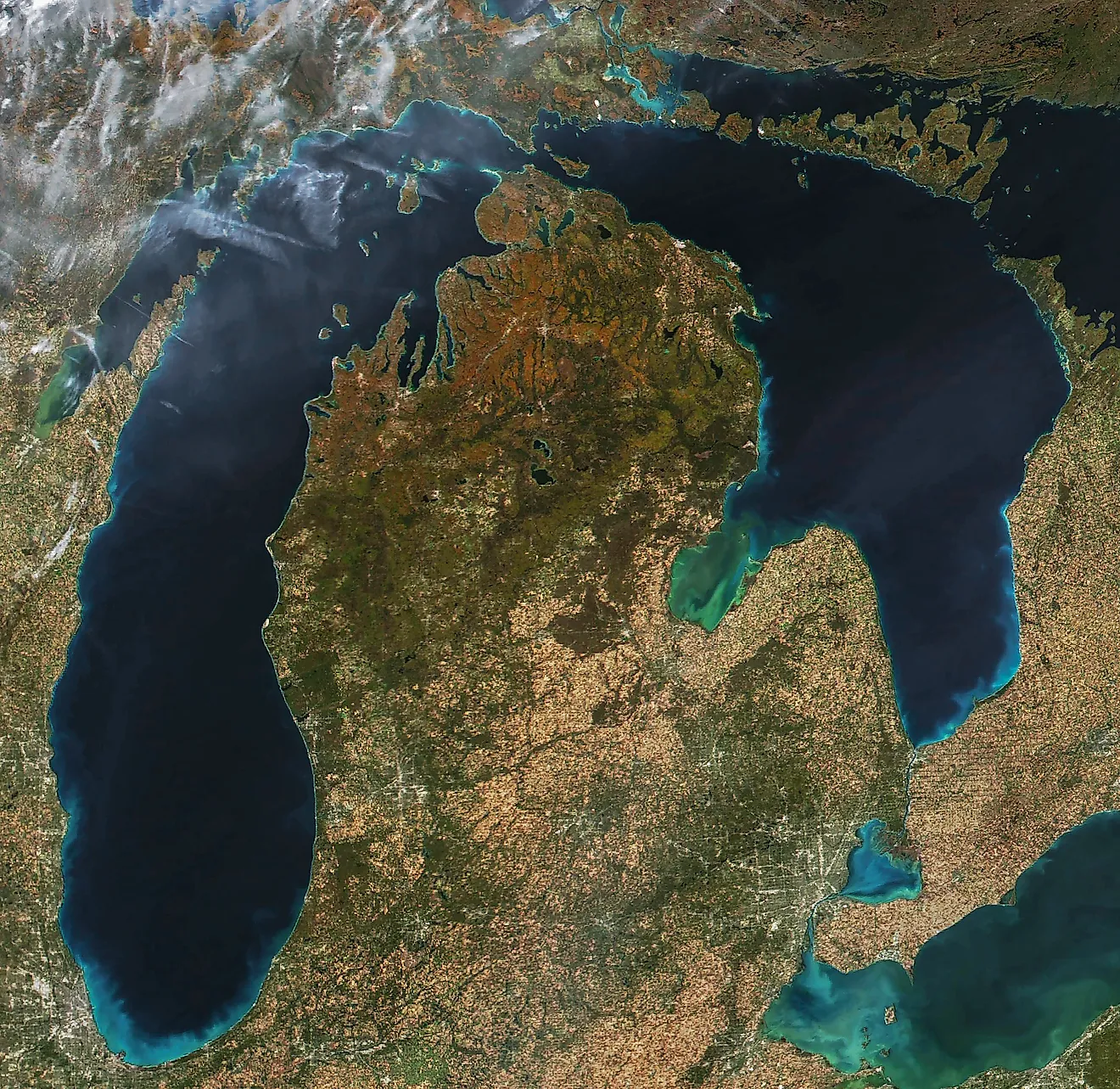
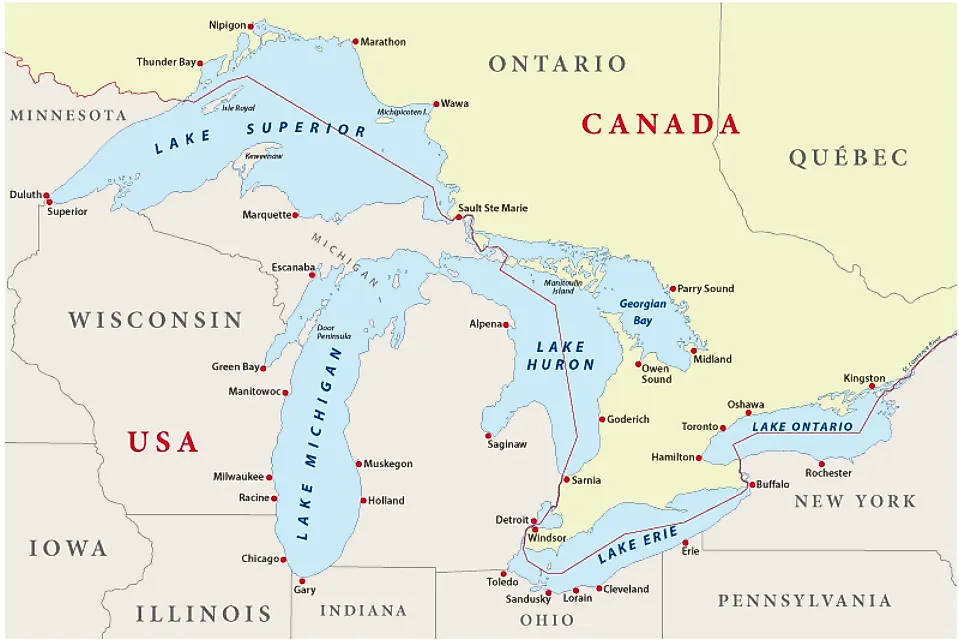
- Illinois, Indiana, Michigan, Minnesota, New York, Ohio, Pennsylvania, and Wisconsin are the eight states in the Great Lakes region.
- Lake Superior is the largest of all five Great Lakes, bordering on Michigan, Minnesota, and Wisconsin.
- Over 85 million people live in the Great Lakes Region, in some of the biggest cities including New York, Chicago, and Milwaukee, and Toronto in Canada.
The Great Lakes are so vast that first-time visitors often mistake them for the ocean, scanning a horizon of water with no far shore in sight. There are five of them across North America, Superior, Huron, Michigan, Ontario, and Erie, and together they hold about a fifth of the world's surface fresh water. They are glacial leftovers, carved and filled as the last ice sheet retreated roughly 14,000 years ago, though the lakes reached their modern shapes at different times: Erie is often pegged at around 10,000 years old, Ontario about 7,000, and the upper three, Huron, Superior, and Michigan, only about 3,000, thanks to the land itself still slowly rebounding after the ice.
They have been economic engines for both Canada and the United States since long before either country looked the way it does now. Four of the five straddle the international border, with only Lake Michigan sitting entirely inside the US, and all have served as maritime doorways to the heart of the continent. That access built the great port cities, Toronto, Chicago, Detroit, Milwaukee, and Cleveland among them. On the American side, eight states touch these waters, sharing an economy and a history shaped by the same enormous lakes. Here they are, one by one.
Illinois

Illinois only touches Lake Michigan at its northeastern corner, but that corner happens to hold Chicago, which changes everything. Known as the "Land of Lincoln," the state runs on farmland, wetlands, rolling hills, and forest, with Springfield as its capital and Chicago as its powerhouse. Incorporated as a city in 1837 near the portage linking the Great Lakes to the Mississippi watershed, Chicago grew into the machine that processed and shipped the raw materials of America's heartland: wheat, tools, and livestock. The city proper is home to about 2.7 million people, with roughly 9.6 million across the wider metro area, making it the third-largest in the country.
Indiana

Indiana grabs its slice of Lake Michigan along its northwestern edge, where the industrial belt around Gary meets the water. It is a manufacturing heavyweight and one of the country's leading producers of corn, poultry, and soybeans, and it ranks among the top auto-manufacturing states, second only to Michigan. It also throws the loudest party on the list: every Memorial Day weekend the Indianapolis 500 sends cars screaming around a 2.5-mile oval for 200 laps, a full 500 miles, in front of one of the largest crowds in all of sports.
Michigan

No state is more defined by these waters than Michigan, which borders four of the five Great Lakes, Superior, Michigan, Huron, and Erie, missing only Ontario. Shaped like a pair of mittens split by the Straits of Mackinac, it also holds an astonishing amount of inland water, so much that no point in the state is more than about six miles from a lake or stream. That is a gift for anglers, boaters, and hunters, and tourism sits alongside manufacturing and agriculture as a pillar of the economy.
Nearly 10 million people live here, and the state exports culture as readily as cars: Madonna, Kid Rock, and producer Jerry Bruckheimer all hail from Michigan, and Detroit-raised Eminem is inseparable from the place.
Minnesota

Only a sliver of Minnesota's northeastern edge reaches Lake Superior, but it is enough to put the state in the club. The rest of its borders run up against North Dakota, South Dakota, Wisconsin, and Iowa. Famous for brutal winters, Minnesota picked up the nickname the "Bread and Butter State" at the 1901 Pan-American Exposition in Buffalo, a nod to the flour and dairy products it was churning out at the time. Living up to its "Land of 10,000 Lakes" plates, it actually holds more than 15,000 bodies of water, and its economy leans on manufacturing, mining, agriculture, and energy.
New York

New York is the surprise on this list for anyone who only pictures Manhattan. The state stretches from the Atlantic in the southeast all the way to Lake Ontario and Lake Erie in the north and west, wrapping rolling hills, farms, and forest in between. Nicknamed the "Empire State" for its wealth and drive, it carries the motto "Excelsior," meaning "ever upward." The Dutch settled what is now New York City back in 1624, and the rest, as they say, is history, most of it written since.
Ohio

Ohio lines the southern shore of Lake Erie, and even its name is watery: it comes from an Iroquoian word meaning "great river." Packed into its 44,825 square miles are 88 counties and nearly 11.8 million people, along with two major cities, Columbus and Cleveland, that anchor a diverse economy. Long a heavyweight in car assembly and steel, Ohio has spent recent decades branching into food processing and bioscience to keep pace with a changing economy.
Pennsylvania

Pennsylvania sneaks onto the list with just over 50 miles of Lake Erie shoreline at its northwestern tip, around the city of Erie, but that is enough to make it a Great Lakes state. Home to about 12.8 million people, it earned the nickname the "Keystone State" for its role in holding the young nation together, a keystone being the wedge-shaped stone at the center of an arch that locks the rest in place.
History is thick on the ground here: the Declaration of Independence and the US Constitution were both signed in Philadelphia, and Lincoln delivered the Gettysburg Address on Pennsylvania soil. The state also claims Frank Lloyd Wright's Fallingwater, the cities of Pittsburgh and Philadelphia, and a large Amish community still living much as it did a century ago.
Wisconsin

Wisconsin closes things out with a coastline on both Lake Michigan and Lake Superior and about 5.8 million residents. This is "America's Dairyland," the nation's top cheese producer, and it wears the title proudly enough to put foam cheese wedges on people's heads at football games. Beyond the dairy barns, paper production, information technology, and tourism round out an economy that has always known how to make the most of its lakeside real estate.