6 Most Snake-Filled Bodies Of Water In Connecticut
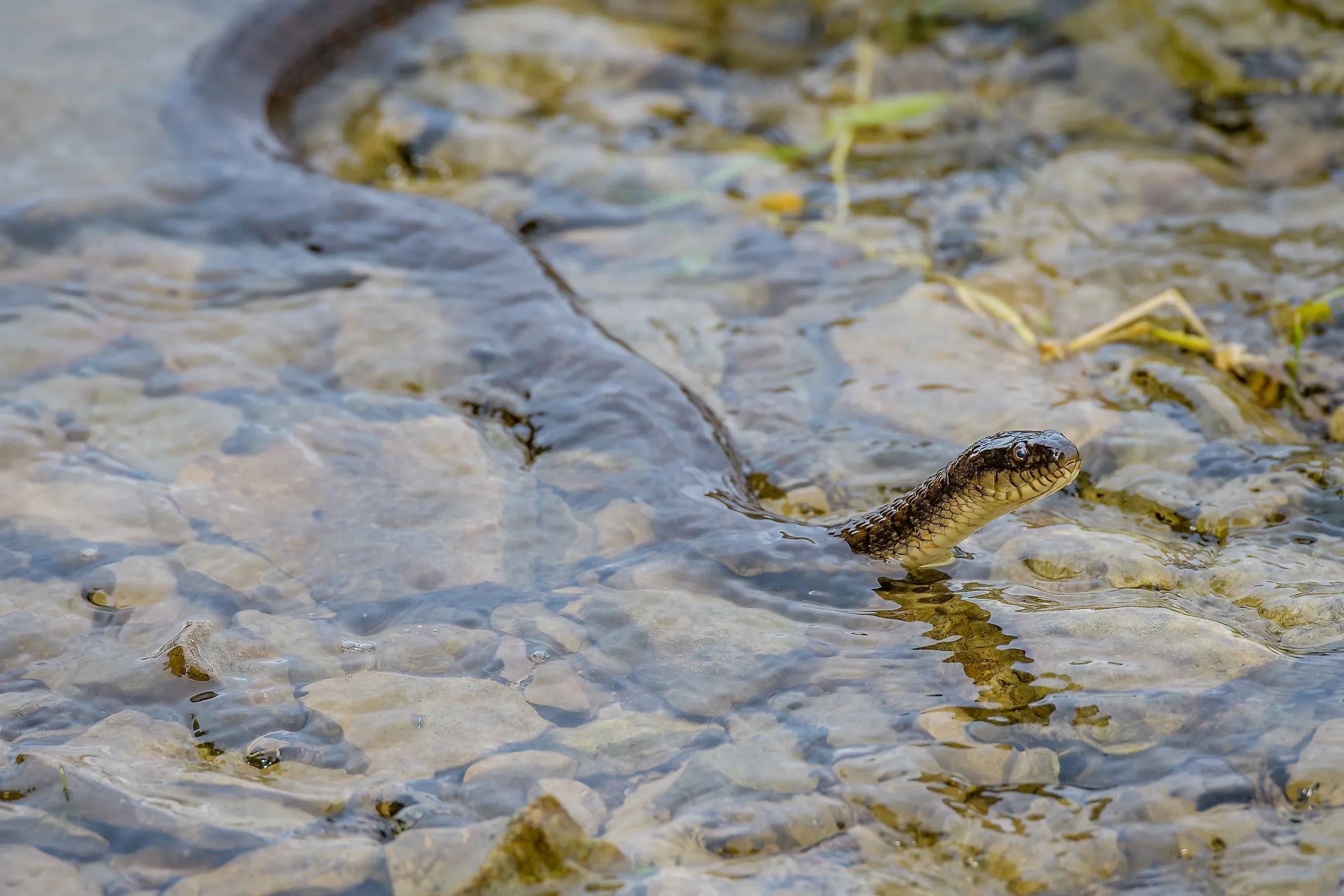
Connecticut's rivers, reservoirs, and forest ponds support several semi-aquatic snake species, but two are especially closely tied to the water. The northern water snake (Nerodia sipedon) is a resident of nearly all of the states freshwater wetlands and waterways. The eastern ribbon snake (Thamnophis sauritus) seldom ventures from shallow waters, favoring the vegetative areas bordering ponds, streams, and woodland swamps.
None of Connecticut's water-loving snakes are venomous. Of the state's 14 snake species, only the northern copperhead (Agkistrodon contortrix mokasen) and timber rattlesnake (Crotalus horridus) are venomous, and both are terrestrial snakes that inhabit rocky ridges and talus slopes rather than aquatic habitats. Snake activity along these rivers, lakes, and reservoirs is highest from April through October, with sightings common in May and June as snakes emerge from winter and become more active. In late October and November, most snakes retreat to underground winter dens to spend the colder months in brumation.
Six bodies of water in Connecticut stand out for the habitat they provide each snake species.
Farmington River

The Farmington River moves through a long corridor of woodland, meadow, and wetland in northwest Connecticut that draws multiple snake species to the same stretch of water. A total of 33 towns, from Connecticut to Massachusetts, are included in its watershed, with several located directly along the river's path, including Farmington, Otis, Canton, and Avon. The river is well known to kayakers and fly fishers, but the marshy coves and grassy banks along the Farmington River Trails also attract semi-aquatic snakes.
Northern water snakes are present throughout the Farmington's length preferring still or slow-moving water in areas with overhanging branches and rocks for cover and basking. They are common near dams and bridges, which Farmington has in abundance from its mill-town history. They concentrate near slower pools and woody debris on the inside bends of the river, where frogs and small fish gather. They can swim with their heads above water, and can also dive and hold onto submerged debris where they can remain underwater for over an hour at a time.
Eastern ribbonsnakes (Thamnophis saurita), a species of Special Concern in Connecticut, use the grassy, shrubby margins along the rivers shallower stretches. Instead of diving to the bottom as a watersnake would, this species swims rapidly along the surface of the river's edge and may dart into the bank's vegetation if threatened.
Thames River

Multiple snake species inhabit the Thames River corridor, which begins at Norwich Harbor where the Shetucket and Yantic rivers converge and flows south to Long Island Sound. It passes through a mix of tidal estuaries and freshwater riparian zones where snakes thrive. The marshy edges near the upper freshwater reach of the river provide the densest snake habitat, particularly around Fort Shantok State Park in Montville, where wooded trails, a shoreline pond, and wet meadows border the Thames.
Northern water snakes hunt the slow-moving areas of the river where the current is reduced and small fish are easier to catch. Eastern ribbon snakes (Thamnophis sauritus) occupy the cattail margins where small tributaries create wet, vegetated inlets. Their habitat is in shallow water, marshy areas, and grassy regions that border streams and wooded swamps. They can often be seen thermoregulating on rocks and logs along the water's edge.
Eastern rat snakes (Pantherophis alleghaniensis) are excellent swimmers and their range extends into the southeastern hills that drain into the Thames watershed. These are Connecticut's largest snakes, sometimes exceeding 5 feet (1.5 meters) in length. They hunt the wooded river bottoms and floodplain edges for rodents, frogs, and birds. Along the broader floodplain, northern black racers (Coluber constrictor) work the open grassy fringes between the treeline and the water. They hunt a range of prey, including frogs, birds, small mammals, and invertebrates in the kind of transitional meadow habitat the Thames corridor provides near Norwich.
Lake Lillinonah

The backwater coves, wooded banks, and tributary mouths that feed into Lake Lillinonah create a varied shoreline that supports a diverse snake community. The Lillinonah Trail, which drops down to the reservoir's edge in Bridgewater, passes through some of the most ideal snake habitats around the lake. These include the Pond Brook inlet and Shepaug River inlet near the Upper Paugussett State Forest where narrow, marshy waterways cut into the surrounding hardwood hillsides.
The northern water snake is the most common species of the lake and the easiest of the group to identify. They are heavy-bodied with keeled scales, gray to brown in color with darker crossbands, and can grow more than 3 feet long. These snakes hunt the coves methodically, probing shallow water for fish and frogs. They also regularly sun themselves on the flat rocks and fallen logs that line the shoreline's quieter sections.
Eastern ribbon snakes use the wetter, grassier areas where small tributaries meet the main reservoir. They are noticeably slimmer and smaller than the water snake and rarely exceed 32 inches. This species is best distinguished by three bold yellow stripes running the length of their body and a tail that makes up about a third of their total length.
Common garter snakes (Thamnophis sirtalis) cover the broader floodplain above. They're stockier than ribbon snakes, with proportionately shorter tails and side stripes set on different scale rows. Eastern rat snakes are common in the wooded hills framing the reservoir, and will use their swimming ability to cross between hunting areas. As Connecticut's longest snake, a rat snake is easy to tell apart from the water snake at a glance by their glossy black scales and white patch on their throat.
The lake's long history of protected watershed land on much of its perimeter has allowed all of these species to persist close to a populated corner of the state.
Shetucket River

The Shetucket River's frontage along the Mohegan State Forest provides intact riparian woodland corridor in the eastern part of the state, and that undisturbed area supports a strong snake presence. The Friends of the Shetucket River Valley protects a section of the river within the 500-acre Sprague Land Preserve, supporting snake populations that rely on the river and surrounding habitats. Along the river, several old mill dams create still water immediately upstream that concentrates snake activity.
Northern water snakes are active along the Shetucket where the current slows enough to allow them to easily catch prey. They also use the thick vegetation and hollow logs along the river's banks to give birth. This species is ovoviviparous, meaning they don't lay eggs like the majority of snakes. Instead, they give birth to as many as 30 live young at a time.
Eastern hognose snakes (Heterodon platirhinos) favor the sandy, well-drained soils of the Shetucket's broader floodplain terraces where toad populations are highest. The hognose snake is largely terrestrial, although they will enter the water when moving between areas. As such, the floodplains serve as vital travel corridors connecting their habitats. Their dramatic bluffing behavior, flattening the neck into a cobra-like hood and hissing loudly, makes them one of the more memorable snakes to encounter along a riverbank trail. Northern black racers also use the open meadow patches of the Shetucket's floodplain, hunting by sight across short-grass habitat where they scour the banks for prey.
Salmon River

The Salmon River in Middlesex County is one of the most ecologically intact rivers in Connecticut, and the shallow gravel bars, undercut banks, and emergent vegetation along the Air Line Trail represent ideal snake habitats. Common garters are the most frequently seen species along the Air Line Trail overlooking the river, where the snakes move across sun-warmed sections of the path between searching for prey along the water's edge.
Eastern ribbon snakes need shallow wetland habitats that are becoming rarer to find across the state, but exist along some portions of the Salmon River. The 714-acre Salmon River Division, located at the confluence of the Salmon River and the Connecticut River, provides the type of wetland environment this species needs to thrive. Connecticut's Department of Energy and Environmental Protection (DEEP) points to draining, filling, and impounding as some of the driving causes for freshwater wetland degradation across the state. Inland wetlands were not protected until 1972, so many were filled for development. As a result, the state's wetlands have been reduced by 40 to 50 percent, heavily restricting the eastern ribbon snake's habitats.
The Salmon River corridor, formed from the confluence of the Blackledge and Jeremy rivers, is protected by the Salmon River State Forest on both sides for much of its 10.4-mile length. It offers this species the undisturbed wetland habitat they need to thrive. Northern water snakes can also be found in the river.
Saugatuck Reservoir

Several snake species make use of the water and shoreline around the 827-acre Saugatuck Reservoir. The reservoir and surrounding watershed is highly protected from development, leaving the shoreline largely wooded and undisturbed for decades. That protection creates state riparian habitat, transitional environments between terrestrial and aquatic zones, that allows snake populations to thrive close to a densely populated part of the state.
Northern black racers turn up in the open meadow patches and vegetative areas near the water's edge, searching for prey during daylight. Juvenile black racers often feed more heavily on invertebrates and small prey in sheltered edge habitats.
Northern water snakes concentrate in the long inlet arms where smaller streams feed the reservoir. They seek out protected coves where shallow, calm waters are rich with frogs and small fish. These snakes can also regularly be seen basking on half-submerged logs and bank rocks in the warmer months.
Common garters and eastern ribbon snakes use the wet, grassy areas where the forest gives way to the reservoir's margin. Eastern ribbon snakes are semi-aquatic and rarely found far from a source of water. When threatened, they quickly flee into the water or hide within the tangle of bank vegetation.
Connecticut’s Prime Snake Waterways
Connecticut's bodies of water and their surrounding habitats are movement corridors, hunting grounds, and thermal refuges for a diverse community of snakes. They're particularly ideal habitats because each one combines the right mix of shallow water, prey-rich edges, and protected shoreline each species need to thrive. The eastern ribbon snakes and eastern hognose snakes are both species of concern in Connecticut, and the northern black racer is listed as an important species with declining populations statewide. The population is reminder that the presence of snakes in and along these waterways is something to celebrate and represents an important measure of habitat health.