The Smallest Freighter Still Working The Great Lakes
The shortest self-propelled freighter hauling bulk cargo on the Great Lakes today is the MV Tamarack, a Canadian cement carrier that went to work in 2025. The ship that looks the part is a different one. The Alpena, a World War II-era steamer that still delivers cement to ports such as Duluth and Muskegon, keeps the appearance of a traditional Great Lakes steamship and is far shorter than the modern bulk carriers around it, and Tamarack comes in more than 100 feet shorter still.
Both ships haul cement for Amrize. The Alpena works the company's American routes, where about 90 percent of the cement made at its plant in Alpena, Michigan, leaves by boat, and Tamarack carries Amrize cement into Toronto, on the Canadian side of the lakes. A freighter as small as Tamarack sits at the far end of a fleet led by thousand-footers, and it still arrived with 15 years of planned work ahead of it. The reasons lie in where the ship has to go and in how much cement fits inside a short hull.
Tamarack Is About Two-Fifths as Long as the Lakes' Biggest Freighter

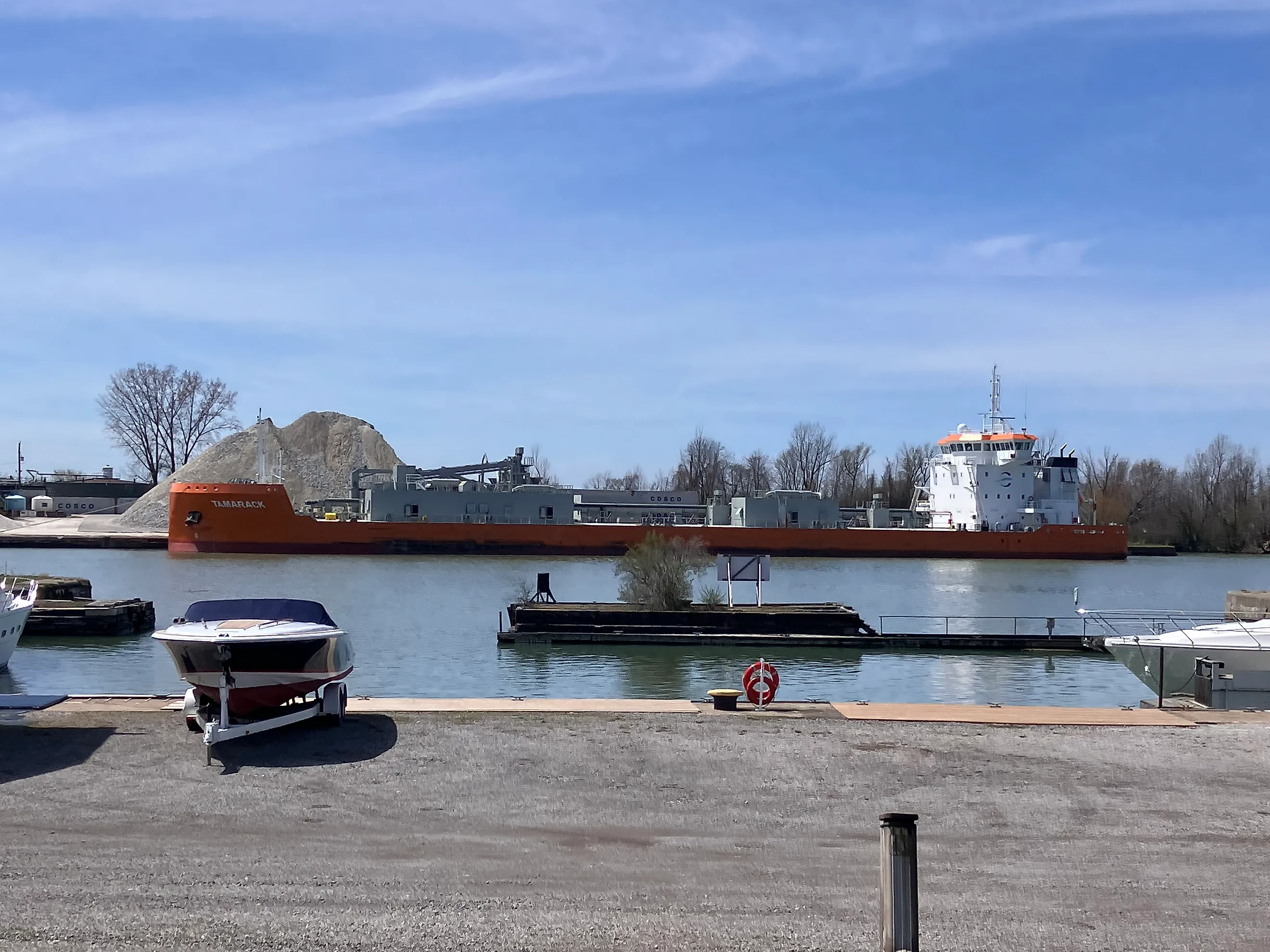
Tamarack measures about 403 feet overall, or 122.9 meters, according to its manager, Canada Steamship Lines. The Paul R. Tregurtha, the longest vessel working the lakes, measures 1,013.5 feet, so two and a half Tamaracks could line up end to end along its hull with a few feet to spare. The cargo gap is wider. Tamarack is rated at 12,500 metric tons of deadweight, the combined weight of cargo, fuel, water, and stores it can safely carry, while the Tregurtha loads about 69,000 metric tons of iron ore, so a full Tamarack holds less than a fifth of a Tregurtha cargo.

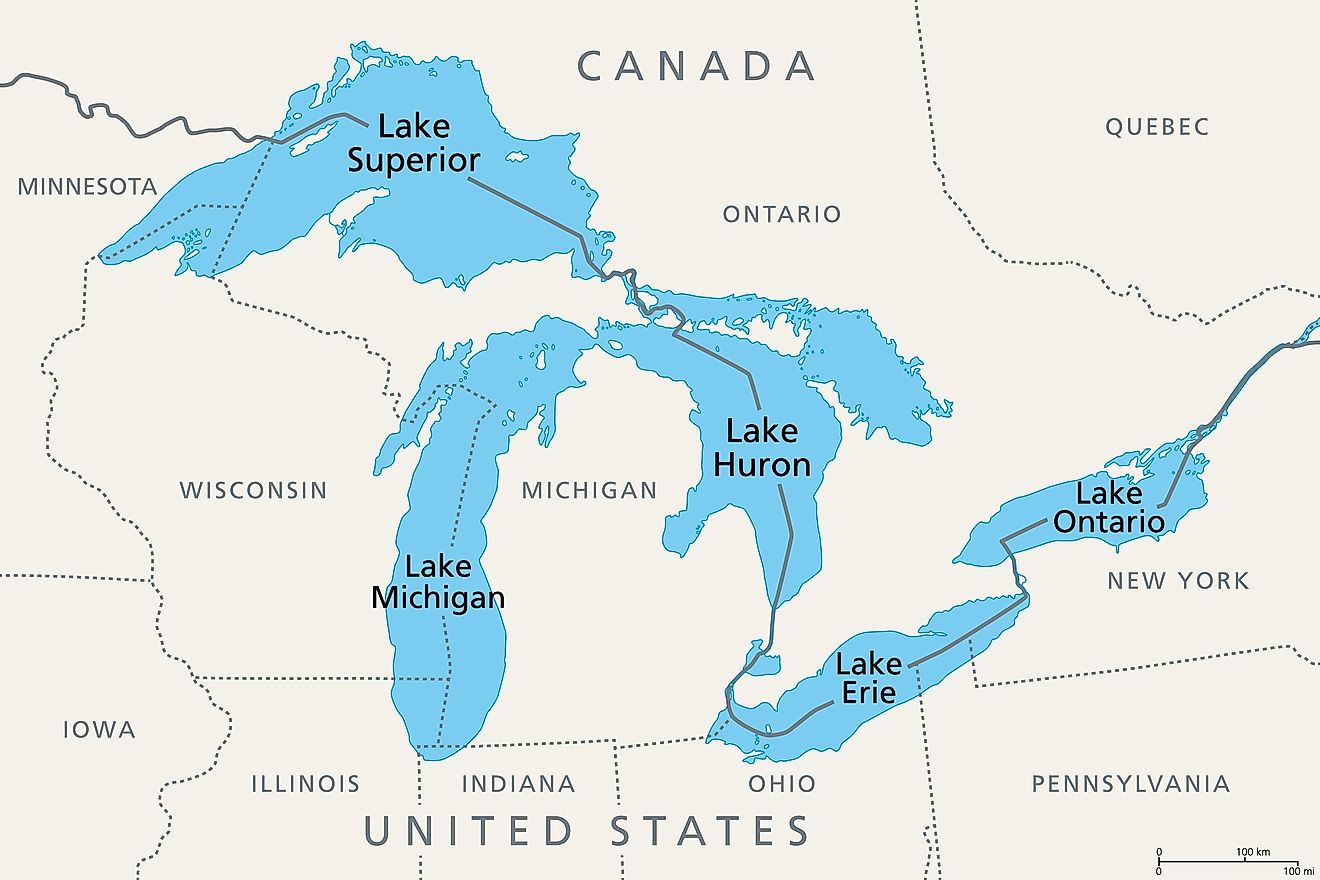
Length also decides where each ship can go. The locks of the Welland Canal and the St. Lawrence Seaway take ships up to 740 feet long, which keeps the Tregurtha, at more than 1,000 feet, out of Lake Ontario and the St. Lawrence River. Tamarack fits those locks with more than 300 feet of length to spare, and it reached Toronto by way of the Seaway.
The Alpena Looks the Part but Runs 116 Feet Longer

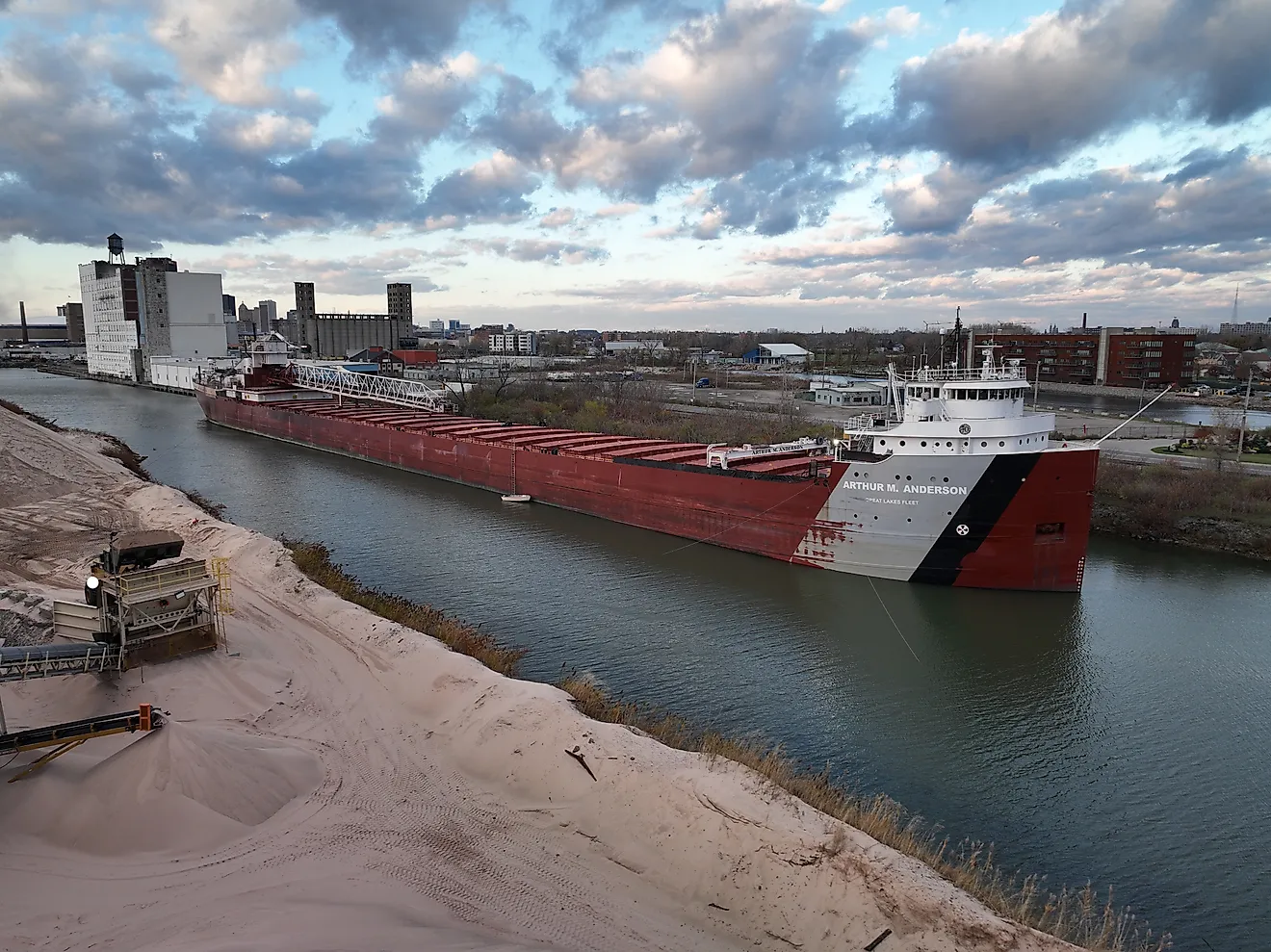
The Alpena owes its size to a cut. It was launched in 1942 as the Leon Fraser for the Pittsburgh Steamship Company and measured about 639 feet. Around 1990, a 120-foot midsection was removed at Fraser Shipyards in Superior, Wisconsin, and the hull was converted into a self-unloading cement carrier. The ship returned to service in 1991 as the Alpena, 519 feet 6 inches long and 67 feet wide. The shorter hull lets it call at small ports, and it still carries about 14,000 long tons, enough for over half a million 60-pound bags of cement. Since 2015, it has been the oldest active steam-powered commercial vessel on the Great Lakes.
Tamarack is about 116 feet shorter than the Alpena and about 8 feet wider. Both are self-propelled dry-bulk ships in the Great Lakes cement trade, which makes length the fair measure between them. By that measure, two other cement carriers on the lakes fall between them, with the NACC Argonaut at about 448 feet and the McKeil Spirit at about 459 feet.
Tamarack's Hull Uses Nearly All the Width the Seaway Allows

Width is where Tamarack makes up for its short length. Its beam of about 75 feet comes within inches of the Seaway's standard width limit of 23.2 meters, about 76 feet. A short, wide hull holds more cargo for each foot of length, and Tamarack's length is about 5.3 times its beam, compared with about 7.8 for the Alpena and about 9.7 for the Tregurtha.
The ship was designed by Groot Ship Design in the Netherlands and built by Holland Shipyards Group as a replacement for two older vessels, and according to the builder, its single hull matches the transport capacity of that pair. Fully loaded, Tamarack draws about 21.5 feet in fresh water, about 4.5 feet less than the Seaway's standard draft limit of 26 feet, so a full load of cement stays within the rules for passing through the locks.
Swiveling Propellers Bring the Wide Hull Alongside the Dock
Getting that wide hull alongside a cement terminal is the job of its propellers. Tamarack runs on diesel-electric power, with generators driving two 1,300-kilowatt rudder propellers that together deliver about 3,500 horsepower, a little less than the 4,000-horsepower steam turbine in the Alpena. Each propeller turns a full 360 degrees, so the ship can push water in any direction, and a bow thruster adds sideways control at the front for docking and harbor maneuvers. Once the ship is tied up, it unloads itself. Its four dedicated cement holds take about 378,000 cubic feet of powder, and both loading and discharge run on mechanical and pneumatic systems, the pneumatic ones using air pressure to move cement through pipes.
Tamarack Joined the Great Lakes Cement Trade in 2025

Tamarack crossed the Atlantic to reach this work. The ship was delivered at Holland Shipyards in the Netherlands on July 23, 2025, and arrived at the Port of Montreal on August 22 after its maiden transatlantic voyage. On September 18, it was formally welcomed at Amrize's Toronto cement terminal on Lake Ontario as the first new cement carrier on the Great Lakes in two decades.
The 2026 shipping year is the first full season of the ship's planned 15 years of service, and Canada Steamship Lines lists Tamarack as operating on the Great Lakes and the St. Lawrence Seaway. It is co-owned by the CSL Group and SMT Shipping through their Eureka Shipping joint venture, and its planned service would keep it on cement routes until about 2040.
The shortest freighter on the Great Lakes and the oldest active steamship among them reached their size in opposite ways. The Alpena lost 120 feet in its rebuild around 1990, and the shorter hull lets it call at small ports with about 14,000 long tons of cement aboard. Tamarack was designed short from the start, with its capacity built into a hull nearly as wide as the Seaway allows, so it passes the locks into Lake Ontario with hundreds of feet to spare, and its builder says that single hull matches the capacity of the two older ships it replaced. Both ships remain in the Amrize cement trade in 2026, one on American routes that reach Duluth and Muskegon and the other on Canadian routes that reach Toronto. The thousand-footers carry far bigger loads, yet none of them can pass the locks to the Toronto terminal that Tamarack serves.