Why Great Lakes Freighters Race To Beat The Soo Locks' Winter Closing
Every January, some of the largest ships in North America throw themselves into a frantic, ice-choked sprint across the Great Lakes, all to beat a single unforgiving deadline. At one minute before midnight on January 15, the Soo Locks slam shut for the winter, and any freighter caught on the wrong side is effectively stranded for the next ten weeks. It turns the end of the shipping season into a genuine race against the clock. Here is why these thousand-foot giants push so hard through the cold.
The Locks That Rule the Lakes

The Soo Locks, at Sault Ste. Marie, Michigan, are the single most important chokepoint in Great Lakes shipping. They are the only way for vessels to travel between Lake Superior and the four lower Great Lakes, gently raising or lowering ships around the 21-foot drop in the St. Marys River. Roughly 4,500 vessels carrying up to 80 to 90 million tons of cargo, mostly iron ore, coal, grain, and stone, pass through them every year. The largest chamber, the Poe Lock, is the only one big enough to handle the giant 1,000-foot lakers. Put simply, if a ship on Lake Superior wants to reach the steel mills downstream, it has no choice but to go through the Soo.
The Hard Deadline: January 15

And every winter, the Soo Locks close. By federal regulation, they shut down at 11:59 p.m. on January 15 and do not reopen until March 25, a roughly ten-week window in which no ship can pass between Lake Superior and the rest of the lakes. The closure is not arbitrary. It is when the Army Corps of Engineers drains, inspects, and repairs the aging locks, replacing gates and machinery that simply cannot be serviced while ships are pouring through. It is grueling work carried out in the teeth of a northern Michigan winter, and the date is essentially non-negotiable. When the doors close, the season is over.
Stockpiling Ore for the Steel Mills

Here is the catch that drives the entire race: the steel mills do not close for winter, but the ships do. Blast furnaces in Gary, Cleveland, and Detroit run around the clock all year long, and they devour mountains of iron ore doing it. Since no fresh ore can move through the Soo for ten straight weeks, the mills have to stockpile enough to last the entire shutdown. That turns the late fall and early winter into a mad scramble, with freighters hauling load after load of taconite pellets down from Lake Superior ports like Duluth-Superior and Two Harbors to build up those crucial reserves before the deadline arrives.
Ending Up on the Right Side

There is a second, more personal reason each ship is hustling: it needs to finish the season in exactly the right place. When the locks close, every vessel has to be at its designated winter layup port, where it will spend the next couple of months getting millions of dollars of maintenance and upgrades. A freighter that misjudges its timing and gets caught on the wrong side of the Soo is simply stuck there until spring, unable to cross Lake Superior or reach the lower lakes. So in the final weeks, captains thread a careful needle, squeezing in one last profitable run while making absolutely sure they will end up on the correct side of the locks.
Racing the Ice to the Finish

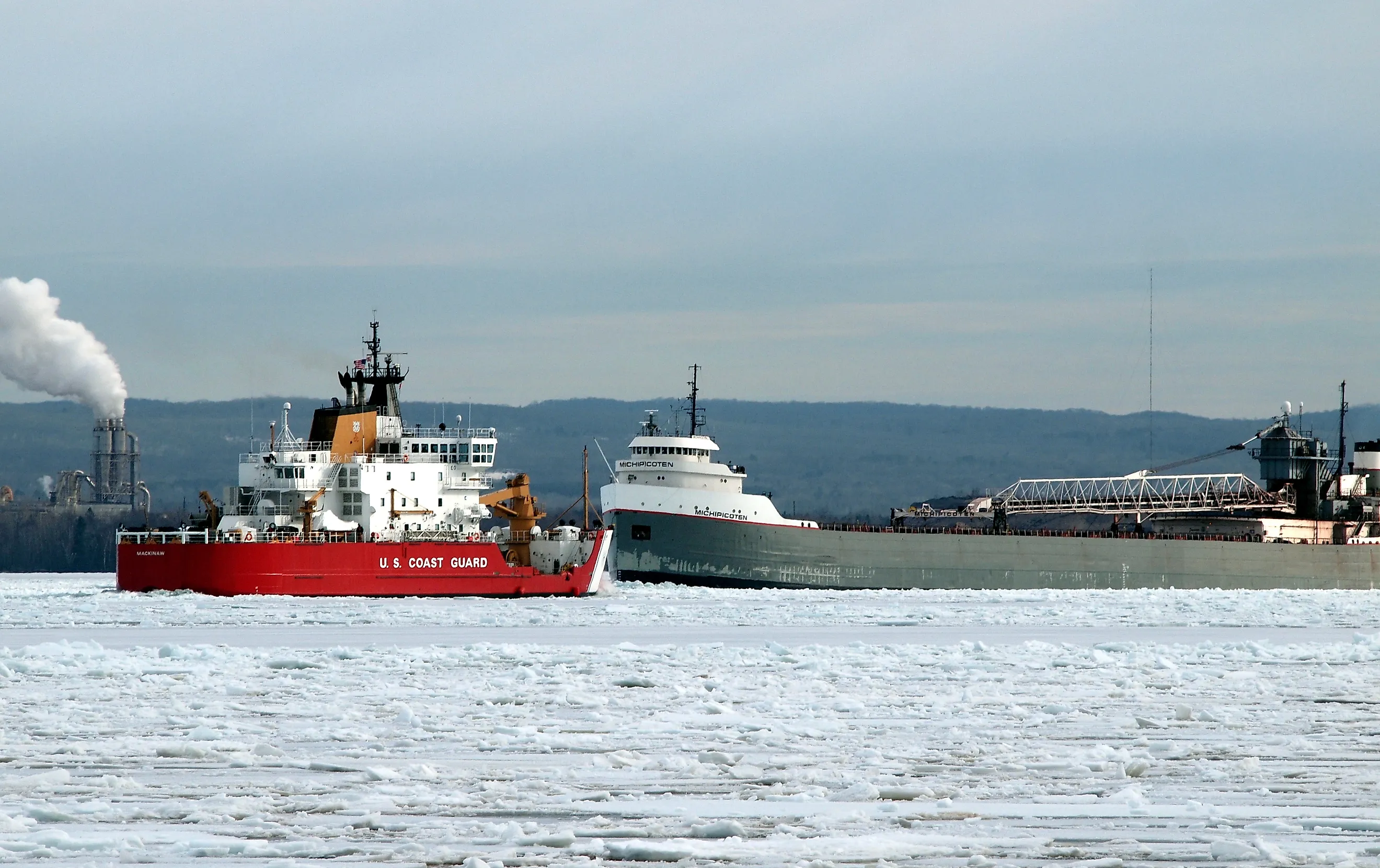
As if a fixed calendar deadline were not enough, the ships are also racing the ice. By mid-January, Lake Superior and the connecting waterways are freezing over, and the final runs get genuinely treacherous. The U.S. Coast Guard launches its largest domestic icebreaking effort, aptly named Operation Taconite, to keep channels open and shepherd the last ore carriers toward the locks. Even then, a late passage can be a slog. When the 1,000-foot American Spirit made the very last transit of the 2026 season, its trip through the lock took three hours thanks to heavy ice jamming the chamber. Every year, devoted ship-watchers gather to salute that final freighter as it slips through the Soo, the dramatic closing note of the season, just before the gates swing shut and the lakes go quiet until spring. So when those freighters power through the January cold, they are not merely chasing one more paycheck. They are beating a deadline that has shaped life on the Great Lakes for generations: the annual, immovable closing of the locks that hold the entire system together.