Cleopatra's Daughter: From Roman Prisoner To African Queen
History has long romanticized the life and death of Cleopatra VII, transforming her into a figure defined by legend more than governance. Popular portrayals emphasize beauty and tragedy, yet ancient sources instead highlight her education, political skill, and command of diplomacy. While her reign and relationships have been examined extensively, her role as a mother and the lives of her children receive far less attention.
Cleopatra VII had four children. Of them, only Cleopatra Selene II would grow to rule. Following her parents’ defeat and death, Cleopatra Selene was taken to Rome, where her life became shaped by Roman power and memory. What survives of her story comes largely from Roman authors, many writing under the influence of Octavian, whose political narrative cast Cleopatra and her legacy in a hostile light.
Despite these constraints, Cleopatra Selene endured a disrupted childhood, adapted to elite Roman society, and ultimately emerged as a monarch in her own right. As queen of Mauretania, she governed with notable autonomy, blending Hellenistic traditions inherited from the Ptolemies with Roman political realities. Through her rule, she preserved elements of her dynastic heritage while operating fully within the Roman world, making her one of the most remarkable and often overlooked figures of the late Hellenistic age.
Early Life

Of Cleopatra VII's four children, Julius Caesar was the father of the eldest son, Caesarion. Her union with Marc Antony led to the birth of three more children, including the twins, a son and a daughter, named Alexander Helios (the Sun) and Cleopatra Selene (the Moon), respectively, and a younger son named Ptolemy Philadelphus. The twins were born in 40 BCE, and as children of Roman triumvir Mark Antony and Queen Cleopatra, they lived their early lives in Alexandria, Egypt, with their older and younger brothers, Caesarion and Ptolemy Philadelphus.
Along with her brothers, Cleopatra Selene descended from Greek Ptolemaic heritage from their mother and the aristocratic Antonii Roman family on their father's side. During their rule, The Ptolemies blended Greek laws with Egyptian traditions, restored old Egyptian temples, and erected new ones. The Ptolemaic Dynasty ruled Egypt for three centuries from 305 - 30 BCE before falling to the Romans.
Cleopatra VII was Egypt's final pharaoh. She ruled for 22 years. She was highly educated and was the only Ptolemy to learn the Egyptian language. Although conspiracies and murders were a part of her mother's childhood, a young Cleopatra Selene would have witnessed her mother ruling her kingdom. She would have seen her mother receiving, visiting, and corresponding with embassies around the Mediterranean. In doing so, her mother provided an example of her expectations for Cleopatra Selene.
After the Battle of Actium, Cleopatra VII knew she was defeated, and her enemy, Octavian, also called Caesar Augustus, was on his way. In an attempt to protect them, Cleopatra packed up her children and sent them away. She would never learn that her children were captured, her sons murdered, and her daughter would be raised by her enemy.
The Fall Of Egypt

To preserve Egypt’s independence, Cleopatra VII forged powerful political alliances within Rome. Her relationships with Julius Caesar and later Mark Antony were calculated efforts to secure her throne and protect her dynasty. These alliances, however, placed her in direct opposition to Octavian, whose rise depended on eliminating rival centers of power.
In 34 BCE, Antony and Cleopatra staged a lavish public ceremony in Alexandria, later known as the Donations of Alexandria. Seated on golden thrones, they presented their children before a gathered crowd, conferring royal titles that symbolized Antony’s vision of a renewed eastern empire. Cleopatra was proclaimed Queen of Kings, while Caesarion was declared King of Kings and recognized as the son and heir of Julius Caesar. Alexander Helios received nominal kingship over Armenia, Media, and Parthia, Cleopatra Selene was named Queen of Cyrenaica and Libya, and Ptolemy Philadelphus was granted Syria and Cilicia. These titles, though largely symbolic, were intended to project dynastic legitimacy and territorial ambition.
The Donations proved politically disastrous. To Octavian, they represented a direct challenge to Roman authority and an affront to traditional Roman values. Framing the conflict carefully, Octavian declared war on Egypt rather than on Antony himself, portraying Cleopatra as a foreign queen corrupting Roman politics. After years of mounting tension, the struggle culminated in the Battle of Actium, where Octavian’s fleet, commanded by Marcus Agrippa, defeated the forces of Antony and Cleopatra.
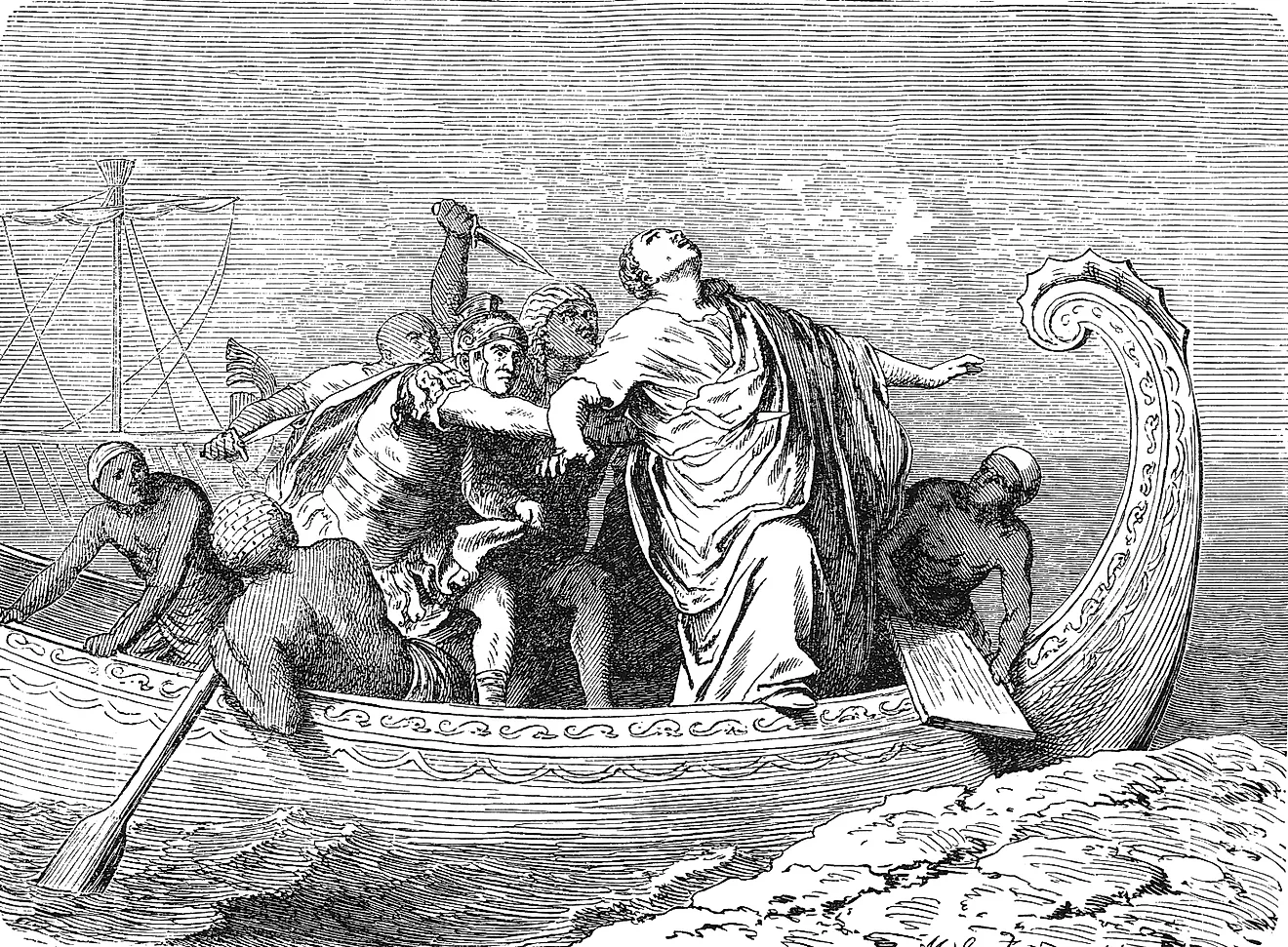
Following their defeat, Antony and Cleopatra withdrew to Alexandria. When Octavian invaded Egypt the following year, the couple sent their surviving children away and chose suicide rather than public capture and humiliation. Their deaths marked the end of Ptolemaic rule and Egypt’s transformation into a Roman province.

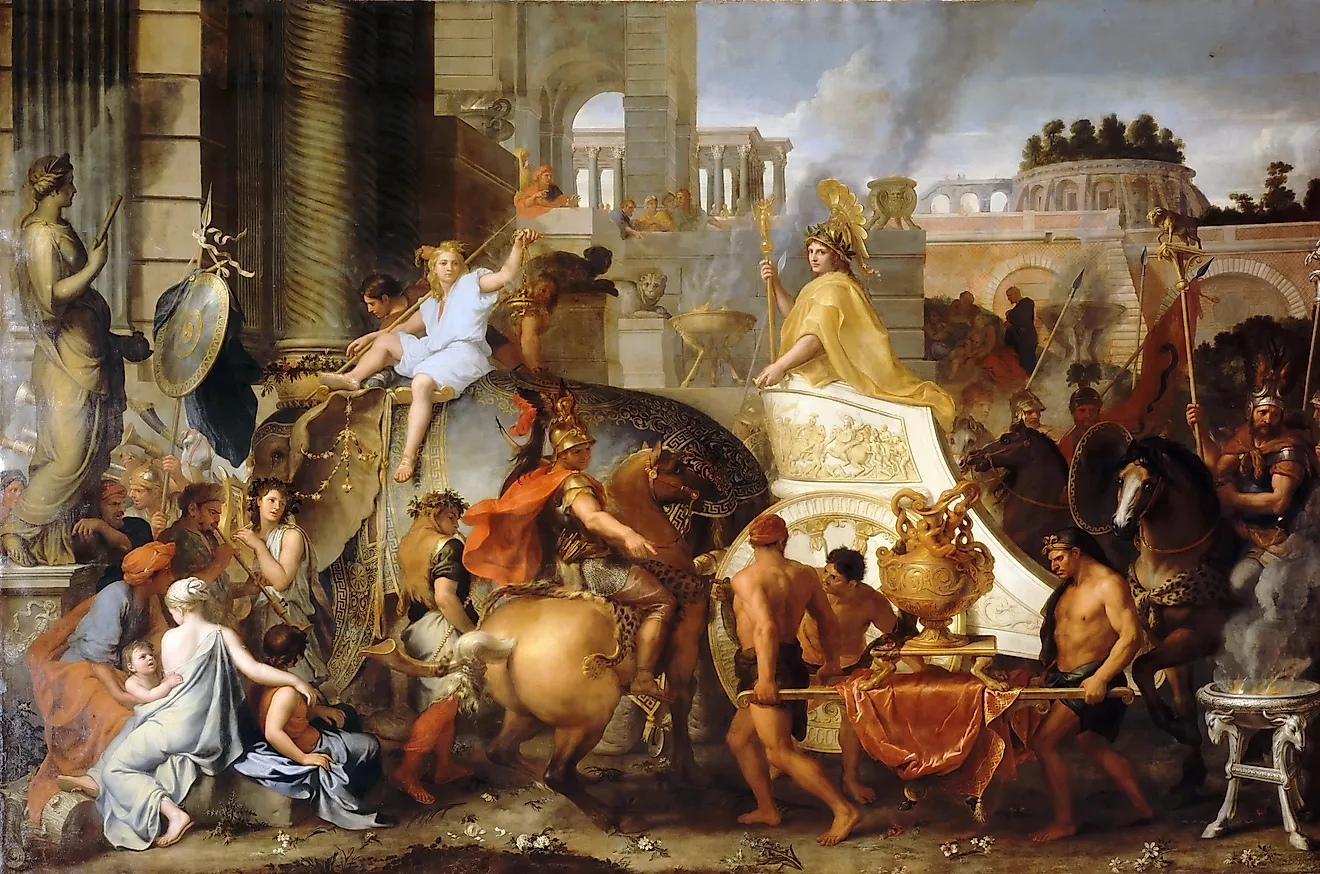
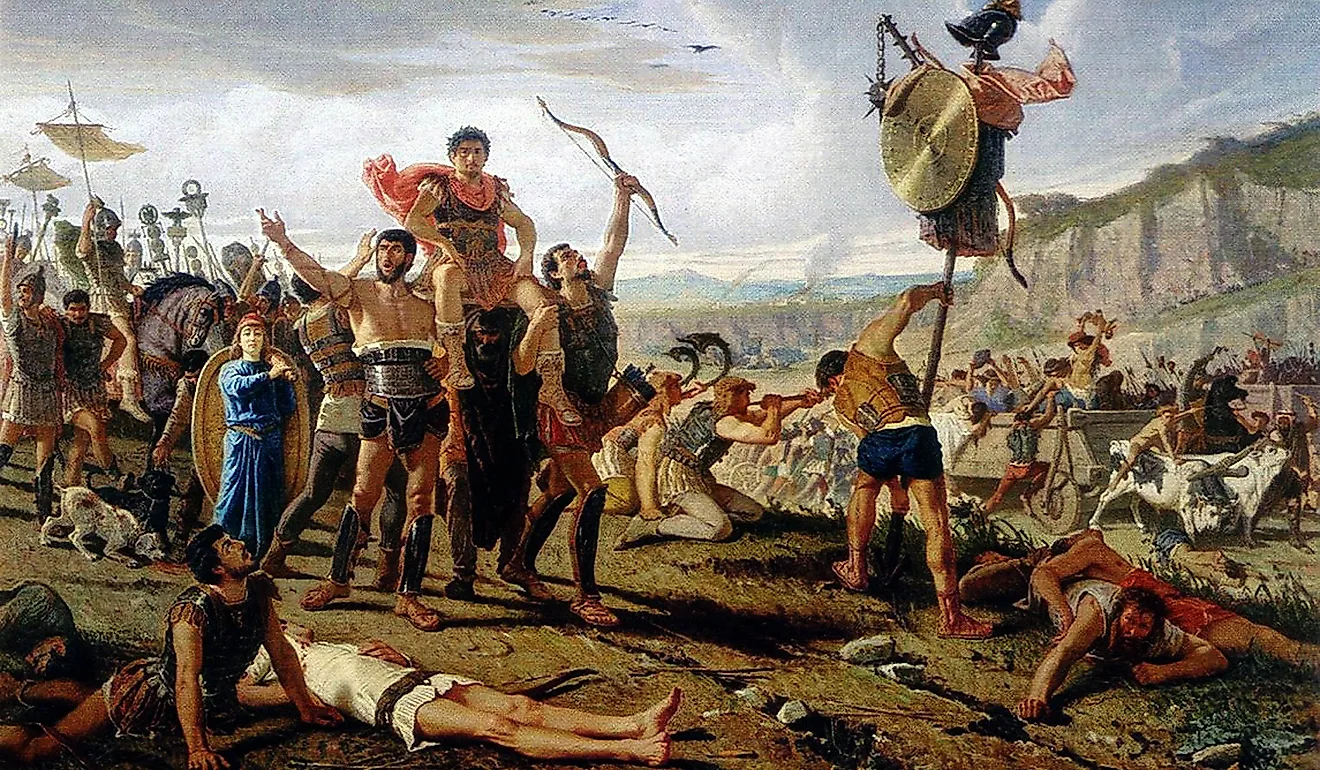
With their parents dead, the children were left to their dramatic fates. En route to India, Caesarion was betrayed by his tutor, captured by Roman forces, and executed. To celebrate his victory, Octavian paraded an effigy of Cleopatra holding an asp. The twins, Cleopatra Selene and Alexander Helios, walked beside it, dressed as the moon and the sun. They were ten years old.
After establishing Egypt as a part of the Roman Empire, Octavian took Cleopatra Selene, Alexander Helios, and Ptolemy Philadelphos to his sister, Octavia, to live in Rome on Palatine Hill. It was here the children were educated with the other children in Octavia's charge. Alexander Helios and Ptolemy Philadelphus disappeared from existence after arriving at Palatine Hill. Egyptologists suggest they either died of a sickness or were murdered. Regardless of how they died, Cleopatra Selene was left to navigate her new life in Rome without them.
Life As A Roman Prisoner

Life in Rome yielded a different lifestyle than in Alexandria, moving from a small household to Octavia's very full house on Palatine Hill. Living within Octavia's house were Cleopatra Selene's paternal extended family and Octavia's older children from a previous marriage. These children included her half-brother Antonius, half-sisters, both called Antonia, and Octavia's older children, Marcus Claudius Marcellus and his two sisters, both called Marcella. Octavian, now named Augustus, and his wife Livia Drusilla, lived nearby with their children, Julia, Tiberius Claudius Nero, and Decimus Claudius Drusus. In addition to their children, Augustus collected children from Roman nations. These children were heirs of nearby nations sent to Rome to "Romanize" them in hopes of creating better kings. Some of these children were the offspring of rulers who had died or been executed. And one of them was Cleopatra Selene's future husband, Gaius Julius Juba.

Gaius Julius Juba was the son of King Juba of Numidia. King Juba committed suicide in 46 BCE after his defeat by Caesar at the Battle of Thapsus. Caesar took his son as a baby to Rome, where he was exhibited in his triumph parade. Afterward, Juba was raised in Caesar's household until 44 BCE, when Caesar was assassinated. Juba was then passed into the custody of Octavian and Octavia. While living with Octavia, Juba was awarded Roman citizenship and received a Roman education. He wrote scholarly treatises with his contemporaries Marcellus, Tiberius, and Drusus. Cleopatra Selene also received an education, studying Greek, Latin, and philosophy. Like her mother, she became fluent in multiple languages, including Egyptian.
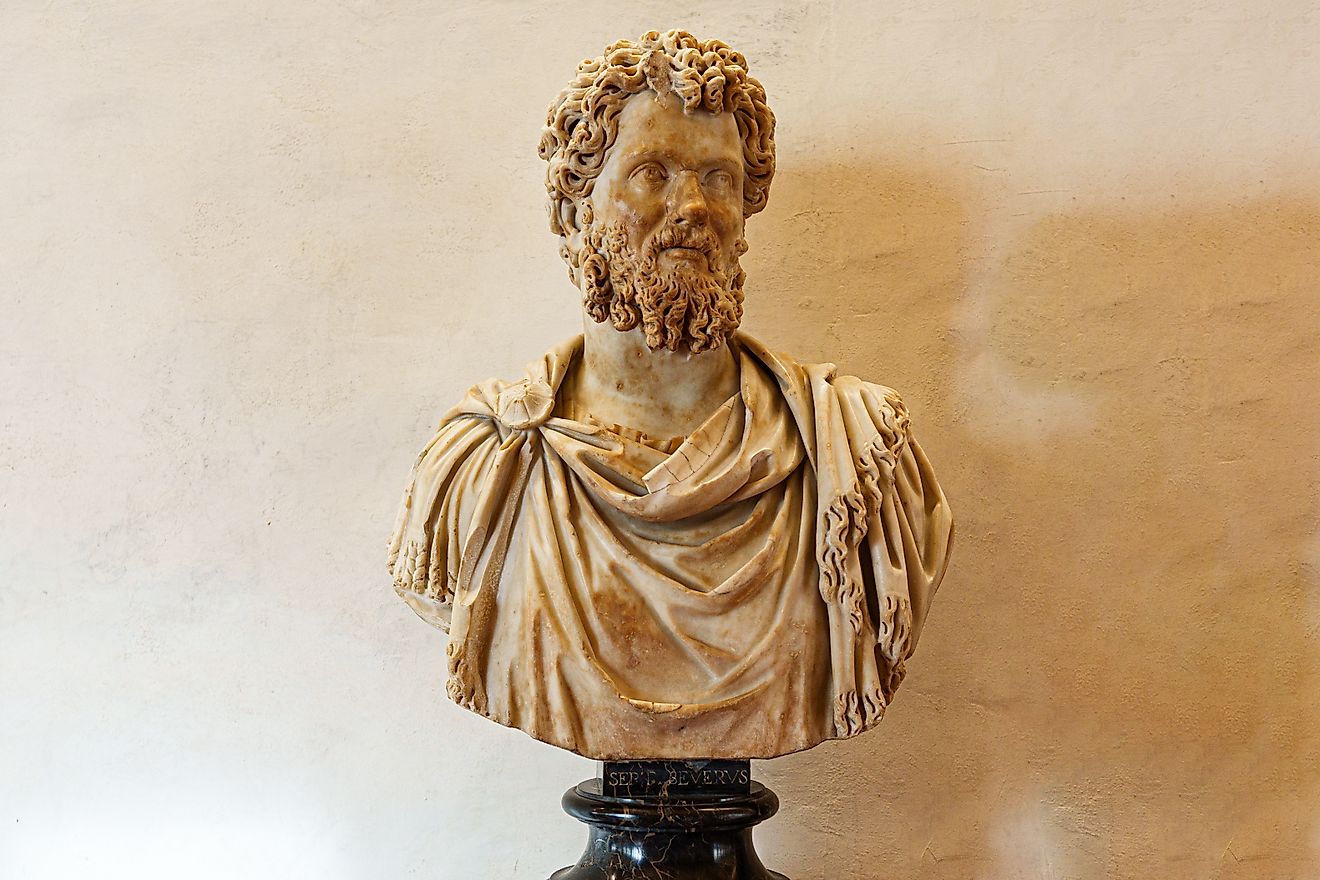
The two young royals had a lot in common. Both were young royals who were orphaned due to Roman conquests. Both were exiled from their homes in North Africa. They grew close as they bonded over Hellenistic culture, African history, and geography. Their bond did not go unnoticed by their guardian, Octavia. In 25 BCE, Octavia arranged for Cleopatra Selene and Juba to be married. The match was approved by Augustus, who proclaimed them as king and queen of Mauretania. After the wedding, the new king and queen were sent to rule as loyal allies of Rome.
Transition To African Queen

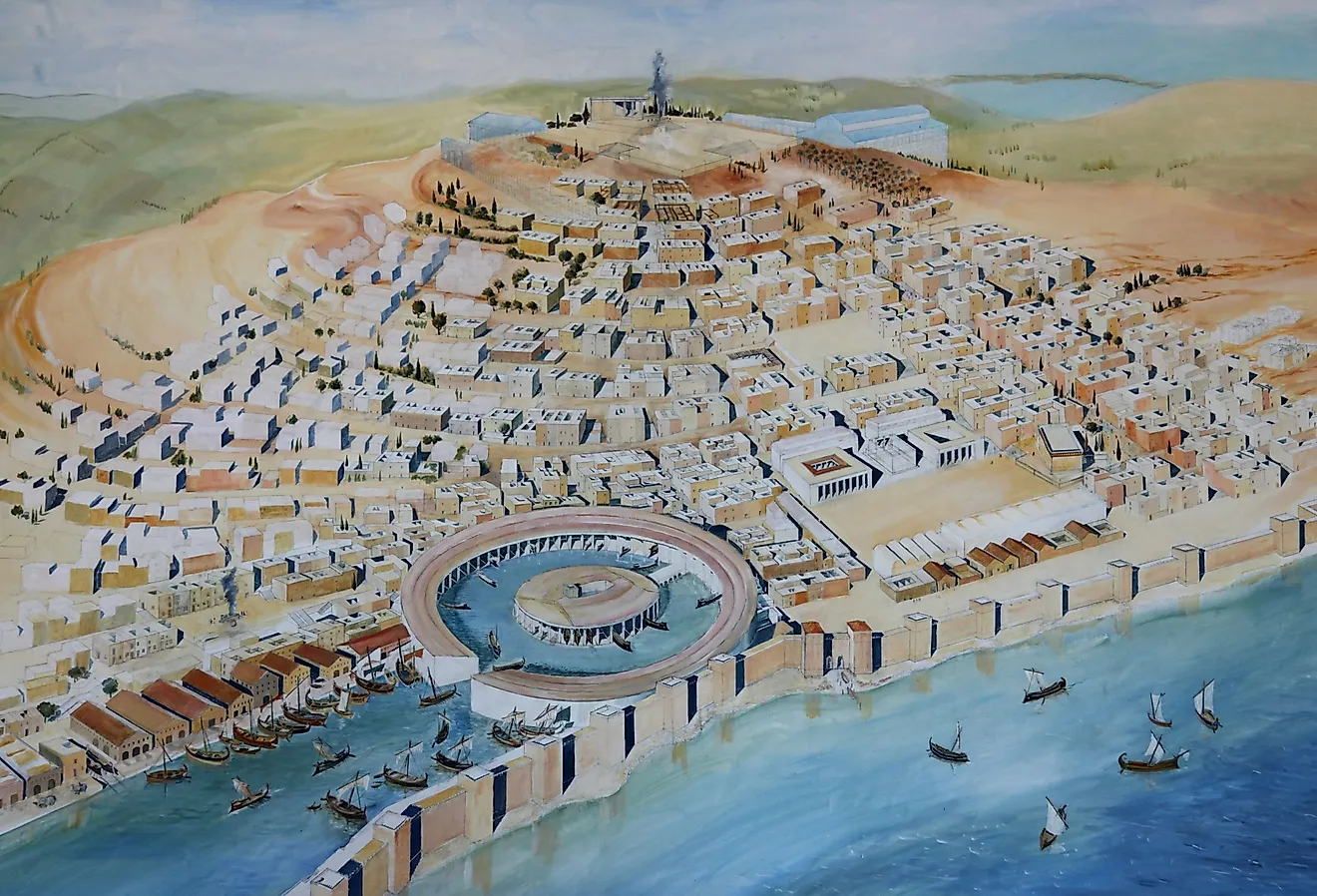
As king and queen of Mauretania, the newlyweds got to work rebuilding the city. The kingdom of Mauretania was a vast territory and included clusters of Greek and Roman colonies. They renamed the capital Caesaria to honor their benefactor, Augustus. A new layout for the city was styled similar to the Roman grid, a nod to their upbringing and life in Rome. The new plan included Roman baths and a theatre to further promote Roman culture. Inspiration for the city's architectural designs came from Rome and Alexandria. Architectural details included sphinxes and columns.
In the new capital, a library modeled after the Library of Alexandria was built. With a focus on cultural achievement, Cleopatra Selene welcomed scholars, poets, and physicians who had served the Alexandrian royal court. The royal palace became a place where Greek, Roman, and Egyptian cultures blended. With increased farming and trade, the country became famous for exporting goods such as timber, grain, and dye. Cleopatra Selene navigated Roman politics and established alliances with Roman emperors while conserving her kingdom's autonomy. In doing so, she secured the protection of Rome for Mauretania.

As queen, Cleopatra Selene honored her mother's heritage, stylizing herself as a Ptolemaic monarch, calling herself "Cleopatra, daughter of Cleopatra." To further honor her Greek legacy, she displayed portraits of Ptolemaic aristocrats and rulers in the Mauretanian royal art collection. Sometime during her reign, Cleopatra Selene birthed two children, a son named Ptolemy and a daughter whose name is unknown. Her son's name further extended her family's Greek Ptolemaic legacy.
The royal couple ruled together until Cleopatra Selene's death at the age of 35. Although the exact date of her death is unknown, a poem written by Crinagoras suggests her death coincided with a lunar eclipse. Upon her death, the queen was entombed in the Royal Mausoleum of Mauretania, which can be seen near Cherchell in modern-day Algeria. King Juba continued to rule Mauretania after his wife's death alongside their son, Ptolemy, as a co-ruler.
Legacy And Influence

Cleopatra Selene impacted the region she ruled. Her patronage of the arts and sciences encouraged the flourishing of Mauretanian culture, attracting philosophers, scholars, and artists from around the Roman Empire to gather in her court. As a queen with Egyptian ancestry, she promoted her family's heritage by supporting the worship of Egyptian deities in Mauretania. Changes to the capital reflected Roman and Egyptian styles, emphasizing the merging of two cultures. By commissioning the construction of impressive public buildings, temples, and theatres, she significantly changed the architectural landscape of her capital.
After Cleopatra Selene's death, her husband Juba and their son Ptolemy continued to rule. During their reign, the two kings faced frequent revolts combined with conflicts with neighboring African tribes. With consistent raids, they were in over their heads. Rome provided military assistance, which resulted in increased hostility. Ptolemy was the last of the Ptolemaic dynasty to rule. In 40 CE, the Roman emperor Caligula hired assassins to execute Ptolemy, leaving Mauretania to become annexed by the Roman Empire. As a Roman province, Mauretania was under complete control of the emperor, extending the empire across the coast of North Africa.

In the course of her reign, Cleopatra Selene influenced the region's culture. Her court welcomed intellectuals to create magnificent art and architecture, leaving a visual impression on North Africa. Her legacy and bloodline continued through her granddaughter, Drusilla, who married into Roman nobility. It is poetic that Drusilla would marry into the Roman elite. Her marriage brought the family full circle as, once again, the Ptolemaic family merged with Rome.
What is known about Cleopatra Selene is closely tied to her family. As queen, her story is told through the accomplishments of her husband. She was Cleopatra's only surviving child, and her political status changed dramatically throughout her life. She lived first as an Egyptian princess, then as a Roman prisoner, and finally as an African queen. Although she spent her teenage years as a political prisoner, she was educated alongside other political prisoners her own age. Her marriage to Juba gave her the freedom to create a country that reflected both her parents. Cleopatra Selene lived a fascinating life that captured the imaginations of writers, historians, and artists. Her life inspired many novels that speculate on how she balanced family drama while navigating Roman politics in a world where men ruled.