The Elite Special Forces of Ancient Egypt
The military of Ancient Egypt operated very differently from modern armed forces, evolving significantly over time. In Egypt’s early periods, particularly during the Old and Middle Kingdoms, armies were often raised through temporary levies drawn from the general population. These soldiers were not full-time professionals, but they were typically equipped by the state and organized under experienced commanders rather than sent into battle unprepared.
By the time of the New Kingdom, Egypt had built a remarkably advanced military system. The government kept dedicated standing forces, well-trained infantry, specialized archers, and an elite chariot corps that were crucial in Egypt’s campaigns in the Levant and Nubia. Serving in the military became a respected profession, offering chances for promotion, rewards, and social recognition.
The Medjay were troops serving the Pharaoh, originally from Nubian desert communities. Over time, they became a crucial component of Egypt's military, recognized for their roles as scouts, border guards, and security personnel. The term Medjay later came to refer to a professional class of soldiers and police rather than an ethnic group.
Together with veteran infantry, chariot warriors, and royal guards, the Medjay helped form the backbone of one of the most enduring and adaptable military systems of the ancient world.
From the Edges of the Civilized World

The Medjay are first attested in Egyptian sources during the Old Kingdom of Egypt, which lasted from approximately 2686 to 2181 B.C. Early references describe them as a semi-nomadic people originating in Nubia, a region that largely corresponds to parts of modern-day Sudan.
Rather than inhabiting the Nile Valley itself, the Medjay lived primarily in the arid zones of Lower Nubia and the Eastern Desert south of Egypt. This region was characterized by extreme temperatures, scarce water sources, and difficult terrain. Such conditions likely fostered skills well suited to desert survival, long-distance movement, and irregular warfare. Egyptian records consistently associate the Medjay with scouting, tracking, and desert patrols, roles that required endurance and intimate knowledge of harsh landscapes.
The exact way the Medjay became a part of Egyptian society isn't completely clear, but it seems to have happened gradually rather than all at once. Over time, Egyptian leaders started to include Medjay people and groups in their official services, appreciating their skills as archers and desert fighters. By the Middle Kingdom, the word “Medjay” more often described their role as professional soldiers and police rather than just their ethnicity.
It is important to note that early Medjay forces predated the introduction of horses and chariots into Egypt. Their reputation rested on infantry skills, particularly archery and reconnaissance, rather than chariot warfare, which only emerged in Egypt centuries later. This early specialization laid the foundation for the Medjay’s later prominence as trusted soldiers and internal security forces within the Egyptian state.
The Medjay at War

Using their nomadic background to their advantage, the Medjay were experts at fighting in the vast expanses of the desert. No matter if the enemy was a rival enemy kingdom from the Middle East or raiders attacking from the Sarhara or Nubia, the Egyptians used Medjay troops to repel these invaders with stunning effectiveness.
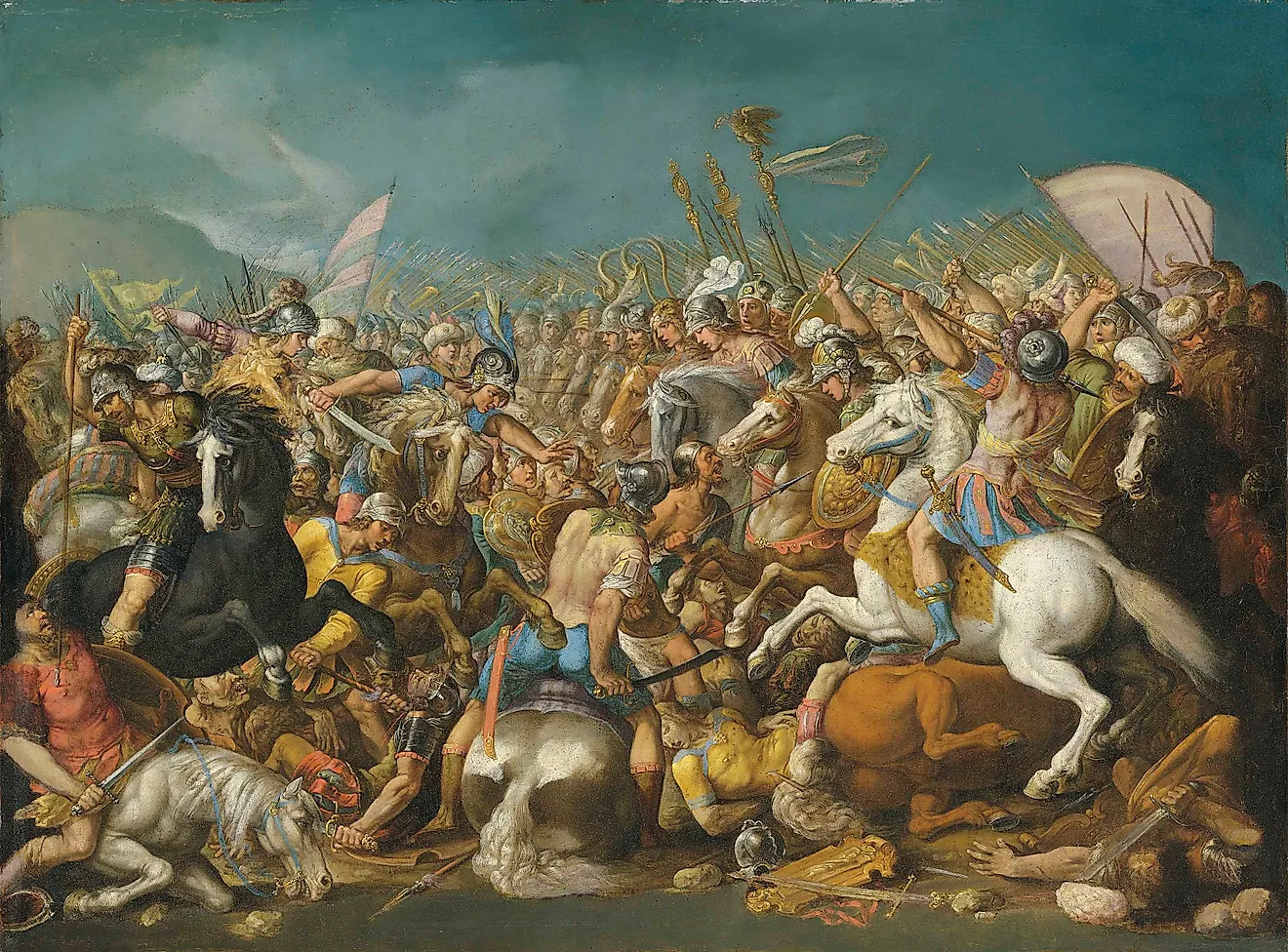
The Madjay were primarily used as shock troops on the battlefield. They would position themselves on the flanks of enemy formations either on horses or in chariots and carry out devasting charges that would often cause the enemy forces to panic and flee.
Not only were the Medjay vital contributors in the battle, but they also served as invaluable reconnaissance units that were used to scout ahead of the main Egyptian army and relay crucial information back to generals about the whereabouts of enemy armies and encampments.
Their time spent in the desert allowed them to move with stunning speed and could easily outrun or even harass other hostile scouting parties. Using their knowledge of the land around them they could forage for food with little difficulty and stay out in the field days or even weeks at a time.
Beyond the Battlefield

Although their prominence was during wartime, the Medjay also held a vital role in peacetime. As Egypt’s institutions grew, these soldiers became more essential for maintaining internal security and law enforcement throughout Ancient Egypt. Egyptian documentation regularly links the Medjay with discipline, dependability, and dedicated service to the state—traits that made them ideal for delicate security tasks.
In peacetime, the Medjay also functioned as a formal policing force. They were stationed in towns, temple complexes, and work sites, where they enforced order, protected state property, and oversaw laborers. Their authority derived from their official status rather than fear alone, and they operated as representatives of royal power rather than independent enforcers.
Police work in Ancient Egypt bore little resemblance to modern law enforcement. Instead of investigative policing, Medjay duties focused on visible control and prevention. This included patrols, guarding infrastructure such as granaries and tombs, intervening in disturbances, and ensuring compliance with state directives. Through these roles, the Medjay became an essential part of Egypt’s administrative and security system, maintaining order long after battles had ended.
From Nomads to City Folk

As the Medjay began to regularly intermingle with Egyptian society they gradually started to abandon their nomadic lifestyle in favor of the much cushier and easygoing path of city living. This did not all happen overnight but by the 18th Dynasty, the Medjay were used exclusively as a paramilitary force that was under the direct command of the pharaoh.
They were now tasked with protecting the pharaoh and guarding graveyards and other religious sites such as temples and shrines. For centuries, this prestigious position was held exclusively by the Medjay but by the 19th Dynasty, it was ruled that anyone, regardless of background could take on these roles.
By the 20th Dynasty lasting from 1189 BC to 1077 BC, mentions of the Medjay slowly faded from record and soon stopped completely. It is not entirely clear what happened but it is assumed by many historians that the majority of Medjay either assimilated into Egyptian society or the once near-sacred position of being a Medjay soldier lost its luster once the general population was allowed to participate.
Summary
The likely fate of the Medjay might seem exceptional but in fact, is the rule rather than the exception. Countless times throughout history nomadic people have come into contact with sedentary "civilized" folk only to seamlessly assimilate into their culture within a few generations.
Regardless, the legacy of the Medjay still lives on today in modern movies, art, television shows, and video games. Their reputation as being unwaveringly loyal and fierce warriors is something that will continue to be just one of the many captivating aspects of Ancient Egyptian society.