Ancient Weapons More Advanced Than Their Era
Ancient warfare often produced engineering that seems ahead of its time, shaped by societies under enough pressure to test new solutions quickly. The composite bow, for example, dominated battlefields across Eurasia for centuries before anyone could explain why its layered materials worked so well. That same pressure-driven ingenuity appears repeatedly in the ancient world, in weapons whose sophistication stood apart from the military norms of the time.
The Composite Bow (c. 2000 BCE)

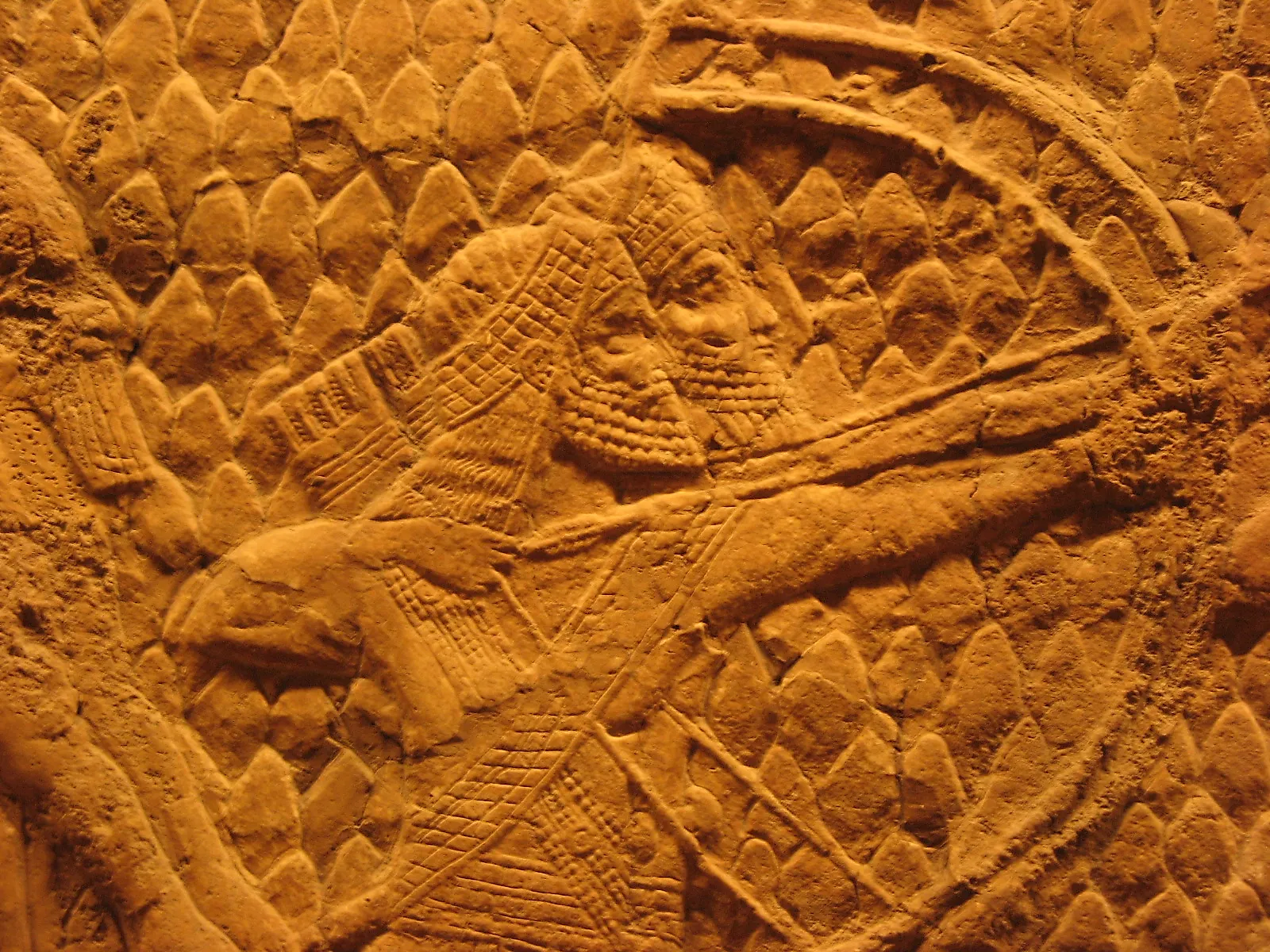
The full horn-wood-sinew composite bow likely originated in the Near East in the first half of the second millennium BCE and was later adopted and refined by Egyptians, Assyrians, Persians, and Scythians. Its laminated structure exploited the tensile strength of sinew on the back of the bow and the compressive strength of horn on the belly, anticipating principles that would not be formally explained until much later. The recurved shape stored more energy than a straight wooden bow of the same size, and the bow delivered far greater range and penetrating power.
The composite bow first transformed warfare from the chariot, not from horseback. The earliest physical evidence of the bow predates widespread mounted archery by roughly 500 years; equestrian archery as a battlefield practice did not emerge until the Iron Age. Once paired with the spoked-wheel war chariot, the composite bow gave Egyptian, Assyrian, and Mitanni armies a mobile platform that could deliver arrow fire at speed and at range. Several composite bows were recovered from the tomb of Tutankhamun, who died in 1324 BCE.
The composite bow is also one of the earliest known tools made from multiple bonded materials, and producing one was a craft in itself. The wood, horn, and sinew had to be matched, glued under tension, and cured slowly. A single bow could take more than a year to complete.
The Hittite Chariot (c. 1600 to 1200 BCE)

While chariots were widespread in the Bronze Age, the Hittites engineered a uniquely advanced version. The Hittite chariot placed the axle at the center of the carriage rather than at the rear, where the Egyptian and Mitanni designs had it. This put the crew's weight directly over the wheels, allowing the chariot to carry three men instead of two: a driver, a warrior, and a shield-bearer. The result was a heavier, less agile vehicle that could fight in two roles at once, with the warrior free to attack while the shield-bearer absorbed return fire.
To pull the heavier carriage, the Hittites bred larger horses. They also kept the wheels light, with four spokes rather than the six or eight common elsewhere, which helped offset the added weight.
At the Battle of Kadesh in 1274 BCE, fought in present-day Syria, Hittite chariots formed the core of the offensive force and initially routed two Egyptian divisions. The Egyptian army, with its lighter and faster two-man chariots driven by an archer-driver and a shield-bearer, regrouped and held the field. The battle ended in a stalemate and led to the first known peace treaty in history, signed about fifteen years later between Ramesses II and Hattusili III.
The Polybolos Repeating Catapult (3rd century BCE)

The polybolos was a torsion-powered repeating ballista attributed to Dionysius of Alexandria, a Greek engineer who worked in the arsenal at Rhodes in the 3rd century BCE. The engineer Philo of Byzantium (c. 280 to c. 220 BCE) later described the device in detail. It used a flat-link chain drive running over pentagonal sprockets to load, fire, and reset bolts in a continuous sequence; this is the oldest known application of a chain drive in the historical record.
The operator turned a windlass that drew the bowstring back. As the slider moved, a rotating roller in the magazine dropped a fresh bolt into the firing slot. When the slider reached the back of its travel, a trip mechanism released the bowstring, fired the bolt, and reset the cycle. A bolt could be loaded and shot every few seconds without the operator having to reach into the magazine.
Although the polybolos was complex and expensive to build, and there is little record of its widespread military use, it demonstrates that Hellenistic engineers were already working with repeating mechanisms and chain drives long before similar ideas reappeared in medieval and early modern Europe. Recent research at Pompeii has identified impact-mark clusters along the city walls that may date to the Roman siege of 89 BCE and that match the firing pattern Philo described.
The Gastraphetes (4th century BCE)

Often described as the ancestor of the crossbow, the Greek gastraphetes (literally "belly-bow") was a mechanical bow mounted on a stock and cocked by leaning the user's body weight onto a curved abdominal plate. Heron of Alexandria, writing centuries later, attributed the invention to Zopyros of Tarentum.
Unlike a hand-drawn bow, the gastraphetes allowed soldiers to load the weapon in advance and pull a heavier draw weight than the arms alone could manage. Because the body did the work of bending the bow, the operator could hold a tensioned shot until ready to fire. This made the weapon useful in 4th-century BCE sieges, where soldiers shooting from fortified positions needed accurate, powerful projectile fire that did not depend on continuous physical strain.
The gastraphetes marked the shift from handheld archery toward mechanical artillery in the Hellenistic world. Its limitation was the elastic limit of wood and horn, which capped the force a bow could store. That limit drove the next innovation: torsion catapults, which used twisted bundles of hair and sinew to generate far greater force than any bow could deliver.
The Chinese Repeating Crossbow (4th century BCE)

The Chinese repeating crossbow first appears in the archaeological record in the 4th century BCE. The earliest known example was excavated from Tomb 47 at Qinjiazui in Hubei Province, dating to the Warring States period. Two main forms developed: the early Chu-state pistol-grip type, and the later Zhuge crossbow, which is named for the Three Kingdoms strategist Zhuge Liang (181 to 234 CE). Despite the name, Zhuge Liang did not invent the weapon; the Records of the Three Kingdoms credits him with improving an existing design, producing a version known as the Yuanrong that fired ten iron bolts in a single volley.
The repeating crossbow used a top-mounted gravity-fed magazine and a single rectangular lever that combined the actions of spanning the bow, dropping a bolt into the firing channel, and releasing the string. A trained user could fire bolt after bolt with one hand, holding the weapon stationary while working the lever. The mechanical advantage came at a cost: the weapon was short-ranged and lacked the penetrating power of a single-shot crossbow. Bolts were often poison-tipped to compensate.
The repeating crossbow was suited to defensive use rather than open-field combat. Ming-dynasty texts describe it as a household weapon usable by civilians who lacked the strength or training to span a heavy military bow. The volume of fire it produced could also break up an enemy assault on a wall or gate, even when the individual bolts struck without much force. Versions of the weapon stayed in use into the late Qing dynasty in the 19th century.
Chinese Bronze Trigger-Lock Crossbows (Qin and Han, 3rd to 2nd century BCE)

Han Chinese armies used crossbows fitted with bronze trigger-lock mechanisms. Excavated examples from the Terracotta Army of the First Emperor Qin Shi Huang reveal precise standardization: the trigger components are interchangeable across different weapons, indicating organized batch production at scale.
The bronze trigger assembly was typically a three- or five-piece lock that allowed soldiers to hold a fully drawn bow under tension without keeping manual force on the string. This had several advantages. The shooter could aim deliberately rather than fire as quickly as possible, which improved accuracy. The mechanical lock also meant that less physical strength and less training were needed to operate the weapon.
Standardized bronze trigger components are an early case of military mass production. The accuracy, reliability, and large-scale supply of these crossbows contributed to the Han dynasty's military dominance in East Asia.
Wootz Steel Blades and Damascus Steel (mid-1st millennium BCE onward)
Wootz was a high-carbon crucible steel produced in southern India and Sri Lanka, made by sealing iron with carbon-rich material such as charcoal in clay crucibles and heating the mixture to the melting point. Archaeological evidence places production by at least the mid-1st millennium BCE; excavations at Kodumanal in Tamil Nadu have yielded crucible fragments and metallurgical remains from roughly the 3rd century BCE onward. Wootz ingots later supplied the material for many of the blades known in later literature as Damascus steel, named for the Syrian city where Crusaders encountered them.
Modern metallurgical study links the distinctive watered surface of true wootz and Damascus blades to carbide banding and related microstructures formed during slow solidification, cooling, and forging. The technique produced a steel that was hard, held an edge well, and showed a patterned grain that gave the blades their reputation in trade and in legend.
Wootz remained highly prized for centuries and circulated through Indo-Arab trade routes into the Middle East, where smiths forged it into the patterned blades that became famous in Europe after the Crusades. The traditional crucible methods behind the most prized Damascus blades were eventually lost in the early modern period, which only added to the steel's mystique.
Pressure, Materials, And The Engineering Of Ancient War
These weapons, including composite bows, repeating catapults, crossbows, and high-grade steel, show how ancient societies developed military technology that stood apart from the norms of their time. Each was a direct response to a battlefield problem. The polybolos answered the demands of siege warfare; the composite bow gave chariot armies range and mobility; the three-man Hittite chariot countered Egyptian shock tactics. Together, these weapons show how ancient societies applied design, materials, and mechanical skill to solve immediate problems in ways that would influence warfare long after the original craft was lost.