9 Abandoned Ancient Cities You Can Still Visit Today
Abandoned ancient cities are the kind of places that make you take history seriously. Petra in Jordan was carved straight into sandstone cliffs by a desert civilization that all but vanished before a Swiss explorer rediscovered the city in 1812. Pompeii in Italy was buried under volcanic ash in a single afternoon and preserved nearly intact beneath it for more than 1,500 years. Volubilis stood as a Roman provincial capital in what is now Morocco. Each of these nine cities was once a center of trade, religion, or government, and each was eventually emptied by some combination of war, disaster, and changing political tides. They remain open to visitors today, which means anyone with a passport can walk the streets that locals abandoned a thousand or more years ago.
Petra, Jordan

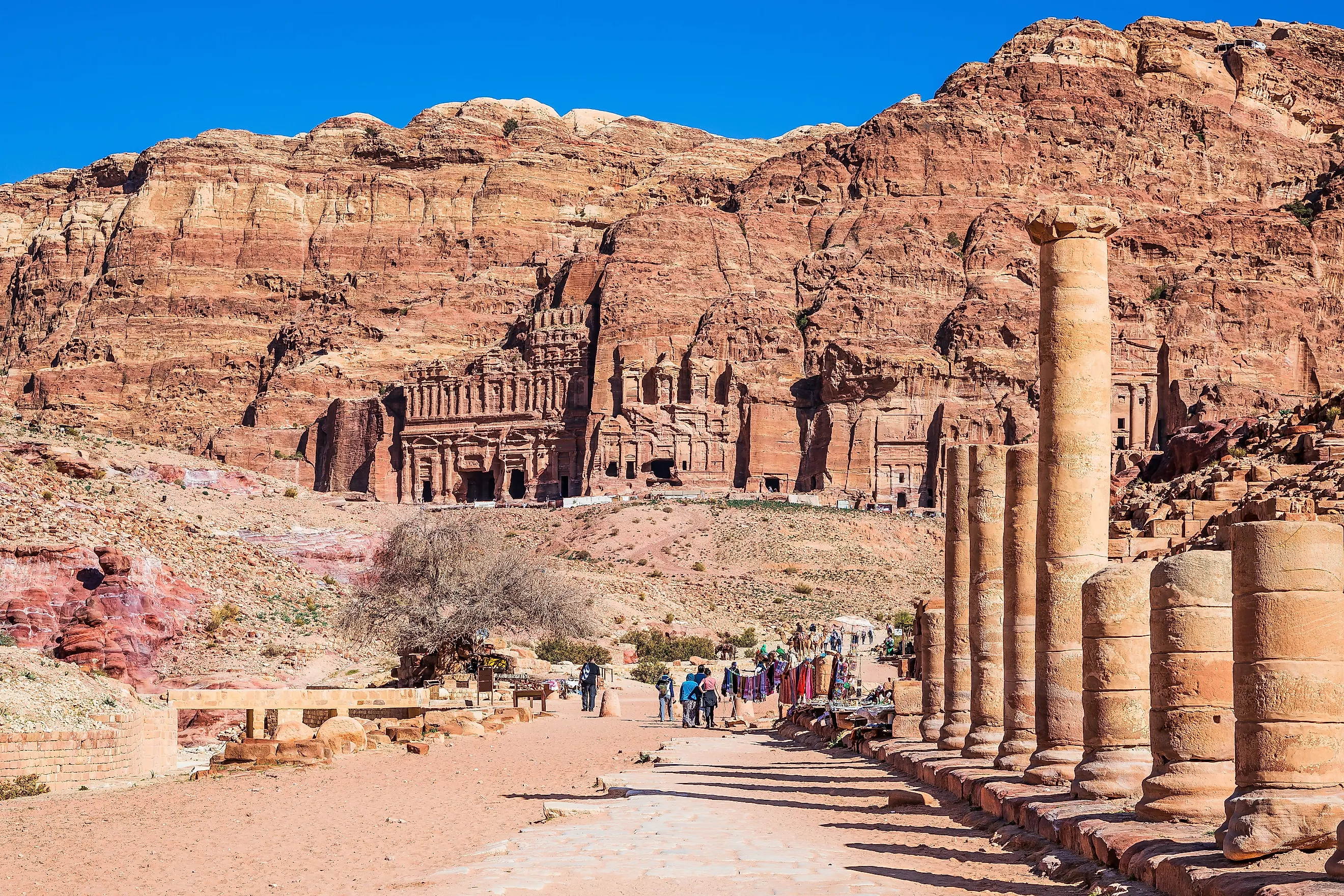
Petra, sometimes called the Rose Red City for the color of the sandstone its monuments were carved from, was the capital of the Nabataeans. The Nabataeans were an Arab people who inhabited the northern Arabian deserts from at least the 4th century BCE, originally as nomadic merchants who built fortunes on the long-distance caravan trade in frankincense and spices. At some point they shifted to settled life and began carving the elaborate facades, tombs, and temples that make up Petra today. They survived in an arid landscape by engineering an extensive system of rock-cut channels, ceramic pipes, and underground cisterns that captured runoff and spring water. The architecture itself blends Arabian, Hellenistic, Egyptian, and Roman influences, with classical columns, pediments, and statues all carved directly out of cliff faces by hand.
Two earthquakes (in 363 CE and 551 CE) damaged much of the city's infrastructure, particularly the water system, and Petra slowly emptied. By the 700s CE it was essentially abandoned to local Bedouin tribes, who knew the location for the next thousand years while the rest of the world forgot it. The Swiss explorer Johann Ludwig Burckhardt rediscovered the city for the West in 1812 by hiring a guide under the pretext of wanting to make a sacrifice at a tomb in the area. Petra was named one of the New Seven Wonders of the World in 2007, and most modern visitors begin their tour by walking through the Siq, a narrow natural gorge that opens dramatically onto the Treasury (the elaborate facade made internationally famous by Indiana Jones and the Last Crusade). The Street of Facades, the Roman Theater, and the 800-step climb up to Ad Deir, the largest monument in the city, are all worth the time.
Jerash, Jordan

North of Petra, Jerash offers some of the best-preserved Roman provincial ruins in the Middle East. The city was once part of the Decapolis, a league of ten Greco-Roman cities, and reached a population of roughly 20,000 by the third century CE. A combination of factors brought Jerash down: the gradual decline of the Roman Empire, a Sassanian Persian invasion in 614 CE, the Muslim conquest in the 630s, and finally a devastating earthquake in 749 CE that flattened much of the city. By the 13th century Jerash was deserted.
The ruins now attract visitors from around the world. The Arch of Hadrian, built to commemorate the emperor's visit in 129-130 CE, stands at the southern entrance to the site. The Hippodrome hosted chariot races and athletic events. The Oval Plaza, a colonnaded forum ringed with Ionic columns, is one of the most distinctive surviving public spaces from the Roman world. The Sanctuary of Zeus rises in terraced levels with temple columns reaching about 15 meters tall. The Temple of Artemis, dedicated to the patron goddess of Jerash, anchors the religious center, and the North Theater (originally an odeon for civic meetings) was later used for performances.
Pompeii, Italy

Pompeii, in Italy's Campania region, was originally settled in the 7th or 6th century BCE by the Oscans, a people indigenous to central and southern Italy. After the Social War of 91-87 BCE, the city was incorporated into the Roman state and its inhabitants gradually adopted Latin and Roman citizenship. The combination of fertile volcanic soil, a strategic position on the Bay of Naples, and proximity to Rome made Pompeii prosperous, and a wave of luxury villas and public buildings followed. A major earthquake hit the city in 62 or 63 CE, prompting an extensive rebuilding effort that was still underway when the much larger disaster came.
In late summer or autumn of 79 CE (long held to be August 24, but recent evidence from a graffito found in 2018 points more strongly to October), Mount Vesuvius erupted catastrophically. Hot ash and pumice rained down on Pompeii for hours, eventually burying the city under up to 20 feet of debris. The next morning, fast-moving pyroclastic surges (clouds of superheated gas and ash) swept through the streets at temperatures around 250°C, killing anyone who had not already fled. When excavations began in earnest in 1748, archaeologists found bread still in ovens and the body-shaped voids in the hardened ash where Pompeii's victims had died. By pouring plaster into these cavities, they were able to create approximately 1000 casts that capture the final positions of the dead, including families huddled together and a guard dog still chained to a wall. Pompeii was rediscovered as early as 1599 by an architect named Domenico Fontana, but real excavation did not begin until the 18th century. Visitors today can walk the Stabian and Forum Baths, the Teatro Grande and Teatro Piccolo, and the Pompeii Amphitheater, which (built around 70 BCE) is the oldest known stone Roman amphitheater in the world.
Herculaneum, Italy

About 11 kilometers from Pompeii sits Herculaneum, named after Hercules in Roman tradition. Smaller and wealthier than its more famous neighbor, Herculaneum was a coastal retreat for Roman elites. The Villa of the Papyri, the largest residence in town, is widely believed to have been owned by Lucius Calpurnius Piso Caesoninus, Julius Caesar's father-in-law. When Vesuvius erupted in 79 CE, Herculaneum was buried under about 20 meters of pyroclastic material, far deeper than Pompeii. The depth and the rapid sealing preserved organic materials that were destroyed elsewhere: wooden beams, furniture, doors, food, and the only surviving library of papyrus scrolls from the ancient world.
For centuries, scholars assumed Herculaneum's residents had escaped because so few bodies were initially found. Excavations starting in the 1980s changed that picture dramatically when the remains of more than 300 people were discovered in the boat sheds along the ancient shoreline, where they had gathered hoping to escape by sea. Herculaneum was rediscovered in 1709 and only about a quarter of the city has been excavated, since the modern town of Ercolano sits directly on top of the rest. The Baths of Herculaneum still feature original frescoes and marble finishes. The House of the Atrium has elaborate geometric floors. The House of Neptune and Amphitrite preserves a vivid wall mosaic that still reads as if it were finished last week. An ancient Roman boat, charred but largely intact, sits near the boat sheds where so many of the city's last residents died.
Volubilis, Morocco

The site of Volubilis, in modern Morocco, was inhabited for centuries before its formal founding as a city in the 3rd century BCE. The Berber kingdom of Mauretania ran the region under King Juba II, a scholar-king educated in Rome who turned Volubilis into a thriving political and cultural center. After the assassination of his son Ptolemy by Caligula in 40 CE, the emperor Claudius annexed Mauretania for Rome in 44 CE and divided it into two provinces. Volubilis became the capital of Mauretania Tingitana, the western province, and the city flourished through the first two centuries of imperial rule. Roman administration withdrew from Volubilis in 285 CE under pressure from Berber tribes; the city continued to be inhabited but in a much-reduced form. Idris I founded the Idrisid dynasty there in 788 CE, briefly reviving Volubilis as an Islamic center, but by the 11th century it was abandoned. The 1755 Lisbon earthquake collapsed many of the remaining structures.
Visitors today can walk the streets where Berber kings, Roman administrators, and centurions once lived. The mosaics in the House of the Labours of Hercules depict the twelve labours in clear narrative panels and have been preserved in remarkable condition. The Triumphal Arch, built in 217 CE to honor the emperor Caracalla, stands at the head of the main street. The Capitoline Temple still holds its Corinthian columns. Volubilis became a UNESCO World Heritage Site in 1997.
Dougga, Tunisia

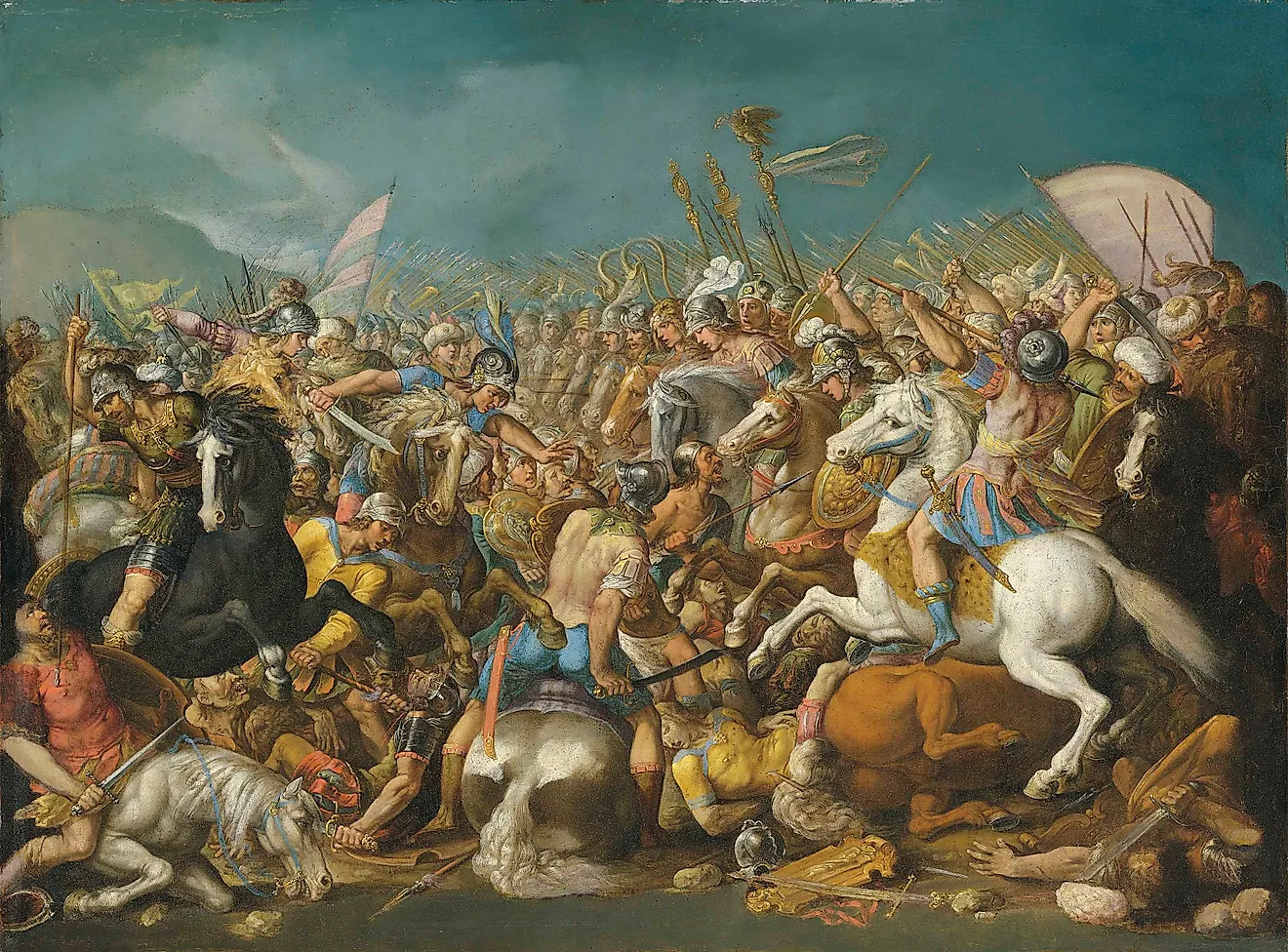
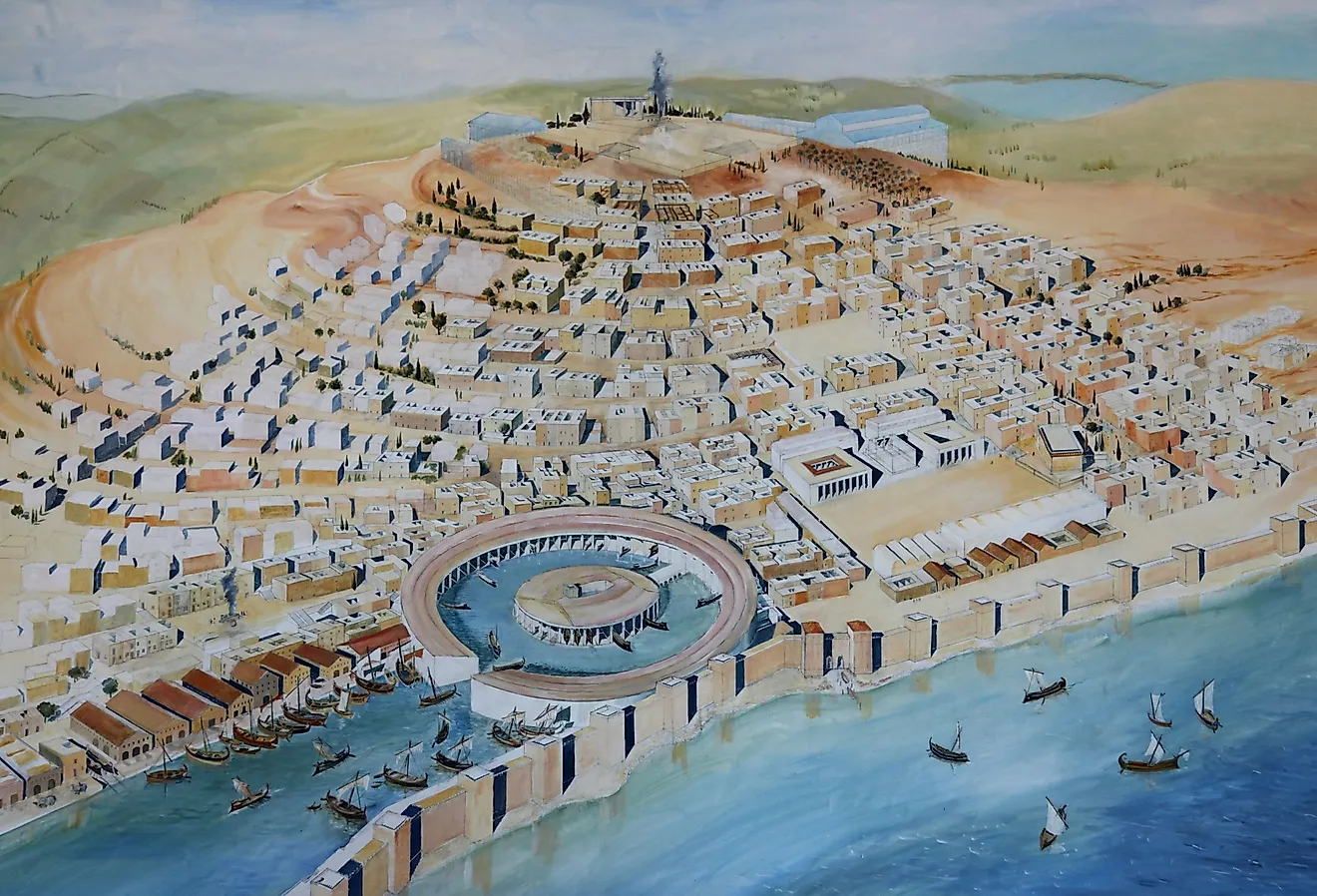
Dougga (ancient Thugga) was founded by the Numidians, possibly as early as the 6th century BCE, and grew into a wealthy regional center under King Masinissa, who ruled Numidia from 202 to 148 BCE. Masinissa was a critical Roman ally during and after the Second Punic War (218-201 BCE), and Numidia retained considerable independence until the conflict between Caesar and Pompey in the 1st century BCE; Caesar defeated Juba I (a Pompey supporter) at the Battle of Thapsus in 46 BCE and absorbed Numidia into the Roman state. Under Roman rule, Dougga prospered and acquired most of the monumental architecture that survives today. The city's prosperity began declining in the 4th century CE. Dougga survived the fall of the Roman Empire, was taken by the Vandals in the 5th century, reconquered by the Byzantine Empire under Belisarius in the 6th century, and gradually abandoned during and after the Arab conquest of North Africa beginning in the 7th century.
Dougga was rediscovered in the 17th century, with serious archaeological work starting in the 19th century. The site has been a UNESCO World Heritage property since 1997. The forum is well preserved and includes the Capitol building (dedicated to Jupiter, Juno, and Minerva) and several smaller temples. The Temple of Saturn drew worshipers asking for protection and good harvests. The Temple of Juno Caelestis was built in honor of Juno, queen of the Roman gods. The Roman theater, cut into the hillside, still has its stone seating. The Libyco-Punic Mausoleum, with bilingual inscriptions in Punic and Numidian, is one of the most important pre-Roman monuments in North Africa.
Pergamon, Türkiye

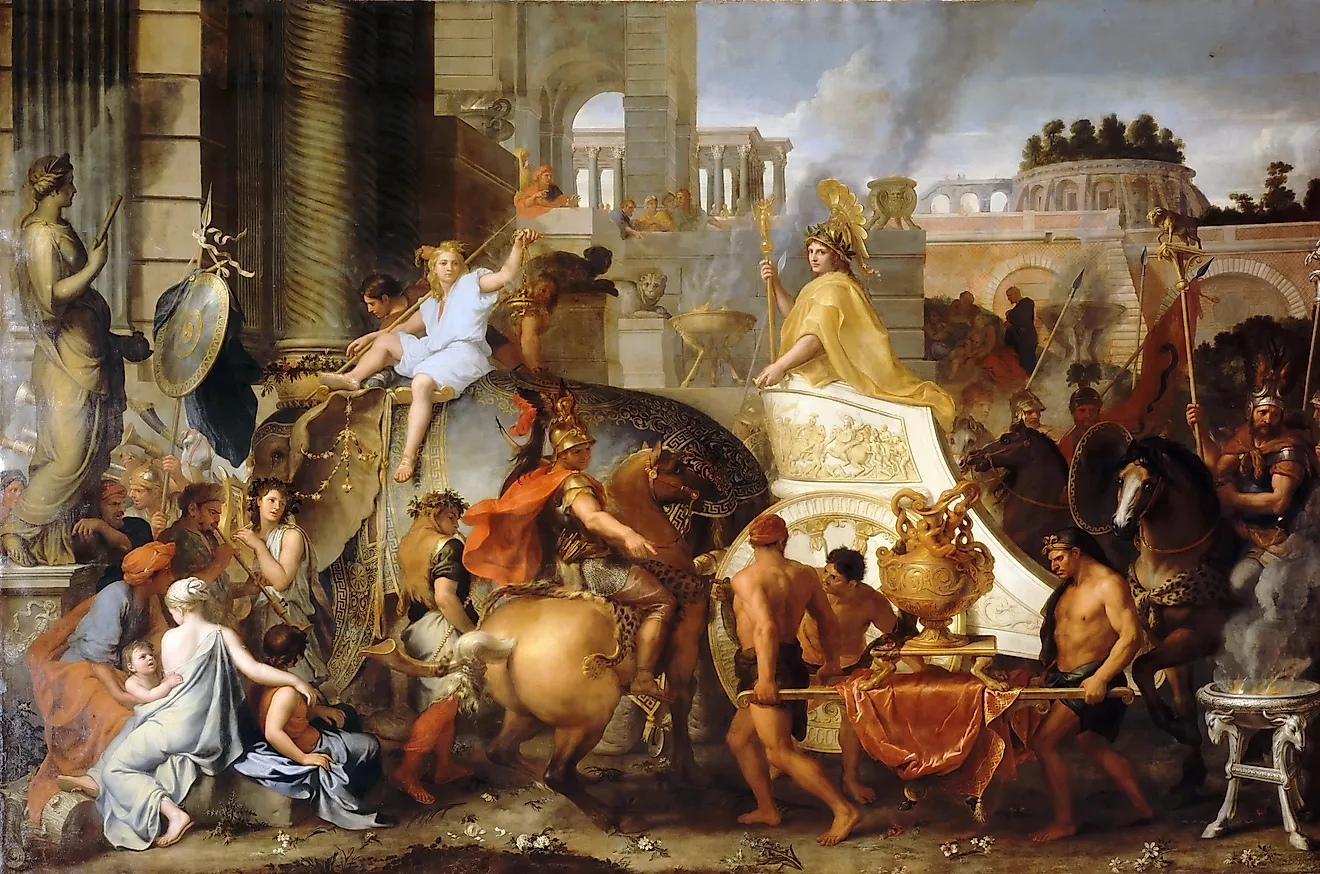
Pergamon was built on a steep hill in what is now western Türkiye and rose to importance after the death of Alexander the Great in 323 BCE, when his generals divided up his empire and Pergamon became the seat of the Attalid dynasty. From its location near the Aegean Sea at the edge of the Hellenistic world, Pergamon emerged as a major center of art, architecture, and learning. When King Attalus III bequeathed the kingdom to Rome upon his death in 133 BCE, Pergamon became a Roman provincial capital, and the city expanded with new public buildings, the Roman theater, and an aqueduct. The Asclepieion, a healing sanctuary established in the 4th century BCE, was greatly expanded under Roman rule into one of the most important medical centers in the ancient world.
The ancient acropolis of Pergamon was eventually abandoned, though the modern Turkish city of Bergama still occupies the surrounding lowlands today and has a population of around 65,000. The acropolis ruins lie about 25 kilometers from the Aegean and rise dramatically against the surrounding landscape. The acropolis includes the foundation of the Great Altar of Pergamon (the friezes themselves are now in Berlin's Pergamon Museum), the Temple of Athena dedicated to the city's patron goddess, the Temple of Trajan, and the remains of the famous Library of Pergamon, which once held an estimated 200,000 papyrus and parchment scrolls and was supposedly given to Cleopatra by Mark Antony. The dramatically steep Roman theater, cut into the hillside at a 70-degree angle, is the steepest known theater in the ancient world.
Teotihuacán, Mexico

Teotihuacán was one of the largest cities in the ancient Americas, and the identity of the people who built it remains an open question among archaeologists. The Aztecs gave the ruins their current name (meaning roughly "the place where the gods were created") when they encountered them more than a thousand years after the city's collapse. The original builders may have been Totonacs, Otomi, Nahuas, or some combination of Mesoamerican groups; one theory holds that volcanic eruptions farther south displaced populations into the Teotihuacán Valley, where they founded or expanded the city around 100 BCE. At its peak in roughly 450 CE, Teotihuacán covered about 8 square miles and held an estimated population of 100,000 to 200,000 people, which would have made it one of the largest cities in the world at the time.
The city was laid out on a strict grid oriented around the Avenue of the Dead, a 3.2-kilometer ceremonial road that runs roughly north-south and aligns with Cerro Gordo to the north. The Pyramid of the Moon stands at the northern end of the avenue. The Pyramid of the Sun, the largest structure in the city, rises 216 feet from a base measuring about 720 by 760 feet, making it one of the largest pyramids in the world. By around 550-600 CE, much of the city's monumental core was deliberately burned and many of its sculptures defaced; whether this was the result of an internal uprising, an outside invasion, or social collapse from prolonged drought is still debated. By 750 CE, the city was effectively empty. Visitors today can climb the Pyramid of the Sun, walk the Avenue of the Dead, view the Paradise of Tlaloc fresco at the Tepantitla compound, and see the elaborate carvings on the Temple of the Feathered Serpent (Quetzalcóatl).
Conimbriga, Portugal

By the time Roman armies reached the central Iberian Peninsula in the 2nd century BCE, the site of Conimbriga had already been continuously inhabited for more than 700 years. Iron Age Castro communities held the area until Roman general Decimus Junius Brutus campaigned through the region around 138 BCE, after which Conimbriga was incorporated into the Roman province of Lusitania. The town flourished through the early imperial period and acquired a forum, a substantial bath complex, an aqueduct, and a network of elite houses with elaborate mosaic floors. When Suebi raids hit the city in 465 and 468 CE, residents responded by hastily building a defensive wall straight through the middle of the city, sacrificing some of the finest residential blocks in the process. When the city's water supply was eventually cut, the remaining population fled. After the Moorish conquest of Iberia in 711 CE, Conimbriga's bishop relocated to nearby Aeminium (modern Coimbra) and the old town was effectively abandoned.
The mosaics that lay buried for centuries are now the centerpiece of the site. The House of the Fountains (Casa dos Repuxos) holds some of the most intact mosaic floors in the Roman world, depicting hunting scenes, mythological figures, and abstract patterns. The Casa de Cantaber was the largest urban residence in Conimbriga, with its own private bath complex and gardens that still show the bases of decorative fountains. Visitors can also see the public Roman baths and walk through the late Roman defensive wall that was built right through the heart of what had been a thriving city.
Walking Through Empires That Are No Longer There
What ties these nine sites together is not the way they ended (each fell for its own combination of reasons) but the fact that the people who built them did not expect their cities to be empty a thousand years later. Petra's hydraulic engineers, Pompeii's bakers, Pergamon's librarians, Teotihuacán's pyramid builders, and Conimbriga's mosaic artists were planning for tomorrow, the way every civilization does. Visiting these places in person tends to leave a different impression than reading about them. Modern cities, including the ones we live in, follow the same pattern. The streets are interesting precisely because they were once full of people doing what we are doing today.