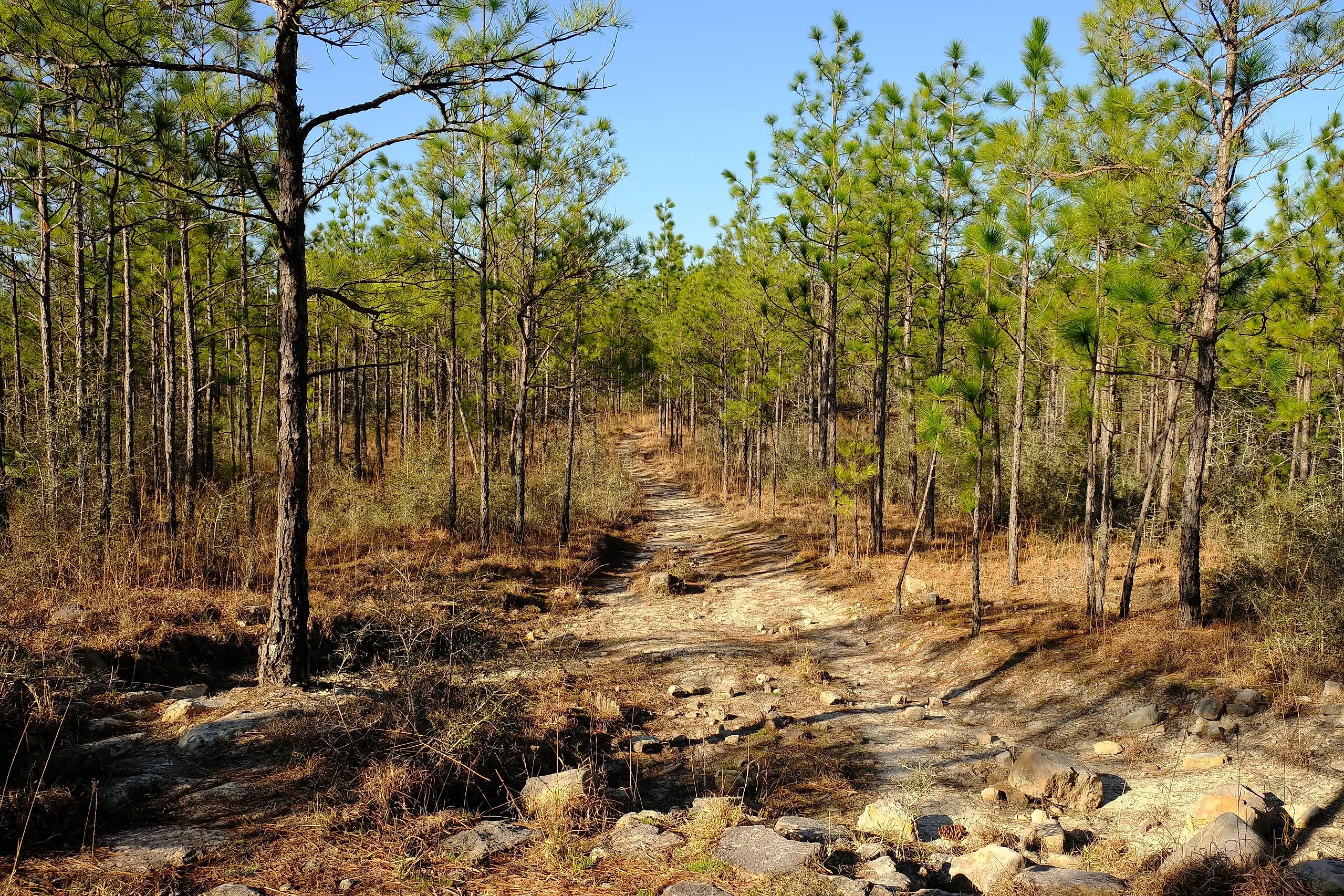
Where To Find The Last Old-Growth Longleaf Pine Left In America
Old-growth longleaf pine trees (Pinus palustris Mill) are in steep decline, and only three percent of their historical range remain. Longleaf pines as a whole are in short supply, with only two million acres of their once massive range remaining, but an even fewer number of these trees are old-growth. When all is said and done, as few as 12,000 acres of old-growth longleaf could be left in the US, scattered across the southern United States.
Conservation efforts are underway to aid in regrowth, but efforts are slow. American Forests is working on several projects with various partners to restore longleaf forests and protect current populations. These collaborative forest landscape restoration projects are planting longleaf pines near Charleston, South Carolina to restore longleaf trees to their native habitat.
What Happened to the Old-Growth Longleaf Pines

These slow-growing trees produce strong wood and grow consistently straight, which made them ideal for building materials. These trees were made into ship masts, telephone poles, construction beams, and more.
Between the 1880s and the 1920s, these aging giants were harvested in huge numbers. By the 1930s longleaf numbers were already at a fraction of their once healthy size. Recognizing the importance of this tree for the ecosystem as well as for human use, foresters began to take action to help preserve the longleaf for future generations.
But despite good intentions, the two initial policies enacted to protect these trees hurt them more than they helped them. The first policy was to rely on other species for construction, like slash and loblolly pines. While this saved longleaf pines from harvest, it also meant the tree was no longer in demand and wasn't replanted through thoughtful or sustainable practices.
The second policy was the suppression of fire by the U.S. Forest Service in the early and mid-20th century. This can sound counterintuitive, but longleaf pines require periodic ground fires to be able to compete with surrounding wildlife, and vegetation. These fires are a part of this ecosystem, and without them, longleaf pines can't compete and grow to their full potential.
Where to Find Longleaf Pines

Old-growth longleaf pines can be found scattered through the tree's original range. These trees can be found across the Southern US, from southeastern Virginia to central Florida, and further west as far as eastern Texas. This particular range once included as many as 60 million acres of longleaf pines, and while far fewer individuals remain standing today, this is still the best range to try and find longleafs. The trees rely on fire-dependent ecosystems and a range of conditions, including low, wet flatwoods that are found along the US coast and dry mountainous conditions along slopes and ridges in states like Alabama and Georgia.
Ecological Benefits of Longleaf Pines

The decimation of longleaf pines doesn't just impact the tree's population and construction materials; it is also detrimental to the ecological landscape. Longleaf pines support surrounding biodiversity with nearly 600 different species associated with ecosystems dependent on the longleaf pine.
Half of those species are considered rare, and more than 100 of them are classified as at-risk. Additionally, 30 of the species associated with longleaf pine ecosystems are threatened or endangered. Some of these species include red-cockaded woodpeckers, indigo snakes, gopher tortoises, and flatwoods salamanders.
Longleaf pines also provide erosion control and are able to grow where other species of pine can't, like in sandy and dry areas, on steep slopes, or in areas with infertile soil. They are also durable and can easily withstand storms better than other southeastern pines. This is critical as climate change continues, since they are well-suited and ready to stand up against extreme weather and evolving climates.
Saving the Last Old-Growth Longleaf Pines

There were once 90 million acres of old-growth longleaf pines across the entirety of the US. Now, the forests that once could have covered the entire area of the state of Montana can only cover half of the largest city in the state. But these trees can recover. While old growth takes centuries to rebuild, protecting current individuals and planting new ones is a good start. This species once hit a historical low of 3.2 million acres but has since rebounded to 5.2 million acres. While this growth is a small start, it shows that recovery is possible.