The Last Ash Trees The Emerald Borer Has Not Reached
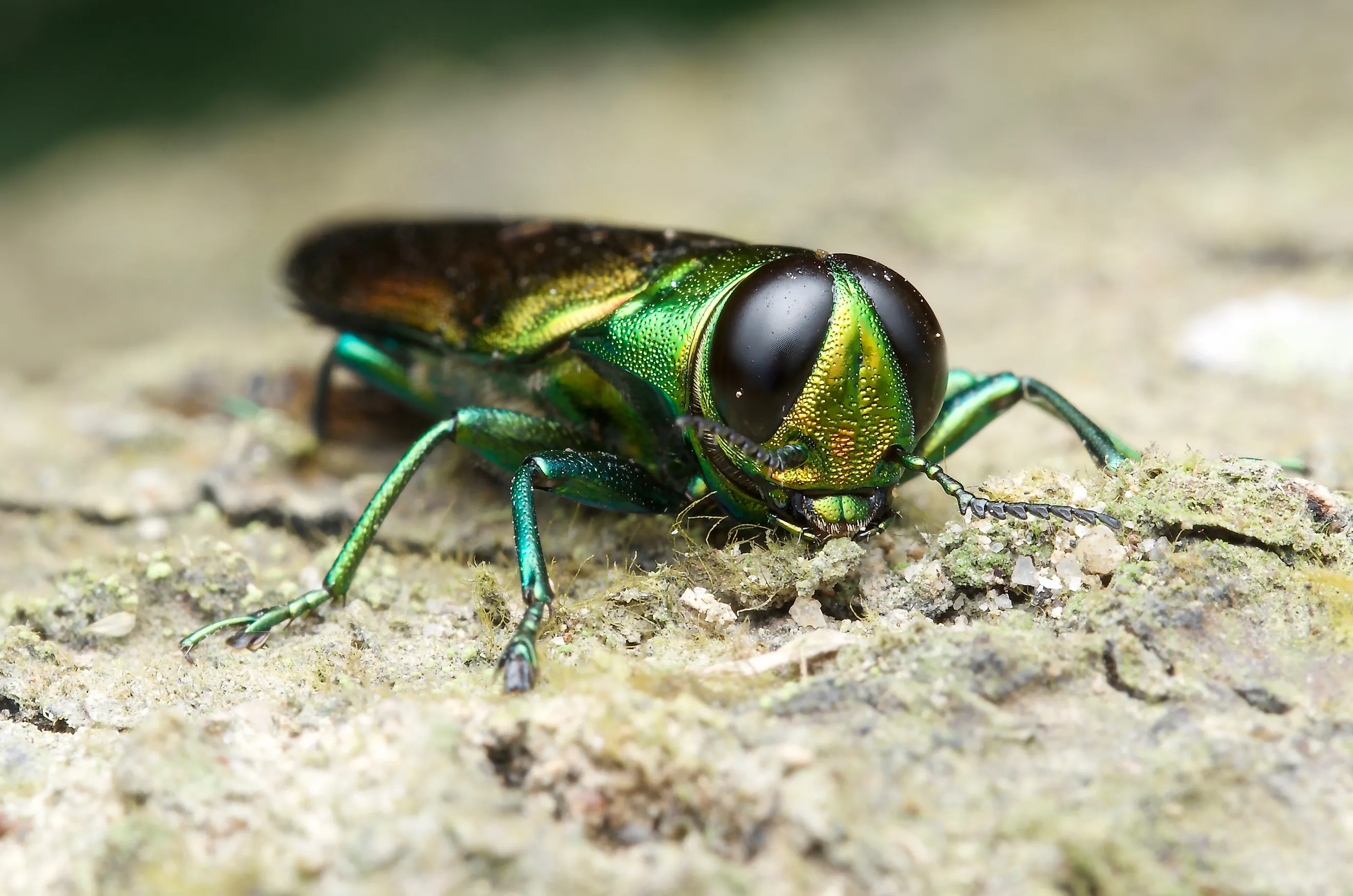
Minnesota has nearly one billion ash trees, and many in its northern forests have yet to encounter the emerald ash borer. The metallic-green beetle, first discovered in the United States in 2002, has killed hundreds of millions of ash trees across North America, leaving dead trunks and thinning canopies in its wake. Its larvae tunnel beneath the bark, destroying the tissues that transport water and nutrients through the tree. Yet the insect has not reached every American forest. Large areas of northern Minnesota, parts of Maine, and forests in the South and West still contain ash trees outside known infestation zones. Meanwhile, researchers in Ohio and Michigan have identified rare survivors that may carry the genetic defenses needed to help restore the species.
Where The Beetle Has Not Established Itself

Florida remains one of the eastern states without a confirmed emerald ash borer infestation. The Florida Department of Agriculture and Consumer Services continues to monitor for the insect because native ash species grow in the state, particularly in wetland and floodplain habitats.
Neighboring Mississippi had also remained free of confirmed infestations until July 2025, when the beetle was discovered in Issaquena County. As of August 2026, Mississippi State University Extension reported that the insect had been confirmed in only that county. The discovery illustrates how an area can move from apparently unaffected to infested in a short period.
Farther west, Oregon's native ash trees face a newer threat. Emerald ash borer was first detected near Forest Grove in 2022, marking its arrival on the West Coast. By 2026, infestations had been confirmed in five counties in the northern Willamette Valley. Oregon ash commonly grows along rivers, streams, and wetlands, and many populations outside the known infestation area remain at risk.
An absence of confirmed detections does not guarantee that every ash tree in these regions is free of the insect. Emerald ash borer populations can remain difficult to detect for several years because early damage occurs beneath the bark.
Northern Minnesota's Remaining Ash Forests

Northern Minnesota contains some of the largest remaining concentrations of black ash trees in the United States. These trees thrive in wetlands, where their roots help regulate water levels and their canopies support wildlife habitat. In some areas, black ash makes up nearly the entire forest canopy, making these woodlands particularly vulnerable to the emerald ash borer.
Although the beetle was first detected in Minnesota in 2009, its expansion into northern forests has been slower than in the southern part of the state. A 2025 assessment found that only about 2% of ash stands managed by the Minnesota Department of Natural Resources were in generally infested areas. By September 2026, however, the insect had been confirmed in 62 of Minnesota's 87 counties.
The state's northwestern corner and portions of its northern boreal forests have remained outside known infestation zones. Cold weather helps slow the insect's development, but does not provide complete protection. Researchers have found that temperatures around -30°F can kill approximately 90% of emerald ash borer larvae, although surviving insects can continue reproducing.
Losing black ash could also change the landscape itself. Without mature trees drawing water from the soil, wetlands may become wetter and eventually transition into marshes or shrublands. Forest managers are experimenting with planting other native tree species before the beetle arrives to help maintain forest cover.
Maine's Uninfested Black Ash Trees

Maine's black ash forests face a similar threat, although the trees have an additional cultural significance. Black ash, also called brown ash in the region, has been used by Wabanaki basketmakers for generations. The wood's annual growth rings can be separated into flexible strips, making it particularly suitable for traditional basket weaving.
The emerald ash borer was first detected in Maine in 2018, with infestations initially discovered in Aroostook and York Counties. Since then, the beetle has spread into other parts of the state, although substantial areas remain outside confirmed infestation zones.
In July 2026, Maine Forest Service traps detected the insect in Jackman. Another infestation was reported in Surry the following month, prompting an expansion of the state's quarantine areas. The Ash Protection Collaboration Across Waponahkik brings together Wabanaki communities, researchers, government agencies, and other partners to locate healthy ash stands, collect seeds, and preserve basketmaking traditions. Seed banking is particularly important because a tree growing in an uninfested area is not necessarily resistant to the beetle.
Ohio's Lingering Ash Trees Offer A Different Kind Of Hope

Some of the most important surviving ash trees are found in places where the beetle has already killed nearly all their neighbors. Researchers call these specimens "lingering ash" because they remain alive years after an infestation has devastated the surrounding forest.
Kathleen Knight, a research ecologist with the U.S. Forest Service in Delaware, Ohio, has spent more than two decades studying ash mortality and identifying these unusual survivors. Working with Jennifer Koch and other researchers, Knight has helped investigate whether their survival is associated with inherited resistance.
In January 2026, researchers published findings showing that certain lingering white and green ash trees possess measurable, heritable defenses against emerald ash borer larvae. Some trees killed a greater proportion of larvae or restricted their development compared with susceptible ash trees.
This distinction matters because surviving an infestation does not necessarily mean a tree has avoided the beetle. Some lingering ash trees appear capable of tolerating or resisting attacks that kill others. Blue ash has also demonstrated greater survival than several other North American ash species, although it is not immune to infestation.
Researchers are using grafting, controlled breeding, and greenhouse testing to determine whether resistance can be passed to future generations. The findings support the possibility of breeding more resistant trees, but do not yet amount to a proven method for restoring entire ash forests.
What Happens After The Ash Trees Die?

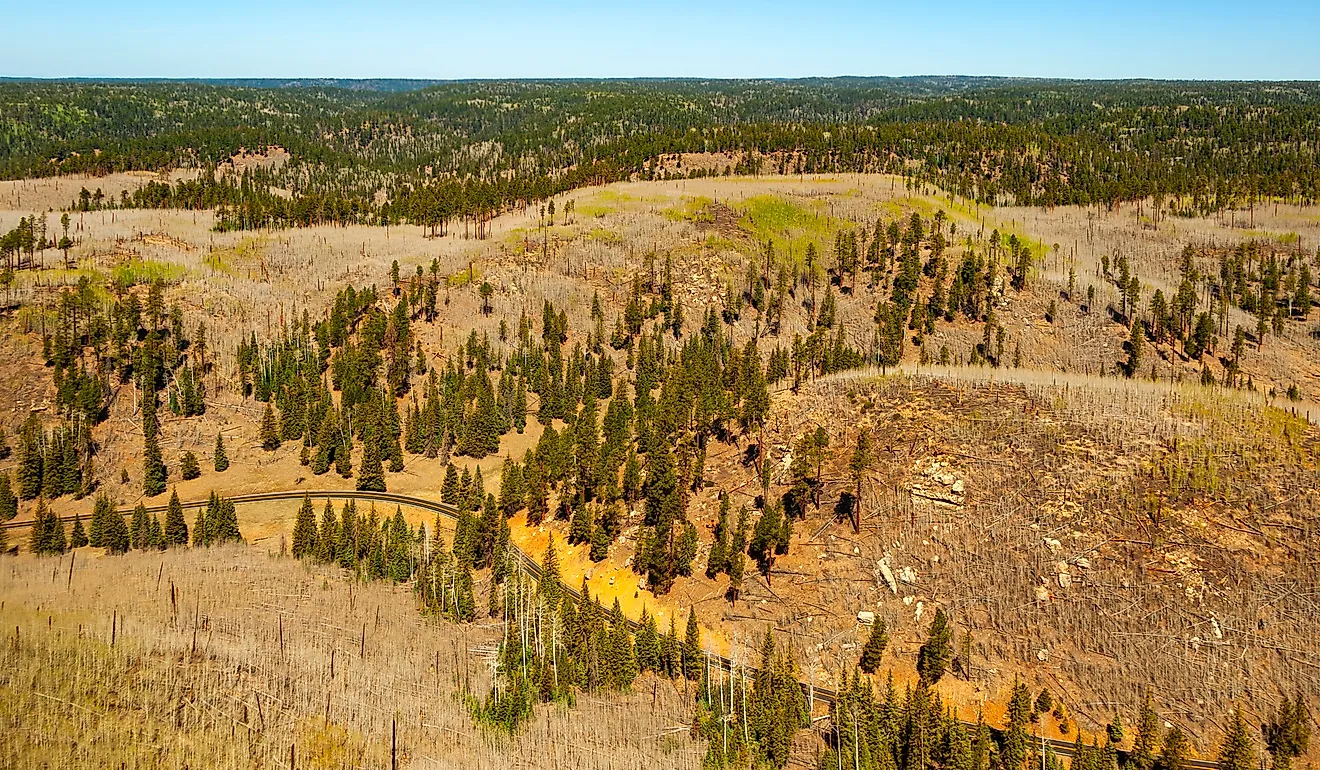
The effects of emerald ash borer are already visible in forests around Washington, D.C. The National Park Service estimated that its National Capital Region parks once contained approximately 300,000 ash trees. By 2023, only about 42,000 living adult trees remained.
There are signs of regeneration. National Park Service monitoring published in 2025 documented increasing numbers of ash seedlings and saplings, including green and pumpkin ash growing from surviving root systems in wetland environments. However, these young trees may become vulnerable as their trunks grow large enough to support beetle larvae.
In managed forests, the response can involve timber harvesting and planting replacement species. Unlike national parks, national forests are managed by the USDA Forest Service for multiple uses, including timber production and recreation. Removing selected trees and establishing other native species can help preserve forest cover where ash mortality threatens to leave large openings.
The Forest Service is also studying biological controls, including parasitic wasps that attack emerald ash borer eggs or larvae. These efforts are intended to reduce beetle populations rather than eliminate the insect entirely.
Preventing The Spread Into Remaining Ash Forests
One of the greatest risks to uninfested forests comes from transporting firewood. Emerald ash borer larvae can survive beneath the bark of cut logs, allowing the insect to travel far beyond the distance it would ordinarily fly. For campers, the simplest precaution is to purchase firewood near the campsite and leave unused wood behind rather than transporting it elsewhere.
Infestations can also be identified through D-shaped exit holes in bark, winding S-shaped tunnels beneath the surface, thinning branches, and patches where woodpeckers have stripped away bark to reach larvae. These symptoms are not all exclusive to emerald ash borer, so suspected discoveries should be reported to state forestry officials or the USDA for confirmation.
There are still substantial populations of American ash trees the emerald ash borer has not reached, particularly in northern wetlands and parts of the insect's expanding western range. Their survival depends on how quickly the insect spreads and whether forest management, biological controls, and resistance breeding can limit its effects. The rare trees already surviving established infestations may prove just as important as those the beetle has yet to encounter.