The National Forests With The Most Snapping Turtles
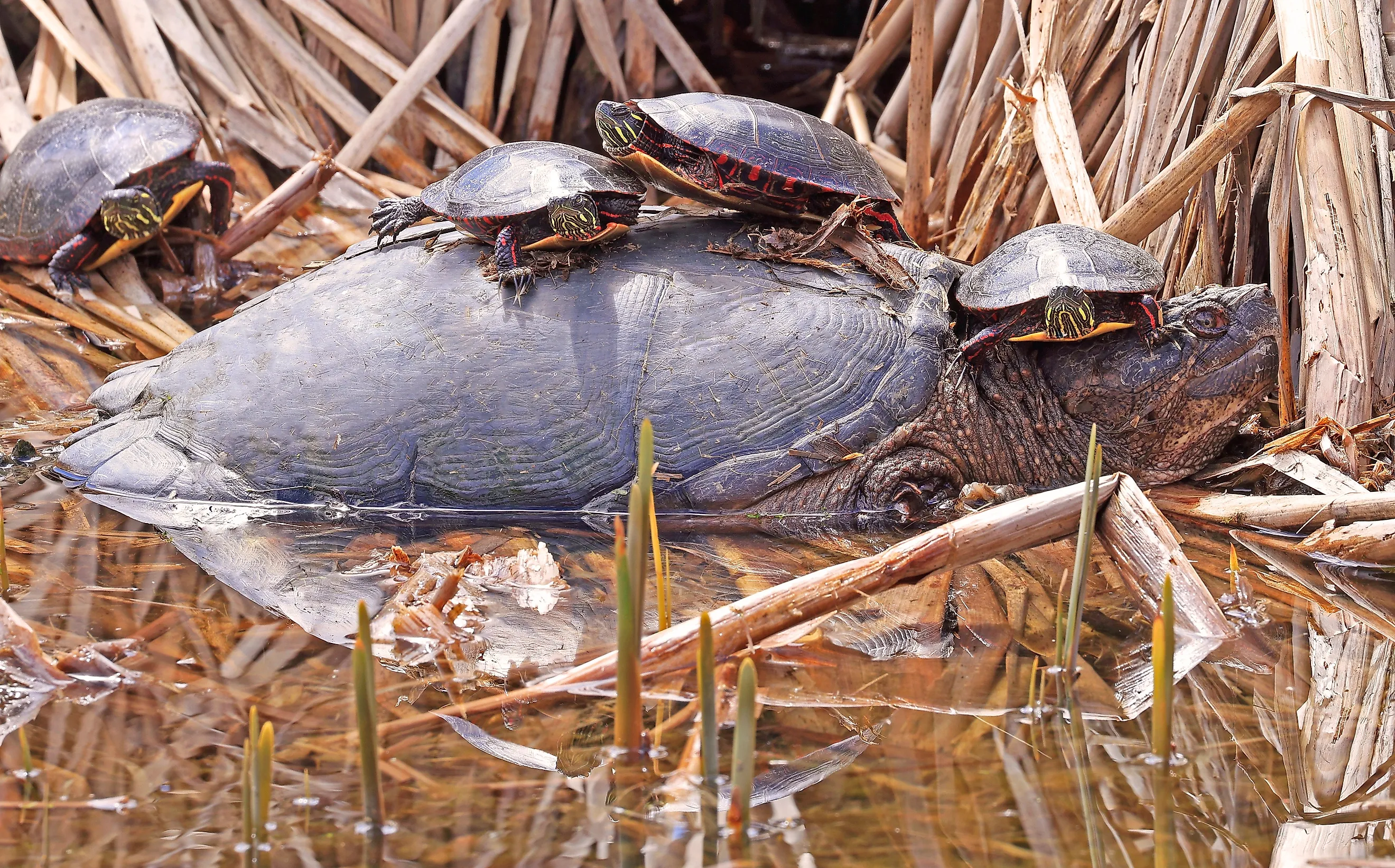
Snapping turtles generally live in shallow ponds and streams, but they can also be found in brackish environments, and are shy by nature. Meaning they will likely swim away promptly if they see you. Common snapping turtles extend into northern regions of the United States, while alligator snapping turtles are largely in the southern waterways. They are found in various State and National Parks all over the country, and here is a list of the National Forests with the Most Snapping Turtles.
Sam Houston National Forest - Texas

The Sam Houston National Forest in Texas contains 163,037 acres across Huntsville, Conroe, Cleveland, and Richards Texas. It is intermingled with privately owned timber lands and small farms. The National Forests and Grasslands in Texas (NFGT) offer countless opportunities for outdoor recreation, including the Multi-Use Trail in the Sam Houston National Forest. Alligator snapping turtles can be found in large rivers from Texas to Florida and north to Illinois. They are listed as threatened in several states. They are a protected species in Texas. Alligator snapping turtles are significantly larger than common snapping turtles, with common turtles weighing between 10 - 35 pounds while alligator snapping turtles range from 50, for females, up to 220 pounds for males. Due to their protected status, alligator snapping turtles are fairly abundant in Texas, and they have been documented in the Sam Houston National Forest.
Apalachicola National Forest - Florida

The Apalachicola National Forest in Florida is the largest national forest in the state, encompassing 635,019 acres, and is the only National Forest in the Panhandle. Alligator snapping turtles are found in the panhandle and northern Florida in rivers, lakes, backwater swamps, and occasionally, in brackish waters. The diet of an alligator snapping turtle primarily consists of plants and animals such as fish, musk turtles, and acorns. Female turtles lay their eggs on land in sandy soils, preferably when the weather is warm and humid. They lay a "clutch" per year, which averages anywhere from 17-52 eggs at a time. The eggs incubate for 100-110 days, making mid-August the most common time for baby turtles to emerge.
Monongahela National Forest - West Virginia

Established in 1920, the Monongahela National Forest spans nearly 1 million acres across 10 counties in eastern West Virginia with elevations ranging from 1,000 feet to 4,863 feet on Spruce Knob, West Virginia's highest peak. Monongahela provides timber, water, grazing, and minerals, as well as some of the most ecologically diverse landscapes in the central Appalachians. The river that gives the forest its name comes with a legend older than America: the dark, murky waters are said to hold a turtle-like beast estimated at nearly 20-feet long and weighing approximately 500 pounds. The Ogua, or simply, the Monongahela River Monster, was first spotted in 1745 and said to have been a two-headed turtle. While the mystery of the monstrous double headed turtle remains unsolved, common snapping turtles have been confirmed in the forest.
Wayne National Forest - Ohio

Ohio's only National Forest spans more than 240,000 acres in the southeast of the state and features hardwood forests, rolling hills, streams, and over 300 miles of multi-use trails. Its boundaries also hold a population of common snapping turtles. Common snapping turtles spend most of their lives underwater, occasionally sticking just the tips of their nostrils up out of the water for air, but are able to go into hibernation underwater without breathing for months. Female turtles come out of the water in early summer, however, to lay eggs on dry land. If they feel threatened, they can be aggressive, striking out quickly with their long necks and inflicting severe bites. Snapping turtles are opportunistic omnivores, feeding on plants as well as fish, frogs, reptiles, birds, and small mammals.
Chippewa National Forest - Minnesota

More than 400,000 acres of wetlands, 923 miles of streams, and 1,300 lakes comprise a lot of habitat for common snapping turtles at the headwaters of the Mississippi River and the Hudson Bay. The Chippewa National Forest is one of the most aquatic National Forests in the country, and much of those waters are filled with snapping turtles. Snapping turtles can live 30 to 40+ years in the wild, and up to 100 years in captivity under the right circumstances. Raccoons, foxes, coyotes, skunks, and large birds, especially the great blue heron, hunt and eat turtle eggs for protein. It is estimated that only 1 in 100 eggs survive. The young turtle is then still vulnerable to large fish and birds until it reaches maturation. Once fully grown, snapping turtles are not faced with many natural enemies.
Though the U.S. National Forest Service does not keep a record of its snapping turtle populations, we know that both alligator snapping turtles and common snapping turtles can be found in the waters of many National Forests. Alligator snapping turtles are common in Texas, Louisiana, Alabama, Arkansas, Georgia, Florida, Mississippi, and Oklahoma, with some stretching north throughout Missouri and into Illinois and Iowa. While common snapping turtles are abundant throughout the eastern and central United States.