The Most Dangerous Trees In American Forests
Falling branches and dead trees injure hundreds of people every year in America's forests. Foresters call these hazards widowmakers, a term for broken limbs, snapped treetops, and standing dead trees called snags that can fall without warning. The name widowmaker dates back to logging camps, where a falling limb could kill a worker and leave a spouse widowed. The U.S. Forest Service advises hikers to watch for leaning trunks, peeling bark, and canopies with large dead patches. These are all signs that a tree may be unstable. High winds and ice storms make these hazards much more likely to fail, which is why rangers often post additional warnings after severe weather.
Most trees in a national forest are safe to walk past. Widowmakers are only one hazard. Others appear repeatedly in Forest Service safety bulletins, invasive-pest reports, poison-control warnings, and scientific studies because they pose well-documented risks to people.
Some become dangerous after insects kill them. Others are toxic, covered in razor-sharp thorns, or prone to dropping healthy-looking limbs without warning. These are some of the trees most worth recognizing before heading into the woods.
Lodgepole Pine

Drive through parts of Colorado, Wyoming, or Montana and you'll pass through miles of gray, dead lodgepole pine. It's the legacy of a mountain pine beetle epidemic. In Colorado alone, the outbreak affected 3.4 million acres of forest between the late 1990s and 2013.
According to the Colorado State Forest Service, it killed up to 80 to 90 percent of lodgepole pine stands in Summit, Grand, Eagle, and Routt counties. The mountain pine beetle is native to western North America and helps keep forests healthy by removing older, weakened, or diseased trees.
This creates space for younger trees to grow. Problems arise when dense forests, drought, and unusually warm winters lead to large beetle outbreaks. Entire lodgepole pine stands can die within just a few years, leaving behind miles of standing dead trees that may fall without warning.
Southern Pines

The Southeast has its own version of the story. The culprit is the southern pine beetle, widely considered the most destructive forest insect in the region. During South Carolina's worst recorded outbreak in 1995 and 1996, the beetle caused an estimated $125 million in timber losses, according to the South Carolina Forestry Commission.
Like the mountain pine beetle, it's native to its ecosystem and usually attacks weakened trees. During outbreaks, however, it can also overwhelm healthy pines. Once a southern pine dies, it deteriorates quickly. Compared with most hardwoods, dead pines lose their structural integrity much faster, making standing snags more likely to snap or topple during high winds.
In 2024, the U.S. Forest Service warned visitors to Alabama's national forests to watch for beetle-killed pines after widespread southern pine beetle damage left dead trees standing throughout recreation areas. Two years later, officials temporarily closed trails in West Chop Woods on Martha's Vineyard until crews could remove hazard trees killed by southern pine beetles.
Poison Sumac

Poison sumac grows as a large shrub or small tree, not the low, three-leaflet poison ivy most hikers know to avoid. It favors wetlands, swamps, bogs, and streamside forests across the eastern United States, reaching the Gulf Coast, New England and the Great Lakes.
Every part of the plant contains urushiol, the same oil found in poison ivy and poison oak. About 80 to 90 percent of adults develop a skin reaction after contact with urushiol. North Carolina State Extension warns that inhaling smoke from burning poison sumac can cause severe lung irritation.
Because it grows in wetlands rather than along well-used trails, many hikers never expect to encounter it. Look for a red-tinged central stem with 7 to 13 smooth-edged leaflets and clusters of pale white or cream-colored berries.
Honey Locust and Black Locust

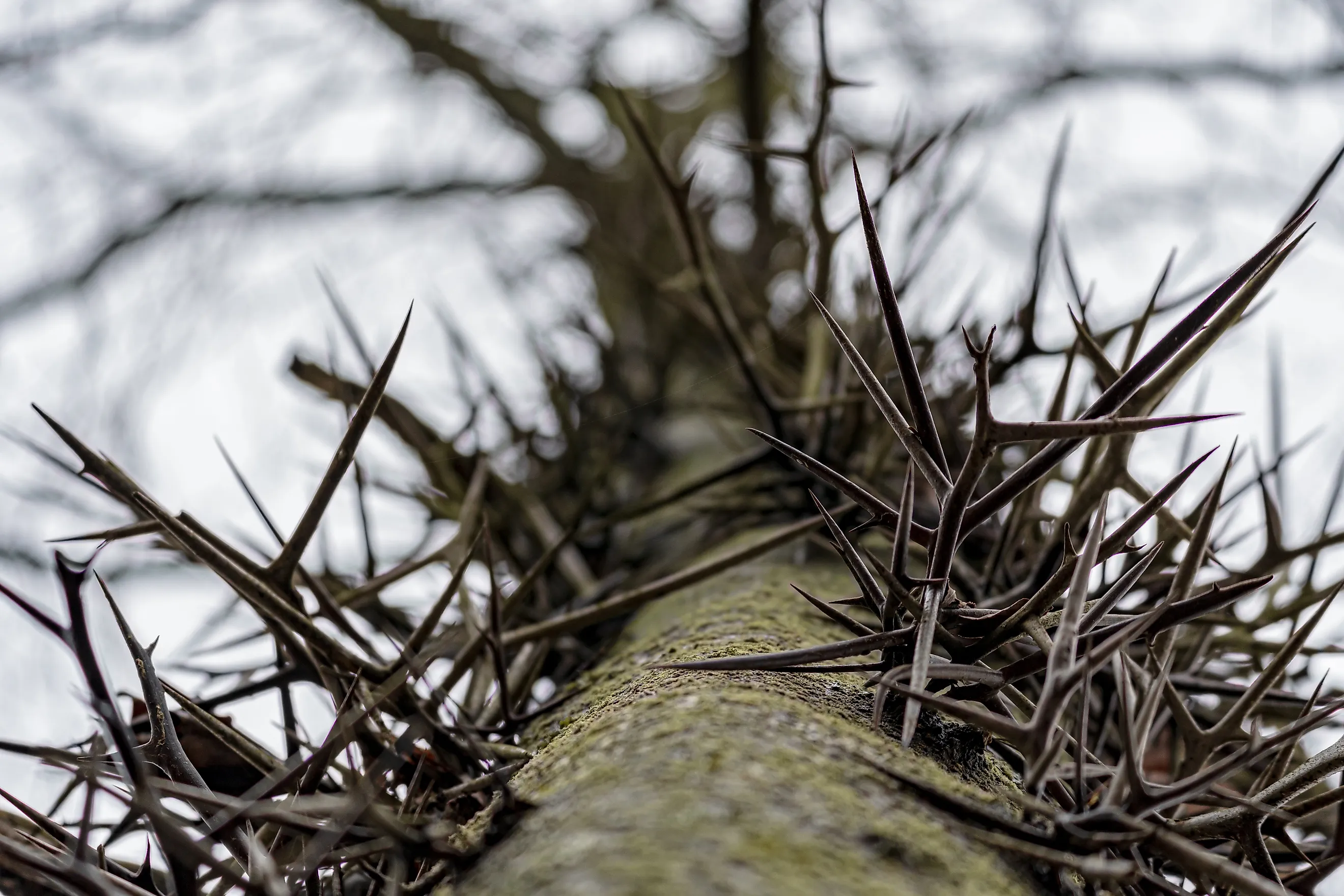
Honey locust grows thick, branched thorn clusters directly from its trunk and lower branches. Some thorns reach nearly a foot long, hard enough to puncture tractor tires and sharp enough to pierce heavy boots or leather gloves. Old thorn clusters eventually fall to the ground, so hikers are often injured by stepping on hidden thorns rather than brushing against the tree itself. Deep puncture wounds can be slow to heal and are prone to infection.
Black locust has much smaller paired thorns, usually less than an inch long, but it adds another hazard. Its bark, leaves, seeds, and seed pods contain toxic compounds that can cause nausea, vomiting, weakness, and other symptoms if ingested. Medical literature has also documented serious complications from black locust thorn punctures, including rare cases of tissue death and nerve damage.
The two species are often confused. Black locust has smaller paired thorns and simple compound leaves, and honey locust has large, branched thorns and doubly compound leaves.
Manchineel
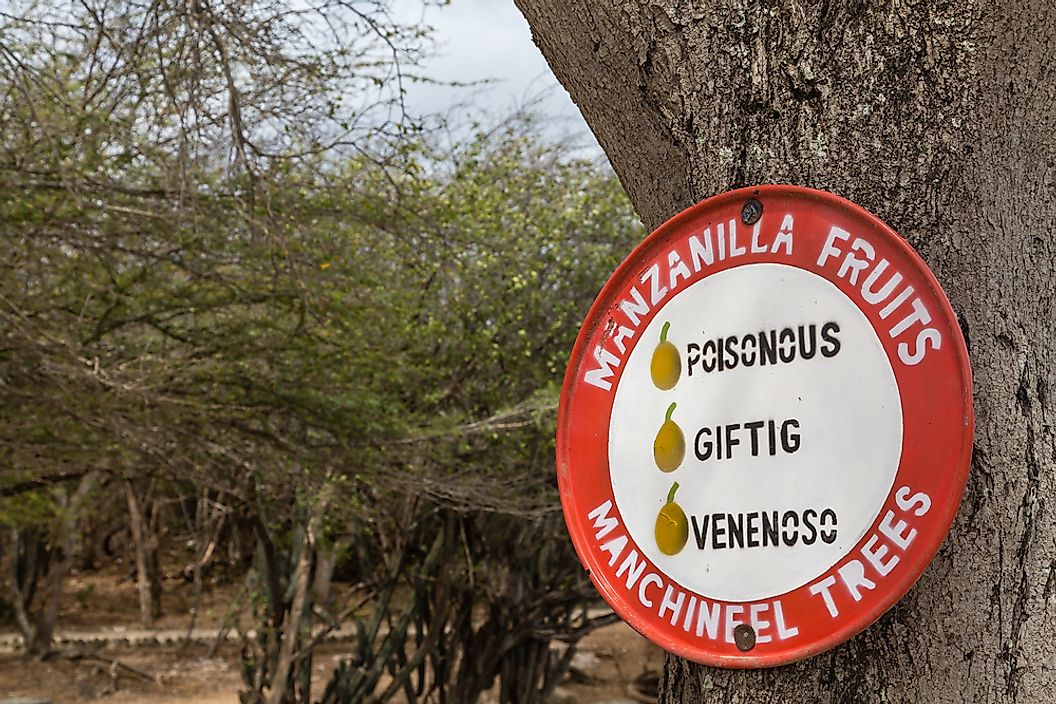
Manchineel is often called the most dangerous tree in the world. Its milky sap can cause severe chemical burns. Its small green fruits resemble apples, but they're highly poisonous. Rainwater dripping from the leaves can carry enough sap to irritate exposed skin. Smoke from burning the wood can inflame the eyes and lungs.
In one widely cited medical report, two tourists who ate the fruit after mistaking it for a small apple developed intense burning in their mouths and throats within minutes and required medical treatment. Manchineel is confined to a narrow stretch of South Florida, including coastal hammocks, mangrove swamps, and brackish shorelines in the Everglades and Florida Keys.
The species is rare enough that Florida lists it as endangered. You won't encounter it in a national forest because Florida's three national forests lie hundreds of miles to the north. Instead, you're most likely to see it in places such as Everglades National Park or the National Key Deer Refuge. If you're exploring South Florida's coastal hammocks or mangrove forests, admire it from a distance.
Ash Trees

Few pests have reshaped American forests as quickly as the emerald ash borer. First detected in Michigan in 2002, the invasive beetle has since spread to 38 states and the District of Columbia, killing tens of millions of ash trees. USDA researchers report that virtually all untreated infested ash trees eventually die.
As the larvae tunnel beneath the bark, they interrupt the tree's transport of water and nutrients. Dead ash trees become brittle within just a few years and may shed large limbs or topple with little warning. The danger has become so widespread that the National Park Service now removes hazardous ash trees around trails, roads, and park structures in parks near Washington, D.C.
In New Jersey, officials removed about 1,500 at-risk ash trees from high-use areas of Delaware and Raritan Canal State Park to reduce the danger to people. Forest Service researchers have found that mature ash stands can go from healthy to near-total mortality within about six years of infestation.
California Oaks

California oaks can occasionally shed large, healthy-looking limbs without warning, a phenomenon known as summer branch drop or sudden limb failure. Summer branch drop has been documented in several California oak species, including California black oak. Yosemite National Park regularly warns people about the hazard after falling oak limbs caused multiple serious injuries and fatalities.
California black oaks also grow throughout the Sierra Nevada and adjacent national forests, making the warning relevant well beyond Yosemite. The first published account dates to 1882, when California botanist Albert Kellogg described the phenomenon in a valley oak. More than a century later, researchers still don't have a definitive explanation.
Leading theories involve drought stress, internal gas pressure, and the plant hormone ethylene, but none fully explains why apparently healthy limbs sometimes fail. The breaks usually occur several feet from the trunk rather than at the branch collar, making them especially difficult to predict. On hot, still summer afternoons, the safest choice is to avoid lingering beneath the broad horizontal limbs of mature California oaks.
Conclusion
None of this means national forests are dangerous places to visit. The Forest Service routinely removes hazardous trees near campgrounds, trails, and roads, but the best protection is knowing what to look for. Watch for dead or leaning trees and avoid lingering beneath mature California oaks on hot, still afternoons. Learn to recognize poison sumac, thorny locusts, and standing dead trees before heading into the woods.