10 Of The Most Adorable Small Towns In Virginia
Virginia's small towns have a knack for making history feel close at hand. In Leesburg, 18th century buildings now house coffee shops and restaurants along South King Street. Abingdon pairs a centuries-old tavern with one of the country's longest-running professional theaters. On the eastern shore, Cape Charles features pastel-colored homes near the Chesapeake Bay, and Chincoteague adds wild ponies and a historic lighthouse to its waterfront appeal. These ten Virginia towns stand out for their inviting streets, distinctive architecture, and the little details that make exploring them a pleasure.
Leesburg

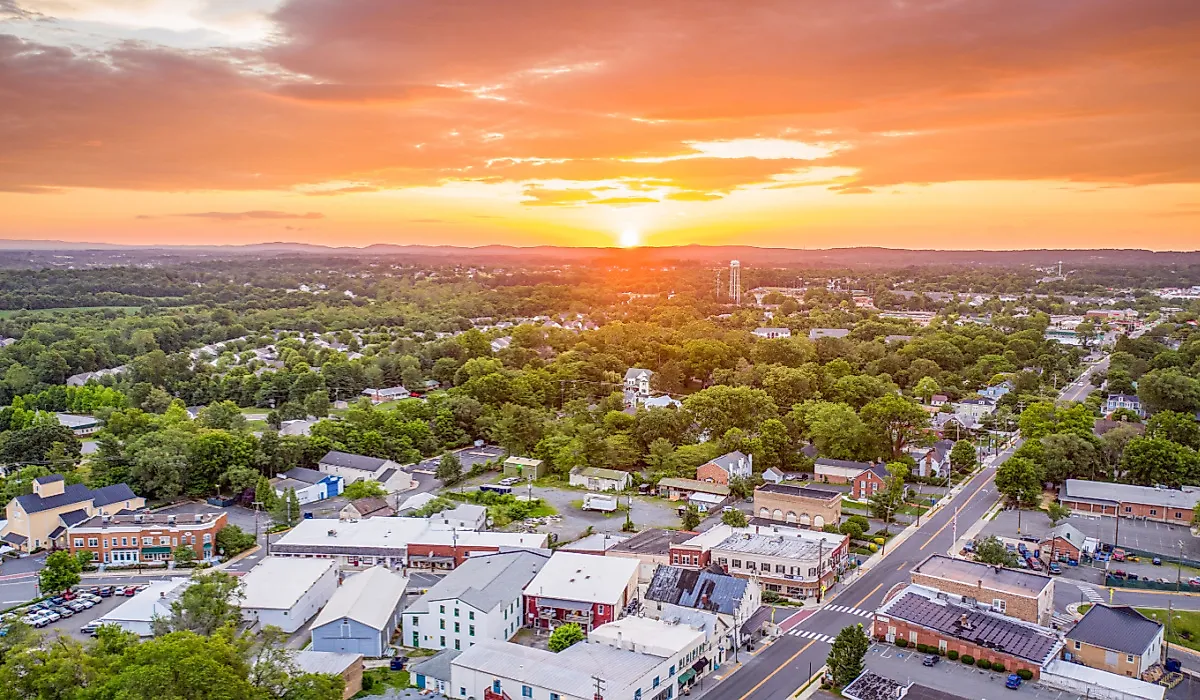
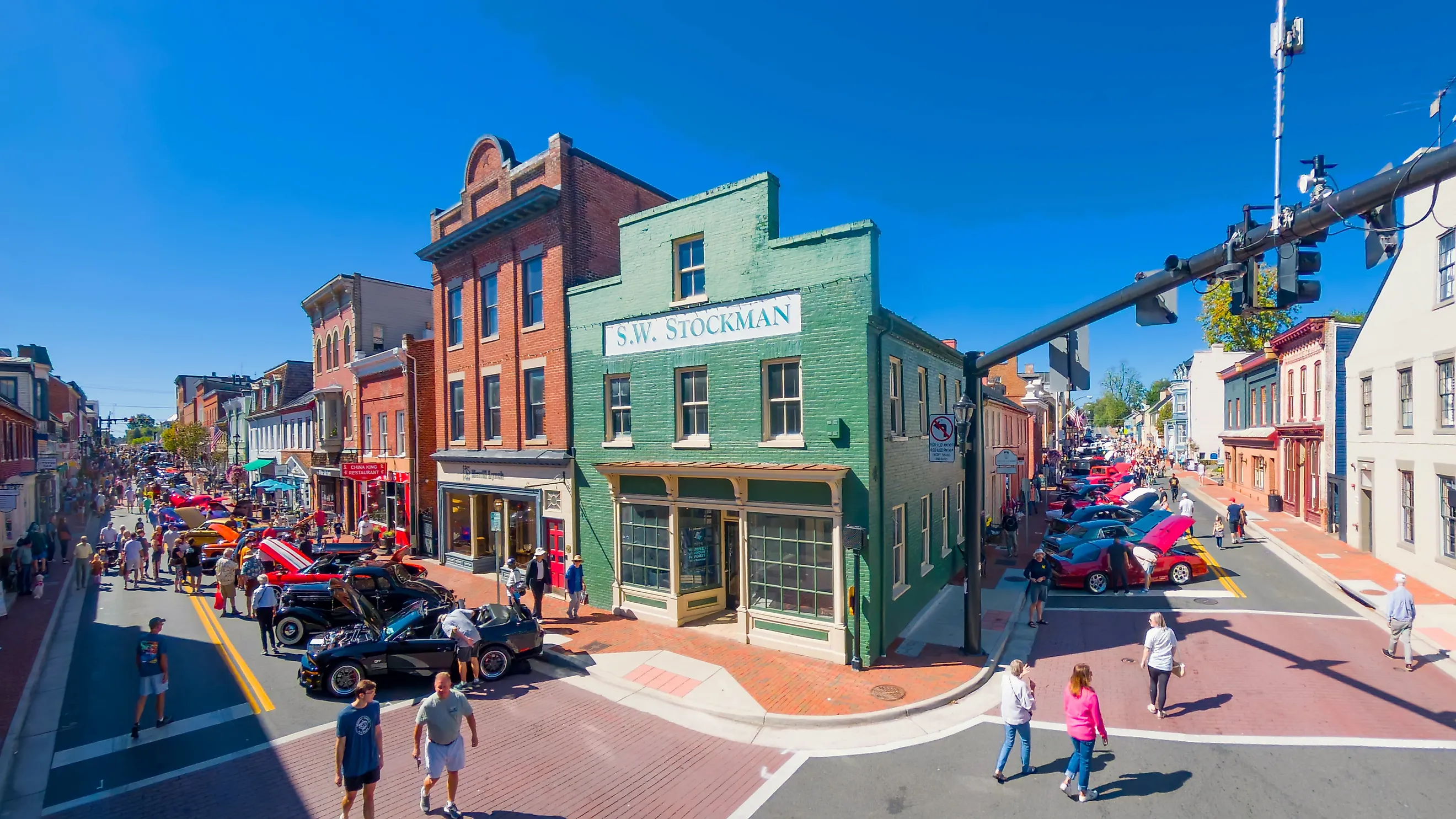
Founded in 1758, Leesburg deserves to be mentioned first because of South King Street, a compact and narrow strip of restaurants, bars, shops, and cafes in restored 18th and 19th century buildings, forming a postcard-like image of a thriving Colonial downtown center. South King Street includes Lightfoot Restaurant, a fine dining establishment inside a former bank decorated with antique chandeliers and fireplaces. More laid back dining options await at King’s Tavern and Wine Bar, or the Georgetown Cafe right next door, both offering outdoor seating. In fact, the South King Street area is nicknamed the “Leesburg Coffee Corridor” because there’s nearly a dozen coffee shops within a few blocks of each other, such as Goosecup, a specialty coffee roaster by day and a stylish cocktail bar by night.
Downtown Leesburg also contains numerous historical landmarks, such as The Norris House, displaying an unusual blend of Queen Anne and Georgian revival architecture on Loudoun Street, and Dodona Manor, the former home of General George C. Marshall, who served as Chief of Staff of the U.S. Army as well as the Secretary of State before being awarded the Nobel Peace Prize. Constructed in Federal style architecture, Dodona Manor is available for tours, with original furnishings and household items selected by the Marshall family during their inhabitance from 1941 to 1959.
Abingdon

Situated within the highlands of the Blue Ridge Mountains, Abingdon’s downtown is more spread out, which allows impressive historic structures to stand out on their own, especially within the town’s celebrated arts and dining scene. The William King Museum of Art is located at the top of a hill just off Main Street, and it features rotating exhibits from local artists along with contemporary art from all over the world. Just a few minutes away lies The Arts Depot, situated inside a former railroad station from 1870 and offering three galleries of paintings, folk art, jewelry, sculptures, and handmade crafts.
Back on Main Street, the magnificent Abingdon United Methodist Church sits right next to The Barter Theatre, one of the longest-running professional theaters in the country since opening in 1933, and still hosting a regular schedule of major productions such as “Come From Away” and “Elf.” Meanwhile, The Tavern is instantly recognizable with its faded grey exterior, a stark contrast from the predominantly brick buildings of downtown. Originally constructed in 1779 as an overnight inn for stagecoach travelers, The Tavern is consistently mentioned among the best restaurants in the region, and contains original stone walls, mantles, and floors.
Cape Charles

Cape Charles is a beach town on a small peninsula on the eastern shore. Its main commercial center is Mason Avenue, home to acclaimed restaurants like Ambrogia Caffe and Enoteca, renowned for their fresh seafood and family-style portions, as well as popular weekend and nighttime hangouts like Brown Dog Ice Cream. Mason Avenue is also walking distance from Cape Charles Beach, noted for its soft sand, shallow waters, and 300-foot wooded fishing pier.
Cape Charles’ grid-like structure makes it easy to find Central Park, a sprawling grassy space surrounded by tree-lined streets dotted with brightly colored, multi-story homes displaying shades of pink, blue, yellow, green, and even purple. These homes are brilliantly complemented by the occasional church, like Emmanuel Episcopal Church on Tazewell Avenue, featuring striking Gothic architecture. The serenity of Cape Charles is further emphasized by Cape Charles Natural Area Preserve, where a boardwalk winds through 29 acres of grassy dunes and maritime forests before culminating in a scenic bluff overlooking the Chesapeake Bay.
Williamsburg

Williamsburg served as the capital of the Colony of Virginia from 1699 to 1780. Williamsburg’s deep connection to the Colonial era is exemplified by the world-famous Colonial Williamsburg, featuring 300 acres of restored 18th century buildings, costumed historical performers, and period-era trade shops. The College of William and Mary is located right next-door, which means that Colonial Williamsburg is bordered by a lively college town adorned with pristine brick buildings and an abundance of shopping and dining options.
On the western edge of Colonial Williamsburg is Merchant’s Square, one of the country’s earliest planned shopping districts and home to over 40 shops and restaurants including Ember, an American-Japanese fusion chophouse, and Fat Canary, an award-winning fine dining restaurant. Just a few minutes away on Henry Street, the Art Museums of Colonial Williamsburg consists of two museums providing American and British art from the 17th, 18th, and 19th centuries. Heading north up Prince Georges Street or Richmond Road leads to a quiet “sweet spot” between the college and Colonial Williamsburg. On Scotland Street, for instance, lies a smaller commercial center headlined by Geolo-Tea, a woman-owned tea room and cafe for a peaceful afternoon away from the crowds.
Middleburg

Middleburg proudly promotes itself as the “Nation’s Horse and Hunt Capital” due to its long history of steeplechase racing, fox hunting, and horse farming. The real star of this town, though, is Washington Street flanked by many historic buildings and one of the longer, more affluent downtown strips on this list. At the intersection of Washington Street and Madison Street is the stone-built Red Fox Inn and Tavern, one of the oldest continuously operating inns in the United States and featuring two places to eat: an intimate dining room offering a four-course seasonal menu and a classic Colonial-style pub.
Other highlights of Washington Street include the Middleburg Antique Gallery, specializing in antiques from the 1700s, and Crème de la Crème, a French- and Italian-inspired home goods and gift boutique. The luxurious element culminates at Tremolo Bar, serving elegant dishes like caviar and hot crab dip with wines from Italy, France, Portugal, and more. On that note, several local wineries are located just 10 minutes or so from downtown, and the Instagram-worthy drive through Little River Turnpike is certainly worth the trip. The Chrysalis Vineyards at The Ag District, for example, specializes in the cultivation of Norton, America’s oldest native wine grape, and welcomes guests into a sprawling backyard area overlooking the Blue Ridge Mountains.
Chincoteague

Chincoteague occupies the entirety of the island that bears its name, as well as part of Assateague Island. Main Street runs right along the western edge of Chincoteague Island, and the centerpiece of downtown is Robert N. Reed Downtown Waterfront Park, a popular site for unwinding with its wooded dock and four oversized Adirondack chairs. Directly in front of the park is the Village Mall, which houses a number of shops including Island Artisans, featuring handmade gifts from local craftspeople, and All About Reptiles, a pet shop with a large selection of cold-blooded creatures.
To the right of the park are two art galleries, the Osprey Nest Art Gallery and the Flying Fish Gallery, along with Bill’s Prime Seafood and Steaks, serving up juicy Black Angus steaks since 1960. Meanwhile, a distinct characteristic of Chincoteague is its beloved population of wild ponies, which roam throughout the Chincoteague National Wildlife Refuge on Assateague Island. Accessible by road, the refuge is also the home of 142-foot Assateague Lighthouse constructed in 1867. The lighthouse is open for tours from April through November, producing panoramic views of Chincoteague's waterfront pine forests.
Staunton

Staunton lays claim to one of the largest concentrations of historic architecture in Virginia, with six historic districts in total. Some of the state’s finest Victorian architecture can be observed in the Beverley Historic District, a.k.a. downtown Staunton. Many buildings in this district were built between 1870 and 1920, and are now inhabited by upscale restaurants and cafes like Zynodoa, specializing in authentic southern cuisine, and The Split Banana, offering 18 flavors of gelato. The American Shakespeare Center's Blackfriars Playhouse remains the country’s only accurate reconstruction of William Shakespeare’s iconic indoor theater, and it maintains a regular schedule of performances.
In the nearby Gospel Hill District lies the Woodrow Wilson Presidential Library and Museum Visitor Center, housed inside the birthplace of America’s 28th president. The museum contains seven galleries depicting Wilson’s early life as well as various exhibits related to suffrage, prohibition, and Wilson’s leadership in World War I. Staunton’s tribute to Woodrow Wilson continues at Woodrow Park, located on a hilltop in the Sears Hill District and featuring marvelous views of downtown Staunton from above.
Luray

As far as natural scenery goes, Luray is tough to beat. A popular gateway to Shenandoah National Park, Luray provides direct access to the Skyline Drive, a 105-mile scenic route through the aforementioned park, including a noteworthy overlook point of Hazel Mountain. Luray is also frequently associated with the Luray Caverns, the largest cavern system in the eastern United States.
In town, Luray presents a small but easily walkable Downtown Historic District surrounded by the Blue Ridge Mountains. Main Street features cozy eateries like Broad Porch Coffee and Cafe and Porch and Vine, serving contemporary American cuisine in a sophisticated setting. Historical elegance continues at The Mimslyn Inn, a shining example of Georgian Revival architecture with three restaurants including the Speakeasy Bar and Restaurant, serving creative dishes like duck empanadas and Oysters Rockefeller. Lastly, a great place to relax in Luray’s mountainous terrain is Carillon Park, located off the edge of West Main Street. The Blue Ridge Mountains are particularly captivating as the backdrop of Carillon Park’s Luray Singing Tower, erected in 1937 and 117 feet in height.
Lexington

Lexington’s historic downtown is distinguished with its plentiful brick buildings and sidewalks, along with its hilly streets and elaborate maze of local businesses. Within this maze are a wide range of dining options such as Bistro on Main, the Heliotrope Brewery, and The Georges, a boutique hotel spread across five historic Main Street buildings. Haywood’s is The Georges’ fine dining restaurant, and it features live jazz music as well as an expertly curated wine list.
These restaurants are conveniently mixed in with eclectic shops offering unique products like the Scottish and Irish clothing at Celtic Tides, the handmade functional art at Earth, Fire, and Spirit Pottery, and the genre-specific reads at The Historian’s Books. Downtown Lexington is also the site of the Jackson House Museum, the former home of Confederate General Thomas “Stonewall” Jackson before the Civil War. The home is open for tours and contains original furnishings selected by Jackson and his wife. Despite their rustic appearances, various Lexington restaurants are incredibly chic, like SkyBar, a vibrant cocktail bar open until 12:30am on weekends, turning this historic town into a booming nightlife spot.
Onancock

Onancock may seem like a quiet waterfront community, but its bustling arts and dining scene is certainly worthy of mass attention. Downtown revolves around Market Street, where The Crockett Gallery showcases original watercolors, acrylics, and oil paintings of the eastern shore by local artist Willie Crockett. Timothy Smith and Sons is a woodworker’s haven, featuring custom-made furnishings as well as antiques and fine art for sale.
At Bizzotto’s Gallery Cafe, guests can peruse more artwork from local artists while enjoying coastal cuisine with an international twist. Right across the street is Bread and Butter, hailed for their homemade pasta and locally inspired clam pizza. Founded in 1680, Onancock is among the oldest towns in the state, as evidenced by its collection of Victorian, Federal, and Colonial style homes on and around Market Street. Onancock’s history is also immortalized by Ker Place, a two-story brick mansion built in 1799 in Federal style architecture and framed exquisitely by Market Street Methodist Church on the left, and the Onancock Baptist Church on the right. Ker Place houses its own display of period-era art and furnishings, occasionally bringing in traveling exhibitions from the Virginia Museum of History and Culture and the Virginia Museum of Fine Arts.
Virginia's Small Towns Are A National Treasure
Virginia’s small towns highlight the diversity of the state’s landscape, as well as its widespread embrace of the past and future simultaneously. Some towns accentuate Virginia’s greatest natural wonders, from the Blue Ridge Mountains to the Chesapeake Bay. Others present downtowns that are essentially miniature cities, fueling their respective economies with exceptional food and art. Every single town on this list, though, is a touching tribute to Virginia’s history with their architecture and landmarks, adding an unforgettable visual and intellectual aspect to downtown. Their populations may be on the lower side, but these towns are teeming with life year-round.