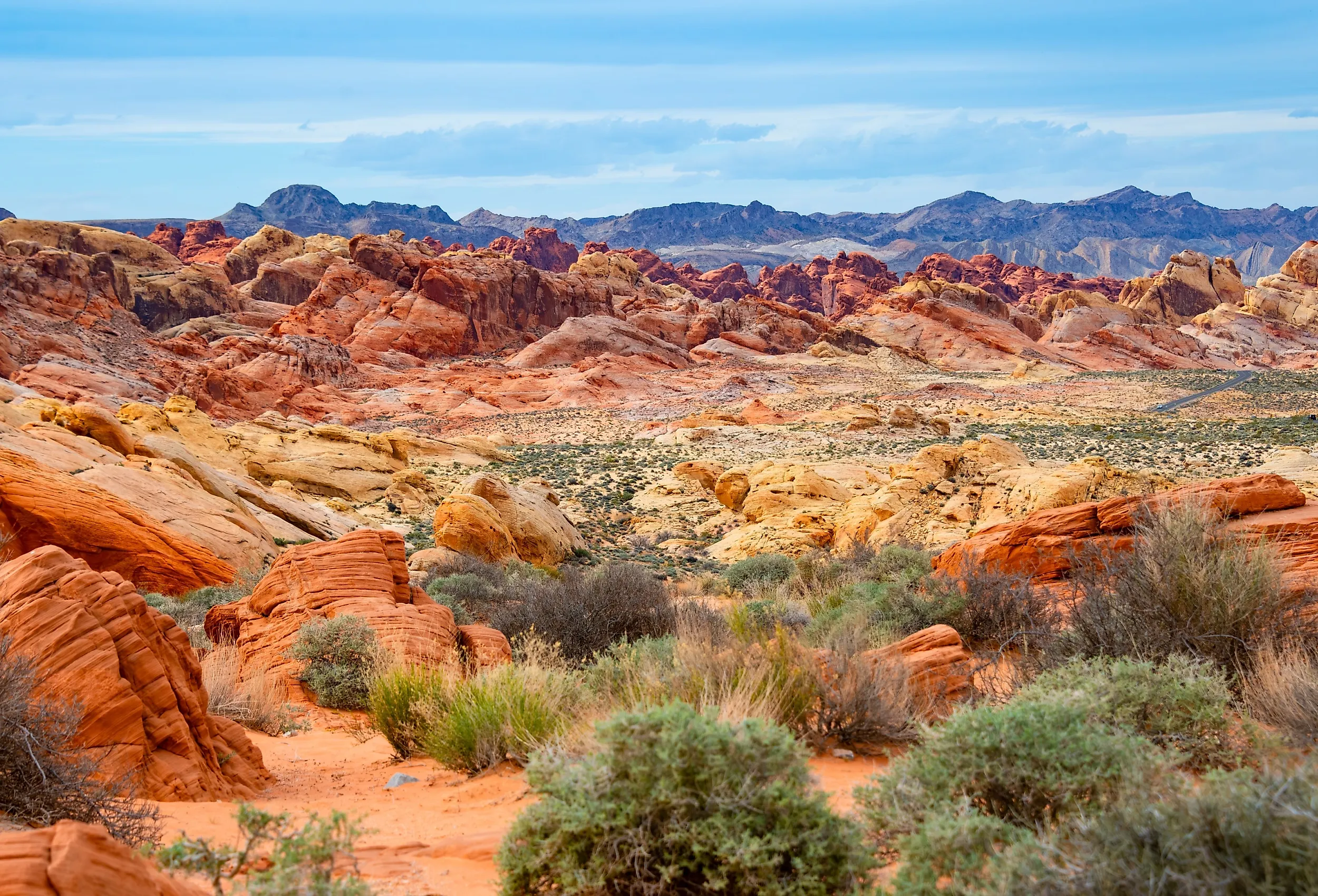
How Big The Mojave Desert Is Compared To England
England covers 50,301 square miles and that figure does not move. The Mojave Desert covers somewhere between 31,000 and 54,000 square miles depending which source you open, and Wikipedia manages three different numbers on the same subject. Which means the honest answer to this comparison is that it depends. At the most commonly cited figure England wins by five percent. At the figure on this very website the Mojave wins by seven. At one widely used number they differ by 301 square miles, which on a map of either is a smudge.
Nobody Agrees How Big The Mojave Is

Before any comparison, the spread in the published figures deserves pointing out, because it is remarkable.
Wikipedia's opening sentence says 47,877 square miles. Its own infobox says 31,000. Further down the same article says 54,000. Oregon State puts it at roughly 50,000. WorldAtlas has long used 54,000.
That is a range of 23,000 square miles between the lowest and highest, a factor of 1.74, for a desert that has not moved. The variation comes from where you draw the edges, because deserts do not come with fences.
England Is The Fixed Point

One side of this comparison has the decency to be a settled number.
England covers 50,301 square miles, or 130,279 square kilometers. It has borders drawn by centuries of argument, a land registry and an Ordnance Survey, which between them leave very little room for interpretation.
The Mojave has a rain shadow, some mountains and a general sense of where things get dry. The two are not measured to the same standard and it shows.
Three Answers, All Defensible

Run the arithmetic against each published Mojave figure and the winner changes.
At 47,877 square miles, the most-cited number, England is larger by 2,424 square miles, about five percent. At 54,000, England loses by 3,699, about seven percent. At 50,000 they are 301 square miles apart, which is roughly the size of Rutland and well inside anybody's margin of error.
Only the 31,000 figure settles it decisively, making England 62 percent larger. That one appears to be measuring something narrower than the other four.
The Population Is Where It Stops Being Close

Two places of roughly the same size, and the resemblance ends immediately.
England holds about 57 million people. The Mojave holds roughly 15 million, which sounds like a lot until you remember that number is mostly Las Vegas and the eastern fringe of greater Los Angeles rather than anybody distributed across the desert.
England runs at about 1,135 people per square mile against the Mojave's 313, making it three and a half times denser. Strip out the two metropolitan areas and the gap becomes comical.
The Rain Difference Is Eight To One

The climate comparison is the one that needs no adjusting for measurement method.
England receives roughly 33 inches of rain a year. The Mojave receives two to six, and parts of it under two, making it the driest desert in North America.
So a place the size of England gets somewhere between a sixteenth and a fifth of England's rainfall. Manchester reportedly gets more rain in a wet fortnight than parts of the Mojave manage in a year.
One Has Death Valley

The Mojave contains something England cannot match on any measurement anybody has devised.
Death Valley sits inside the Mojave and holds the highest air temperature ever reliably recorded on Earth. Badwater Basin, also inside it, is the lowest point in North America at 282 feet below sea level.
England's equivalent extremes are the Holme Fen post at around nine feet below sea level and a national heat record that would be an unremarkable Tuesday in Furnace Creek.
England Has No Endemic Trees Worth Mentioning

Biologically the desert is doing considerably more interesting work in the same footprint.
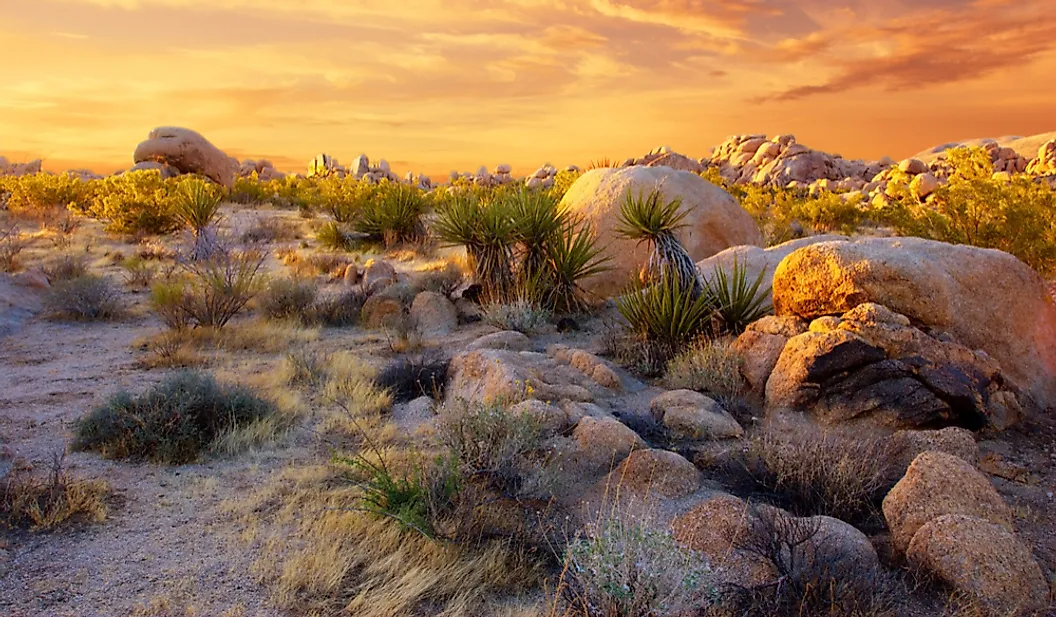
One third of the species in the Mojave are endemic, found nowhere else, and the desert holds between 1,700 and 2,000 endemic plant species. The Joshua tree is effectively exclusive to it.
England, having been scraped flat by ice and then farmed continuously for a thousand years, has almost no endemic species at all. Its most distinctive vegetation is a hedge.
Both Are Mostly Empty Of Their Reputation

Each place is widely misunderstood in the same direction, which is worth noting.
The Mojave is imagined as sand dunes and is mostly rock, scrub and mountain, sitting between 2,000 and 5,000 feet. Las Vegas is entirely inside it, as is a stretch of Los Angeles.
England is imagined as green fields and is now about 15 percent built on or paved. Both places are doing a reasonable job of looking like their postcards from a distance.
Six Million People Visit It
Visitor numbers close the gap in a way nothing else does.
Roughly six million people a year visit Mojave destinations including Joshua Tree National Park, Lake Mead and Death Valley, plus the largest off-road vehicle area in the world at Johnson Valley.
England receives something in the region of 40 million international visitors a year. So a region of similar size gets about a seventh of the footfall and still manages to be one of the most visited desert landscapes on Earth.
The Scoreboard

England and the Mojave Desert are close enough in size that the winner depends entirely on which published figure you pick up, and the most-cited one gives England a five percent edge. At the number this site has used for years, the desert takes it instead.
After that the two stop resembling each other. England has three and a half times the population density, eight times the rainfall and no endemic species to speak of. The Mojave has the hottest temperature ever recorded, the lowest point in North America, two thousand plants that grow nowhere else, and a tree named after a prophet. One of them is more interesting and it is not the one with the hedges.