Where Coral Snakes And Kingsnakes Overlap
One of these snakes carries a neurotoxic venom potent enough to rank it among the most dangerous reptiles in North America. The other is completely harmless, yet has spent millions of years evolving to look almost exactly like it. The venomous coral snake and the harmless kingsnake share the warm woods and deserts of the southern US, in one of nature's most famous cases of mistaken identity. And there is a genuinely delicious twist: the copycat does not just impersonate the coral snake, it also hunts and eats it. Here is where coral snakes and kingsnakes overlap, and why their relationship is so wonderfully strange.
The Overlap Zone

Coral snakes in the US come in three varieties: the eastern coral snake, which ranges from North Carolina down through Florida and west along the Gulf Coast; the Texas coral snake, found across Texas and into Louisiana and Arkansas; and the Sonoran, or Arizona, coral snake of the desert Southwest. Kingsnakes, meanwhile, are among the most widespread snakes in all of North America, blanketing that entire territory and reaching far beyond it. Wherever a coral snake lives, in other words, a kingsnake almost certainly lives too, frequently in the very same sandy pine woods or rocky desert. The key player in the Southeast is the scarlet kingsnake, which shares both the coral snake's range and, remarkably, its looks.
Meet the Coral Snake

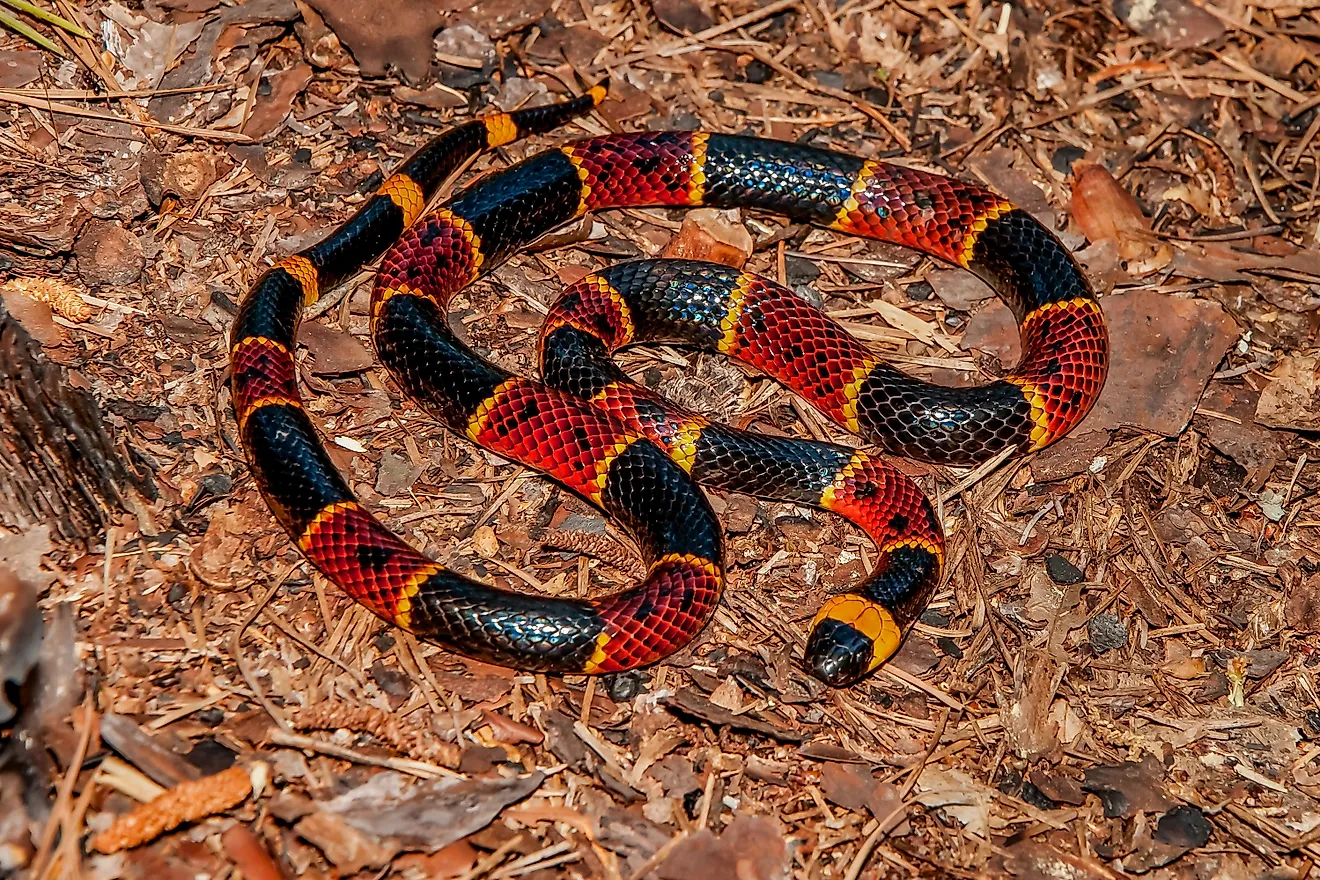
The coral snake is the genuinely dangerous half of this pair. Unlike the pit vipers most Americans fear, it is an elapid, a relative of cobras and mambas, and it carries a potent neurotoxic venom that attacks the nervous system. It is also shy and secretive, spending much of its life burrowing through leaf litter and loose, sandy soil, which is why actual bites are quite rare. You will know it by its bold rings of red, yellow, and black, with the red bands bordered on each side by yellow. It is small, vividly colored, and very much best admired from a safe distance.
Meet the Kingsnakes

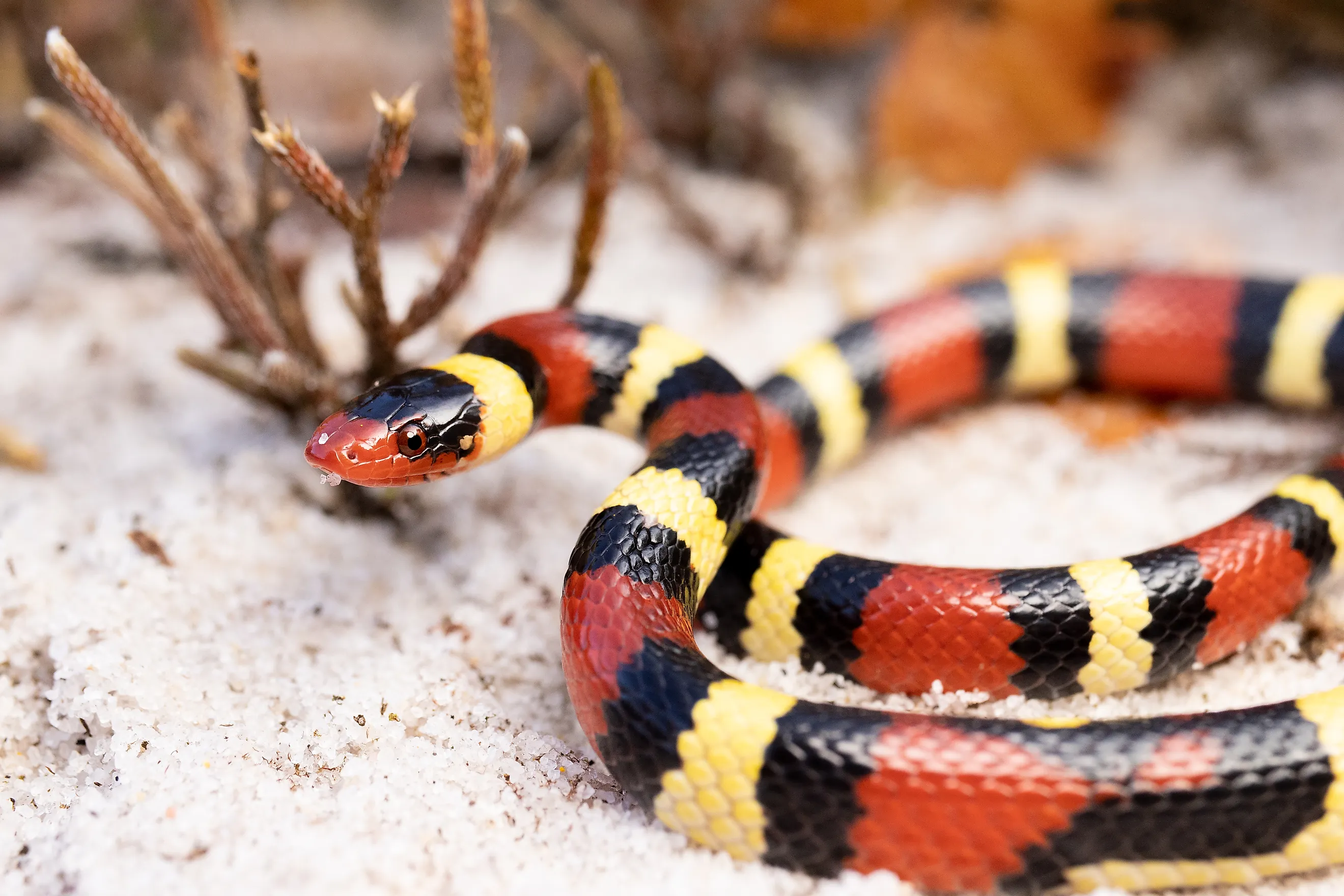
Kingsnakes are the harmless half, and then some. Completely nonvenomous, they are powerful constrictors and famous snake-eaters, which is exactly where the "king" in their name comes from. Found nearly everywhere in the country, across forests, deserts, swamps, and farmland, they come in many forms, but the one that matters most here is the scarlet kingsnake of the Southeast, a slender, brightly banded snake that could, at a glance, easily pass for a coral snake. Out in the desert Southwest, the Arizona mountain kingsnake plays the very same role opposite the Sonoran coral snake.
The Great Impersonation

This is where the overlap gets truly interesting. The scarlet kingsnake is a textbook case of Batesian mimicry, in which a harmless animal copies the warning colors of a dangerous one in order to scare off predators. Over countless generations, birds and other hunters learned to steer clear of the coral snake's red-yellow-black pattern, and any kingsnake that happened to look like it simply got eaten less often. The result is the famous rhyme for telling them apart: "Red touches yellow, kill a fellow; red touches black, friend of Jack." Scientists have even proven the disguise works, finding that fake snakes painted in coral colors were attacked far less by predators in places where real coral snakes live. Milk snakes and scarlet snakes run the exact same con.
The Twist: Kingsnakes Eat Coral Snakes

Here is the part that turns the whole relationship on its head. Kingsnakes are not merely immune to intimidation; many are literally immune, or at least highly resistant, to snake venom, and they are voracious ophiophages, meaning they eat other snakes for a living. They routinely kill and swallow rattlesnakes and copperheads, and they will happily make a meal of a coral snake too. So in the zone where the two overlap, the harmless scarlet kingsnake is pulling off an incredible double act: it borrows the coral snake's deadly reputation to protect itself from predators, and then turns right around and preys on the very snake it is pretending to be.
Telling Them Apart

So how do you tell the deadly original from its harmless copy? Within the US, the old rhyme is the handy quick guide: on a coral snake, the red bands touch the yellow ones, while on a kingsnake, the red touches black. That said, herpetologists are quick to warn that the rhyme is not foolproof, because it only confirms a typically patterned US coral snake and should never be trusted outside the country, where the colors line up differently. Both snakes are secretive and often active at night as well, so a clear, lingering look is rare. The safest rule in overlap country is also the simplest one: admire any brightly banded snake from a respectful distance, and never pick one up just to check.