The State Parks With The Most Alligators
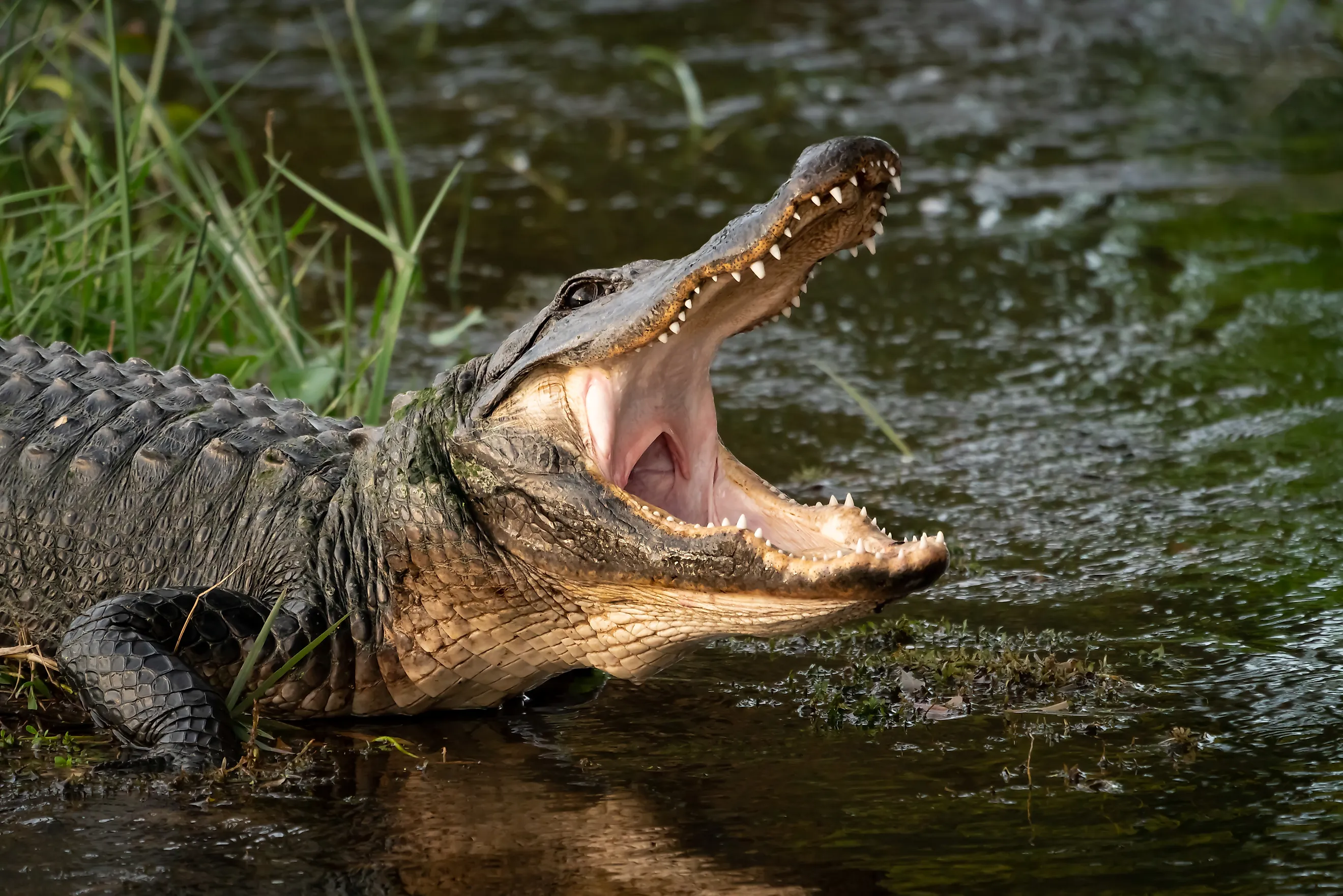
American alligators (Alligator mississippiensis) are widespread throughout the southeastern United States. In Florida, they are found in all 67 counties, inhabiting freshwater marshes, swamps, rivers, and lakes. However, determining their exact numbers within individual state parks can be difficult because alligators move freely between protected areas and surrounding waterways. The state parks on this list are known for their substantial alligator populations, either within park boundaries or in neighboring lakes, rivers, and wetlands.
Myakka River State Park, Florida

Myakka River State Park is one of Florida's largest and oldest state parks. The Myakka River flows through the park's more than 37,000 acres of wetlands, prairies, hammocks, and pinelands. The banks of the tea-colored river are lined with palm trees and live oaks. The park forms part of the larger Myakka Island conservation area, which encompasses more than 80,000 acres.
Hundreds of American alligators inhabit the park's waterways and wetlands, where they bask on logs and riverbanks. Courtship generally begins in April, with mating occurring in May or June. During hot weather, alligators regulate their body temperature by moving between sunlit areas, shade, and water, which can affect how often visitors see them.
Brazos Bend State Park, Texas

Much of Brazos Bend State Park's roughly 5,000 acres lies within the Brazos River floodplain, although the park also contains areas of upland coastal prairie. During the rainy season, swales and depressions fill with water, creating freshwater marshes. Along with the Brazos River, Big Creek flows through the park, connecting with sloughs and oxbow lakes. Altogether, the park contains approximately 1,000 acres of water.
Texas Parks and Wildlife estimates that 250 alligators longer than six feet (1.8 meters) inhabit the park, excluding smaller juveniles and hatchlings. Alligators are particularly common around Elm Lake and 40-Acre Lake, where they frequently haul out along the shorelines.
Okefenokee State Park, Georgia

Okefenokee State Park (formerly Stephen C. Foster State Park) is a gateway to Okefenokee Swamp, one of North America's largest blackwater wetlands. Although the park is only 120 acres, it is located within the roughly 438,000-acre Okefenokee Swamp. An estimated 12,000 to 15,000 alligators inhabit the wider swamp's interconnected wetlands and open prairies.
Despite the park's small acreage, visitors can encounter high concentrations of alligators in its waterways. Ranger-led boat tours, along with rented kayaks and canoes, provide access to these waterways. In July 2025, about 300 alligators gathered around the park's boat basin and canal. The unusual congregation lasted about 24 hours, and researchers could not establish its cause.
Lake Kissimmee State Park, Florida

Lake Kissimmee State Park is a 5,930-acre park bordering Lake Kissimmee, Florida's third-largest lake, which spans approximately 34,948 acres. The park contains 12 different natural communities, including floodplain marshes, pine and scrubby flatwoods, and shady hammocks. It is located within the upper Kissimmee Chain of Lakes, near Lake Rosalie and Lake Tiger.
The wider Kissimmee watershed forms the headwaters of the Everglades, with water flowing south through Lake Okeechobee. Lake Kissimmee itself supports one of Florida's largest alligator populations, with the Florida Fish and Wildlife Conservation Commission (FWC) estimating 16,200 alligators in the lake and its associated wetlands in 2024.
Lake Griffin State Park, Florida

Lake Griffin State Park encompasses 620 acres of swamps, marshes, and hardwood uplands near Lake Griffin. Near the park entrance stands Florida's second-largest live oak, estimated to be roughly 400 years old. A boat ramp and dock at the head of a 1,000-foot (304-meter) canal allow visitors to kayak or canoe into the Dead River, which connects to Lake Griffin, part of the Harris Chain of Lakes.
Lake Griffin is one of Florida's largest lakes, spanning approximately 9,428 acres. It also supports a sizable alligator population. According to FWC estimates for 2024, 7,370 alligators inhabited the lake, making it one of Florida's most heavily populated alligator waters.
Lake Fausse Pointe State Park, Louisiana

Lake Fausse Pointe State Park occupies 6,000 acres along the western edge of the Atchafalaya Basin, the largest swamp in the United States. Louisiana is home to more than 3 million wild alligators, giving it the largest estimated alligator population of any state. The park's wetlands include swamps, bayous, and lakes bordered by stands of cypress trees.
Alligators are regularly encountered in these waterways and surrounding marshes. Although levee construction altered Lake Fausse Pointe's historical connection to the Atchafalaya River system, the park retains extensive wetland habitats suitable for alligators. Its location near the greater Atchafalaya Basin places it within one of Louisiana's most important alligator habitats.
An Abundance of Alligators
While some state parks have documented estimates of their resident alligators, others provide access to much larger ecosystems that support thousands of North America's largest reptiles. Florida's freshwater lakes, the Brazos River floodplain in Texas, and the expansive swamps of Georgia and Louisiana give these animals room to bask, breed, and move freely between waterways. Although populations differ between parks and their surrounding wetlands, all six destinations are home to large numbers of American alligators.