12 Most Advanced Countries in the World
Global Finance Magazine's ranking of the world's most technologically advanced countries draws on four metrics. The first is the share of population with internet access. The second is the share of population on LTE or 4G mobile networks. The third is the IMD World Competitiveness Center's Digital Competitiveness Score. The fourth is research and development spending as a share of GDP. The twelve countries below are the ones Global Finance places at the top of the resulting ranking, with the supporting industry data refreshed to the most recent figures available in 2026.
1. South Korea (Score: 6.63)

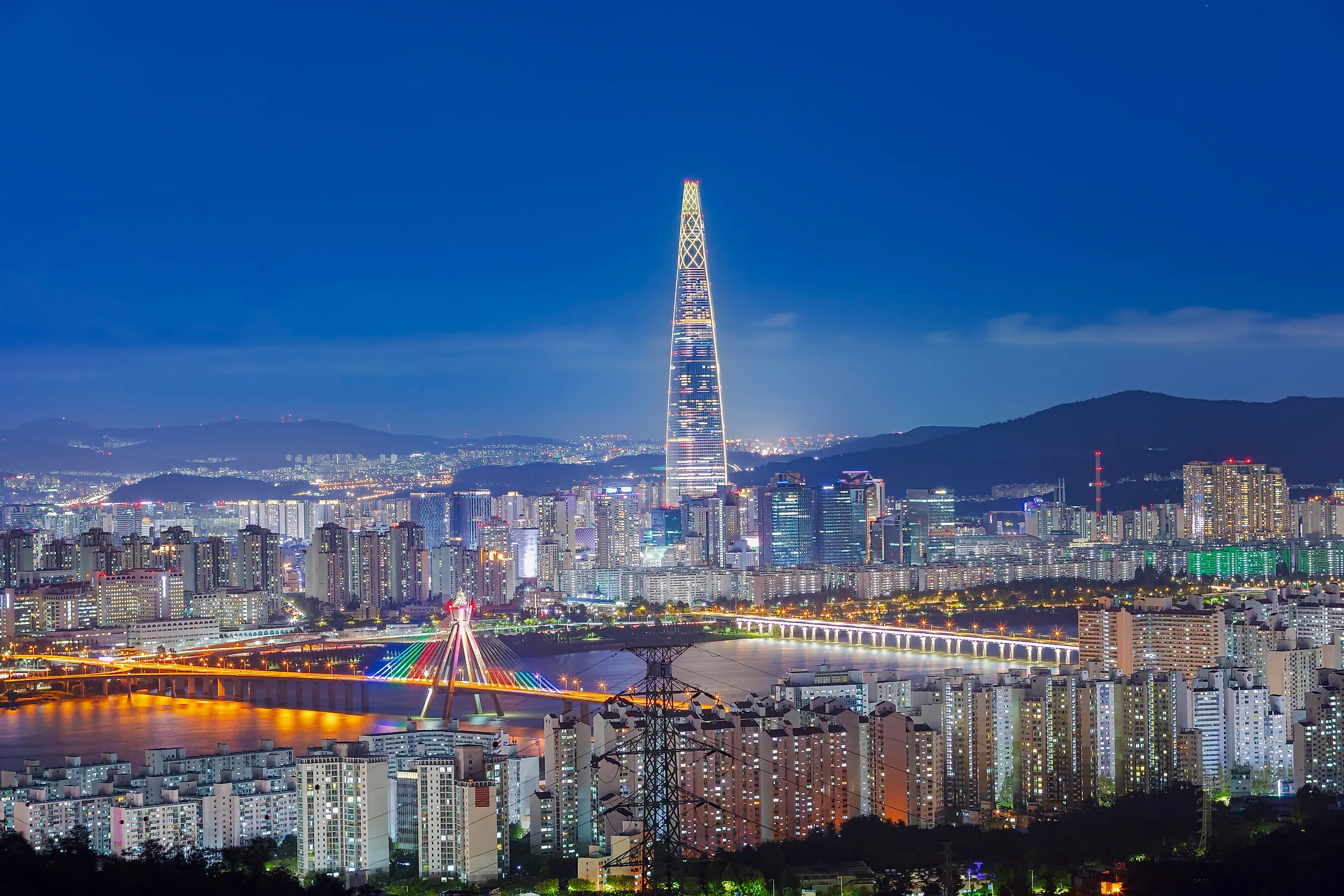
South Korea spent approximately 5.0% of GDP on research and development in 2023, the second-highest share in the OECD after Israel and one of the highest national R&D intensities in the world according to OECD Main Science and Technology Indicators data released in 2025. The country launched the world's first commercial 5G mobile network in April 2019, and internet penetration now exceeds 99% of the population. Samsung Electronics is among the world's largest semiconductor companies by revenue, competing year to year with TSMC and Nvidia for the top position, and remains the world's largest smartphone manufacturer by unit volume. Samsung also held a roughly 7.2% share of the global foundry market in 2025 (a distant second to TSMC) according to TrendForce. SK Hynix is the world's second-largest memory chip manufacturer after Samsung, with Micron in third, and benefited from booming high-bandwidth memory demand for AI accelerators through 2024 and 2025. LG anchors consumer displays and electric vehicle batteries through LG Energy Solution. Hyundai-Kia is the world's third-largest automaker by sales after Toyota and Volkswagen. The combination of universal digital infrastructure and very high national R&D intensity keeps South Korea at the top of the Global Finance ranking.
2. United States (Score: 4.94)

The United States recorded approximately $823 billion in total R&D spending in 2023 according to the National Science Foundation and OECD figures, the highest absolute figure of any country and roughly 3.4% of GDP. Silicon Valley, the corridor running between San Jose and San Francisco, hosts the headquarters of Apple, Alphabet, Meta, and Nvidia, while Seattle hosts Microsoft and Amazon. These six companies, joined by Tesla, are the "Magnificent Seven" that accounted for the majority of US equity market gains in 2023 and 2024. Nvidia briefly became the world's most valuable listed company in 2024 on the back of AI accelerator demand and continues to anchor data-center compute supply. The university research base, including MIT, Stanford, Caltech, Carnegie Mellon, and the University of California system, produces an outsized share of global citations in computer science and artificial intelligence. The current generative-AI investment cycle is led from the United States, with OpenAI, Anthropic, and Google DeepMind setting the pace at the frontier. What keeps the country below the top spot in this particular ranking is lower internet penetration than South Korea and the Nordic states, not any shortfall in research capacity.
3. Taiwan (Score: 4.90)

Taiwan rose to third in the Global Finance ranking on the strength of its semiconductor industry. Taiwan Semiconductor Manufacturing Company (TSMC), founded in 1987 in Hsinchu by Morris Chang, captured approximately 70% of the global foundry market in 2025 according to TrendForce, posting US$122.5 billion in foundry revenue, up 36% year-on-year. TSMC also accounts for the overwhelming majority of advanced sub-7-nanometer chip production globally and remains the sole external manufacturer of Apple's most advanced silicon and of Nvidia's leading AI accelerators. Advanced technologies (7-nanometer and below) made up 77% of total wafer revenue in Q4 2025. The Hsinchu Science Park is the geographic core of Taiwan's semiconductor and electronics industry. Foxconn (Hon Hai Precision Industry) is the world's largest contract electronics manufacturer and assembles the majority of iPhones. MediaTek leads mobile system-on-chip designs outside the Apple-Samsung-Qualcomm tier. ASUS, Acer, and HTC anchor consumer computing brands. Taiwan spent about 4.0% of GDP on R&D in 2023 according to OECD MSTI data, with that figure trending upward each year. The strategic centrality of TSMC's manufacturing capability has made semiconductor policy one of the most consequential areas of US-China economic competition since 2022.
4. Denmark (Score: 4.79)

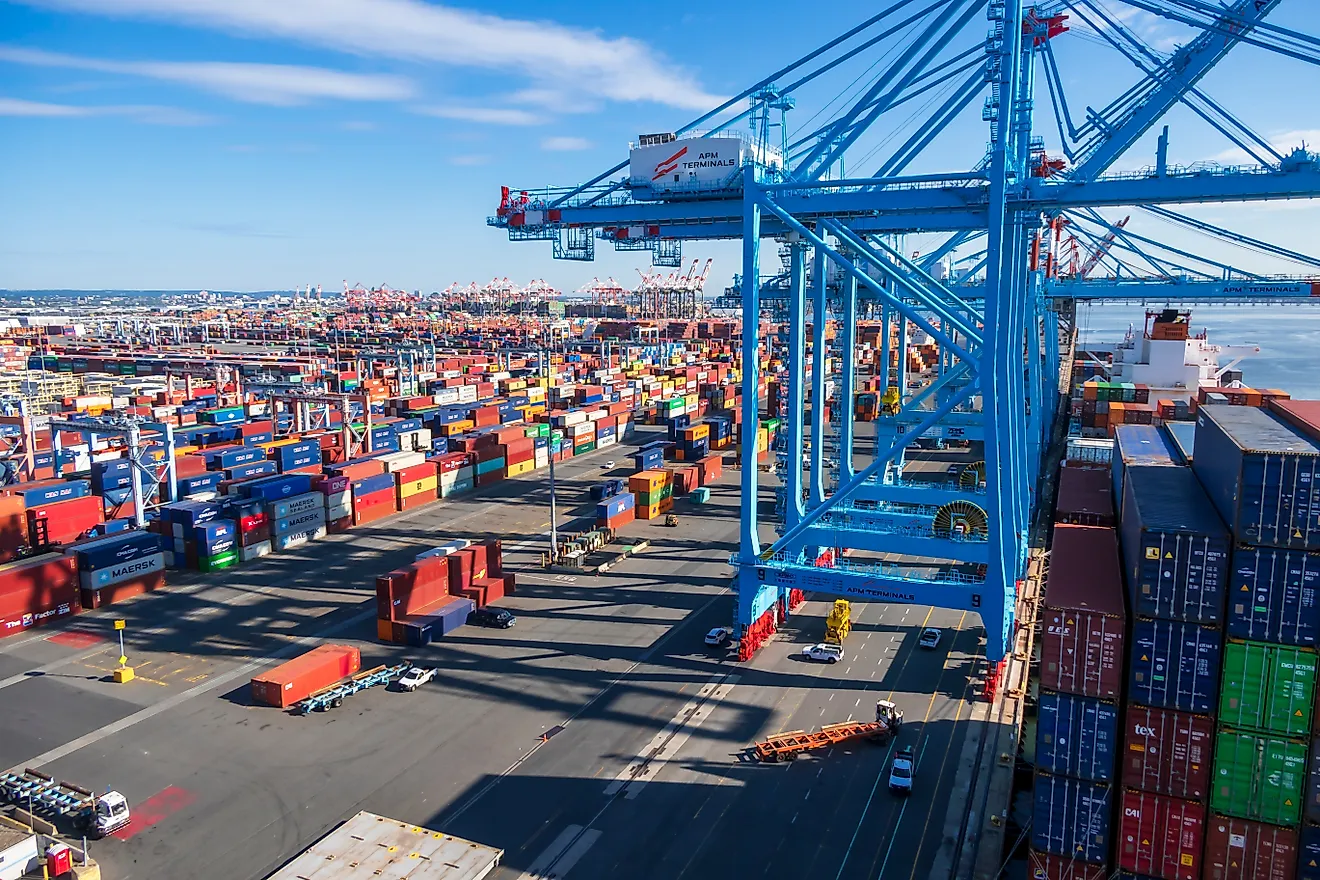
Denmark's technological position rests on green technology and pharmaceutical manufacturing. Vestas, headquartered in Aarhus, is the world's largest manufacturer of wind turbines, with cumulative installed capacity exceeding 190 GW globally as of 2025. Ørsted, formerly the state oil-and-gas company DONG Energy, is the world's largest operator of offshore wind farms by capacity. Novo Nordisk, the manufacturer of the GLP-1 agonist drugs Ozempic and Wegovy for diabetes and obesity, surged to become Europe's most valuable listed company in 2023 before losing roughly 60% of its peak market capitalisation through 2024 and 2025 on disappointing clinical trial results, competition from Eli Lilly's tirzepatide franchise, and a board decision in May 2025 to replace CEO Lars Fruergaard Jorgensen. The company briefly reclaimed Europe's top spot from SAP in June 2025 before falling back. Its market capitalisation stood near $200 billion in May 2026. Maersk, headquartered in Copenhagen, is the world's second-largest container shipping company after Switzerland-based MSC. Denmark spent approximately 3% of GDP on R&D in 2023 according to OECD figures. The Technical University of Denmark (DTU) and the University of Copenhagen supply the research base. In 2023, Denmark approved Europe's first nationwide green hydrogen pipeline network, scheduled for full operation by 2031.
5. Switzerland (Score: 4.68)

Switzerland combines pharmaceutical manufacturing, finance, and precision engineering at a scale disproportionate to its population of about 9 million. Roche and Novartis consistently rank among the largest pharmaceutical companies in the world by revenue, typically in the top five. ETH Zurich and EPFL are consistently ranked among the world's top 20 universities, and ETH alumni include 22 Nobel laureates including Albert Einstein, who studied there from 1896 to 1900 before publishing his 1905 papers. CERN, on the Franco-Swiss border outside Geneva, operates the Large Hadron Collider, the world's largest particle accelerator at 27 km in circumference, where the Higgs boson was confirmed in July 2012. ABB, headquartered in Zurich, is a global leader in industrial automation and electrification equipment. Logitech is a major peripherals manufacturer. Switzerland spent approximately 3.4% of GDP on R&D in 2023 and ranks first in Europe by patents per capita. The Swiss Federal Institute of Intellectual Property and the country's history of political neutrality have made Zurich a preferred European research base for major US technology companies, including Google and IBM.
6. Israel (Score: 4.10)

Israel spent approximately 6.3% of GDP on research and development in 2023 according to OECD MSTI data, the highest share of any country in the world. Total R&D expenditure that year reached $28.3 billion, with around 92% driven by the private sector. The country has approximately 6,000 active startups and more than 100 companies that have reached unicorn valuation. Unit 8200, the Israel Defense Forces' signals intelligence unit, is the most prolific single source of cybersecurity entrepreneurs anywhere in the world, with alumni having founded Check Point Software, Palo Alto Networks (US-headquartered but Israeli-founded), CyberArk, and dozens of others. Mobileye, founded in 1999, is the world's leading supplier of advanced driver-assistance systems; Intel acquired the company in 2017 for $15.3 billion and spun it back out via IPO in October 2022. Waze, the navigation application, was acquired by Google for $966 million in 2013. Wix is a major no-code website builder. The October 2023 Hamas attack and the subsequent Gaza war triggered the largest reservist call-up in Israeli history and significantly affected the technology workforce. The US-Israeli coordinated strikes on Iran in late February 2026 and the resulting regional war added further pressure on the sector through the first half of 2026.
7. Finland (Score: 3.94)

Finland's technological identity is no longer defined by the Nokia mobile phone era, which effectively ended when Microsoft acquired the Nokia handset business in 2014 (the feature phone business and Nokia brand licensing later passed to HMD Global in 2016). Today's Nokia, headquartered in Espoo, is a major manufacturer of 5G network infrastructure equipment, competing with Ericsson, Samsung, and Huawei. The Finnish gaming sector is among the highest-output per capita in the world. Supercell (the maker of Clash of Clans and Clash Royale, majority-owned by Tencent since 2016) and Rovio (the maker of Angry Birds, acquired by Sega in 2023 for $776 million) anchor the segment. Wärtsilä leads marine power systems and engines. KONE is among the world's largest manufacturers of elevators and escalators. Finland's R&D spending was approximately 3.0% of GDP in 2023 according to OECD figures, and the government has set a target of 4% by 2030. The country's high digital infrastructure adoption and consistent education performance (the PISA scores that drew international attention in the 2000s have moderated but remain strong) sustain the ranking.
8. Netherlands (Score: 3.79)

ASML Holding, headquartered in Veldhoven, is the world's sole manufacturer of extreme ultraviolet (EUV) lithography machines, the equipment required to fabricate the most advanced semiconductor nodes. Each EUV machine costs approximately $150 million to $380 million, weighs about 180 tonnes, and is delivered in roughly 40 separate shipments. ASML recognized revenue on 44 EUV systems in 2024 (42 standard NXE and 2 High-NA EXE) and reported total net sales of €28.3 billion for the year. The company has begun the multi-year rollout of its High-NA EXE generation, which doubles resolution at the leading edge. ASML's market capitalisation was approximately $560 billion in May 2026, making it among the most valuable listed companies in Europe. Philips, headquartered in Amsterdam and now focused entirely on health technology, divested its consumer electronics businesses through the 2010s. Booking.com, headquartered in Amsterdam, dominates European online travel. TomTom remains a major automotive mapping and navigation provider. The Amsterdam Internet Exchange (AMS-IX) is consistently among the largest internet exchange points in the world by traffic. The Netherlands' engineering talent is supplied by Delft University of Technology, Eindhoven University of Technology, and Wageningen University.
9. Sweden (Score: 3.76)

Spotify, founded in Stockholm in 2006 by Daniel Ek and Martin Lorentzon, reached 751 million monthly active users and 290 million paid subscribers at the close of 2025, remaining the world's leading paid music streaming service. Ek stepped down as CEO on January 1, 2026 to become Executive Chairman, with Gustav Söderström and Alex Norström taking over as co-CEOs. Ericsson, headquartered in Stockholm, is one of the four major global suppliers of 5G mobile network infrastructure alongside Nokia, Samsung, and Huawei. Klarna pioneered the modern buy-now-pay-later model and listed on the New York Stock Exchange in September 2025 after a multi-year valuation reset. Volvo Cars (Geely-owned since 2010) and the separately owned Volvo Trucks anchor automotive manufacturing. Northvolt, the European Union's flagship lithium-ion battery manufacturer and a centerpiece of European battery sovereignty plans, filed for Chapter 11 bankruptcy protection in the United States in November 2024 and entered Swedish bankruptcy proceedings in March 2025, a significant setback for the regional battery industry. Sweden's R&D spending was approximately 3.6% of GDP in 2023, and the country has one of the world's highest rates of digital payment adoption.
10. Norway (Score: 3.59)

Norway generates roughly 88% of its electricity from hydropower alone and approximately 98% from renewables overall, the highest renewable share of any developed country. Battery electric vehicles accounted for 95.9% of new car sales in Norway in 2025, and 97.6% in December alone, effectively meeting the country's long-standing target of phasing out conventional internal combustion engine sales by year-end 2025 according to Norwegian Road Federation data released in January 2026. Equinor (formerly Statoil) and Aker BP operate the country's offshore oil and gas industry, which funds the Government Pension Fund Global, the world's largest sovereign wealth fund at approximately $2 trillion in assets as of late 2025 and around $2.2 trillion before the Q1 2026 market correction. The fund holds an average of roughly 1.5% of every listed company in the world. Norwegian shipbuilding heritage has translated into modern leadership in offshore wind installation vessels, aquaculture systems, and maritime electrification. Norway's R&D spending of approximately 1.9% of GDP is the lowest among the top twelve countries on this list. The high overall position reflects very strong digital infrastructure adoption and a high Digital Competitiveness Score.
11. Singapore (Score: 3.50)

Singapore spends approximately 2.2% of GDP on research and development. The Research, Innovation and Enterprise 2025 plan allocated approximately S$25 billion (about US$18.5 billion) to public-sector R&D over the 2021 to 2025 period, the country's largest single five-year science commitment, and the successor RIE2030 plan announced in 2025 increased the allocation further. Government research investment is channeled primarily through the Agency for Science, Technology and Research (A*STAR). The One-North research district contains Biopolis (biomedical research) and Fusionopolis (information, communications, and engineering technology), purpose-built innovation precincts opened in the 2000s. Sea Limited, the parent of the e-commerce platform Shopee and the gaming company Garena, and Grab, the Southeast Asian ride-hailing and financial services platform, are the major Singapore-headquartered consumer technology companies. nuTonomy, an MIT spin-out, launched the world's first publicly accessible self-driving taxi service in Singapore in August 2016, operating with safety drivers in the One-North district. Singapore's bilingual English-Mandarin policy facilitates collaboration with both Western and Chinese technology ecosystems.
12. United Kingdom (Score: 3.49)

ARM Holdings, founded in Cambridge in 1990, designs the processor architectures that power approximately 99% of smartphones globally and an increasing share of laptops, including all current Apple Mac silicon. SoftBank acquired ARM in 2016 for $32 billion, then returned it to public markets via IPO on Nasdaq in September 2023. The company's market capitalisation exceeded $150 billion in 2025 on the back of AI-related licensing growth. DeepMind, founded in London in 2010 by Demis Hassabis, Shane Legg, and Mustafa Suleyman and acquired by Google in 2014 for approximately $500 million, developed AlphaGo, which defeated world Go champion Lee Sedol in March 2016, and AlphaFold, which by 2022 had predicted three-dimensional structures for nearly all 200 million proteins known to science. The Oxford-AstraZeneca COVID-19 vaccine, developed in 2020 at the Jenner Institute under Sarah Gilbert, became one of the most widely distributed vaccines in the global pandemic response. The first international AI Safety Summit was held at Bletchley Park, the site of the World War II codebreaking effort that produced Alan Turing's work, in November 2023, hosting representatives from 28 countries. The subsequent summits in Seoul (May 2024) and Paris (February 2025) extended the framework. UK R&D spending is approximately 2.9% of GDP. The Cambridge cluster, sometimes called Silicon Fen, anchors deep-technology research. The United Kingdom also remains the largest single venture-capital recipient in Europe by funding raised.
What the Top Twelve Share
The countries on this list are all wealthy nations with developed economies, but they fall into two distinct groups under the Global Finance methodology. The first group consists of large absolute spenders with the scale to lead in particular sectors: the United States in AI and venture capital, Taiwan in semiconductor manufacturing, the United Kingdom in artificial intelligence research. The second group consists of smaller economies with the population density and policy coherence to deploy advanced digital infrastructure across nearly the entire population and to maintain very high R&D intensity: South Korea, Israel, Switzerland, the Nordic countries, and Singapore. The conspicuous absentees from the top tier (China at 41st, India at 65th, Japan at 16th) are absent for different reasons. China's R&D investment is enormous in absolute terms, reaching approximately $723 billion in 2023 and second only to the United States, but its internet penetration of roughly 78% of population remains below that of advanced economies. India's R&D spending as a share of GDP remains below 1%. Japan's ranking decline reflects falling internet usage among the elderly and a Digital Competitiveness Score that has slipped year-on-year. The list is best read as a snapshot of national digital and research capacity per capita, rather than absolute technological power, and it is dominated by countries that combine high education levels, high digital adoption, and sustained government commitment to R&D as a strategic priority.