The Lowest Temperature Ever Recorded In Every US State
The Lowest Temperature Ever Recorded In Every US State
Meta description: Alaska hit -80°F in 1971. Every US state record low, where it happened, and whether that spot is reliably the coldest or just got unlucky once.
A 92-degree gap separates the coldest temperatures ever officially recorded in Alaska and Hawaii. Alaska reached a staggering -80°F in 1971, the lowest verified temperature in United States history. Hawaii's record low, meanwhile, is 12°F. It is the only state that has never officially fallen below zero.
These extremes come from NOAA's State Climate Extremes records. Elevation, valleys that trap dense cold air, deep snow cover, calm winds, and major Arctic outbreaks all help explain why individual places can fall far below their usual winter temperatures.
One distinction runs through everything below. Some of these stations are simply where the cold lives, and they turn up near the bottom of the state rankings most winters. Others caught a once-in-a-century air mass and have never come close since. Tallahassee is not a cold place. It was a cold place for about six hours in 1899. Knowing which is which tells you more than the number does.
Jump To A Region
Fifty states is a lot to scroll. Use these to skip straight to the part of the country you want, or go to the full table of every record at the bottom.
- Northeast - record holder New York, -50°F and colder across northern New England
- Mid-Atlantic and Appalachians - record holder Maryland
- Southeast - record holder Kentucky
- Midwest - record holder Minnesota
- Great Plains - record holder North Dakota
- Mountain West - record holder Montana, and the coldest reading in the lower 48
- Southwest - a three-way tie at -50°F
- The Utah asterisk - the -69.3°F reading NOAA does not count
- Pacific Northwest and West Coast - record holder Oregon
- Alaska and Hawaii - the two ends of the national range
- The outbreaks that set the records
- Full table: every state record low
Northeast

The Northeast gets its cold from two directions. Canadian air arrives overland with nothing to warm it, and the region's mountains and narrow valleys give that air somewhere to settle once it stops moving. Northern New England and the Adirondacks do most of the work, while the coastal states are protected by an ocean that stays warmer than the land all winter.
Regional record holder: New York, -52°F.
New York: -52°F, Stillwater Reservoir and Old Forge
Stillwater Reservoir on February 9, 1934, and Old Forge on February 18, 1979. Both sit in the Adirondacks, where cold air drains off the high peaks into enclosed hollows and has nowhere to escape. This is routine territory rather than a fluke. Old Forge and the surrounding hollows report the state's lowest readings most winters, and the village is locally famous for it.
Maine: -50°F, Big Black River
January 16, 2009. The station sits in far northern Maine near the Quebec border, about as far from the moderating Atlantic as the state allows, with deep snow cover and a long clear night. Reliably one of the coldest spots in New England, and the fact that this record is recent rather than historic says something about how consistently cold that corner remains.
New Hampshire: -50°F, Mount Washington
January 22, 1885. Mount Washington is a special case: at 6,288 feet it is not a cold-air basin but an exposed summit, and its extremes come from altitude and wind rather than from still air pooling. The summit is almost always the coldest place in the state, and it holds one of the highest surface wind speeds ever recorded on earth.

Vermont: -50°F, Bloomfield
December 30, 1933. Bloomfield lies in the Northeast Kingdom where the Connecticut River valley narrows and Canadian air settles into the bottom. A regular contender rather than a one-off, and the surrounding towns routinely run colder than anywhere else in the state.
Pennsylvania: -42°F, Smethport
January 5, 1904. Smethport sits in a valley on the northern Pennsylvania plateau that collects cold air overnight. The reading came during a severe outbreak, though the valley is genuinely cold country and the broader region competes for the state's lowest readings each winter.
Massachusetts: -35°F, Chester
January 12, 1981. Chester is in the Berkshire hills, far enough inland that the Atlantic cannot moderate it. The Berkshires are consistently the coldest part of the state, though a reading this low required an unusually strong air mass on top of that.
New Jersey: -34°F, River Vale
January 5, 1904. This one is a genuine outlier. River Vale is in suburban Bergen County, a short drive from New York City, and nothing about it suggests record cold. The same enormous outbreak that set Pennsylvania's record that morning pushed Canadian air far enough south to overwhelm the usual coastal moderation. It has not been close since.
Connecticut: -32°F, Falls Village and Coventry
Falls Village on February 16, 1943, and Coventry on January 22, 1961. Both are inland, away from Long Island Sound. Falls Village in the northwest hills is a frequent cold spot, but readings in the minus thirties require a severe outbreak rather than an ordinary cold night.

Rhode Island: -28°F, Wood River Junction
January 11, 1942. Rhode Island is small and coastal, so this was always going to take an exceptional event. Wood River Junction sits in a sheltered inland hollow in the state's rural southwest, which makes it the most plausible location, but the temperature itself was a one-off.
Mid-Atlantic And Appalachians
This is where the map starts to disagree with intuition. Maryland and West Virginia sit well south of New England, yet their records beat those of Massachusetts and Rhode Island, because the Appalachian Plateau lifts the land to 3,000 feet and higher. Every record in this group came from high ground, not from the coastal plain where most of the population lives.
Regional record holder: Maryland, -40°F.
Maryland: -40°F, Oakland
January 13, 1912. Oakland is in Garrett County on the Appalachian Plateau, roughly 2,400 feet up and climatically closer to Vermont than to Chesapeake Bay. It is reliably the coldest place in the state, and local residents regard the distinction as entirely unsurprising.
West Virginia: -37°F, Lewisburg
December 30, 1917. The Greenbrier Valley sits between ridges that trap dense air near the surface on clear nights. High-elevation West Virginia routinely produces the state's lowest readings, and nearby Canaan Valley is among the coldest places in the eastern United States.
Virginia: -30°F, Mountain Lake Biological Station
January 21, 1985. At roughly 3,800 feet in the Appalachians, the station was fully exposed to one of the most powerful Arctic air masses to reach the Southeast in the twentieth century. The site is routinely cold for Virginia, but January 1985 was the extraordinary part.
Delaware: -17°F, Millsboro
January 17, 1893. Delaware has no high ground and no shelter from the ocean's influence, so this was entirely a product of the air mass. Millsboro is inland by Delaware standards, which is to say barely. A clear one-off.
Southeast

The Southeast splits neatly in two. The Appalachian states have real cold country in their mountains, where elevation does the work year after year. The Gulf and Atlantic coastal states have none, and every one of their records traces to a single catastrophic outbreak, mostly February 1899 or January 1966. These are not cold places that got colder. They are warm places that were briefly unrecognisable.
Regional record holder: Kentucky, -37°F.
Kentucky: -37°F, Shelbyville
January 19, 1994. Fresh snow cover, light winds and a powerful Arctic high let temperatures collapse overnight across the state. Shelbyville is ordinary central Kentucky farmland rather than a known cold pocket, which makes this an event record rather than a geographic one.
North Carolina: -34°F, Mount Mitchell
January 21, 1985. At 6,684 feet, Mount Mitchell is the highest point east of the Mississippi River and is the coldest place in the state on most days of the year, not just this one. The summit is decades colder in character than the Piedmont an hour away.
Tennessee: -32°F, Mountain City
December 30, 1917. Mountain City sits around 2,400 feet in the far northeastern Appalachian corner of the state, reliably among Tennessee's coldest. The same outbreak set West Virginia's record on the same day.
Arkansas: -29°F, Brook Farm Pond near Gravette
February 13, 1905. Northwestern Arkansas sits on elevated Ozark terrain and is routinely colder than the southern lowlands, but a reading this far below zero required the nationwide cold wave that also set the Kansas and Missouri records the same day.
Alabama: -27°F, New Market
January 30, 1966. New Market is in the far northern tip of the state near the Tennessee line, which is the only part of Alabama with any real exposure to Arctic air. Even so, this was a freak outbreak and the Gulf Coast three hours south stayed far warmer.
Mississippi: -19°F, Corinth
January 30, 1966. The same cold wave, the same day, the same geography: Corinth sits in the northeastern corner against the Tennessee border. Northern Mississippi is the coldest part of the state, but nineteen below is not something it does.
South Carolina: -19°F, Caesars Head
January 21, 1985. Caesars Head sits above 3,000 feet on the Blue Ridge Escarpment, the one piece of South Carolina with genuine mountain climate. Routinely the state's coldest spot, though this particular reading belongs to the great January 1985 outbreak.
Georgia: -17°F, CCC Fire Camp F-16 near Beatum
January 27, 1940. A Civilian Conservation Corps camp in the higher terrain of northern Georgia. The north Georgia mountains are reliably the coldest part of the state, but the station itself no longer exists, which is a reminder of how much these records depend on where somebody happened to be keeping a thermometer.
Louisiana: -16°F, Minden
February 13, 1899. The Great Arctic Outbreak pushed air deep into the Gulf states that had no business being there. Minden is in the northwest corner, the coldest part of Louisiana, but this is as pure a one-off as the list contains.
Florida: -2°F, Tallahassee
February 13, 1899. The southernmost contiguous state has officially dipped below zero exactly once, in the Panhandle, during the most severe Arctic outbreak in American records. Tallahassee averages lows in the forties in February. Nothing about this reading is repeatable, and no Florida station has come within fifteen degrees of it since.
Midwest

The Upper Midwest is the only part of the country outside the mountains and Alaska that produces extreme cold as a matter of routine. Northern Minnesota, Wisconsin and Michigan combine high latitude, deep reliable snow cover, long nights and interior position, and the Great Lakes complicate the picture by keeping shoreline communities measurably warmer than places fifty miles inland.
Regional record holder: Minnesota, -60°F.
Minnesota: -60°F, Tower
February 2, 1996. Tower sits in a low, snow-covered basin in the state's northeastern interior and is the most dependable cold spot in the contiguous United States outside the mountain West. It records subzero readings dozens of times a winter and competes with Embarrass nearby for the state's daily low with some regularity.
Wisconsin: -55°F, Couderay
February 2 and 4, 1996. Twice in three days, during the same air mass that set Minnesota's record. Couderay is in the northwestern lake country, routinely among the state's coldest, and the repetition within one week shows how exceptional that particular February was.
Michigan: -51°F, Vanderbilt
February 9, 1934. Vanderbilt is inland in the northern Lower Peninsula, far enough from both Lake Michigan and Lake Huron that the water cannot moderate it. The surrounding region is consistently the coldest in the Lower Peninsula, and the Upper Peninsula runs colder still in most winters.
Iowa: -47°F, Washta and Elkader
Washta on January 12, 1912, and Elkader on February 3, 1996. Washta has traded on the nickname "coldest spot in Iowa" for more than a century. Both readings followed major Arctic incursions, and the 1996 event is the same one that set the Minnesota and Wisconsin records that week.
Missouri: -40°F, Warsaw
February 13, 1905. Warsaw is in west-central Missouri, not an obvious cold pocket, and the reading belongs to the nationwide cold wave rather than to the location. The same day set records in Kansas and Arkansas.
Ohio: -39°F, Milligan
February 10, 1899. The Great Arctic Outbreak again, producing extremes across the entire eastern half of the country. Milligan is a small community in the southeastern hills; Ohio's routinely coldest ground is farther north, which marks this as an event record.
Illinois: -38°F, Mount Carroll
January 31, 2019. The most recent record on this list, set during the polar vortex outbreak, and it replaced a mark that had stood since 1930. Mount Carroll is in the hilly northwestern corner, the coldest part of the state, but 2019 was genuinely extraordinary.
Indiana: -36°F, New Whiteland
January 19, 1994. Fresh snow, light winds and Arctic high pressure let temperatures collapse overnight just south of Indianapolis. New Whiteland is unremarkable terrain, and the same morning set Kentucky's record an hour south.
Great Plains

The plains have no topography to stop anything. Air that leaves the Canadian prairies can travel to Texas without crossing a single ridge, which is why this is the one region where a state as far south as Oklahoma can post a reading in the minus thirties. The gradient is steep: the Dakotas belong to the coldest group in the country, while Texas at the other end is merely occasionally startled.
Regional record holder: North Dakota, -60°F.
North Dakota: -60°F, Parshall
February 15, 1936. The winter of 1935-36 remains the benchmark for prolonged cold on the northern plains, and North Dakota is routinely the coldest state in the contiguous US by average winter temperature. Parshall is not a freak location. It is representative.
South Dakota: -58°F, McIntosh
February 17, 1936. Two days after the North Dakota record, during the same extended cold spell. McIntosh sits near the North Dakota line in the state's cold northern tier.

Nebraska: -47°F, Bridgeport and Oshkosh
Bridgeport on February 12, 1899, and Oshkosh on December 22, 1989. Both are in the western panhandle, higher and more continental than the eastern part of the state, and that corner is reliably Nebraska's coldest. Two records ninety years apart in the same small area is a geography signal rather than coincidence.
Kansas: -40°F, Lebanon
February 13, 1905. Lebanon sits near the geographic centre of the contiguous United States, about as continental as a location can be, with no water or terrain to soften an air mass. Northern Kansas is routinely the state's coldest, though forty below took the 1905 wave.
Oklahoma: -31°F, Nowata
February 10, 2011. A striking one, because Nowata is in the northeastern river valleys rather than the higher panhandle where Oklahoma's cold usually concentrates. Fresh deep snow and a calm night let cold air pool in the valley bottom, producing a reading far below anything the surrounding region normally sees.
Texas: -23°F, Tulia and Seminole
Tulia on February 12, 1899, and Seminole on February 8, 1933. Both sit on the elevated, dry plains of the Panhandle and West Texas, which is consistently the coldest part of the state. Still, minus twenty-three is not a Texas number in any ordinary winter.
Mountain West

This is the coldest region in the lower 48, and almost none of it is about latitude. Every record here was set in a basin, a pass or a high valley where dense air drains downhill after dark and collects with nowhere to go. All four states exceed -60°F, something no other region manages, and three of the four records came from sites above 5,000 feet.
Regional record holder: Montana, -70°F, also the record for the entire contiguous United States.
Montana: -70°F, Rogers Pass
January 20, 1954. The precise reading was -69.7°F, and it remains the lowest temperature ever officially recorded in the contiguous United States. Rogers Pass lies along the Continental Divide at roughly 5,600 feet, in terrain built for exactly this. Montana produces extreme cold every winter, though seventy below has never been approached since.

Wyoming: -66°F, Riverside Ranger Station
February 9, 1933. The station sits inside Yellowstone National Park, where high elevation, dependable snow cover and sheltered valleys combine. Yellowstone is routinely among the coldest places in the country, and interior park stations regularly report the lowest reading in the lower 48 on winter mornings.
Colorado: -61°F, Maybell
February 1, 1985. Maybell occupies a high basin in the northwest where cold air drains off surrounding terrain and settles. It is a habitual cold spot that turns up in Colorado's daily minimum reports all winter, and the same outbreak that produced this reading set the Utah unofficial record the same day.
Idaho: -60°F, Island Park Dam
January 18, 1943. The Island Park basin sits at high elevation just west of Yellowstone and is one of the better cold-air traps in the Rockies. Reliably cold rather than freakish, and the surrounding caldera floor regularly posts Idaho's lowest winter temperatures.

All four Mountain West records sit above 5,000 feet, and three of the four were set within basins or passes rather than on open ground.
Southwest

The Southwest produces the list's most counterintuitive numbers. Three of these four states tie at exactly -50°F, matching Vermont and Maine, and Arizona's record beats those of Massachusetts and Connecticut. The desert reputation applies only to the low country. Above 7,000 feet the air is thin and dry, holds almost no heat after sunset, and the basins between the ranges trap whatever cold settles into them.
Regional record holders: New Mexico, Nevada and Utah, tied at -50°F.
New Mexico: -50°F, Gavilan
February 1, 1951. Gavilan sits above 7,000 feet in the northern mountains, and the state's high country is routinely far colder than Albuquerque or the southern desert. The number surprises people who know only the southern half of the state.
Nevada: -50°F, San Jacinto
January 8, 1937. San Jacinto is in the far northeastern corner, in the high basins of the Great Basin. Clear skies and dry air let these valleys shed heat quickly after dark, and northern Nevada posts subzero readings as a matter of course.
Utah: -50°F, Strawberry Tunnel (East)
January 5, 1913. High elevation and terrain capable of trapping dense cold air. Utah is also the one state where the official number understates what has actually been measured, for reasons set out below.
Arizona: -40°F, Hawley Lake
January 7, 1971. The station sits above 8,000 feet in Arizona's White Mountains, a world away from Phoenix. Hawley Lake is consistently the coldest reporting site in the state and is not an accident of timing, which is why Arizona's record beats several New England states.
The Utah Asterisk
On February 1, 1985, a research station in a limestone sinkhole called Peter Sinks, high in the Bear River Mountains, registered -69.3°F. That is nearly twenty degrees colder than Utah's official record and the second-lowest temperature ever measured anywhere in the contiguous United States, behind only Rogers Pass.
It does not appear on NOAA's list because Peter Sinks is a research installation rather than an official cooperative observing station, and the State Climate Extremes Committee recognises only archived observations from qualifying sites. The reading itself is not disputed. The Utah Climate Center at Utah State University has monitored the basin ever since.
The sinkhole is roughly half a mile across at 8,164 feet, shaped like a bowl with no outlet for water or air. On clear, calm nights the basin radiates away its heat and cold air slides down the surrounding slopes and pools on the floor with nowhere to go. Peter Sinks and neighbouring Middle Sink hold nearly every monthly low-temperature record in the state, which is about as far from a one-off as a cold record gets. It is the clearest illustration on this list of why terrain beats latitude.
Pacific Northwest And West Coast

Everything on this coast depends on which side of the mountains you stand. West of the Cascades and the Sierra, the Pacific keeps winters mild and record lows unremarkable. East of them, the same states turn continental, and all three records below were set inland in valleys that the ocean air never reaches.
Regional record holder: Oregon, -54°F.
Oregon: -54°F, Ukiah and Seneca
Ukiah on February 9, 1933, and Seneca the following day. Both are inland communities east of the Cascades in high valleys that trap cold air. Seneca in particular is a notorious cold hollow and reports some of the lowest temperatures in the Pacific Northwest most winters, which makes this geography rather than luck.
Washington: -48°F, Winthrop and Mazama
December 30, 1968, both on the same day. The Methow Valley lies east of the Cascades and is reliably the coldest inhabited part of Washington, running thirty degrees or more below Seattle on a clear winter night.
California: -45°F, Boca
January 20, 1937. Boca sits above 5,500 feet near Truckee in the Sierra Nevada, in a basin where surrounding mountains trap cold air. It is one of the better-known cold spots in the West and has a long history of extreme minimums, a fact that sits oddly beside California's reputation.
Alaska And Hawaii

These two states hold both ends of the national range and have nothing else in common. Alaska's interior combines everything that makes cold: high latitude, weeks without real daylight, permanent winter snow cover, and distance from any ocean. Hawaii has none of those and gets its record purely from altitude.
Regional record holder: Alaska, -80°F, the national record.
Alaska: -80°F, Prospect Creek Camp
January 23, 1971, the lowest officially verified temperature in US history. The camp housed pipeline construction workers in interior Alaska near the Arctic Circle, and the reading sits one degree above the North American record of -81°F set at Snag in the Yukon. Interior Alaska reaches -50°F most winters, so while eighty below is exceptional, the general territory is routine. Fairbanks, a few hours south, is the coldest city in the country.
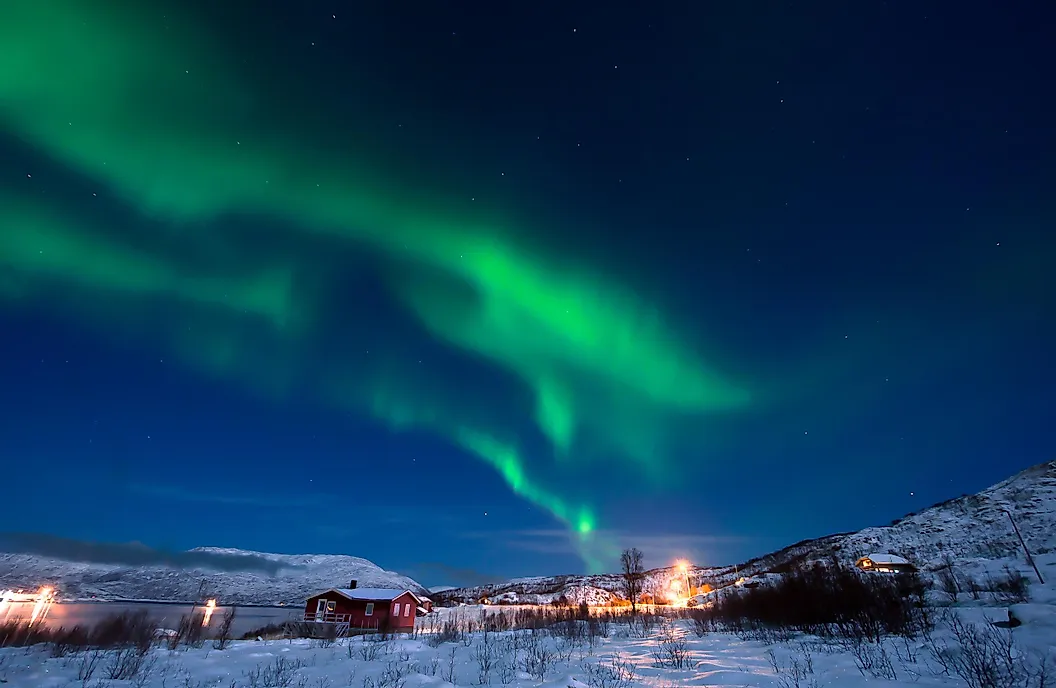
Hawaii: 12°F, Mauna Kea Observatory
May 17, 1979. Hawaii is the only state without an official subzero reading, but Mauna Kea's summit rises nearly 14,000 feet above the tropical Pacific. Note the date: the state record was set in May, not winter, because at that altitude the clarity of the night matters far more than the season. The summit routinely drops below freezing and gets snow, which is why it is the only place in Hawaii that could hold this record.
The Outbreaks That Set The Records
A remarkable share of this list traces back to a handful of events rather than to a hundred separate cold nights.
The Great Arctic Outbreak of February 1899 is the benchmark, setting or tying records in Florida, Louisiana, Nebraska, Ohio and Texas within a few days. It remains the only occasion on which every state in the contiguous US recorded a subzero temperature. February 1905 accounts for Arkansas, Kansas and Missouri. The prolonged cold of February 1936 produced both Dakota records. January 1985 set marks in Colorado, North Carolina, South Carolina and Virginia on nearly the same day, and produced the Peter Sinks reading. January 1994 claimed Indiana and Kentucky, and February 1996 delivered Minnesota, Wisconsin and one of Iowa's two.
Snow cover is the amplifier in almost every case. Fresh snow reflects most of the sunlight reaching it during the day and radiates heat away efficiently after dark, so an Arctic air mass arriving over snow-covered ground produces far lower readings than the same air mass over bare soil.
What America's Record Lows Reveal
Latitude matters, but terrain matters more. Arizona's record came from an 8,000-foot mountain lake rather than the desert, and it beats Massachusetts. New Mexico ties Vermont. Maryland beats Rhode Island. The coldest spot in a state is almost never its northernmost point; it is whichever basin, pass or summit happens to be sitting there when the air mass arrives.
The other half of the answer is simply where you were standing in 1899, or 1936, or 1985. Roughly a third of these records belong to places that produce extreme cold every winter, and the rest belong to ordinary places that were in the wrong valley on the wrong morning. Alaska owns the national record at -80°F, but every contiguous state has fallen below zero at least once, and even Florida has reached -2°F.
Every State Record Low
| State | Record Low | Location | Date |
|---|---|---|---|
| Alabama | -27°F | New Market | January 30, 1966 |
| Alaska | -80°F | Prospect Creek Camp | January 23, 1971 |
| Arizona | -40°F | Hawley Lake | January 7, 1971 |
| Arkansas | -29°F | Brook Farm Pond, nr. Gravette | February 13, 1905 |
| California | -45°F | Boca | January 20, 1937 |
| Colorado | -61°F | Maybell | February 1, 1985 |
| Connecticut | -32°F | Falls Village; Coventry | February 16, 1943; January 22, 1961 |
| Delaware | -17°F | Millsboro | January 17, 1893 |
| Florida | -2°F | Tallahassee | February 13, 1899 |
| Georgia | -17°F | CCC Fire Camp F-16, nr. Beatum | January 27, 1940 |
| Hawaii | 12°F | Mauna Kea Observatory | May 17, 1979 |
| Idaho | -60°F | Island Park Dam | January 18, 1943 |
| Illinois | -38°F | Mount Carroll | January 31, 2019 |
| Indiana | -36°F | New Whiteland | January 19, 1994 |
| Iowa | -47°F | Washta; Elkader | January 12, 1912; February 3, 1996 |
| Kansas | -40°F | Lebanon | February 13, 1905 |
| Kentucky | -37°F | Shelbyville | January 19, 1994 |
| Louisiana | -16°F | Minden | February 13, 1899 |
| Maine | -50°F | Big Black River | January 16, 2009 |
| Maryland | -40°F | Oakland | January 13, 1912 |
| Massachusetts | -35°F | Chester | January 12, 1981 |
| Michigan | -51°F | Vanderbilt | February 9, 1934 |
| Minnesota | -60°F | Tower | February 2, 1996 |
| Mississippi | -19°F | Corinth | January 30, 1966 |
| Missouri | -40°F | Warsaw | February 13, 1905 |
| Montana | -70°F | Rogers Pass | January 20, 1954 |
| Nebraska | -47°F | Bridgeport; Oshkosh | February 12, 1899; December 22, 1989 |
| Nevada | -50°F | San Jacinto | January 8, 1937 |
| New Hampshire | -50°F | Mount Washington | January 22, 1885 |
| New Jersey | -34°F | River Vale | January 5, 1904 |
| New Mexico | -50°F | Gavilan | February 1, 1951 |
| New York | -52°F | Stillwater Reservoir; Old Forge | February 9, 1934; February 18, 1979 |
| North Carolina | -34°F | Mount Mitchell | January 21, 1985 |
| North Dakota | -60°F | Parshall | February 15, 1936 |
| Ohio | -39°F | Milligan | February 10, 1899 |
| Oklahoma | -31°F | Nowata | February 10, 2011 |
| Oregon | -54°F | Ukiah; Seneca | February 9, 1933; February 10, 1933 |
| Pennsylvania | -42°F | Smethport | January 5, 1904 |
| Rhode Island | -28°F | Wood River Junction | January 11, 1942 |
| South Carolina | -19°F | Caesars Head | January 21, 1985 |
| South Dakota | -58°F | McIntosh | February 17, 1936 |
| Tennessee | -32°F | Mountain City | December 30, 1917 |
| Texas | -23°F | Tulia; Seminole | February 12, 1899; February 8, 1933 |
| Utah | -50°F | Strawberry Tunnel (East) | January 5, 1913 |
| Vermont | -50°F | Bloomfield | December 30, 1933 |
| Virginia | -30°F | Mountain Lake Biological Station | January 21, 1985 |
| Washington | -48°F | Winthrop; Mazama | December 30, 1968 |
| West Virginia | -37°F | Lewisburg | December 30, 1917 |
| Wisconsin | -55°F | Couderay | February 2 and 4, 1996 |
| Wyoming | -66°F | Riverside Ranger Station | February 9, 1933 |