7 Offbeat Great Lakes Towns To Visit
The Great Lakes shoreline holds great cities but also a layer of overlooked small towns. Marquette anchors Michigan's Upper Peninsula with an active ore dock and easy access to Lake Superior hiking. Kagawong sits on Manitoulin Island where street signs run in English and Ojibwe. Zion's grid pattern still bears the marks of its 1900 utopian founding. Two Harbors and Ashtabula keep their working harbors visible to anyone walking the breakwater or downtown. These seven small towns sit across six US states and Ontario.
Marquette, Michigan

Marquette is best known for its rugged boreal landscapes and surprisingly robust downtown scene. Located on the southern shore of Lake Superior in Michigan, it is the largest city in the state's Upper Peninsula, but still under-the-radar to the many travelers who overlook the Great Lakes as a travel destination.
Marquette has a still-functioning, and fairly busy, ore dock, giving the town a down-to-earth, blue-collar vibe. Its historic iron mining economy still defines its urban landscape, including the Lower Harbor Ore Dock, a concrete structure standing since 1932. Despite this, the town also harbors a quickly growing tourism sector.

A good number of visitors here come for the local hiking trails, many of which begin within city limits, leading to places like Sugarloaf Mountain and Presque Isle Park, which offer views of the lake, with massive freighters often passing by close to shore.
Winter in Marquette can also get quite busy. Although winters here are rough, often seeing over 200 inches of snowfall, skiing, snowmobiling, and snowshoeing are incredibly popular pastimes for residents and newcomers alike. Skiing is so prominent here that the US Ski and Snowboard Hall of Fame & Museum is located just a short drive away in nearby Ishpeming.
Two Harbors, Minnesota

Two Harbors is a small port town on the northern side of Lake Superior. It stands out for how much of its industrial infrastructure remains active, while inviting visitors looking for a nice location by the water. Tourists share the nearby waterfront beaches with the resource-filled freighters, making it one of a few places on the Great Lakes where heavy industry and tourism overlap so visibly.
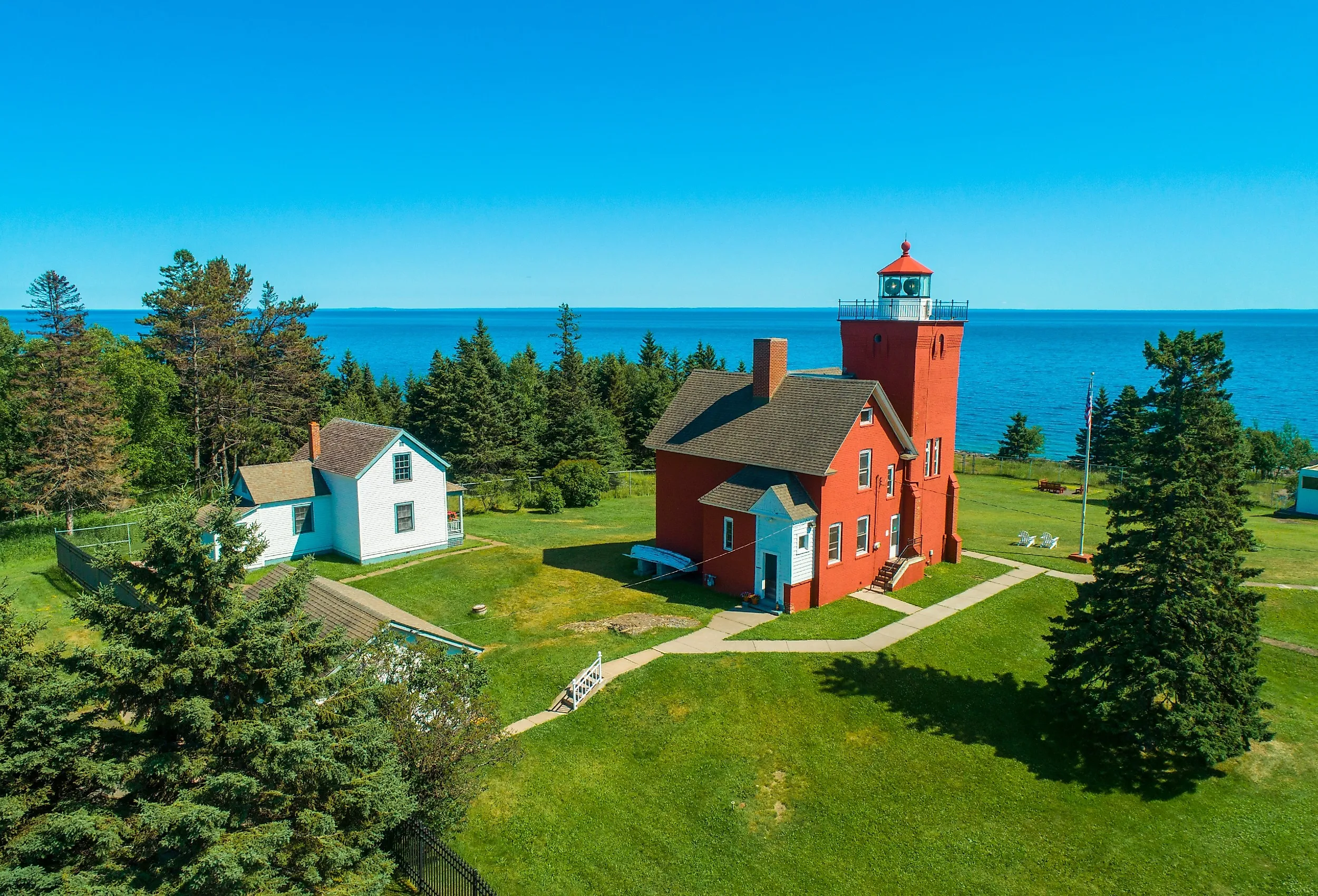
Trains loaded with taconite still run through town, and the ore docks along Agate Bay are a fascinating sight against the backdrop of Minnesota's dense northern forests. The town's breakwall, built to protect ships against Superior's choppy waves, now doubles as a public walking path leading to the main lighthouse, now operated as a part of its very own museum. Two Harbors is also tied to early 20th-century logging operations, which are reflected in the Depot Museum and a stretch of original railroad.

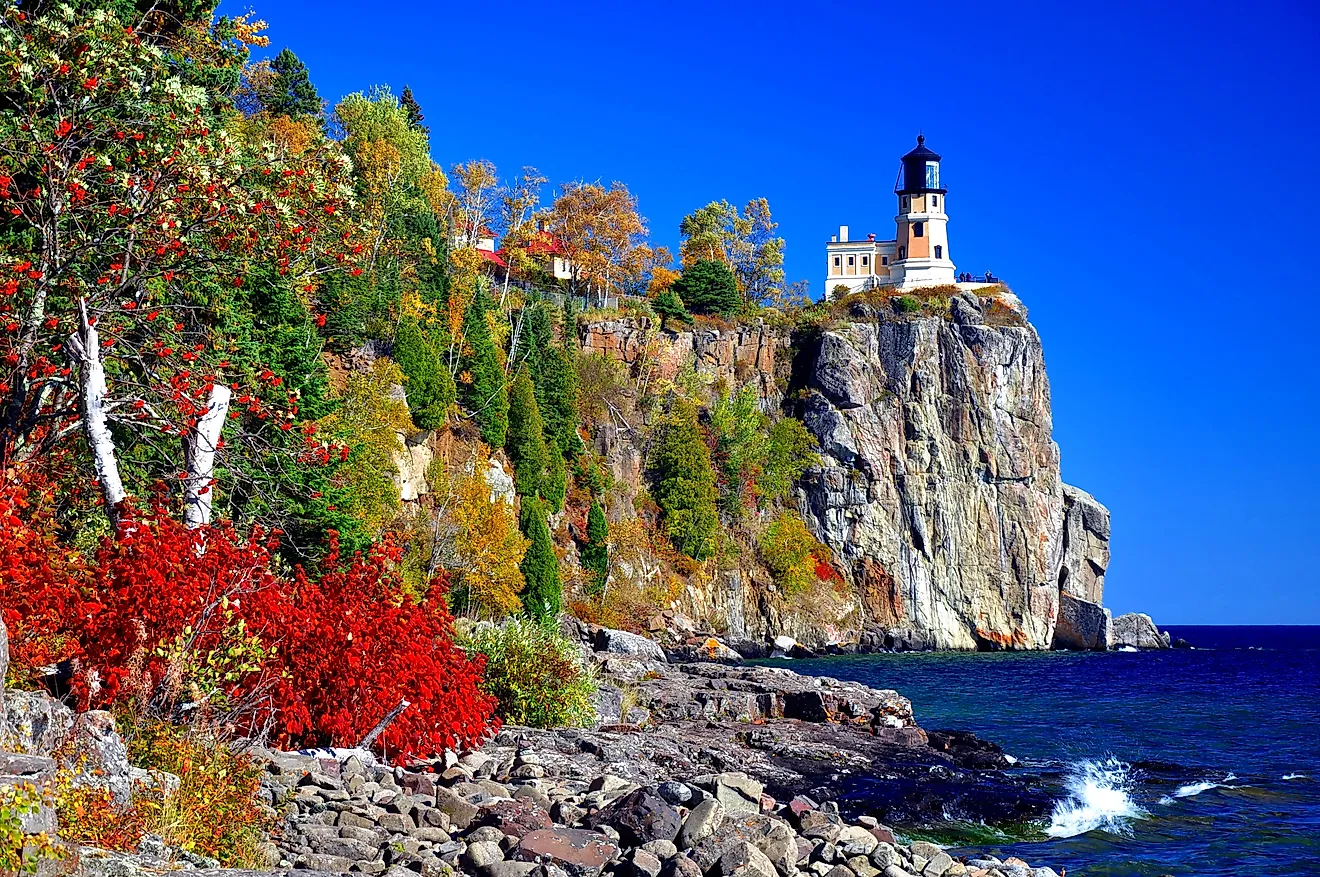
When it comes to parklands, Two Harbors' proximity to Gooseberry Falls, and further up the coast, Split Rock Lighthouse State Park, are two of the biggest natural draws in Minnesota. The latter appeals to both architecture enthusiasts and outdoor adventurers, with its lighthouse, completed in 1910, sitting on a 130-foot-high lakeside cliff above the crashing waves below.
Kewaunee, Wisconsin

Kewaunee sits on the western shore of Lake Michigan, roughly halfway between Green Bay and Door County. Some consider it quite offbeat, with its unique mix of maritime history, rural solitude, and industrial leftovers repurposed for tourism.
Oddball attractions here include the World's Tallest Grandfather Clock, standing 35 feet 10 inches and still running. Svoboda Industries built it in 1976 as a Bicentennial project, and it now marks the head of the Ahnapee State Trail. The eye-catching red-roofed Kewaunee Pierhead Lighthouse is another standout sight that remains active, accessible via a long breakwater walk from downtown.
In terms of outdoor activity, you can bike the Ahnapee State Trail, which follows a defunct rail line through the countryside, making for a great way to see the area up close. If you want to spend some quality time on the water, however, fishing charters depart regularly from the working harbor, known for abundant deep-water trout and salmon.
Kagawong, Ontario

Kagawong, a tiny village on Manitoulin Island (the largest freshwater island in the world) in Lake Huron, is a quiet spot for nature lovers and history fans alike. It functions more like a living museum than a resort destination, yet remains largely unknown outside Ontario.
Its humble layout follows the original 19th-century village plan, with minimal modern development. Its centerpiece is not even a man-made building at all, but instead the Bridal Veil Falls, where the Kagawong River drops over a limestone ledge into a shallow pool. The cascade is accessible by a short trail that passes remnants of the old hydroelectric system that once powered the town.
If you want to learn more about the area's human history, Kagawong's former pulp mill has been converted into a museum and art gallery, preserving equipment and other artifacts from Manitoulin's logging era. Another unique aspect of this community is the fact that street signage is bilingual, being both English and Ojibwe, reflecting the area's Anishinaabe roots.
North East, Pennsylvania

Despite the misleading name, North East is located in the far northwest corner of Pennsylvania, along Lake Erie near the city of Erie. To be fair, it does rest on the northeastern corner of Erie County, which is how the title originated.
It's the center of Pennsylvania's lesser-known grape-growing industry and actually home to one of the largest Concord grape-growing regions outside of its close neighbor, New York. The smell of fermenting juice often fills the town in harvest season, and Welch's still operates a major processing plant nearby.
As you could imagine, wine is another big offering here. The area is home to the annual WineFest, held each September, drawing attention to the region's winemaking operations, including Arrowhead Wine Cellars and Mazza Vineyards, two notable wineries with public tasting rooms just outside the town center.
Another worthwhile attraction in North East is the McCord Memorial Library, built in 1916, which anchors the downtown alongside Gibson Park, a space that hosts a seasonal farmers market. Don't forget about making a trip out to the water, too, with access to Freeport Beach, located three miles north of town.
Zion, Illinois

Zion sits along the Lake Michigan shoreline between Chicago and Milwaukee, and it makes this list for its unusual origin and extensive collection of notable architectural landmarks. Founded in 1900 as an attempt at a religious utopian community by evangelist John Alexander Dowie, the town was laid out in a strict grid with streets named after biblical themes, examples being Elijah Avenue, Ezekiel Avenue, and so on.
Many of the original public buildings were designed to serve both civic and religious functions, including the Zion Hotel and the Shiloh Tabernacle (which burned in 1937), which could seat thousands of worshippers. Today, traces of that planning still shape the layout of downtown, making it a fascinating spot for those who enjoy exploring Illinois' more obscure bits of history.
Moreover, Zion's lakefront is dominated by Illinois Beach State Park, a rare stretch of undeveloped Lake Michigan shoreline with over six miles of sandy dunes, wetlands, and untouched woodlands. The park also includes the Illinois Beach Resort, a modernist structure from the 1950s that has recently been under redevelopment to bring it up to modern standards. Don't worry, its well-preserved exterior still holds its mid-century lines for the most part.
Ashtabula, Ohio

On Ohio's sizable Lake Erie shoreline, Ashtabula is a fun and relaxing destination full of storied history and easy-to-access parks. The Ashtabula Harbor district is centered around the Ashtabula River, where a Strauss bascule lift bridge connects the east and west sides of town. This bridge, built in 1925, remains one of the few of its kind in continuous service on the Great Lakes, a truly obscure sight to behold.
The harbor itself was also once one of the busiest mining ports in the country, and remnants of the old ore and coal docks remain visible for urban explorers. Now, Bridge Street, the town's commercial spine, retains its early boom era buildings and is home to numerous locally run eateries, a maritime museum, and mom-and-pop shops.

The Hubbard House, a former Underground Railroad stop, is another must-visit for history buffs. Tours here are free, but note that group tours are by appointment only. It is open from Memorial Day through Labor Day on weekends.
Ashtabula is also home to a couple of the area's best lakefront green spaces: Walnut Beach and Lake Shore Park, both of which offer access to the lake just steps from downtown.
What These Great Lakes Towns Share
Spread across six US states and Ontario, these seven towns trade the crowds of the big lake cities for working harbors and odd, specific histories. Marquette and Two Harbors still load ore beside their beaches; Kewaunee and Ashtabula turned their lighthouses and lift bridges into landmarks; Kagawong and Zion preserve a 19th-century mill village and a planned utopian grid; and North East runs on grapes. Each rewards a slower look at a shoreline most travelers only pass through.