Where People Are Moving To In Upstate New York In 2026
People move to Upstate New York for one specific thing at a time. They move for a job at a chip plant near Saratoga. They move for a shorter commute into Albany. They move because a new subdivision opened within reach of Rochester and the schools looked good. The seven communities here added roughly 8,400 residents between 2020 and 2025. Each one grew for its own concrete reason.
Malta

Malta is the town the chips built. The GlobalFoundries Fab 8 campus sits right here, inside the Luther Forest Technology Campus, and a $11.6 billion expansion announced in 2024 is adding more than 1,500 jobs over the coming decade. Those jobs pull people, and Malta grew past 17,500 residents to hold them. Interstate 87 runs straight through the middle at Exits 11, 12, and 13, so Saratoga Springs and Albany are both short hops away. The building has kept pace, with a nearly 300-unit project in the works along Route 9 and new neighborhoods filling in around the old Malta Corners crossroads. All that arrived fast, and it brought the usual strain on roads and home prices. Malta rewrote its comprehensive plan in 2023 to steer where the next wave lands.
Stillwater

Stillwater is where the chip boom goes home at night. The Luther Forest Technology Campus that holds GlobalFoundries straddles Stillwater and neighboring Malta, and when Malta filled up, Stillwater had the open room to build. The town gained around 1,200 residents, most of them in newer neighborhoods set back from the old riverfront streets that still line the Hudson. Someone can work a shift at the fab and be swimming at Brown's Beach on Saratoga Lake the same afternoon. The plant helps in a quieter way too, since its annual payments to the town feed the local school budget. More neighbors means more cars and fuller classrooms, the same stretch showing up all over Saratoga County.
Saratoga Springs

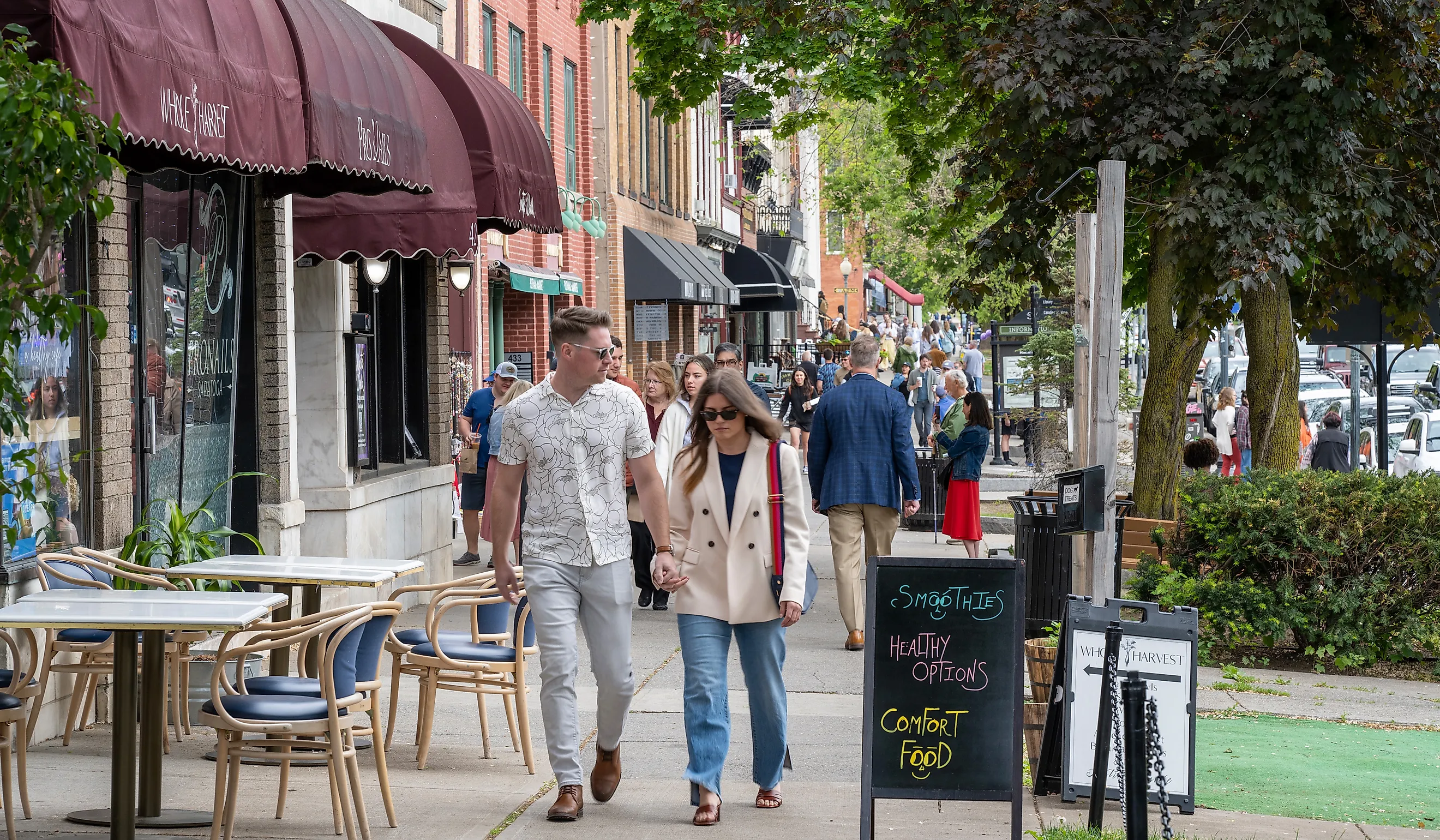
Saratoga Springs is the rare upstate downtown people move toward on purpose. Broadway stays busy year round, not just during the August racing meet that put the city on the map. That walkable core, the mineral springs, and Skidmore College give the place a pull most small cities would trade a lot for. The population pushed past 28,900, modest in raw numbers but steady in a state that keeps shrinking. New condos and apartments have filled in around the edges of downtown, aimed at buyers who want to skip the car. Home prices here run well above the county average, which is its own kind of proof of demand. The city's challenge is the flip side of its appeal, since staying this desirable and staying affordable rarely hold together for long.
Henrietta

Henrietta's biggest tenant is a university. Rochester Institute of Technology sits inside the town, and a steady churn of students, faculty, and staff keeps demand for housing high year after year. Interstate 390 puts downtown Rochester and the rest of Monroe County within a short drive, so people can live near campus and work anywhere. The town added more than 1,700 residents, and the construction crews have kept pace with apartments, mixed-use blocks, and subdivisions, including a large multifamily project proposed along West Henrietta Road. Jefferson Road holds one of the region's densest runs of stores and restaurants, which means daily errands rarely require a trip into the city. All that building sits on some of the busiest roads in the county. Keeping traffic moving is the price of the convenience.
Guilderland

Guilderland lets people work in Albany without living in it. The town sits just west of the capital, with Interstates 87 and 90 both close, and it mixes quiet older neighborhoods with a heavy stretch of stores and offices. That balance is the sell, and it added more than 1,300 residents on the strength of it. New apartments and townhomes have gone up near the existing commercial corridors, and a large planned community on the former Albany Country Club land would bring several hundred more homes in a mix of styles. Guilderland is redoing its comprehensive plan as the traffic and the density climb. The remaining open land is the question mark, the same one hanging over every close-in suburb that people keep choosing.
Albany

Albany is the one place on this list where growth means people moving back into an old city, not out to a new subdivision. As the state capital, it runs on steady employers that do not leave: state government, Albany Medical Center, and the University at Albany. The city added more than 2,500 residents and crossed 100,000, and it did that while barely building anything. Albany's own 2025 housing audit found new construction had stalled and demand was running well ahead of supply. The city has since rewritten parts of its zoning to coax more building and widen the supply of affordable homes. The people are clearly coming. Whether Albany can put a roof over all of them is the harder half of the story.
Halfmoon

Halfmoon's advantage is simple: it is halfway to everything. The town sits between Albany and Saratoga Springs with Interstate 87 running straight through the middle, so jobs in either direction are an easy reach. Most of the new building has clustered near Routes 9 and 146, where subdivisions now sit shoulder to shoulder with the stores and offices that followed them. Halfmoon added just over 1,000 people and still has undeveloped land in its northern and eastern reaches, which is more runway than most towns this close to Albany can claim. Local planners are spending more time on how to grow than whether to. The open acreage up north is the part residents are watching most closely.
The Pull Behind the Numbers
Read the seven together and a clear split appears. Most of these towns grew outward, filling open land with new neighborhoods within reach of the chip fab, the highways, and the capital's job base. Saratoga Springs and Henrietta grew instead by being places people want the address, one for its downtown and one for its university. Albany did something different again, drawing people back into a city that already had the jobs and the services but not enough places to live. What every one of them shares now is the bill that comes due after the growth: home prices, road capacity, school seats, and the open space that made the town attractive in the first place. The reason people moved in is often the very thing that gets harder to protect once they do.