The Most Charming River Towns In Iowa
Iowa's rivers were the state's first highways. Today, these waterways are town centers flowing past the state's prettiest parks and historic districts. In Dundee, the Maquoketa River carved the limestone ridge that is the highest point in northeast Iowa. In McGregor, the Mississippi can be viewed from a 500-foot bluff that connects to a hidden waterfall. River heritage also extends to downtown Le Claire, where historic Mississippi River pilot homes have cafes inside. In these 7 Iowa towns, all the best attractions can be found near a river's edge.
Muscatine

Muscatine's Mississippi River sunsets are so striking that Mark Twain immortalized them in his memoir, Life on the Mississippi. After living here briefly in the 1850s, Twain wrote that no sunsets equaled those in Muscatine. Today, the Mark Twain Overlook spotlights these watercolor skies atop the town's highest hill. With panoramic views of the Mississippi and Muscatine Bridge, this simple park is steeped in history and beauty.
Riverside Park can also be strolled on the Running River Trail System. Along the way, you can see Muscatine's quirky World's Largest Watermelon Sculpture, which celebrates the town as a "Watermelon Capital of the World." Nearby, the National Pearl Button Museum also celebrates Muscatine's legacy as the "Pearl Button Capital of the World." In the early 1900s, the town produced over 1.5 billion mother-of-pearl buttons each year, using mussel shells from the Mississippi River. This museum is a fascinating way to learn more about how this industry put Muscatine on the map.
Cedar Falls

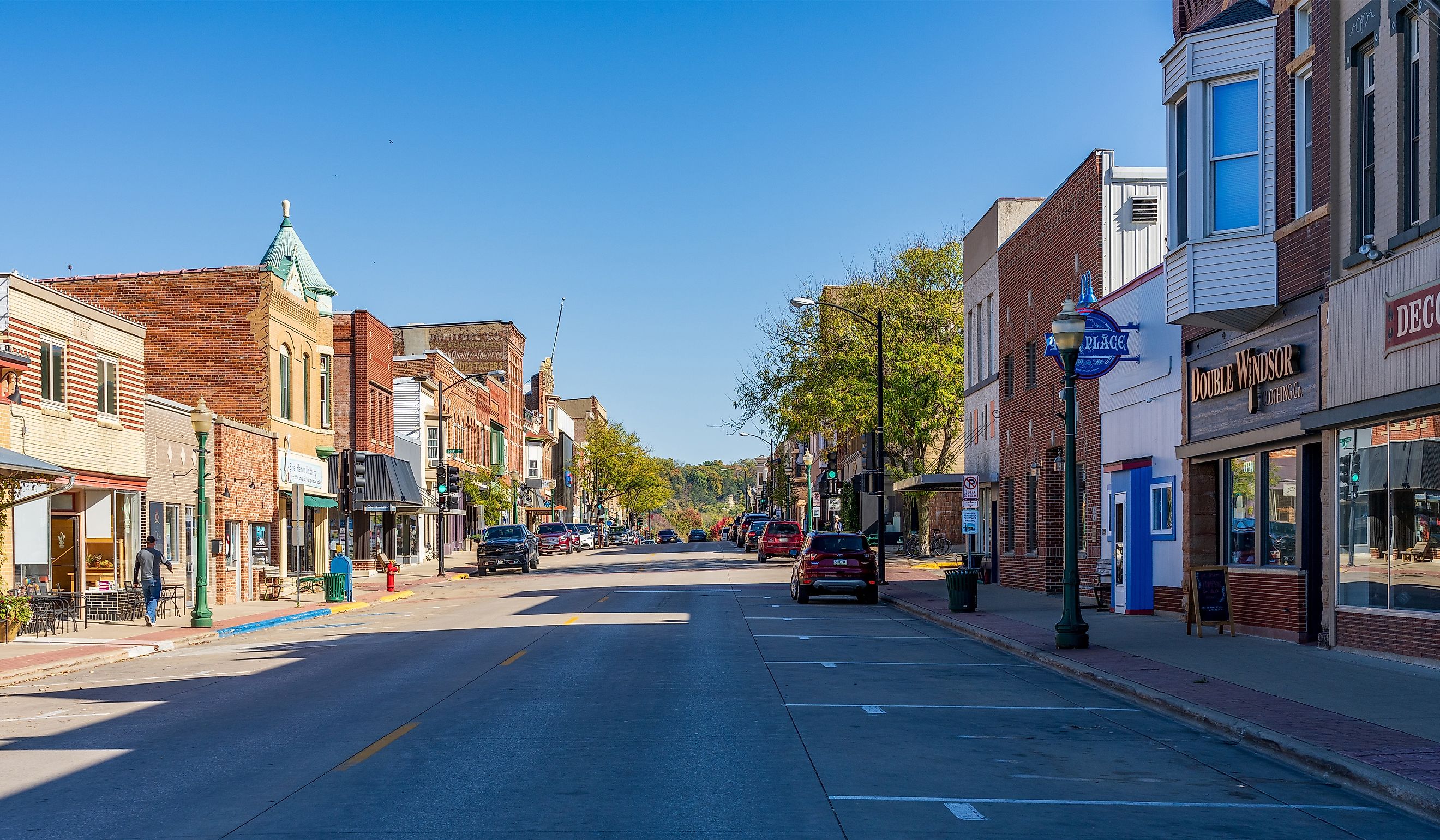
Cedar Falls is a college town where leisure is split between downtown and the Cedar River. Striped with 19th and early 20th-century architecture, the town's Main Street is simultaneously youthful and historic. The Oster Regent Theatre embodies this balance, hosting a mix of modern plays, musicals, and comedy shows in a 1910 building. The rest of Main Street is peppered with laid-back restaurants and student bars like the Berk's Main Street Pub. Across from here, Reader's Cup is a bookish cafe inside The Nook bookstore.
Named after the Cedar River and the trees that thrived on its riverside, Cedar Falls also stays true to its natural roots. The Hartman Reserve Nature Center preserves a 340-acre woodland with centuries-old trees, visible on hikes like the Shirey Lake Trail. For river views, the reserve also connects to the South Riverside Trail. This serene 7-mile path is shaded by trees and paved for easy strolls, following the Cedar River's edge back downtown.
Dundee

Dundee is a Maquoketa River town with Iowa's oldest state park in its backyard. Dedicated in 1920, Backbone State Park is centered around its namesake wonder, "The Devil's Backbone." Carved by the Maquoketa River, this steep limestone ridge is 80 feet high along its western edge. These dramatic heights draw rock climbers to the Backbone Trail, which has the best climbing spots. The hike is also extraordinary in its own right for river views.
Backbone's remaining trail system has other dramatic scenes to explore. Following the East Lake and West Lake Trails leads to Backbone Lake, an impoundment of the Maquoketa River. Trout fishing and boating are popular pastimes along its southwest end, where a castle-style stone boathouse offers boat rentals in the summer. Nearby, Backbone State Park Beach is a curved shore of sand where visitors can swim and rent kayaks.
McGregor

About an hour's drive from Dundee, McGregor is a gateway to waterfalls and river bluffs. Bordering the Mississippi River, McGregor is just a few minutes north of Pikes Peak State Park, a crown jewel of the Iowa park system. Following the Great River Road will bring you to the Pikes Peak Scenic Overlook, a 500-foot bluff high above the Mississippi. Close by, you can also hike the park's half-mile boardwalk trail. The focal point of this woodland route is Bridal Veil Falls, a trickling cascade backed by a rocky cave.
Back in town, McGregor's downtown is a lively commercial center. The historic district is flanked by 19th-century architecture, updated with modern businesses inside. Paper Moon Books is a shining example. The indie bookstore and gift shop is housed in a 1860s brick building, with 3 floors of products to browse. For coffee and a bite, cross Main Street to the Brim Coffeehouse, a locally-owned cafe serving lattes and light meals.
Decorah

Another hour northwest, Decorah sits in the heart of Iowa's bluff country on the Upper Iowa River. At Dunning's Spring Park, a romantic stone bridge leads to a tumbling waterfall surrounded by limestone cliffs. Next door, Decorah's Ice Cave State Preserve features a cave whose floor and walls are often frozen even in spring. For blufftop views, Palisades Park towers above the town. Skirting the Upper Iowa River, this wooded park can be hiked from the river's edge or driven to the top for wide vistas from the main overlook.
Back at ground level, downtown Decorah is just a few minutes away. Water Street is its main corridor, lined with historic brick storefronts and hotels like the Beaux Arts-style Hotel Winneshiek, built in 1905. Like all the best main streets, most of the businesses here are locally owned, including independent shops like Dragonfly Books. Following Water Street West, you will also find Vesterheim, the National Norwegian-American Museum. The museum showcases a collection of over 33,000 artifacts, exploring Norwegian culture, folk art, and the history of immigration to the Midwest.
Bellevue

French for "beautiful view," Bellevue is a Mississippi River town that lives up to its name. Promising "A True Riverfront Experience," the town has plenty of ways to unwind on its waterfront. At River Ridge Brewing, fresh brews and bar-style bites can be enjoyed from a spacious patio on the river's edge. Just steps from here, Riverview Park is part of Bellevue's riverfront trail system, which connects the city's parks and the Dubuque area trails. On the other end, the views from Bellevue State Park are even more commanding.
High on limestone bluffs over the Mississippi River, Bellevue State Park is a sightseeing paradise. The Nelson Unit offers 3 miles of trails, including the paved Nelson Unit Trail to the Butterfly Garden, while the Dyas Unit adds 4 more miles of wooded paths. For classic river views, the Bellevue Bluff Trail follows a ridge to sweeping vistas of the Mississippi River. Surrounded by forests and native prairies, its flowers and native plants attract nearly 60 butterfly species across the warm months.
Le Claire

Founded in the 1830s as a port and home for steamboat river pilots, Le Claire's history and culture are tightly tied to the Mississippi River. Many of these 19th-century pilot homes still stand today, housing businesses like the Crane & Pelican Café. The local Riverboat Twilight also offers a 1.5-hour sightseeing cruise aboard a replica Victorian steamboat. For a longer adventure, their 2-day cruise to Dubuque includes lodging, meals, on-board entertainment, and admission to the National Mississippi River Museum & Aquarium.
Beyond the Mississippi, Le Claire is known as the home of Antique Archaeology. Made famous by the hit History Channel show American Pickers, the antique showroom showcases some of the show's coolest finds. Fans of the series can also browse merchandise like clothing and keychains. As for Le Claire's historic claim to fame, it is also the birthplace and hometown of Buffalo Bill. At LeClaire's Buffalo Bill Museum, museumgoers can learn more about the legendary frontiersman and the Old West era as a whole. Key exhibits include historical photographs, an immersive replica schoolhouse, and the Lone Star Steamboat docked.
Iowa's River Towns: The Midwest's Best Kept Secret
Lifelines during America's frontier days, Iowa's rivers today offer recreation, sightseeing, and leisure. In Cedar Falls, the Hartman Reserve Nature Center connects to the downtown Cedar River. Bellevue's riverfront is also steps away from its commercial district, while its Rivervue Trail leads directly to Bellevue State Park. In these 7 river towns, the lasting effect of each waterway is tangible; while they no longer serve as highways, these rivers are more important than ever.