8 Off-the-Beaten-Path Towns in New Mexico
Quiet roadside towns sit beside ancient sites and volcanic country. This is New Mexico. Los Alamos was assembled in wartime secrecy, and Bathtub Row still stands. Riverbend Hot Springs in Truth or Consequences sits beside the Rio Grande, in waters the Apache and Mimbres peoples have held sacred for centuries. In Grants, a neon-lit arch on old Route 66 is built for drivers to pass through, and a collapsed lava tube just outside town stays frozen year-round.Each town has at least one natural, historic, or roadside landmark worth pulling over for.
Jemez Springs

Although Jemez Springs is small, it packs historic sites, mineral springs, and unusual geology into a short stretch of road. The Jemez Historic Site preserves the history of the Indigenous Jemez people, along with the remains of Gisewa Pueblo and San José de los Jémez Mission. During the annual Lights of Gisewa event, hundreds of farolitos illuminate the site. The site also explains the role of the kiva, a sacred underground structure used for rituals and community gatherings.
Jemez Hot Springs is the village's other natural draw. The resort's therapeutic pools are carved into the surrounding rock, and guests soak with the Jemez River running just beyond them. North of the village, Soda Dam is the area's most unusual rock formation. It is more than 7,000 years old, and in warmer months the Jemez River flows underneath it. In winter, ice can form inside it. The formation built up over time from layers of calcium carbonate left by nearby hot springs.
Taos

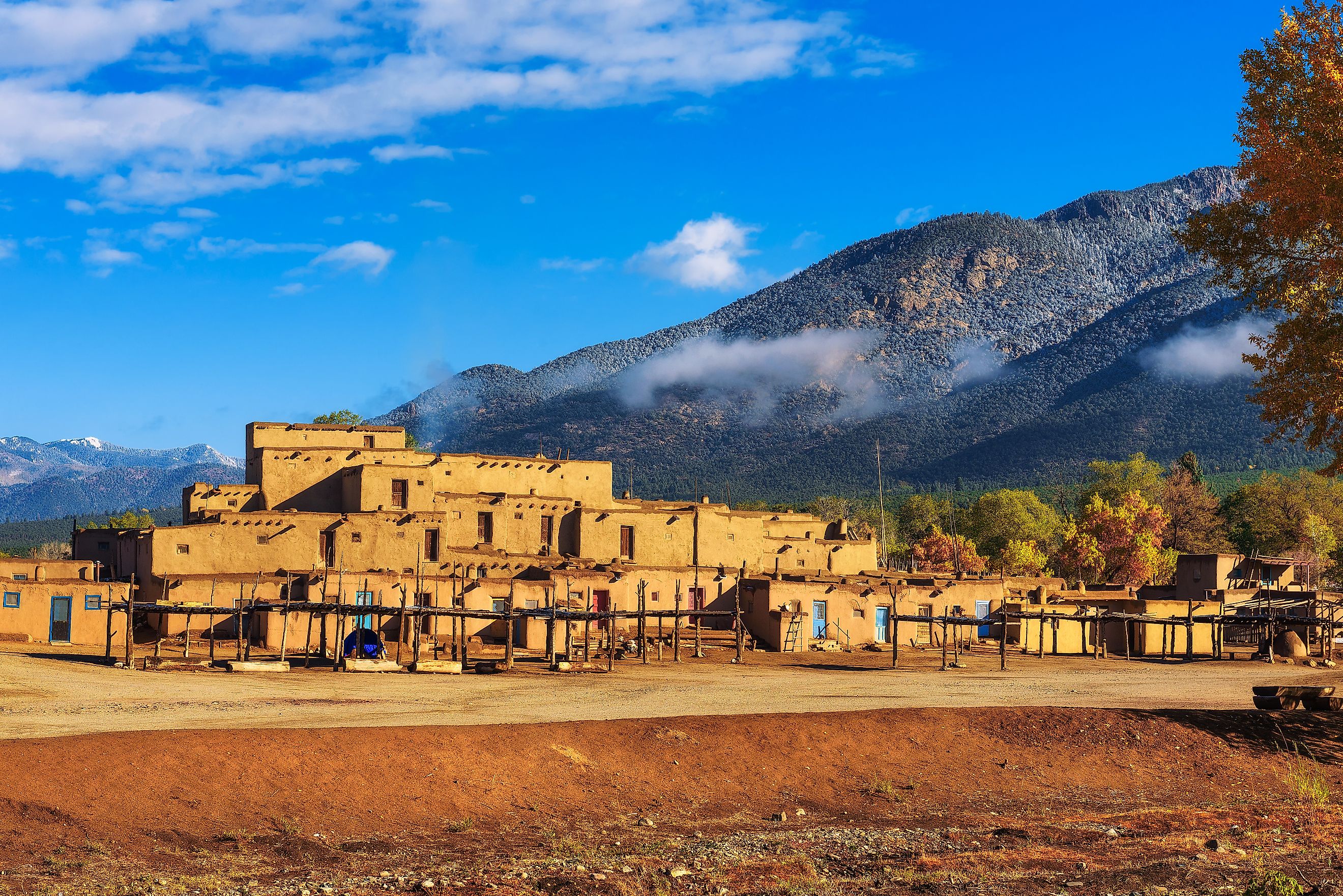
Set in the high desert below the Sangre de Cristo Mountains, Taos is closely tied to the history and traditions of Taos Pueblo. The pueblo has been continuously inhabited for more than 1,000 years and offers guided tours. Before arriving, check the pueblo's current rules on restricted areas and photography.
West of town, the Rio Grande Gorge Bridge spans one of the state's deepest gorges. During construction, the project ran out of funds, and it was temporarily dubbed the “Bridge to Nowhere”. The bridge was eventually completed and is now considered one of the highest bridges in the United States, rising about 650 feet above the Rio Grande. Walk across it, or take in the gorge from river-level viewpoints below. Stagecoach Hot Springs, also called Manby Hot Springs, has small warm pools down in the gorge, though they are legally reachable only from the river.
Truth or Consequences

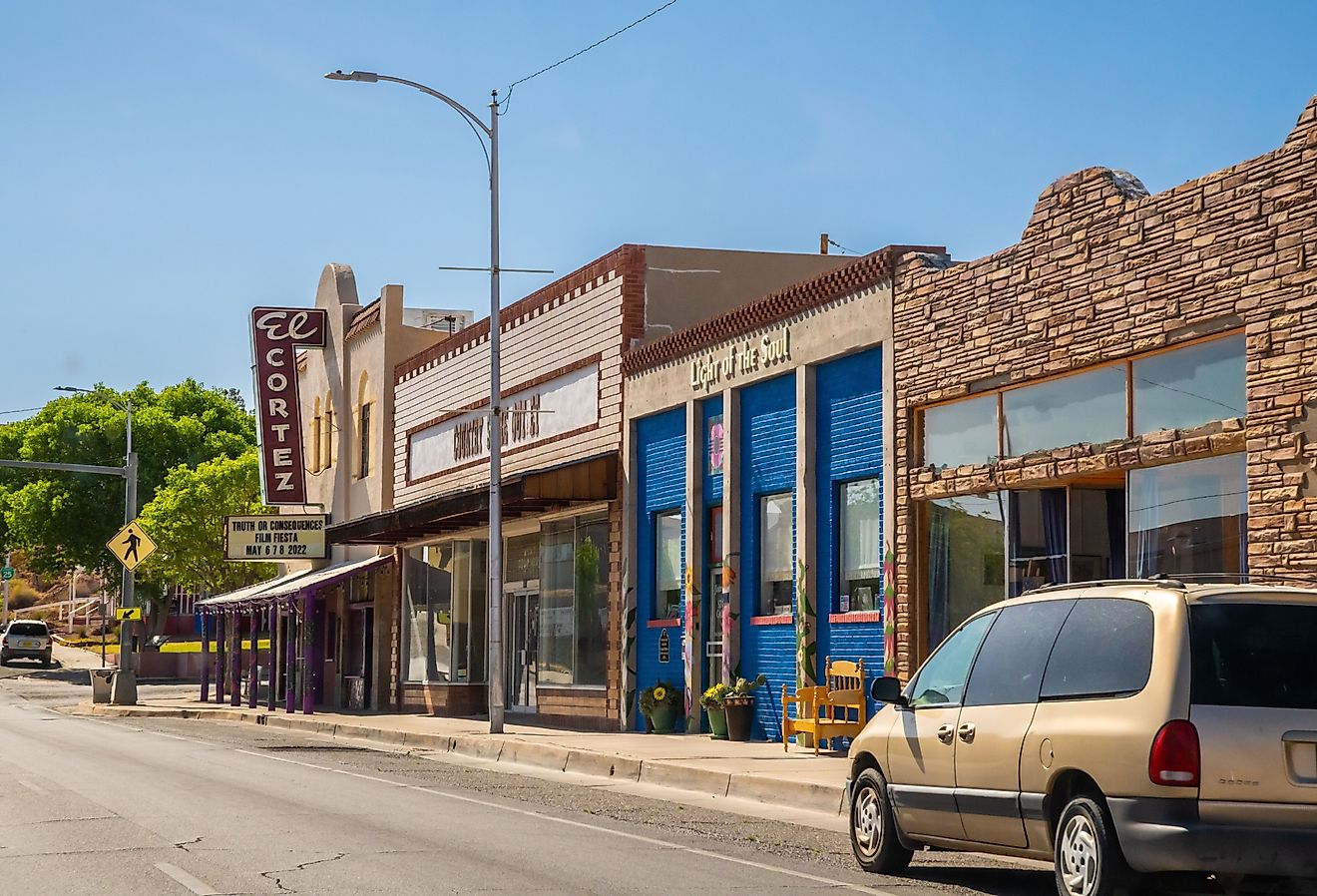
Truth or Consequences was once called Hot Springs, and the springs it was named for are still its main draw. They run through town, including a stretch of pools along the Rio Grande. At Riverbend Hot Springs, the water has none of the sulfur smell common to many hot springs.
Before that soak, the 154-mile Geronimo Trail National Scenic Byway winds through desert, rolling hills, and mountain forest. Both the byway and the Geronimo Springs Museum are named for the Apache leader, and the museum holds Sierra County's largest collection of prehistoric pottery. Its displays also include fossils, minerals, historic photographs, and a miner's cabin.
Santa Rosa

Santa Rosa's standout site is the Blue Hole, a deep, strikingly clear pool. Below the swimming hole lies a cave system sealed to the public by a metal grate. Recent surveys mapped all the accessible passages, though deeper ones may remain. The natural pool sits just off historic Route 66 and remains one of Santa Rosa’s best-known stops. The Route 66 Auto Museum keeps the roadside theme going with vehicles tied to the Mother Road. Inside are restored classics and street rods, all in showroom condition. The museum grew out of owner James "Bozo" Cordova's longtime garage and restoration work, opening in 2000.
About ten miles southeast of Santa Rosa, the small community of Puerto de Luna was once central to Guadalupe County, and its preserved ruins and old buildings still show it. The old Guadalupe County Courthouse, now roofless, is the most visible of them. Old houses and former roadside businesses fill out the rest. Together, they show how the town declined after the county seat moved to Santa Rosa.
Deming

Deming's setting turns up some unusual stops, both in town and out in the desert. Voiers "Pit" Park, a former gravel pit, now has a large amphitheater, a covered pavilion, and a mile-long exercise trail. Two of them are art installations. About 20 miles southeast, Triangles is a Kcymaerxthaere installation, part of an art project that stages an invented parallel-world history at real locations. It marks the Faltese Pømzhirl Impact Site, a nod to how the Chej-Asos people of that mythology saw triangles. East of town, Cabinetlandia exists because Cabinet magazine bought a half-acre of desert for its "Property" issue.
Grants

Grants sits along Route 66 at the edge of New Mexico’s volcanic country. The Route 66 Drive-Thru Arch is the town's tribute to the Mother Road. Built in 2016, the 18-foot arch has neon lights, painted flames, and a classic shield design, and travelers can drive through it for photos.
About 25 miles southwest of Grants, Ice Cave and Bandera Volcano pair a dormant cinder cone with a perpetual ice cave inside a collapsed lava tube. The contrast may sound implausible, but the cave’s insulated lava tube keeps the ice intact year-round. Bandera Volcano erupted about 10,000 years ago, while the ice layers inside the cave have been forming for more than 3,400 years.
Just outside town, El Malpais National Monument has lava flows, cinder cones, lava-tube caves, and sandstone bluffs. Its trails and overlooks run right through the lava country.
Los Alamos

Once a secret wartime community, Los Alamos is now one of New Mexico’s best-known historic and scientific centers. Built for scientists, engineers, support staff, and their families during the Manhattan Project, the town included schools, homes, dentists’ offices, and other essential services. More than 6,000 people worked at the Los Alamos laboratory during the project. The Bradbury Science Museum uses more than 60 interactive exhibits to explain the Manhattan Project, national defense work, modern research, and the laboratory’s later role. Bathtub Row shows how people lived day to day in the wartime town. Because construction moved quickly, only select residences had bathtubs. Several still stand and can be seen from the street.
Long before the Manhattan Project, the area was home to Ancestral Pueblo people, ancestors of today's Tewa-speaking Pueblos, who lived here from about 1150 to 1500 CE. The Ancestral Pueblo Site preserves what they built: structures set into the canyons and mesa tops, with rooms for living, storage, and ceremony, and a semi-circular kiva.
Aztec

Aztec sits at the heart of Chacoan and Ancestral Puebloan history, and Aztec Ruins National Monument is still a sacred place for many Indigenous peoples. The monument holds some of the best-preserved Chacoan ruins of their kind. A self-guided route leads through the masonry, including the Aztec West Great House, original wooden beams, and a restored Great Kiva. In town, the Aztec Museum and Pioneer Village pairs a collection of frontier-era Americana with a reconstructed pioneer village of period buildings. Similar ruins can also be seen at the Salmon Ruins Museum in Bloomfield. There, a marked trail runs through the dig site, Heritage Park, and the museum.
A Quieter Route Through New Mexico’s Past
With deep-rooted ties to Indigenous peoples' heritage and history, the Atomic Bomb, and unique water systems, New Mexico offers a rare look into its past through its natural and historic landmarks, museums, and preserved monuments. Explore lesser-known, less-frequented attractions to create an exclusive itinerary. Soak your worries away in the Jemez Hot Springs, snap a photo under the famed Route 66 Drive-Thru Arch, or dive into the unknown at the Santa Rosa Blue Hole in these eight off-the-beaten-path towns.