11 Of The Most Adorable Small Towns In England
England's most adorable small towns pack centuries of history into just a few walkable streets. In Rye, the cellars beneath the Mermaid Inn date from 1156, Bourton-on-the-Water maintains the country's only Grade II-listed model village, and Sandwich was the first town in Britain to have a preservation order placed on it. From the River Wansbeck in Northumberland to the pebble beaches of Devon's Jurassic Coast, these 11 towns serve up castles, cobbled lanes, and seaside views. Here's what makes each of them worth the trip.
Newark-on-Trent, Nottinghamshire

Few English towns pack as much drama into their past as Newark-on-Trent. Newark Castle, built in the early 12th century on the banks of the River Trent, is best known as the place where King John, the monarch forced to seal the Magna Carta in 1215, died in 1216.
During the English Civil War, the 1640s conflict between Crown and Parliament, the town stayed loyal to the Royalist cause and survived three sieges between 1643 and 1646, and the castle's riverside walls still show the marks left by hundreds of cannonballs. The surrounding gardens, landscaped in 1887, are free to visit.
Newark's Market Place, one of the finest Georgian squares in the country, is overlooked by the Town Hall, built in 1776 and now home to a free museum and art gallery. Historic buildings lining the handsome square include the Grade I listed Queen's Head pub, and markets are still held here regularly.
Rye, East Sussex

Mermaid Street is the reason most people come to Rye. Half-timbered houses lean toward each other along this steep cobbled route, and midway down stands the Mermaid Inn, rebuilt in 1420 above cellars dating from 1156. The inn later served as the headquarters of the Hawkhurst Gang, 18th-century smugglers who moved contraband brandy, silk, and tea through the town's hidden passages.
Rye was one of the Cinque Ports, a medieval confederation of coastal towns tasked with supplying ships for England's defense. The Ypres Tower was also built for this purpose in 1249 and has served as a fort, prison, courthouse, and mortuary down the centuries. It's now part of the nearby Rye Castle Museum with its collection of medieval armor.
The Landgate, built in 1329 during King Edward III's reign, is the only survivor of the town's four original gateways. For the best views over this wonderful old town, climb the tower of the 12th-century St. Mary's Church. If you do, you'll get a close-up look at its 16th-century clock with its gilded figures known as the Quarter Boys.
Morpeth, Northumberland

Set on the north bank of the River Wansbeck, the Morpeth Chantry, built in 1296 as a bridge chapel and tollhouse, is one of only a handful of surviving such structures in the UK. Today, it houses the Morpeth Chantry Bagpipe Museum, a free collection of more than 120 sets of pipes from across Europe, with pride of place going to the Northumbrian smallpipes, the bellows-blown instrument unique to the county.
Across the river, Carlisle Park has row boats for rent on the Wansbeck, an aviary, and woodland riverside paths. Its William Turner Garden honors the Morpeth-born 16th-century herbalist known as the Father of English Botany, and its working floral clock is one of only four in the UK.
It's also a pleasant place for some shopping, especially in Sanderson Arcade, which dates from 1939. Independent boutiques, delis, and galleries line Newgate Street and Oldgate, and a charter market fills the Market Place every Wednesday.
Lyme Regis, Dorset

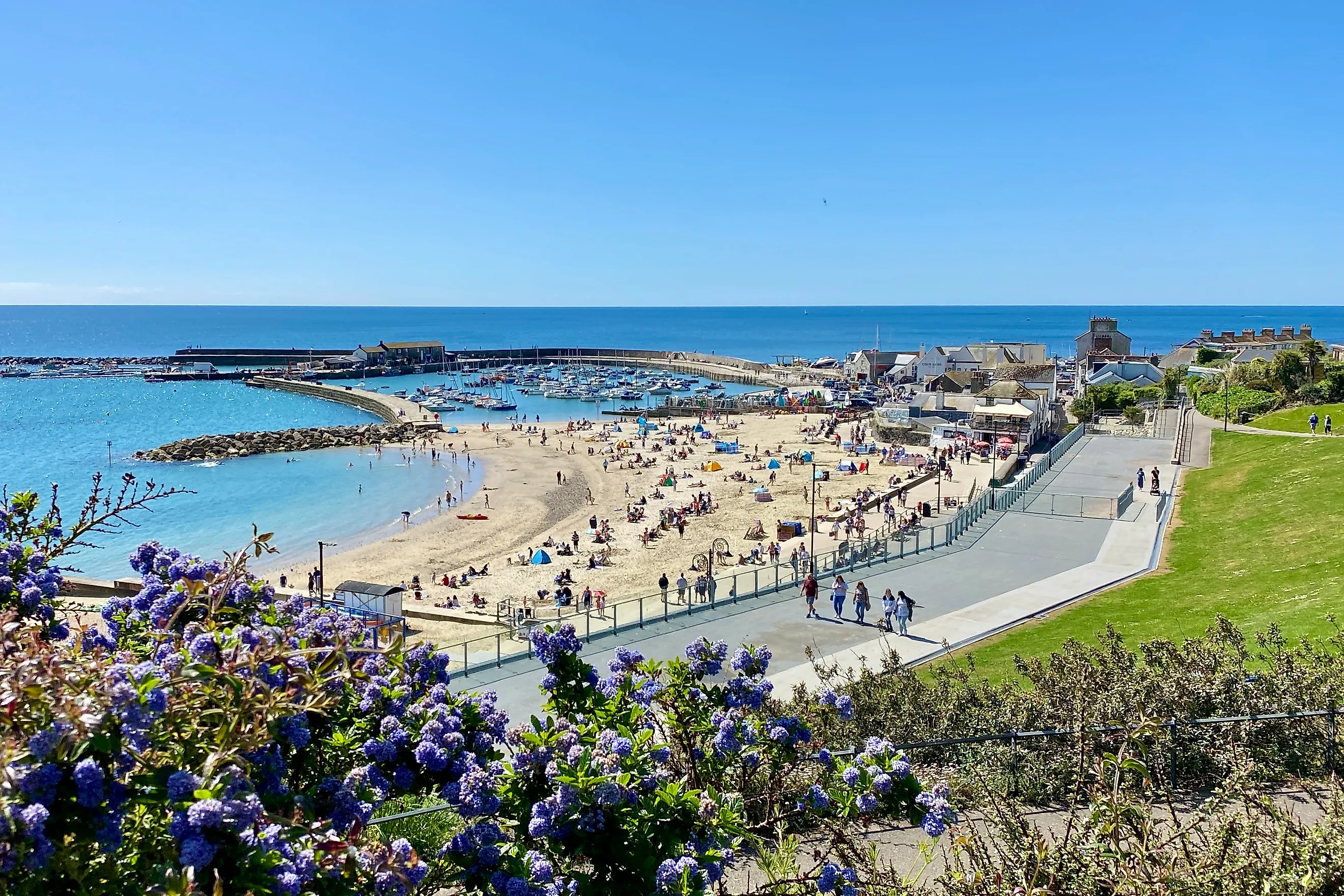
Lyme Regis earned its royal suffix in 1284 when King Edward I granted the town the title Regis, Latin for "of the King," in return for sheltering his fleet during England's wars with France. That shelter came from the Cobb, the curving stone breakwater that still protects the harbor and its fishing boats today.
A walk along its upper wall opens up views across Lyme Bay, and at its far end, the Marine Aquarium occupies harbor buildings dating from 1723, with tanks of local marine life that children can get close to.
The town is equally famous for its fossils, a story that's told at the Lyme Regis Museum. Located on the site of the former home of Mary Anning, the pioneering fossil hunter who unearthed the first complete ichthyosaur skeleton here at age 12, it tells her story alongside a geology gallery and also offers guided fossil walks below Black Ven, the cliffs east of town that still release ammonites and belemnites onto the beach after a storm.
Sandwich, Kent

Yes, the lunchtime staple really did originate in Kent. John Montagu, the 4th Earl of Sandwich, is said to have called for slices of meat to be served between slices of bread in 1762 so he could eat without leaving the gaming table. One of the original Cinque Ports, Sandwich contains the highest number of listed buildings per capita in the country, all of them now protected by a preservation order.
For an ideal photo, take a stroll down Strand Street, the country's longest unbroken stretch of timber-framed buildings. The Guildhall, built in 1579, contains a museum including a Tudor courtroom and copies of the Magna Carta and the Charter of the Forest, sealed in 1217 to protect the rights of common people.
Traffic still enters the old town through the arch of the 14th-century Barbican gate beside the River Stour, one of only two survivors, along with the Fisher Gate, of the medieval town wall's five gateways.
Clitheroe, Lancashire

Clitheroe Castle has dominated the skyline here for more than 800 years. Built in the 12th century on top of a limestone knoll, its Norman keep is one of the smallest surviving stone keeps in England, and the free-to-enter grounds make the short climb worth it for the panoramic views over the Ribble Valley. Below the keep, the Clitheroe Castle Museum, set in the 18th-century Steward's House, does a good job of telling the town's story.
The town also makes the best base for exploring the Forest of Bowland National Landscape, 312 square miles of scenic fells, river valleys, and villages. Walkers head for Pendle Hill, the brooding moorland summit, or to Downham, the estate village 3 miles away that has barely changed since the 16th century.
Closer to town, Edisford Bridge on the River Ribble is an ideal spot for riverside picnics, paddling, and rides on a miniature steam railway. The village of Whalley is also close by. Highlights here include the ruins of Whalley Abbey, the Cistercian monastery established on its riverside site in 1296, and the Whalley Viaduct, an impressive 1800 foot long, 70-foot-tall railway crossing built in 1850.
Watchet, Somerset

Set on the Bristol Channel in Somerset, Watchet is famous in literary circles as the inspiration for poet Samuel Taylor Coleridge's The Rime of the Ancient Mariner. A bronze statue of the poem's haunted sailor now stands on the Esplanade overlooking Watchet Harbour. Once busy as a shipping hub transporting iron ore from local mines across the channel to Wales, it's now a marina, and a pleasant spot to watch leisure craft come and go.
Watchet is a stop on the West Somerset Railway, a 20-mile-long heritage railway running between Bishops Lydeard and Minehead. Disembark at Watchet Station and spend an hour or two exploring this pretty little coastal town before hopping back aboard to the next stop.
Must-visits include East Quay, a contemporary arts center beside the water with free galleries, artists' studios, a print studio, and a restaurant overlooking the moorings. The Watchet Boat Museum, set in a former railway goods shed built in 1862, explains the flat-bottomed flatner boats once worked along the Somerset coast, while the Market House Museum covers the town's mining and papermaking history.
Brewood, Staffordshire

Pronounced "Brood," the pretty little market town of Brewood can trace its roots to an even older name. It was recorded as "Breude" in the Domesday Book, the survey of England ordered by William the Conqueror in 1086. Now a small market town, 16th- and 17th-century buildings surround its most eye-catching landmark, Speedwell Castle. Set in the heart of town on Bargate Street, this Gothic-style house was built in the mid-18th century and reputedly funded by winnings from a bet on a racehorse called Speedwell.
Across the old marketplace, the Swan Hotel began life as a hall house in the 15th century and still serves pints behind its remodeled Victorian frontage. St Mary and St Chad, the Grade I listed parish church, is also photogenic. Although restored in Victorian times, its elaborate alabaster tombs topped with carved effigies date from the 15th to 17th centuries.
The Shropshire Union Canal passes along the village's western edge on its way over the cast-iron Stretton Aqueduct. Now used largely for leisure, companies like Napton Narrowboats based at the nearby Autherley Junction rent out the fun and easy-to-handle watercraft for slow-paced explorations of the canal. The canal towpaths are also fun for a stroll as you take in the moored narrowboats under the ornamental Avenue Bridge.
Woodstock, Oxfordshire

Most visitors head to Woodstock for Blenheim Palace, the UNESCO World Heritage Site on the town's doorstep, where Sir Winston Churchill was born in 1874. Still the seat of the Dukes of Marlborough and considered the country's most important non-royal palace, its magnificent 2,000-acre grounds were landscaped by Capability Brown, the most celebrated landscape designer of the 18th century. Inside, you'll want to check out the Churchill exhibits, as well as the rather modest room where he was born.
The Oxfordshire Museum covers everything from Jurassic fossils to Victorian industry, while the neighboring Soldiers of Oxfordshire Museum tells the story of the county's regiments through immersive exhibits. Other Woodstock highlights include the Town Hall, built in 1766, and the parish church of St. Mary Magdalene, which is worth a look for its musical clock.
The Bear Hotel is a great place to look into if a weekend getaway is on the cards. An old coaching inn dating from the 13th century, its more recent claim to fame is once having hosted Elizabeth Taylor and Richard Burton.
Budleigh Salterton, Devon

Budleigh Salterton is home to one of the nicest, and more unusual, beaches on the English Channel. This Devonshire town's 2.5-mile beach is made of smooth quartzite stones known locally as "Budleigh Buns." Eroded from the Budleigh Salterton Pebble Beds more than 400 million years ago, the rock was carried from what is now Brittany in France by rivers during the Triassic period.
The Fairlynch Museum, set in a thatched cottage close to the seafront, is one of only a few thatched museums in the UK, with displays on local geology, period costumes, and a smugglers' cellar. It also features exhibits about the town's links to Sir Walter Raleigh, the Elizabethan explorer born in the neighboring village of East Budleigh. The South West Coast Path runs along the Budleigh Salterton seafront, with clifftop walks west to Exmouth and east toward Sidmouth.
Cirencester, Gloucestershire

Dubbed the Capital of the Cotswolds, Cirencester was known to the Romans as Corinium Dobunnorum and ranked as the second-largest town in Roman Britain after London. The clearest reminder is the Cirencester Amphitheatre on the southwestern edge of town, where grass-covered earthworks trace the outline of an arena built in the early 2nd century that seated 8,000 spectators. You can learn more about it while viewing the large collection of artifacts from the period at the Corinium Museum, nearly all of them excavated locally.
The town's grandest green space comes courtesy of the Bathurst family, whose 3,000-acre Cirencester Park has been open to the public for generations. The main entrance stands at the top of Cecily Hill, a street of Cotswold stone houses regarded as the prettiest in town, and the family mansion hides behind the world's tallest yew hedge, a semi-circular giant planted in 1720 whose clippings are collected for use in chemotherapy drugs.
The Church of St John Baptist, one of England's great wool churches, looks out over the Market Place and the Corn Hall. Next to the church, the Abbey Grounds cover the site of St Mary's Abbey, founded in 1117 by King Henry I and demolished after the Dissolution of the Monasteries. The Norman Arch at the park's northeastern corner is the only abbey building to survive, standing close to a section of the original Roman town wall.
England At Its Most Adorable
From fossil-strewn beaches to old medieval alleyways once known as hideouts for smugglers, these 11 wonderful small towns are well worth getting to know. Whether you tackle them one by one or string them together into a full driving tour, exploring their pubs, walks, and unique histories is endless fun. So pack comfortable shoes… and a camera.