The First National Monument In America
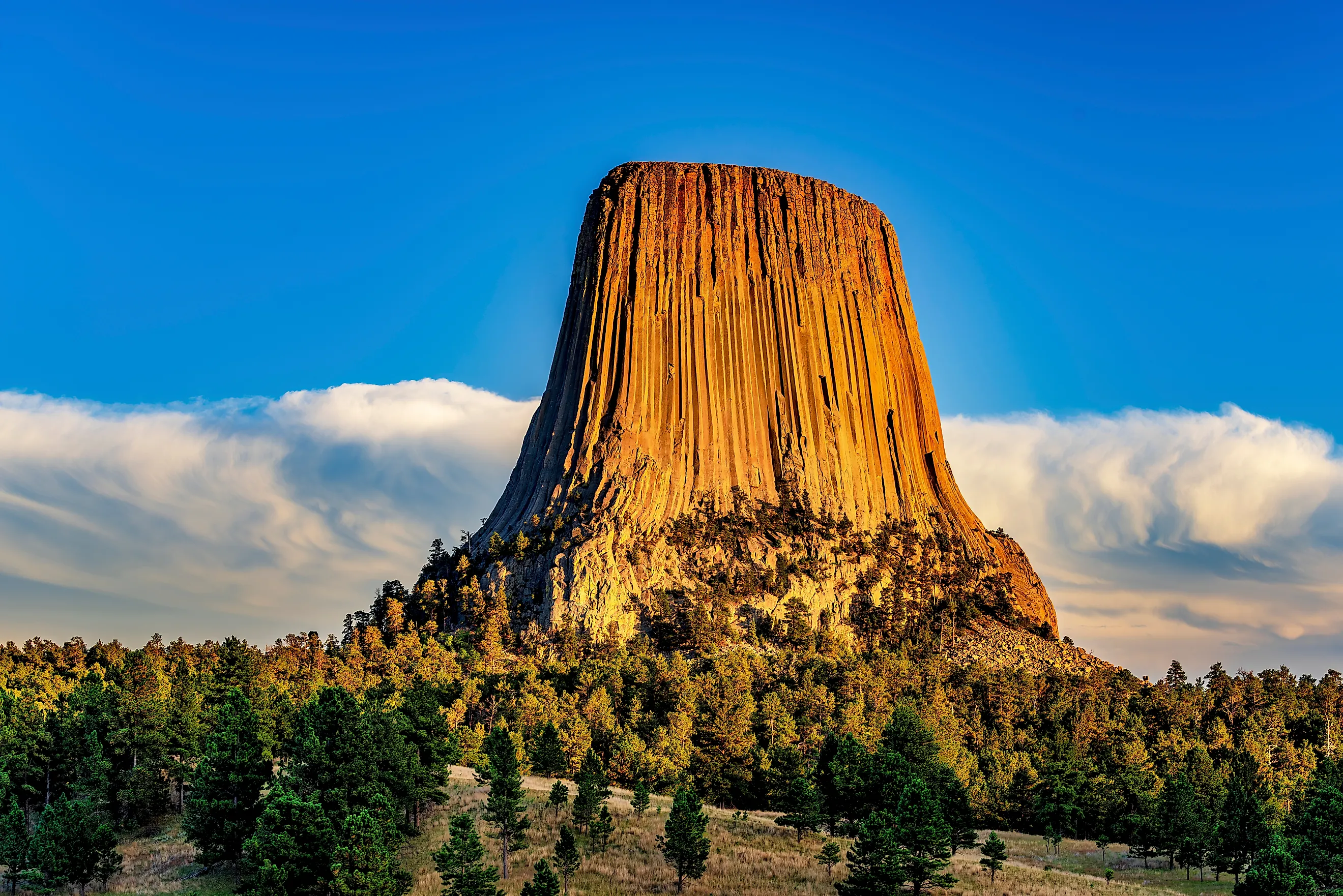
America has a long history of establishing what are known as "national monuments," places that protect and preserve anything from archaeological ruins and coral reefs to desert canyons and more. That tradition began with Devils Tower, a solitary rock formation standing high above the Belle Fourche River in northeastern Wyoming. Its designation marked an important step in federal conservation, recognizing that an individual natural feature deserved lasting protection as much as any man-made structure. Yet the title of "first national monument" captures only part of its significance. For visitors today, the tower brings together questions about Earth's past, enduring Indigenous connections to the land, and the practical challenge of protecting a sacred place that is also a hotspot for outdoor recreation.
How This Natural Landmark Became the First National Monument

On September 24, 1906, President Theodore Roosevelt proclaimed Devils Tower the first national monument in the United States. His decision followed years of efforts to protect the impressive formation, with Wyoming senator Francis E. Warren among its earliest advocates. Congressman Frank W. Mondell is often credited as well, though some historians dispute his role. In fact, federal officials had already reserved the tower and surrounding land from settlement in 1892, but proposals to establish a national park failed at the time.
The breakthrough came with the Antiquities Act, signed into law in June 1906. It authorized presidents to protect landmarks, prehistoric findings, and other objects of historic, scientific, or cultural interest on federal lands. Roosevelt used that authority to preserve Devils Tower for its remarkably unusual geology, emphasizing its importance to scientific study as well as the general scenic properties of the area.
Unlike national parks, which must be established through Congress, national monuments can be created by presidential proclamation under the act. Congress can designate monuments, too, but again, it isn't the sole body in government able to do so in this case. This distinction allowed Roosevelt to act without securing separate legislation. With that, its designation established an early precedent for using presidential authority to protect natural features, extending the act's future applications beyond archaeological sites and historic structures.
How Devils Tower Formed

Devils Tower began forming over 50 million years ago, when magma pushed into sedimentary rock beneath northeastern Wyoming. As the molten material cooled and contracted, cracks developed, dividing the rock into the long, polygonal columns visible today. The resulting rock, called "phonolite porphyry," resisted erosion more effectively than the sandstone, shale, and other sedimentary layers surrounding it. This is kind of like when a sculptor fills a mold with liquid metal, lets it dry, then breaks the much softer mold away to reveal the finished product.
When it comes to this immense, naturally made monument, water and weather stripped away those softer layers over millions of years, gradually exposing the "tower." Erosion continues to remove surrounding material, while broken-off columns have accumulated in the boulder field around its base.
Although geologists agree on its igneous origin, they still debate the original shape and setting of the rock. Proposed explanations include a small underground intrusion (magma that has intruded into and then cooled within the Earth's crust), the remains of a possibly larger, mushroom-shaped intrusion, and a truly volcanic origin (an open-topped volcano). Calling Devils Tower an "extinct volcano" therefore overlooks the uncertainty surrounding exactly how this distinctive appearance developed and what once stood above it.
A Sacred Place Long Before 1906

Long before federal protection, Devils Tower held religious and cultural importance for Indigenous peoples of the Great Plains and Black Hills. The Lakota, Cheyenne, Kiowa, and other tribes maintain distinct connections to it, expressed through oral histories and ceremonies. For them, it is commonly called "Bear Lodge," as several tribal mythologies describe giant bears clawing the rock, explaining the deep grooves between its columns.
These deep-seated relationships continue to this day, as the tower remains a place for prayer, vision quests, and other religious observances. While here, you may see prayer cloths and bundles attached to nearby trees, which are likely sacred offerings that visitors should leave undisturbed.
The name "Devils Tower" emerged from an 1875 expedition led by Colonel Richard Irving Dodge, whose misinterpretation of the Indigenous name, which he rendered as "Bad God's Tower," helped establish the current English designation. That name became official with the monument's creation in 1906, despite heavily differing from the meanings native communities associated with the site.
What to See and Do While Here

Walking the Tower Trail brings the formation's columns and fallen boulders into close view, with changing perspectives on the site as you get around its base. The paved loop measures 1.3 miles (2.1 km), while the full walk, including the approach, is more like 1.6 miles (2.6 km), and a number of benches and interpretive signs provide places to pause along the way. Near the monument's entrance, prairie dogs can also be watched from roadside pullouts or the various trails crossing their colony. But for a longer hike, the Red Beds Trail makes a 2.8-mile (4.5 km) circuit through pristine grassland and wood zones, with plenty more nice views across the Belle Fourche River valley.
Experienced rock climbers often try to tackle the cracks between the tower's columns, but be aware that reaching the summit requires serious technical equipment and skills. Climbers must also register before starting.
During June, all visitors are asked to observe a voluntary closure of climbing and boulder scrambling, too, in recognition of Indigenous religious practices. In these times, however, established hiking trails do remain open.
Plan Your Visit to Devils Tower This Year
If you'd like to see this incredible piece of natural and cultural history for yourself, you can reach Devils Tower via Wyoming Highway 24, connecting with U.S. Highway 14 from Sundance or Moorcroft. Allow two to three hours for a walk around the tower and stops nearby, or longer for additional hikes.
You'll probably want to spend some quality time at the aptly named "Prairie Dog Town," take a sweeping landscape photo or two at all the many vistas surrounding the monument, or even spend the night at the Devils Tower Lodge if you can't fit it all into one day.
But for a simple day trip, keep in mind that summer parking frequently fills between 10 a.m. and 3 p.m., so arrive early or aim for later in the afternoon. Bring water, sun protection, and sturdy shoes. Also note that the monument is open year-round, but winter trails are not usually maintained, so definitely bring appropriate footwear in the colder months. And as usual for any parkland, check road conditions and visitor center hours before departing, especially when snow or ice could affect your travel plans.