9 Of The Friendliest Towns In England
In England's friendliest small towns, it's not uncommon for farmers and craftspeople to open their gates and studios to visitors. In Heddon-on-the-Wall, Barnacre Alpacas invites guests on a walk 'n' talk around the farm, with each participant leading their own animal on a rope and halter. Cockington potter Tez Roberts offers workshops at Sea Change Studios for visitors interested in working with clay. In Olney, a weekly Thursday market and a monthly farmers' market gather around the historic centre, while the Cowper & Newton Museum arranges guided tours on request. Traditional pubs and independent shops round out the welcome across these 9 friendly English towns.
Stratford-upon-Avon

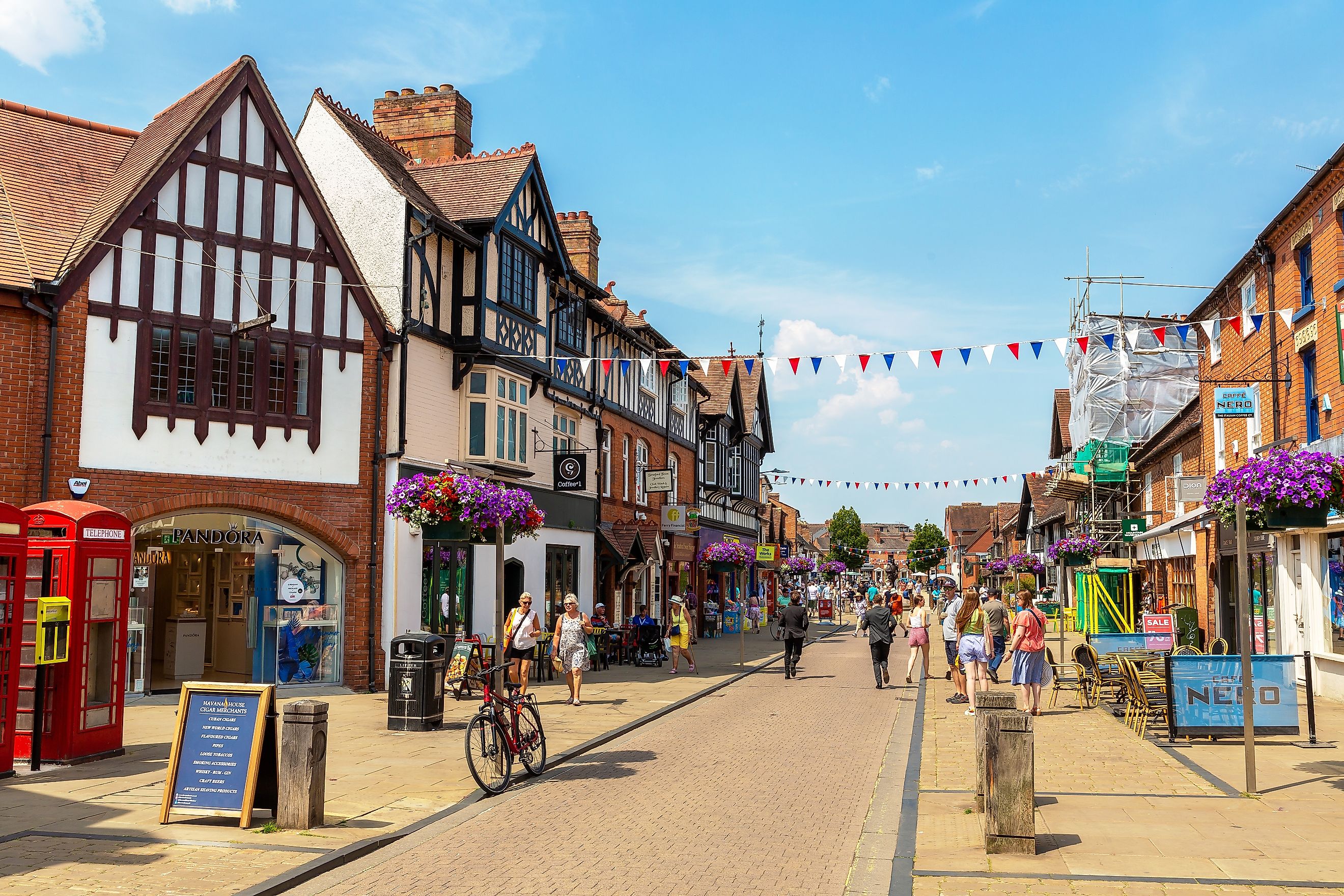
The birthplace of William Shakespeare, Stratford-upon-Avon remains closely connected to one of the world's best-known playwrights. Shakespeare's Birthplace on Henley Street was his childhood home and is now cared for by the Shakespeare Birthplace Trust. Visitors can learn about his family and early years before exploring the Becoming Shakespeare exhibition. Opened in 2025, the exhibition examines the surroundings and experiences that influenced Shakespeare during his formative years.
Another popular stop is Stratford Butterfly Farm, which describes itself as the UK's largest tropical butterfly paradise. Hundreds of butterflies fly through a humid greenhouse environment filled with tropical plants, waterfalls, and fish-filled pools. For a traditional pub stop, Old Thatch Tavern serves seasonal dishes centred on English fare. The historic pub is more than 500 years old and is known for its roasts, ales, and real fire.
Castle Combe

Castle Combe is a Wiltshire village within the Cotswolds National Landscape and is frequently promoted as one of England's prettiest villages. The Manor House occupies a 14th-century building and sits within an estate that includes an 18-hole championship golf course. Visitors can reserve tee times at The Manor House Golf Club, whose par-72 course extends across the rolling Wiltshire countryside.
St Andrew's Church is another historic highlight. Its interior contains an effigy of a knight dating from around 1300 and a medieval clock that has become one of the church's best-known features. Afterward, stop at The Old Stables Coffee Shop, where the menu includes a changing selection of cakes and scones. Its savoury offerings have included cheddar scones served with butter and garden chutney.
Port Isaac

Port Isaac is a traditional fishing village on the north coast of Cornwall, where narrow streets descend towards a small harbour. Walkers can pick up the South West Coast Path from the cliff-top car park and follow it around the headland and harbour towards Port Quin. The elevated sections provide extensive views over the Cornish coast before the path continues beyond the village.
Port Isaac Trading on Fore Street is another stop, with tableware, homewares, and Cornish-themed goods among its changing stock. Seafood lovers can also book a table at Outlaw's Fish Kitchen, which occupies a 15th-century fishermen's cottage. Its changing menus use fish and shellfish landed in Port Isaac and elsewhere in Cornwall, with local fishermen supplying fresh catch daily.
Cockington

Cockington in Devon is a historic village known for its thatched cottages and country setting. One of its green spaces is the Memorial Rose Garden, which forms part of the grounds around Cockington Court. The estate is also home to a community of artists and craftspeople working from studios where visitors can browse locally made pieces.
Among the resident makers is Tez Roberts Ceramics, based at Sea Change Studios at Cockington Court. Roberts works with stoneware and Raku techniques and offers pottery workshops for visitors interested in working with clay. Workshop programmes vary, so visitors can check upcoming sessions before travelling. Combined with Cockington Court and the village's thatched buildings, the studios provide another reason to explore Cockington on foot.
Heddon-on-the-Wall

Heddon-on-the-Wall in Northumberland is closely associated with the Roman frontier that gives the village its name. A surviving section of Hadrian's Wall extends for about 220 metres and represents the broad-gauge design used when construction of the Wall began around 122 CE. Another local experience is the alpaca walk 'n' talk at Barnacre Alpacas, about 10 miles west of Newcastle upon Tyne. The experience follows a gentle 1-mile route around the farm and lasts at least an hour. Each participant walks an alpaca on a rope and halter, with visits arranged in advance. Back in Heddon-on-the-Wall, The Swan offers another stopping point for food and drinks in a traditional pub setting.
Welford-on-Avon

Welford-on-Avon is a Warwickshire village set beside the River Avon. Public footpaths around the village provide opportunities to explore the Avon Valley on foot, while Boat Lane is particularly well known for its timber-framed and thatched cottages. Visit Warwickshire promotes the lane for what it calls the original "chocolate-box image" of traditional thatched cottages. One of the historic properties on Boat Lane dates from the 17th century.
The Bell Inn adds another historic stop to a visit. Visit Warwickshire identifies it as a 17th-century inn, while CAMRA describes the pub as having exposed beams and real fires in winter. It also serves cask ales, including a selection of regular and changing beers. The pub and nearby cottages make this part of Welford-on-Avon particularly suited to a leisurely walk through the village.
Lavenham

Lavenham in Suffolk is a well-preserved medieval village with strong links to the county's historic wool trade. One of its most unusual buildings is The Crooked House on High Street, which dates to 1395. Local visitor information notes the tradition that the leaning building inspired the nursery rhyme There Was a Crooked Man, although that connection remains a popular story rather than a proven historical link.
Art lovers can visit Lavenham Contemporary, a gallery centred on the work of British landscape painter Paul Evans. His paintings depict countryside and coastal areas across Britain, and the gallery also carries work by a small selection of other artists. For afternoon tea, Francesca's occupies a historic High Street building dating from 1532. Its offerings include homemade cakes and afternoon tea with scones, jam, and clotted cream.
Downham

The village of Downham in Lancashire sits beneath Pendle Hill within the Forest of Bowland National Landscape. Its traditional appearance has been carefully preserved, thanks to the absence of overhead wires, satellite dishes, and television aerials. Pendle Hill dominates the views from the village. Visitors interested in climbing to its summit can head to nearby Barley, a well-established starting point for the challenging walk to the top.
Back in Downham, The Assheton Arms serves breakfast and meals in the centre of the village. Another landmark is St Leonard's Church. Historic England dates the present church to 1910, while its west tower survives from the late 15th century. The church and stone-built cottages add to the historic character that has made Downham a filming location for productions including Whistle Down the Wind.
Olney

Olney is a Buckinghamshire market town with a strong literary and religious history. The Cowper & Newton Museum explores the stories of 18th-century poet William Cowper and clergyman John Newton. Newton wrote the words to Amazing Grace while living in Olney. He had previously participated in the transatlantic slave trade and captained slave ships before later speaking and writing against the trade and contributing to the abolition campaign. Visitors can also request a guided museum tour.
Olney continues its market tradition with a weekly Thursday market and a farmers' market on the first Sunday of each month. Both take place around the historic centre. Independent shops provide another reason to explore the High Street, including The Nest at No. 7. The shop specialises in changing collections of homewares and gifts from suppliers in Britain and farther afield.
Say Cheerio to the Same Old
In towns like Stratford-upon-Avon and Olney, and in villages such as Castle Combe and Port Isaac, these destinations offer very different ways to explore England. Join a pottery workshop in Cockington, see Hadrian's Wall at Heddon-on-the-Wall, or follow the coast from Port Isaac. Welford-on-Avon and Downham offer historic streets and countryside walks, while Lavenham brings medieval architecture into the mix. Together, these communities make a strong case for exploring England beyond its largest cities.