The National Forests With The Most Venomous Snakes
Madera Canyon, a single canyon in southern Arizona’s Coronado National Forest, has seven kinds of rattlesnake. All of Florida has three. The richest venomous-snake forests are the ones where very different country sits close together, so a short hike can cross the ground of several species at once. In Arizona that country is stacked up the mountainsides. On the Southern coastal plain it lies flat and interlocked. Which forests pack in the most snakes, and how, is what the rest of this sorts out.
Coronado National Forest, Arizona

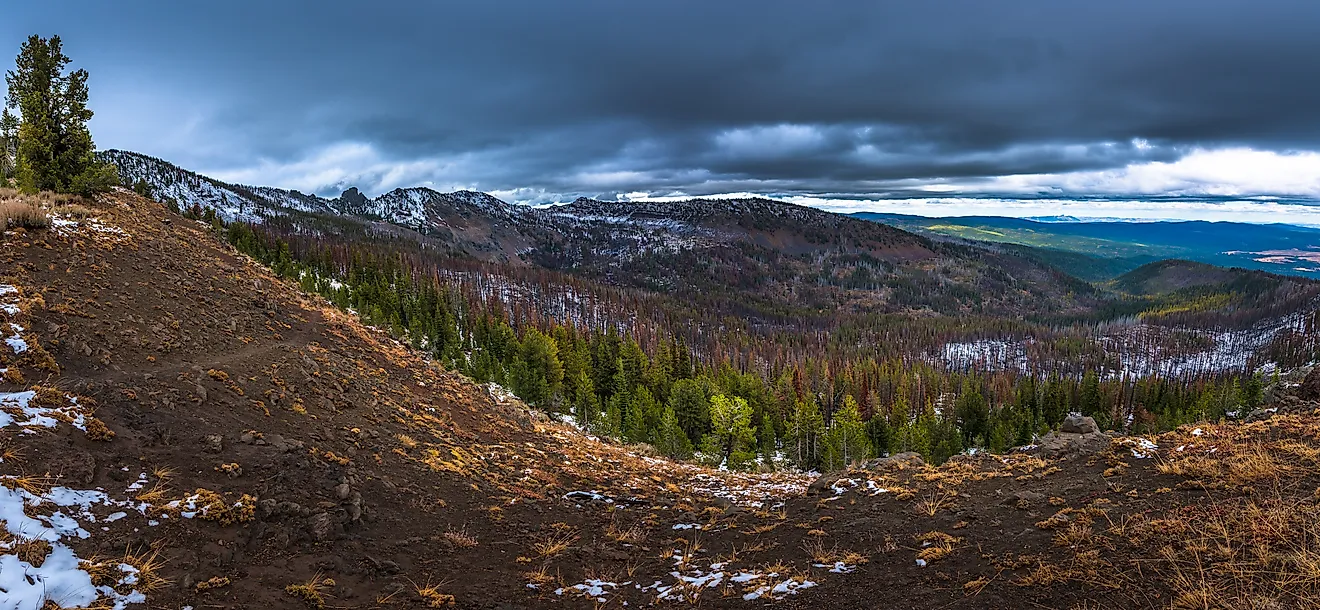
Madera Canyon lies on the northwest side of the Santa Rita Mountains, below the 9,453-foot summit of Mount Wrightson, and some 27 snake species live in the canyon and on the Santa Cruz Valley floor below it, seven of them rattlesnakes. Western diamondbacks and Mojave rattlesnakes can be seen along the valley road leading toward the canyon, tiger rattlesnakes also live here, and the black-tailed rattlesnake, the most frequently encountered snake in Madera Canyon, can appear on any trail above Proctor into the Mount Wrightson Wilderness.
Higher up, the rattlesnakes are smaller and more particular about habitat. The Arizona ridge-nosed rattlesnake, the state reptile since 1986, lives in shaded canyon bottoms under alder, box elder, maple, and oak, most often between 5,400 and 7,500 feet, and like the banded rock rattlesnake it is one of the canyon's small mountain species. Twin-spotted rattlesnakes keep to rocky talus on the highest slopes and eat mainly lizards, and they live higher than any other Arizona rattlesnake, usually above about 7,900 feet.
The Arizona black rattlesnake of the Santa Catalina and Pinaleño mountains, two more of Coronado's separate sky island ranges, brings the forest's total to at least eight rattlesnake species. In the Chiricahua Mountains, parts of the Barfoot area are closed during the twin-spotted rattlesnake's active season under a Forest Service order that runs through April 2028.
Tonto National Forest, Arizona

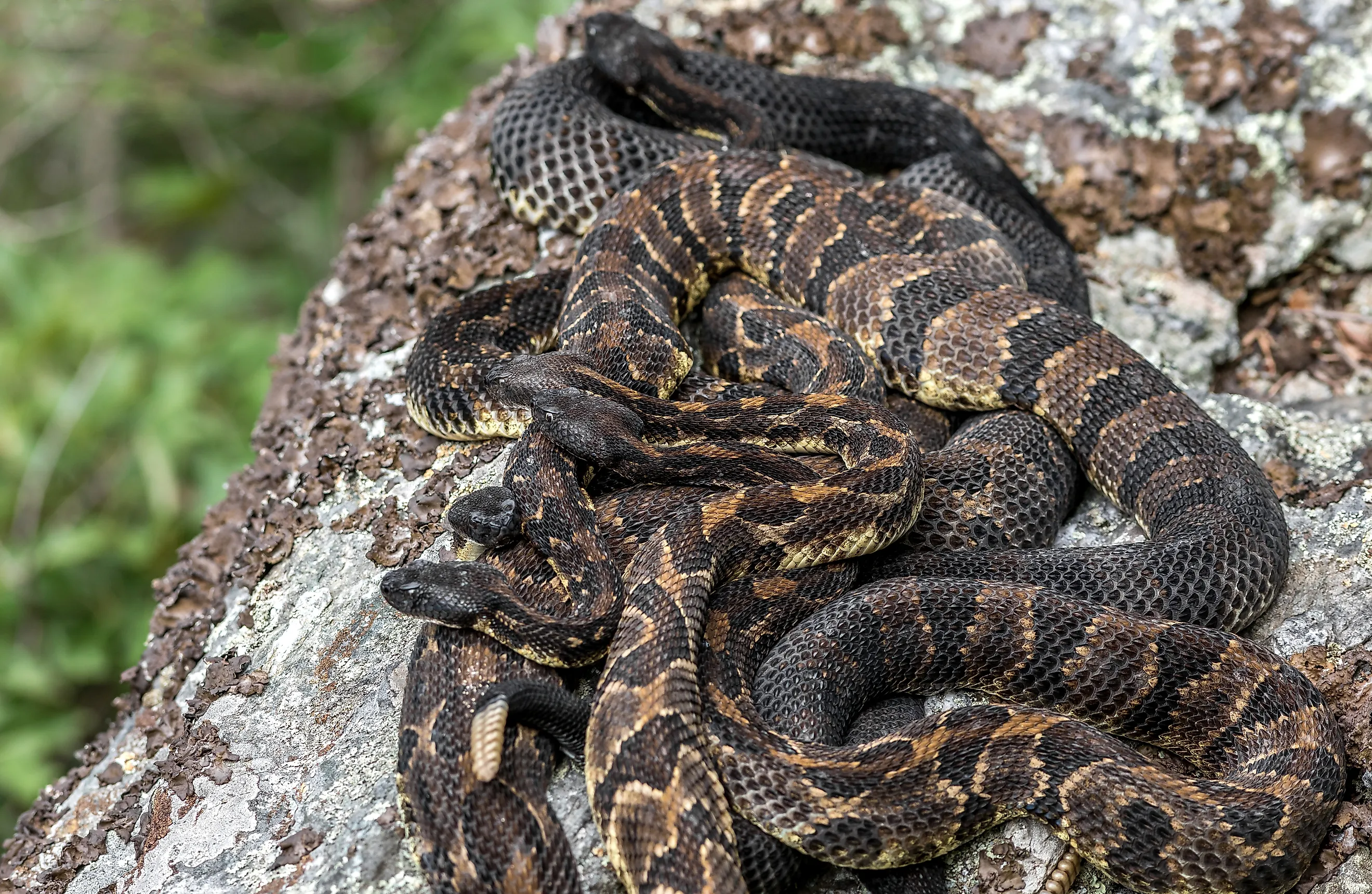
The Arizona black rattlesnake apparently reaches the bottom of its elevation range at Tonto National Monument, a small park in the upper Sonoran Desert surrounded by Tonto National Forest. Radio-tracked adults there spent little time near trails and visitor areas and hibernated on slopes of rocky debris between late October and March. Males court by coiling tightly on top of a female, a behavior called stacking, and mothers appear to stay with their four or five young until the babies first shed, one or two weeks after birth.
Three other venomous snakes live at the monument, which sits above Roosevelt Lake, one of a chain of six reservoirs on a national forest visited by about 3 million people a year. Western diamondbacks are seen there more than any other snake, and the Sonoran coral snake is rarely seen, though probably common. Black-tailed rattlesnakes often turn up along the Upper Cliff Dwelling Trail.
Gila National Forest, New Mexico

In 2001, a visitor killed a black-tailed rattlesnake on the trail to the cliff dwellings at Gila Cliff Dwellings National Monument, a path where staff and volunteers had long been concerned about protecting the black-tails that live along it. The monument is surrounded by the Gila National Forest, and black-tailed rattlesnakes are common there in oak-juniper woodland and every zone above it, up into the spruce and fir of the high country, while western diamondbacks keep lower, in desert and oak woodland. Prairie rattlesnakes are common on the Gila, rock rattlesnakes are uncommon, and Sonoran coral snakes live in its oak-juniper and pinyon-juniper woodland. In New Mexico, the Arizona black rattlesnake occurs only in parts of Grant and Catron counties, in and around this forest.
Ouachita National Forest, Arkansas and Oklahoma

The Ouachita National Recreation Trail is about 225 miles long, with Pinnacle Mountain State Park west of Little Rock at one end and Talimena State Park in Oklahoma at the other, and 192 of those miles are on the Ouachita National Forest. The trail's high point, about 2,600 feet, is on Rich Mountain, and copperheads, western diamondbacks, and cottonmouths have all been seen along the way. Cottonmouths are uncommon in the upland streams of these mountains. Nearly all of Arkansas's western diamondbacks live in the Ouachita uplands and the southwestern Ozarks, on rocky outcrops and open pine-hardwood slopes.
Copperheads made up nearly one in three snakes found at a study site on private timberland in the Arkansas Ouachitas. Timber rattlesnakes and western pygmy rattlesnakes range across Arkansas, these mountains included, and at that site the pygmies turned up only on a high, dry ridge.
Kisatchie National Forest, Louisiana

In pools left by military tank training on Kisatchie National Forest's Vernon Unit, cottonmouths were among seven reptile species seen in 2012 and 2013, and in the upland pine of Natchitoches, Vernon, and Winn parishes, where large parts of the forest lie, every cottonmouth trapped was at a site distant from water. Copperheads and pygmy rattlesnakes were caught mostly in that same upland pine. Pygmy rattlesnakes, ranked as imperiled in Louisiana, keep to the grassy understory of these pine stands, and Texas coral snakes live in this part of central Louisiana as well.
Timber rattlesnakes are rare and local across Louisiana, and two have been found dead on Longleaf Vista Road in the Kisatchie Ranger District, beside the 8,700-acre Kisatchie Hills Wilderness. They prefer hardwoods and eat mostly mammals, mice when young and squirrels and rabbits as they grow.
Conecuh National Forest, Alabama

All six of Alabama's venomous snakes occur in Covington County, home to part of Conecuh National Forest along the Florida line, and in 2011 a local herpetologist called copperheads the most abundant snake on the national forest side of the county. Eastern diamondbacks, Alabama's largest venomous snake, spend the winter in stump holes and in the burrows gopher tortoises dig under the forest's longleaf pine.
Eastern indigo snakes, North America's longest snakes at more than 8 feet, shelter in those same burrows and eat copperheads, cottonmouths, and rattlesnakes, with at least some resistance to their venom. When releases began on Conecuh in 2010, indigos had not been documented in Alabama since 1954, and more than 300 have been let go in the forest since. A hatchling found there and announced in January 2020 was the state's first wild-born indigo in decades.
Apalachicola National Forest, Florida

Florida's copperheads live only in the Panhandle, mostly at its far western tip and along the Apalachicola River and its tributaries, where they favor hardwood floodplains and ravines. Copperheads have been recorded on the western, Liberty County side of Apalachicola National Forest, where two were found on the leaf-strewn banks of a stream winding through a ravine.
On the other side of the forest, in Leon County just south of Tallahassee, the Munson Sandhills are longleaf pine and wiregrass on dry sand, where eastern diamondbacks live. Dusky pygmy rattlesnakes, found in every Florida county, share the forest with cottonmouths and eastern coral snakes, both of which range across the state. The forest between the river ravines and the sandhills covers about 568,000 acres, more than any other national forest in Florida.
Francis Marion National Forest, South Carolina

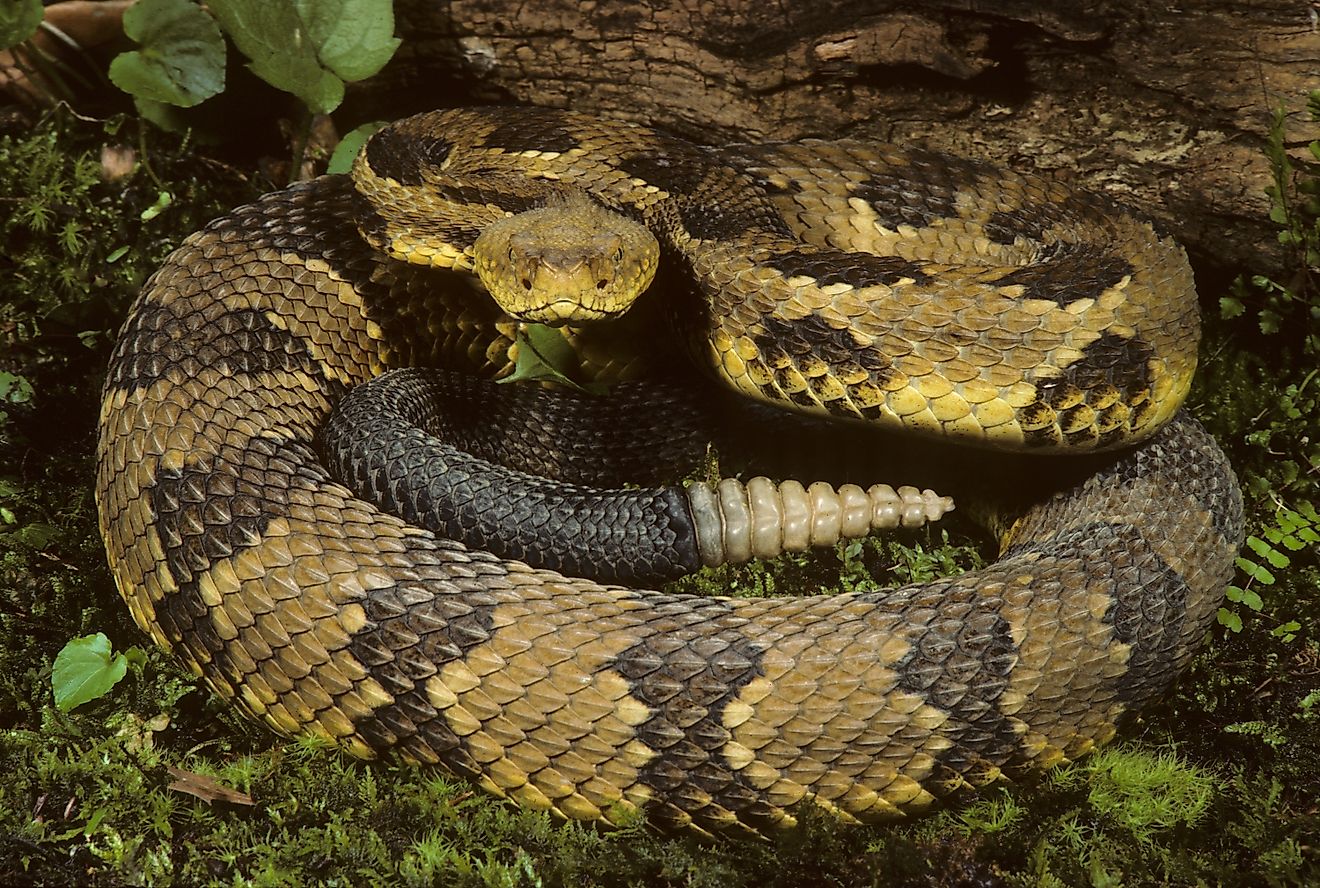
About 200 eastern diamondbacks are estimated to live on one 10,000-acre area of Francis Marion National Forest, north of Charleston, where the rabbits they mainly eat are in short supply, and a three-week Forest Service search in the spring of 2014 found only four. The diamondback, the largest venomous snake in the United States, is one of six venomous species here. Cottonmouths, southern copperheads, timber rattlesnakes, Carolina pygmy rattlesnakes, and eastern coral snakes make up the rest, living among longleaf pine stands and 25 Carolina bays, the shallow oval wetlands inside the forest boundary. Stumps are left in the ground in diamondback habitat to give the snakes cover.
Across these forests, the most widespread venomous snakes are the least particular about ground. Black-tailed rattlesnakes on the Gila are common in every zone between oak-juniper woodland and the high conifers, and in the upland pine of west-central Louisiana, cottonmouths have been trapped at sites away from streams and wetlands. The scarce snakes are tied to narrow pieces of terrain. In the Chiricahuas, twin-spotted rattlesnakes have been found on talus slopes between about 8,300 and 9,500 feet. On Francis Marion, where the diamondbacks' rabbit prey runs short, the snakes are not breeding regularly, and the open pine forest they depend on covers about 3 percent of its former Southeastern range.