The Loneliest National Forest In America
Oregon's Malheur National Forest logged only about 76,000 recreation visits in a year, according to the US Forest Service's own visitor survey. Spread across about 1.7 million acres of the Blue Mountains, that works out to fewer than five visits for every 100 acres of forest. By comparison, Colorado's White River National Forest, the busiest in the country, draws millions of visitors a year. In the Forest Service's most recent round of surveys, no national forest recorded fewer visits. That makes the Malheur the best candidate for the loneliest national forest in America.
How The Forest Service Counts Visitors

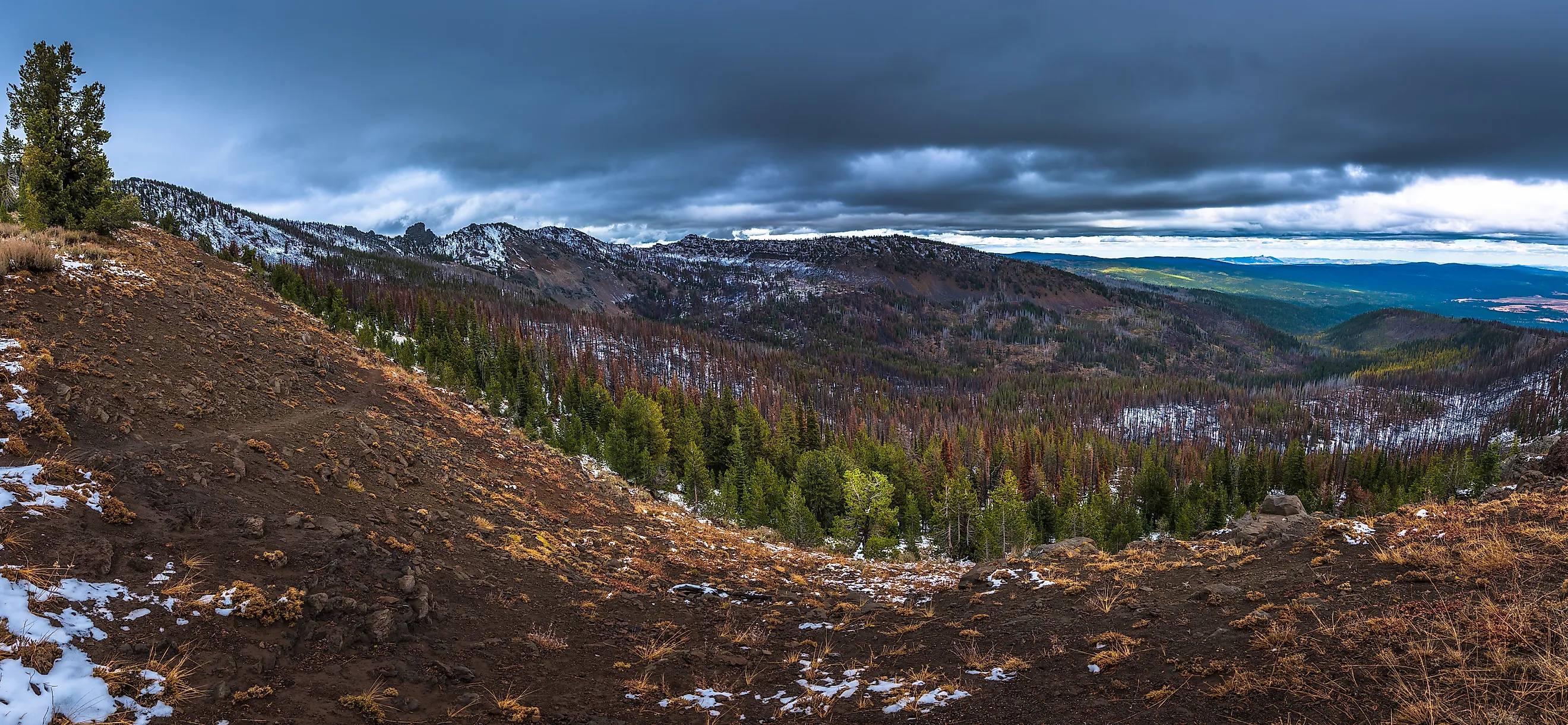
Strawberry Mountain Wilderness, Malheur National Forest, Oregon.
National forests don't have entrance gates or ticket booths, so the Forest Service estimates visits through a program called National Visitor Use Monitoring. Survey crews interview people and count traffic at sample sites across each forest, then use those samples to estimate yearly totals. Each forest is surveyed once every five years, and the estimates come with a wide margin of error.
That margin matters at the bottom of the list. California's Modoc National Forest came in only slightly higher than the Malheur, at about 86,000 visits, but its estimate is so uncertain that it could be much higher or lower. A few prairie and grassland units, such as Illinois's Midewin National Tallgrass Prairie, logged even fewer visits, but they are not forests. Among actual national forests with recent surveys, the Malheur sits at the bottom.
Where The Malheur Is

The Malheur covers a big swath of the Blue Mountains in eastern Oregon, far from the state's major cities. Its headquarters sits in the small town of John Day, and the counties around it are among the least populated in Oregon. The forest is a mix of ponderosa pine, fir, and larch on high ridges, with sagebrush flats and grassy meadows below. It includes the Strawberry Mountain Wilderness, where trails climb to alpine lakes and rocky peaks, and the smaller Monument Rock Wilderness. The headwaters of the Middle Fork John Day River rise here, and the river is an important spawning ground for wild steelhead and Chinook salmon.

Don't confuse it with the similarly named Malheur National Wildlife Refuge to the south. The refuge, a vast wetland run by the US Fish and Wildlife Service, made national headlines during an armed occupation in 2016. The national forest is a separate place, managed by the Forest Service.
The Giant Hiding Underground

The Malheur's most famous resident is almost invisible. Beneath its slopes grows a single honey mushroom fungus, Armillaria ostoyae, that spreads through the soil and roots across roughly 2,385 acres, about 3.7 square miles. Often called the "humongous fungus," it ranks among the largest living organisms on Earth, and scientists estimate it may be thousands of years old. Most of it lives underground as a network of thread-like strands, so visitors usually see only clusters of honey-colored mushrooms in the fall and the dead trees the fungus slowly kills.
A Quiet Forest With A Working Job

Few visitors doesn't mean little use. Like every national forest, the Malheur is managed for multiple uses, so cattle graze its meadows, loggers harvest timber, and hunters arrive each fall for elk and mule deer. Fire is part of its story, too. Dry ponderosa pine forests like these evolved with frequent, low-intensity fires, and managers now use thinning and planned burns to bring that pattern back. For the few people who do visit, the reward is space, with campgrounds that rarely fill, trails with no crowds, and wide-open night skies far from city lights.
Lonely By The Numbers, Rich In Everything Else
The Malheur earns its title through sheer distance. It sits hours from any major city, in one of the least populated corners of the West, so its visitor counts stay low even as other national forests grow busier every year. That isolation has helped protect its salmon streams, its wilderness peaks, and its giant underground fungus. For anyone looking for a national forest with no lines and plenty of room, this corner of eastern Oregon is hard to beat.