Where Copperheads And Rattlesnakes Share The Same Den
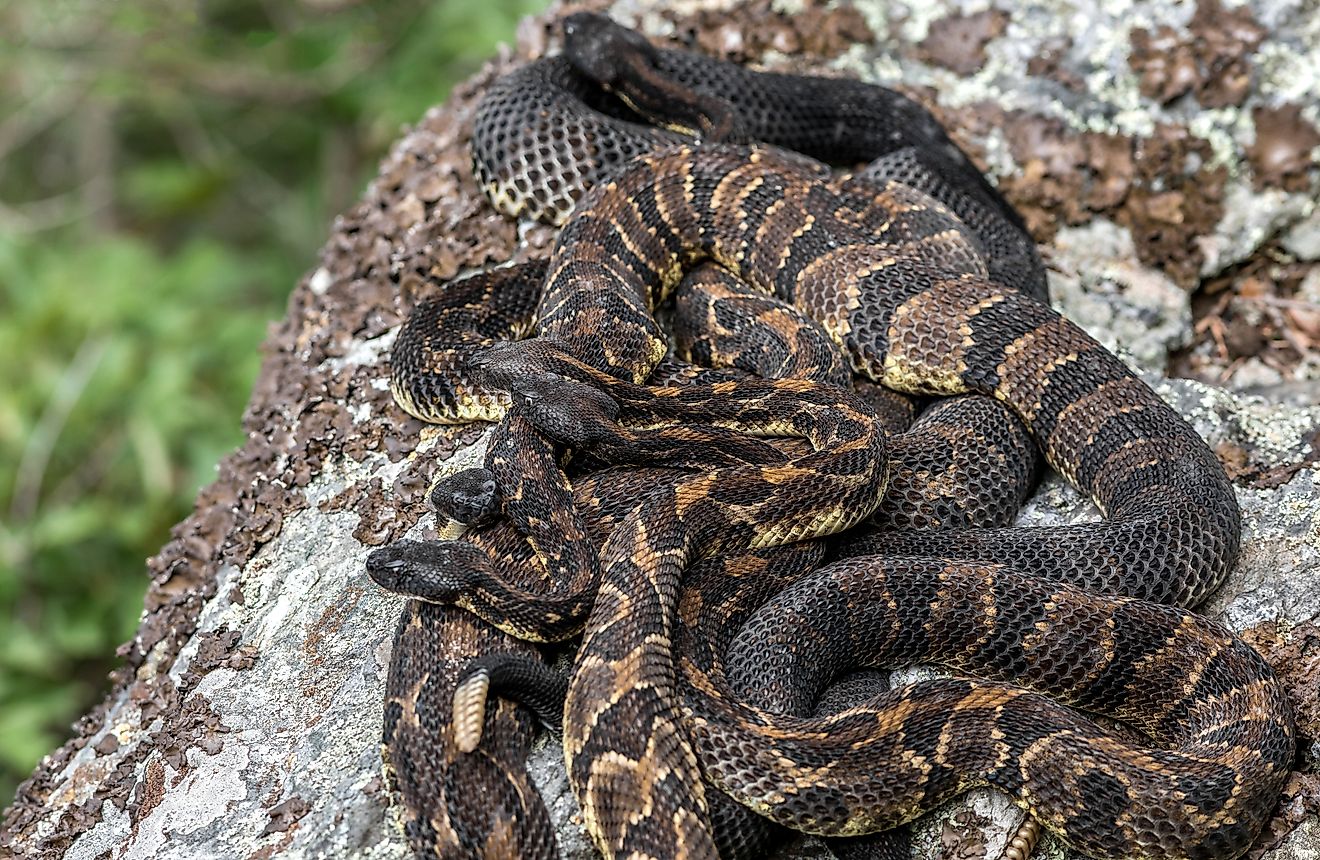
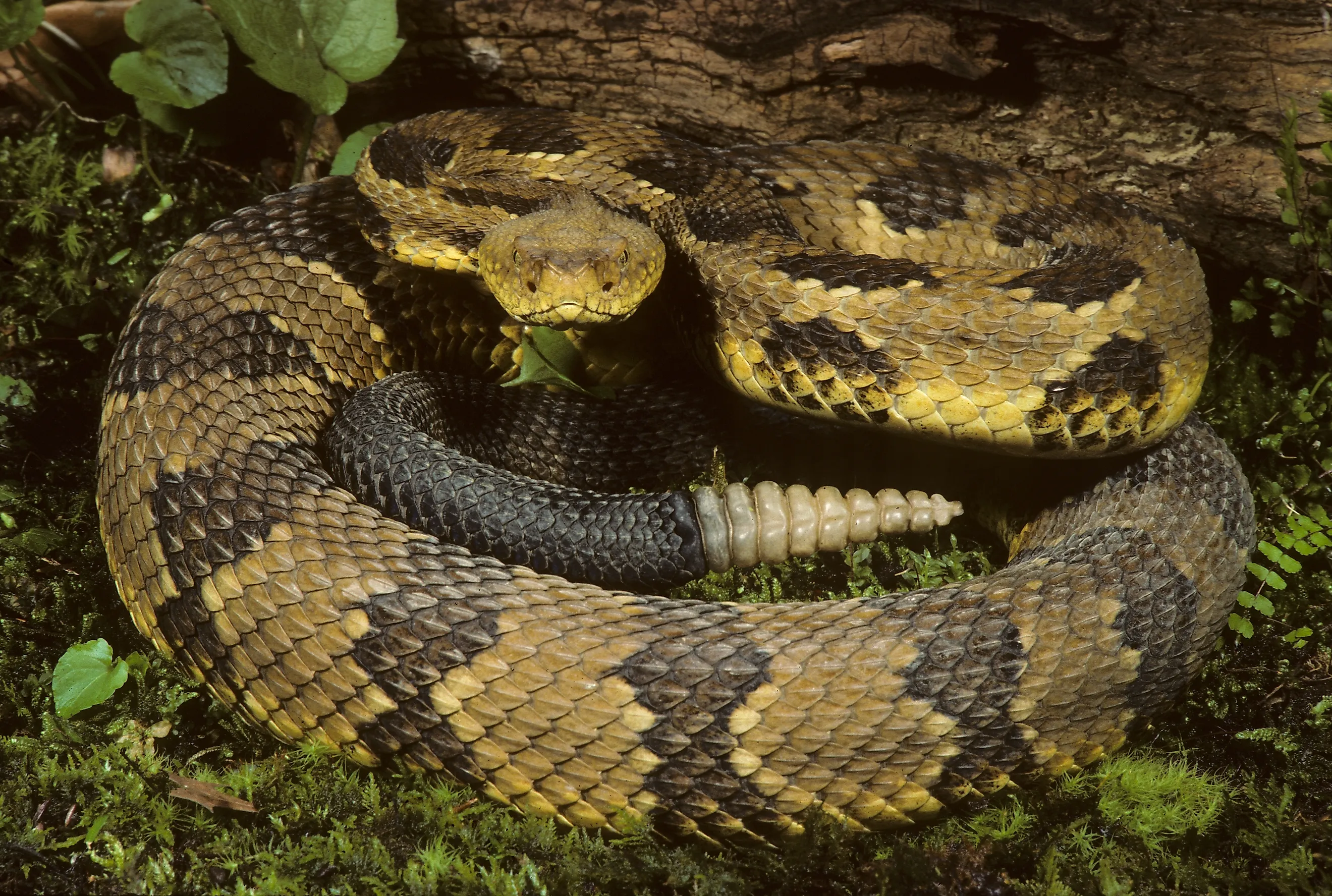
In the central Appalachians, the copperhead and the timber rattlesnake are the only snake species that routinely spend the winter in communal dens, and they frequently spend it in the same one. Occasionally black rat snakes join them. Den populations average 30 to 60 animals, the largest hold 100 to 150, and some have been recorded with as many as 200 timber rattlesnakes alone. This is not cooperation. It is a housing shortage, and it concentrates entire local populations of two venomous species into a handful of rock crevices.
The Appalachian Ridges

The best-documented shared dens in the country run along the spine of the central and southern Appalachians.
Shenandoah National Park in Virginia is where much of the observational record comes from. Snakes there enter the dens between late September and mid-October and emerge over a two to three week window in late April or early May, depending on the weather.
Summer range stays within about 2.5 miles of the den for most animals, though individuals have been tracked 4 to 5 miles out. Whatever distance they cover, they come back to the same crevice.
New York Has Two Hundred Of Them

The northeastern end of the range has the most thoroughly catalogued den system, and its numbers are not encouraging.
The New York Natural Heritage Program database lists 204 known active timber rattlesnake dens. Of those, only 35, or 17 percent, are rated good or better. A further 125 are rated fair. The state's population is estimated at about 40 percent of what it was a century ago.
New York guidance notes explicitly that timber rattlesnakes there hibernate in communal dens, often with copperheads and other non-venomous species.
The Specification Is Identical For Both

Two species share a den because they need exactly the same thing and there is not much of it. The requirement is a space below the frost line that stays above freezing, in rock, on a south or west-facing slope. New York dens are typically in talus accumulations below ledges, or in fractures within or underneath rock outcrops.
Both species want that identical arrangement. Where a hillside offers one good fissure and nothing else for miles, both species use the fissure.
Scarcity Is The Mechanism
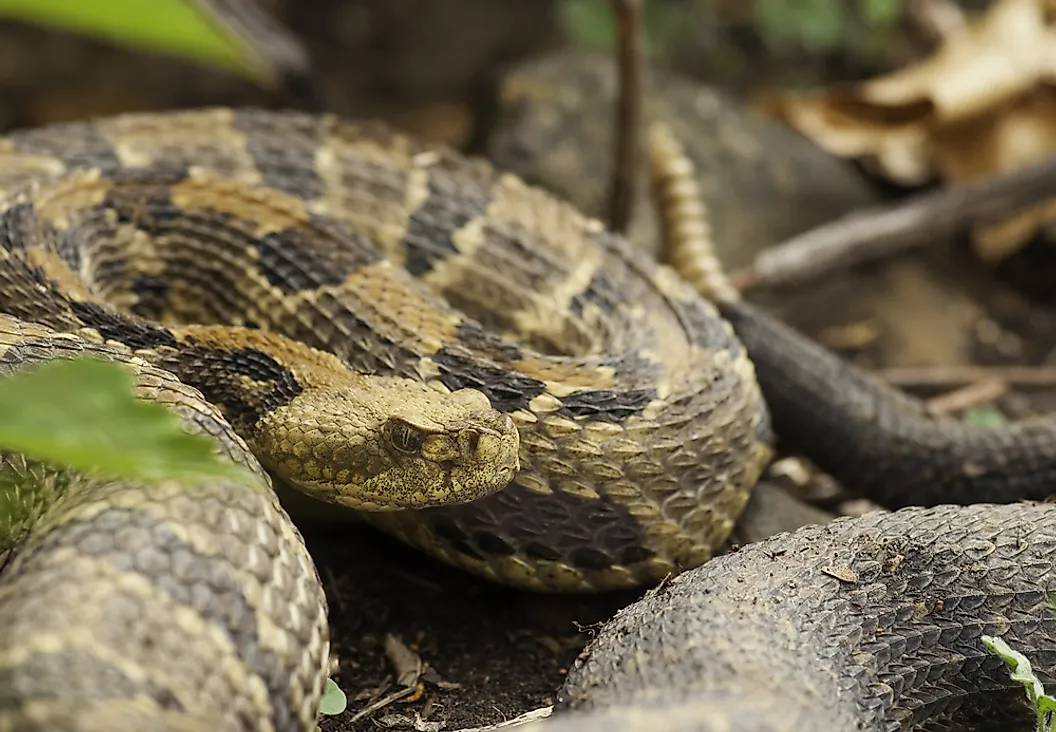
The reason co-denning is a northern and upland phenomenon rather than a universal one comes down to simple supply.
Suitable hibernacula become scarcer and therefore more communal in progressively colder climates. In the southern part of the range, timber rattlesnakes overwinter in stump holes and animal burrows, which are abundant enough that nobody has to share.
Move north or uphill and those options freeze. What remains is rock, rock is finite, and sharing stops being optional.
Elevation Sets The Ceiling

The dens sit at predictable heights, and the pattern tracks latitude in a way that makes the thermal logic plain.
Overwintering dens occur up to about 5,000 feet in the southern Appalachians, 2,200 feet in southern New England, and around 1,300 feet in northeastern New York, Wisconsin and Minnesota. Snakes range higher in summer and come back down to winter.
The further north the population, the lower the den has to be. The same thermal window exists everywhere, it just sits at a different altitude.
The Snakes In A Den Are Related

These are not random assemblages, which is the detail that makes den loss so serious. Timber rattlesnakes show high fidelity to hibernacula with only occasional exchange between sites, and the animals in a given den are consequently highly interrelated. Genetic work in New York found snakes in fragmented habitat stayed in isolated islands, avoided roads, and mated within their own island.
A den is closer to an extended family address than to a shelter. Females show particular fidelity to the den they were born at.
Newborns Find It By Smell

The mechanism by which a den persists across generations is stranger than simple inheritance.
Newborn timber rattlesnakes are often born well away from the overwintering den and follow the scent trails of adult snakes back to it for their first winter. They navigate to a place they have never been using chemical cues left by animals they are not following.
That is also the vulnerability. Break the trail with a road or a development and the neonates do not arrive.
Spring And Autumn Are When You See Them

Shared dens produce a visible seasonal phenomenon that catches walkers out twice a year.
During both autumn ingress and spring egress the species shuttles in and out of the hibernaculum to bask, which results in large congregations of snakes immediately around the den entrance. The animals are not dispersed across the hillside. They are stacked at one point on it.
Which means encountering several venomous snakes at once in April or October is not bad luck. It is the predictable consequence of standing near a den.
One Den Holds The Whole Population

The conservation consequence follows directly from everything above and is the reason den locations are kept off public record.
Timber rattlesnakes mature slowly, females reproduce only every two to four years, and the entire local population may share one hibernaculum. There is no evidence of natural recolonization of an extirpated den site.
Destroy one rock outcrop and you remove a breeding population of two venomous species permanently. The species is already gone from Ontario, Quebec, Maine, Michigan, Delaware and Rhode Island.
The Short Answer
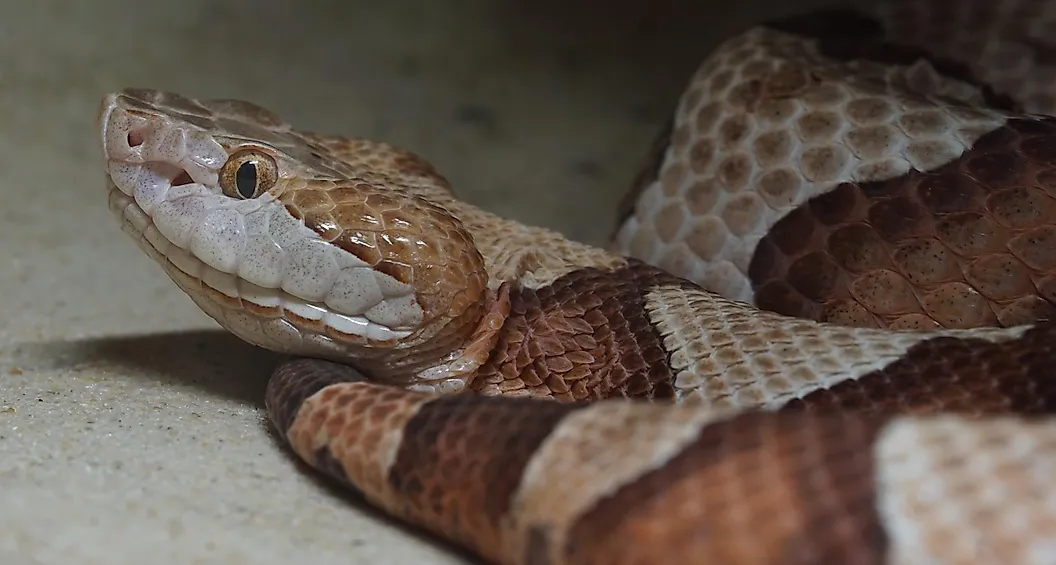
Copperheads and timber rattlesnakes share dens throughout the central and southern Appalachians, across New York and New England, and in the rocky uplands of the Ozarks and Shawnee Hills. They do it because both need a frost-free crevice on a sunny rock face and those are rare, and the colder the climate the rarer they get.
Thirty to sixty animals is typical, 200 has been recorded, and the occupants are usually related. Which is why the destruction of a single outcrop can end two local populations at once, and why nobody who studies these dens will tell you where they are.