The Least Visited Coastal National Park In The Lower 48
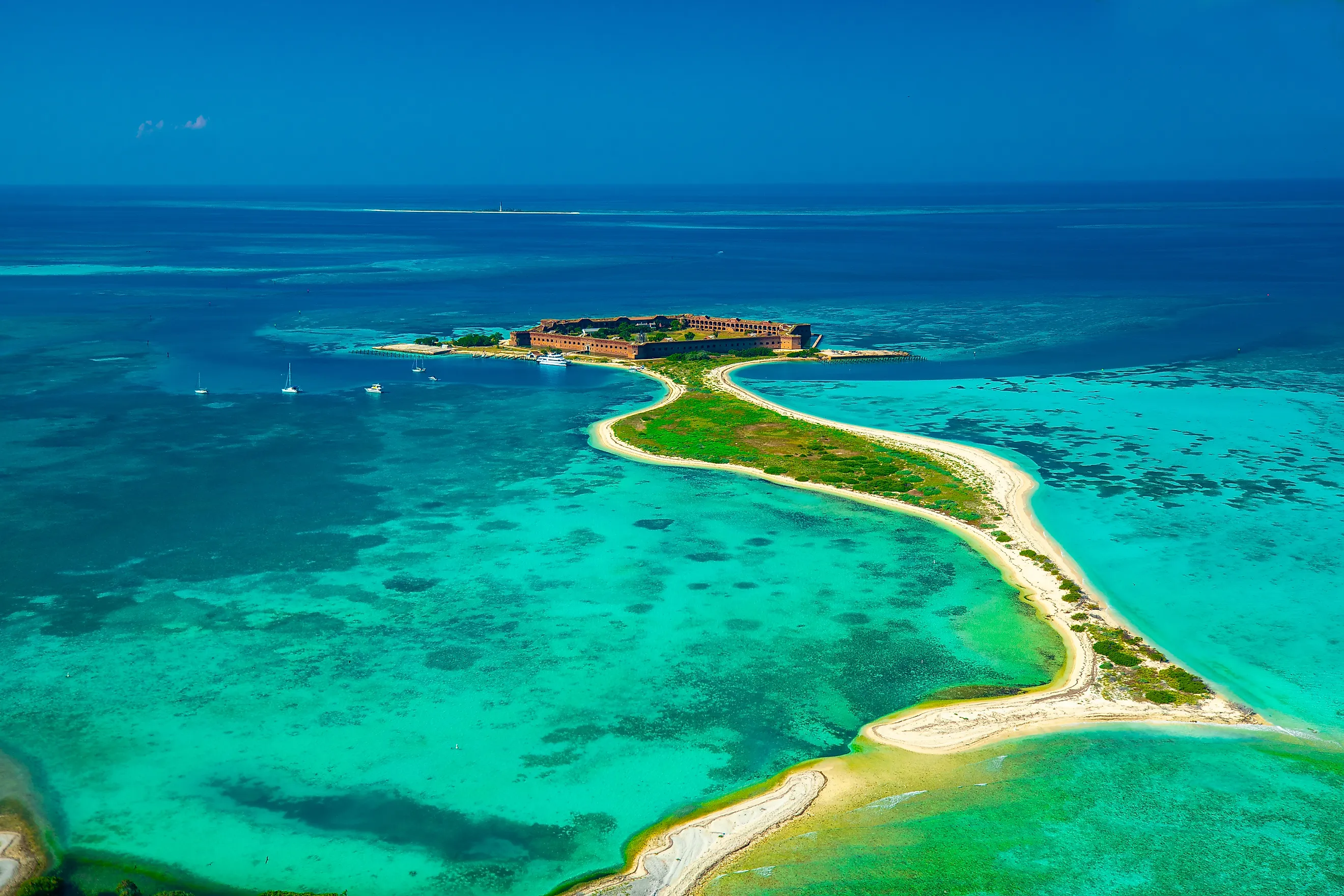
Dry Tortugas National Park recorded about 89,000 recreation visits in 2025, fewer than any other coastal national park in the Lower 48, according to the National Park Service. The park lies far out past Key West, and roughly 99% of it is open water. There is no bridge and no road. Every visitor arrives by ferry, private boat, or seaplane. That single fact does more than anything else to keep the crowds small.
Seven Islands And A Fortress

The park protects seven small islands scattered across coral reefs and seagrass beds about 70 miles (113 km) west of Key West. Spanish explorer Juan Ponce de León named them for the sea turtles he found there in 1513, and sailors later added "dry" because the islands have no fresh water. The centerpiece is Fort Jefferson, a six-sided brick fortress that covers most of Garden Key. The US Army began building it in 1846 to guard the shipping lanes between the Gulf of Mexico and the Atlantic, and although work went on for about 30 years, the fort was never finished.
The fort has an unusual history. During and after the Civil War, it served as a military prison, and its most famous inmate was Dr. Samuel Mudd, the physician convicted of helping John Wilkes Booth after the assassination of Abraham Lincoln. Today, visitors can walk the fort's vaulted brick galleries and climb to the top of its walls for views across the surrounding reefs.
Why So Few People Make The Trip

Getting to Dry Tortugas takes planning. The ferry from Key West takes a little over two hours each way, and seaplane flights are shorter but carry only a handful of passengers. Both have a limited number of seats each day, so the park can only absorb so many visitors, no matter how many want to come. There are no hotels, restaurants, or stores on the islands, and visitors need to bring their own water and supplies.
Low numbers don't mean a lack of interest. In 2025, Dry Tortugas actually set a new visitation record for the park, beating its previous high from 2021. The ceiling is set by boats and seaplanes, not by popularity.
Reefs, Turtles, And Seabirds

Most of what makes the park special is underwater. Snorkelers can swim right off the beach at Garden Key and along the fort's moat wall, where corals, sea fans, and tropical fish gather. Sea turtles, including loggerheads and green turtles, nest on the islands' beaches. Each spring, tens of thousands of sooty terns arrive to nest on neighboring Bush Key, one of the largest seabird colonies in the region, which is closed to visitors during nesting season to protect the birds. Visitors who stay overnight at the small primitive campground on Garden Key get the islands almost to themselves after the day boats leave.
How The Other Coastal Parks Compare

The runner-up is California's Channel Islands National Park, another boat-access park, which drew about 227,000 visits in 2025. Its five islands are home to roughly 145 plant and animal species found nowhere else on Earth, including the tiny island fox. Every other coastal national park in the Lower 48, including Acadia, Biscayne, Everglades, Olympic, and Redwood, drew more visitors. Places like Cape Cod and Point Reyes sit right on the coast, but they are national seashores, not national parks, so they are not part of this comparison.
Remote By Design
Dry Tortugas stays the quietest coastal national park in the Lower 48 because of where it sits, not because it lacks appeal. A long boat ride, a limited number of seats, and no services on the islands keep its visitor count low year after year, even as interest keeps climbing. For those who make the crossing, the reward is a 19th-century fortress surrounded by clear water, coral reefs, and a seabird colony that fills the sky every spring.