Why Every American Town Has A Water Tower
Most American towns have a water tower to store water and deliver pressurized water to businesses and residential areas during times of peak demand. Water towers work alongside other water management tools such as high-lift pumps and water treatment plants to help keep water flowing where it needs to go. Some communities use ground-level storage, reservoirs, standpipes, elevated terrain, or other pressure-storage arrangements instead of a traditional water tower. Its height serves a purpose as well, as it naturally pressurizes the water through the force of gravity. In addition to providing drinking water, it also gives firefighters an important source of water during fires.
The design of a water tower

A water tower's most prominent feature is a tank at the top, often cylindrical or ellipsoidal in shape, but it can take any other form. There is a vent at the top of the tank to allow air to flow through. Within the tank, the water company may install climate control features to prevent ice from forming and blocking the tank, especially in colder regions of America.
The tank is then lifted up via a support structure, made of concrete or steel. There are many types of support structures, from a pedestal to multiple support beams. Minnesota Water Towers lists several different types of water towers, including a thin leg with a flat top, a large leg, a thin leg with a road top, or tall reservoirs, which are not supported by any legs, but are built to be tall and wide.
Within the tank, several pipes control how water moves in and out. A riser pipe carries water into and out of the tower, but it does not pump the water itself. Pumps elsewhere in the system move the water, while the riser serves as the main connection to the tank. An overflow pipe gives excess water a safe path out if the tank reaches its maximum level. Modern towers also use sensors to monitor the water level, allowing automated controls to start or stop pumps as needed to maintain the desired level.
The purpose of a water tower

Water tanks work alongside water treatment plants to deliver water at peak times during the day, such as in the mornings and evenings when families are using water for baths or cooking. The force of gravity adds pressure to the water in the tank. Each foot adds 0.43 psi of pressure to the water, so most water towers need a height of 160 feet to deliver water at 50 to 60 psi to meet the needs of residential areas.
In reality, water towers vary in height from 135 to 165 feet. Some areas also have hilly or mountainous terrain where a water pump can be placed, removing the need for a dedicated water tower. Since these water towers rely on gravity, they can work without any electricity, which is crucial during major power outages. It works alongside a high-lift pump from a water treatment plant that removes pollutants and sediments from groundwater, streams, wells, or lakes, and sends the water out to feeder pipes.
Any water from the plant is fed into the water tower, which, depending on the style, can hold anywhere from 50,000 to 2 million gallons of water. The water tower acts as a backup to the high-lift pump at water treatment plants, sending out water as needed. This helps ensure that water pressure is stable throughout a community.
Water towers can also provide water in times of fire. Faunsdale Foundation notes that towns like Faunsdale, Alabama, needed a steady supply of water, especially due to high rates charged by fire insurance companies.
The history of water towers in the US

Water towers first began being built in the US in the mid to late 1800s and continued to be constructed through the early 1900s. Pittsburgh Tank & Tower Group, a water tower company that has been in business for a century, notes that many of these early tanks were used for fire control.
They were also critical components of new engineering systems designed to improve the delivery of clean drinking water from safer sources. This infrastructure became increasingly important as cities confronted waterborne diseases such as cholera. Chicago experienced major cholera outbreaks in 1852 and 1854, with 1,424 deaths recorded in 1854 alone. At the time, the city’s water supply and sewage systems were closely connected, with waste polluting the Chicago River and threatening Lake Michigan, the city’s main water source.
Chicago began developing a comprehensive sewer system in the 1850s, raising the city’s streets to accommodate underground sewers and eventually working to divert sewage away from Lake Michigan. In 1869, architect William W. Boyington designed the Chicago Water Tower and Pumping Station on North Michigan Avenue. The Gothic Revival tower housed a standpipe that helped regulate pressure in the city’s new water system. The structure stands about 154 feet tall, with the standpipe inside reaching about 138 feet. It survived the Great Chicago Fire of 1871 and remains one of the city’s best-known landmarks.
From 1896 to 1924, more than 6,000 water towers were built throughout the US. The first to be built west of the Mississippi was the 168-foot-tall Marston Water Tower in Ames, Iowa, in 1896. Today it is on the National Register of Historic Places.
The oldest water tower

The world's oldest ornamental water tower is the Louisville Water Tower, constructed on October 16, 1860, in Louisville, Kentucky. The chief engineer of the project, Theodore Scowden, the project's chief engineer, designed the Louisville Water Works complex in a Classical Revival style. He intended the facility to be more than a functional utility, aiming for a structure that was "elegant and commodious." The complex consists of two main structures. The adjacent pumping station features symmetrical side wings and a grand portico, giving it the appearance of a classical temple. The water tower itself is styled after a Roman triumphal column, with a peristyle of Corinthian columns encircling its base. Ten zinc statues depicting mythological figures and a Native American hunter stand atop the tower's lower balustrade. This ornamental tower housed a massive standpipe, which functioned alongside a steam-powered pumping system to regulate water flow from the Ohio River.
Much like the Chicago Water Tower, the Louisville Water Tower was built as part of a system designed to supply the city with clean drinking water. Its construction followed decades of concern over Louisville’s unreliable water supply and recurring cholera outbreaks, including a major epidemic in 1849. It was largely spread by steamboats and tended to hit poorer areas along the Ohio Riverfront harder than the wealthier areas, which had cleaner streets and filtered water through cisterns. The Encyclopedia of Louisville notes that the construction of the waterworks, sewers, and pumps was essential to preventing major outbreaks in the 1860s and following decades.
Today, the Louisville Water Tower also functions as a museum called the Louisville WaterWorks Museum.
A symbol of the community
Water towers across America provide access to safe drinking water at the right pressure for sinks and faucets. They showcase America's culture of coming together to solve difficult issues, including access to water for firefighting and handling dangerous waterborne illnesses.
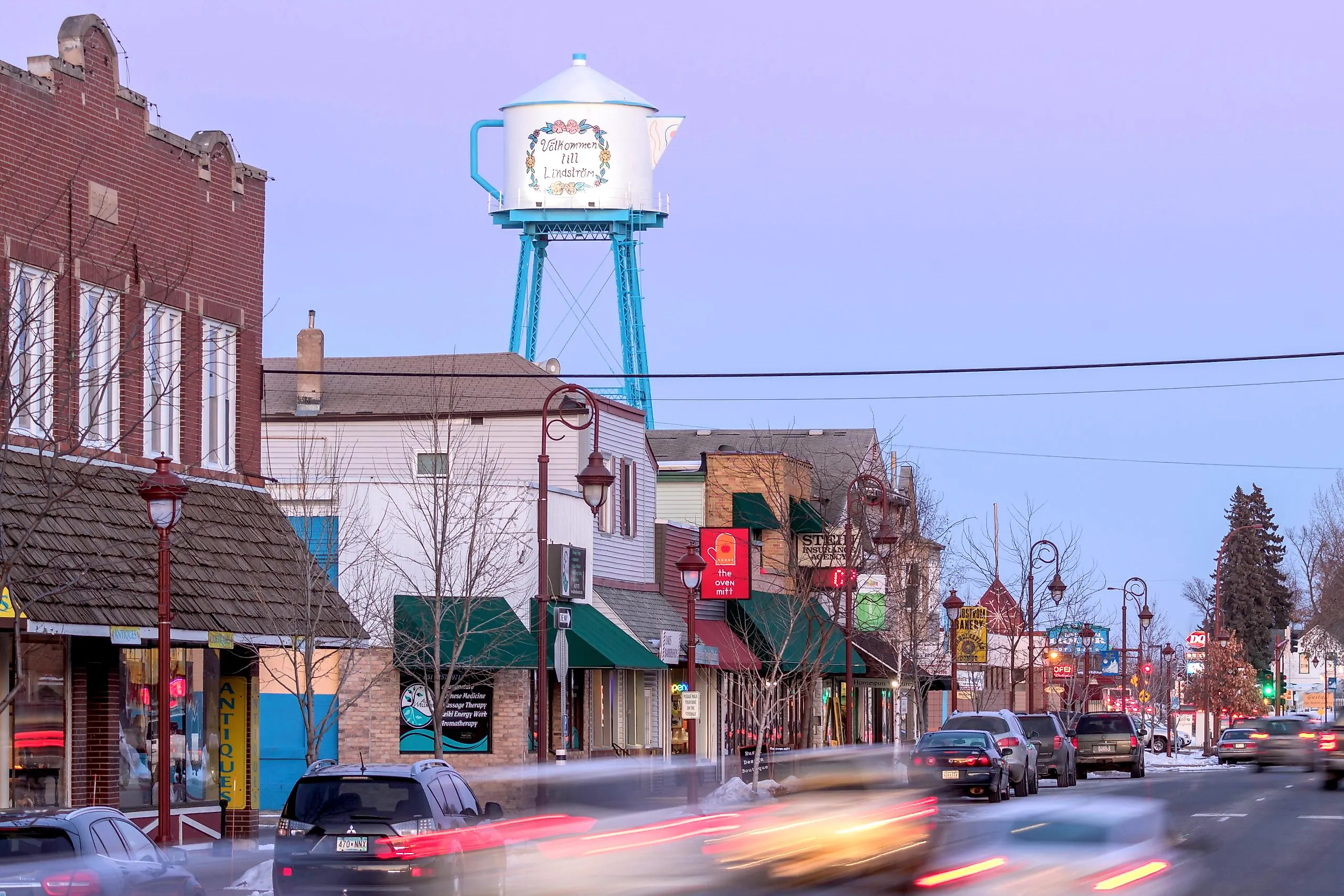
Beyond that, these water towers often serve as symbols for the community. As a tall structure overlooking towns, they commonly feature a town's name in a specialized font or even artistic symbols. Other times, they have quirky designs, such as the Dixie Cup Water Tower in Lexington, Kentucky, where the tank is shaped like a paper Dixie Cup, or the Lakeway Texas Water Tower with its golf ball-shaped tank. Water towers are so recognizable that they even find their way into fictional towns such as Arlen, Texas, in King of the Hill. With their long heritage and usefulness, water towers will continue to dominate small-town skylines across America for years to come.