The Last Working Ferries In America
On the Rio Grande at Los Ebanos, Texas, five men stand on a barge and pull it across the river by hand, hauling a cable 70 yards from bank to bank. It carries three cars and about a dozen people, it makes close to a hundred crossings a day, and it is the last hand-pulled ferry anywhere on a border of the United States. Elsewhere, a 1953 steamship still burns coal across Lake Michigan, and a crossing in Connecticut has been running since 1655. These are not museum pieces or tourist rides. They are working transport links that survived because the bridge nobody built would have cost more than the ferry.
Here are the last of their kind still in service, what each one is the last example of, and the unglamorous economics that decided which crossings lived.
Los Ebanos, Texas
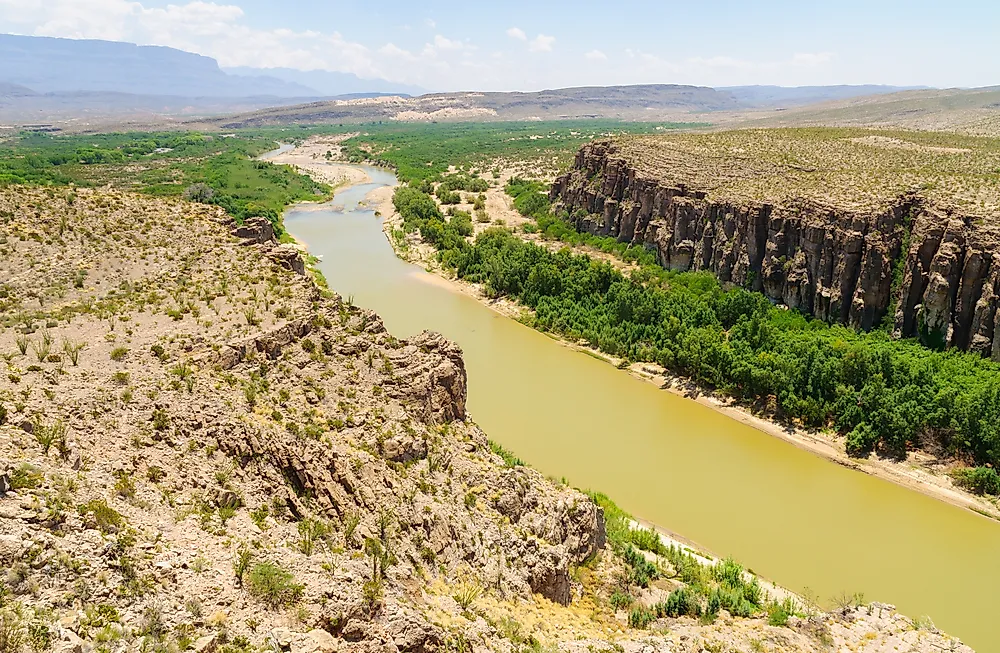
Known locally as El Chalan, this is the only hand-drawn ferry still operating on any boundary of the United States, connecting Los Ebanos in Texas with Gustavo Diaz Ordaz in Tamaulipas. Five crew members haul on a steel cable strung across 70 yards of the Rio Grande, and the whole crossing takes about five minutes.
The town is named for the Texas ebony trees that grow there, and one of those trees is what the cable is anchored to on the American side. The ferry opened in 1950, the current barge dates to 1979, and the state put a historical marker on the site in 1975. It is run as a port of entry by US Customs and Border Protection, which makes it the least imposing international border crossing in the country by a considerable margin.
The ford itself is far older than the service. Spanish explorers under Jose de Escandon used this spot in the 1740s, and it was later crossed by troops during the Mexican War, by Texas Rangers, and by smugglers during Prohibition.
Why It Still Exists
The practical case is simple arithmetic. The nearest bridges are roughly half an hour away in either direction, which for the families on both banks makes a five-minute pull across the river the difference between an errand and an afternoon. Residents describe crossing to see a doctor or family when the bridge queues are long.
It carries real traffic too. Customs figures from 2005 recorded 32,935 cars and 38,759 pedestrians in a single year, and it averages around 50 vehicles a day. It closes when the river runs high, and it spent about four months shut in 2024 because the captain's license had lapsed, which is a very modern problem for a boat pulled by rope.
The SS Badger, Michigan And Wisconsin

The Badger is the last large coal-burning steamship in the United States, and she is not preserved, she is in service. Built in 1953, she crosses Lake Michigan between Ludington, Michigan and Manitowoc, Wisconsin, covering 60 miles in about four hours while carrying cars, trucks and passengers.
She is also the last vessel operating anywhere on the Great Lakes powered by Skinner Unaflow engines, built in Erie, Pennsylvania. The Michigan and Wisconsin historical commissions each registered her as a historic site in 1997, which makes her a listed landmark in two states at once and still a functioning piece of the highway network. She rarely misses a sailing for weather.
Rocky Hill To Glastonbury, Connecticut
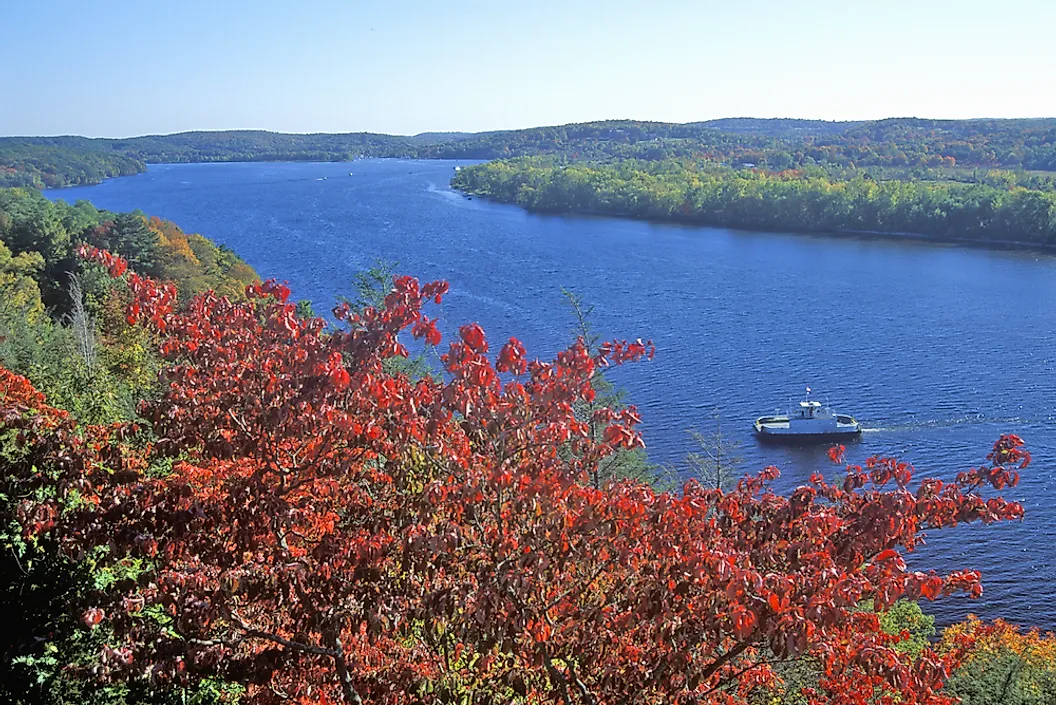
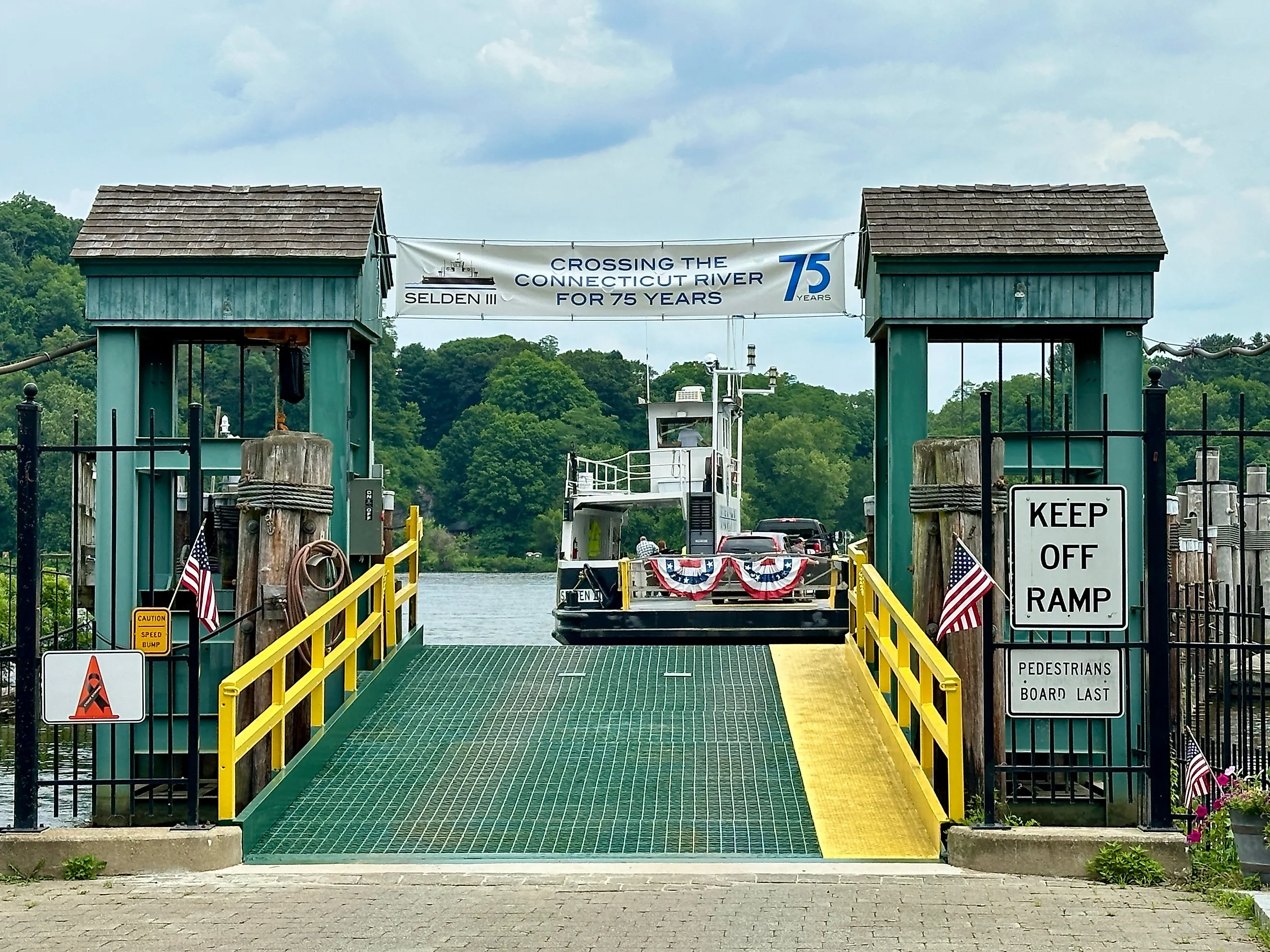
This is the oldest continuously operating ferry service in the United States, running across the Connecticut River since 1655. That is 121 years before the Declaration of Independence and roughly 35 years after the Mayflower landed.
It has never been a grand operation and it still is not. The crossing takes a few minutes, runs seasonally, and carries a handful of vehicles at a time on a barge pushed by a small towboat. What makes it remarkable is pure continuity: the same crossing, in continuous service, through the colonial period, the Revolution, the Civil War, two world wars and the entire history of the automobile.
The Ohio River Survivors
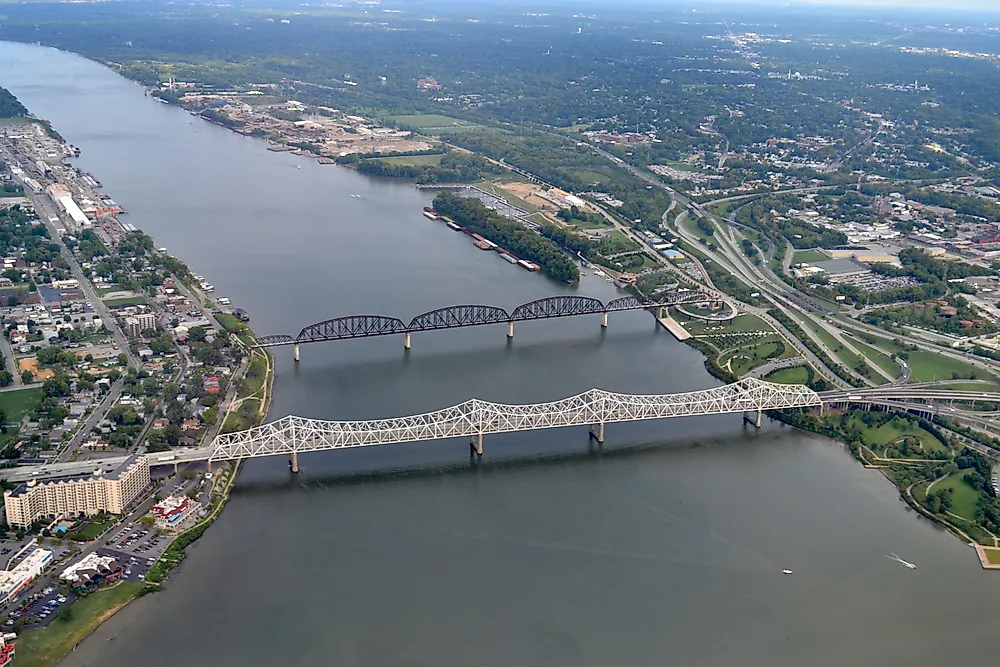
The Ohio once had dozens of ferry crossings and now has a scattering. The ones that remain tend to be where the river is wide, the nearest bridge is inconvenient, and the crossing saves a genuinely annoying detour.
Anderson Ferry, running between Ohio and Kentucky west of Cincinnati, has been in operation since 1817 and is listed on the National Register of Historic Places. Valley View Ferry, on the Kentucky River, traces its license to 1785 and is often described as the oldest continuously operating business in the state. Both exist because they still shorten somebody's commute.
The Free Ferries
A small number of American ferries carry no fare at all, and the reason is not generosity. A state highway department did the arithmetic and found that running a boat indefinitely was cheaper than building a bridge once.
The Merrimac Ferry in Wisconsin is the clearest case. It crosses Lake Wisconsin as part of a state highway, it is operated free of charge by the Wisconsin Department of Transportation, and it is a cable ferry, winching itself across on a guide wire rather than steering. Several of the North Carolina Outer Banks routes work on the same logic, where the alternative to a boat is many miles of driving or a bridge across open water.
Gee's Bend, Alabama
This is the most unusual entry on the list, because it is the only one that stopped completely and then came back.
Gee's Bend is an isolated community inside a loop of the Alabama River, and its ferry to Camden was the short way out. The service was discontinued in 1962, during the period when residents were organizing to register to vote, and it stayed gone for 44 years. Without it the trip to the county seat ran around 40 miles instead of a short crossing.
The ferry was restored in 2006. It now runs again on the route it always ran, and it is the rare American ferry whose absence and return were both about something other than transport economics.
The One That Did Not Make It
White's Ferry crossed the Potomac between Maryland and Virginia and was the last operating ferry on the entire river. It ran a cable-guided barge that carried commuters for decades, and it is on this list as a warning rather than a survivor.
It stopped in December 2020, and not because of demand or weather. A Virginia landowner won a court ruling over the landing rights on their side of the river, and with no legal place to dock, the ferry simply ceased. A crossing that survived floods, ice and the Civil War was ended by a property dispute, which is a reminder that these operations are held together by arrangements as much as by boats.
Why So Few Are Left

Every ferry on this list is competing with a bridge that has not been built yet, and that is the entire economics of the category. A bridge costs enormously more up front and almost nothing to run. A ferry is cheap to start and expensive forever, in crew, fuel, maintenance and inspection.
So ferries survive in exactly two situations: where traffic is too light to justify a bridge, or where the water is too wide or too deep for one to be affordable. The Interstate Highway System eliminated most of the first category during the 1950s and 1960s, which is when the great majority of American ferry crossings disappeared.
What is left are the edge cases. A river crossing serving a few dozen cars a day, a lake wide enough that a bridge is fantasy, an island, or a community whose road out runs the long way round.
What They Have In Common

None of these survived because anyone set out to preserve them. Los Ebanos runs because five men pulling a rope is still faster than a 40-mile round trip to a bridge. The Badger burns coal because replacing the engines would cost more than the vessel earns. Rocky Hill has run since 1655 because nobody ever had a reason to stop.
They are the last working examples of a technology that once operated at every significant river crossing in the country, and they are working rather than preserved, which is the only reason they are still here. The moment any of them becomes a heritage attraction rather than a piece of infrastructure, the clock starts.