The Sea Creature That Goes Longest Without Eating
Far below the ocean's surface, a meal can be hard to come by. The supergiant isopod (Bathynomus jamesi), a crustacean resembling an oversized pill bug, lives on the deep-sea floor, where food arrives sporadically as organic debris and the remains of dead animals sinking from above. When a large meal appears, the isopod feasts, and a slow metabolism stretches its energy reserves. Some giant isopods have survived more than five years without eating in captivity, and a 2026 study identified genetic adaptations that may help explain this extraordinary ability.
Meet the Supergiant Isopod

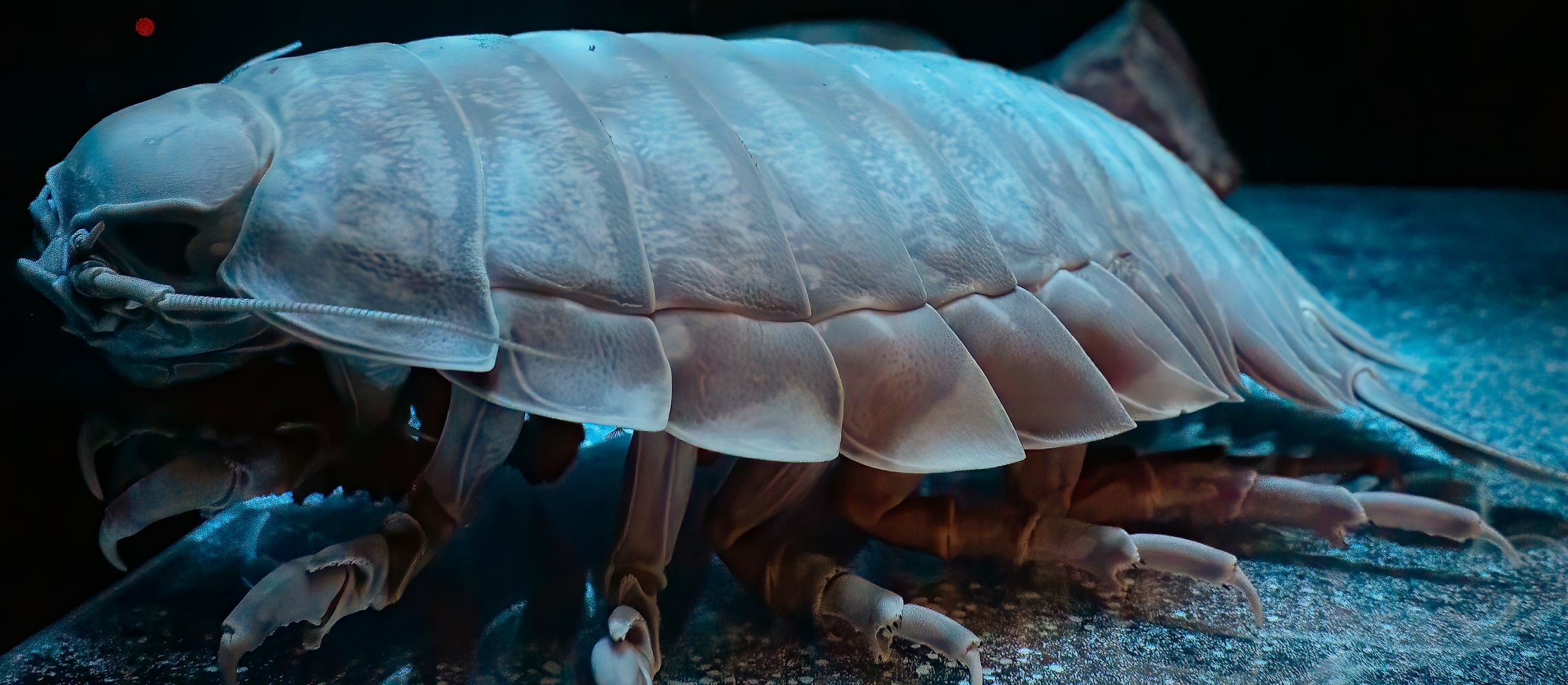
The supergiant isopod belongs to a group of deep-sea crustaceans related to the common pill bug. Its flattened, segmented body and overlapping armor plates resemble those of its land-dwelling relatives, although giant isopods can grow larger than 30 centimeters. Despite their bug-like appearance, isopods are crustaceans, more closely related to crabs, shrimp, and lobsters than to insects.
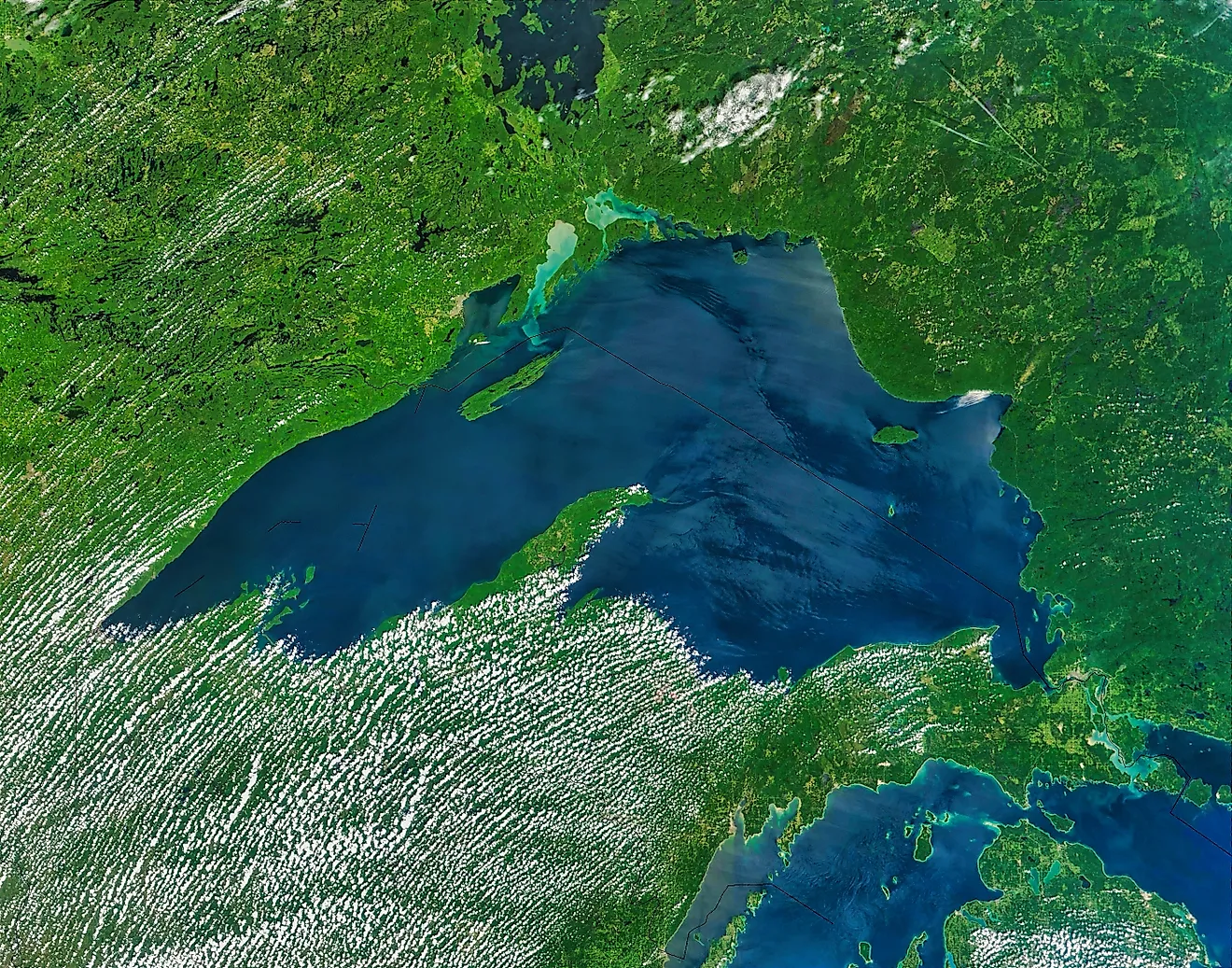
Bathynomus jamesi was formally described as a new species in 2017, based on specimens collected near Hainan Island in the South China Sea. Its known range extends across parts of the western Pacific and northwestern Indian Ocean, including waters near the Gulf of Aden. Like other giant isopods, it scavenges organic matter and the carcasses of fish, squid, and other marine animals that reach the seafloor. Because meals are unpredictable in the deep sea, eating as much as possible when food appears is a valuable strategy.
How It Survives Years Without a Meal

For the supergiant isopod, surviving food shortages depends partly on consuming large meals and conserving energy. Its expandable stomach accommodates a large amount of food at once, and its slow metabolism allows it to use that energy gradually rather than burn through its reserves quickly. Giant isopods' fasting abilities have been documented in captivity: one identified as Bathynomus giganteus survived more than five years without eating at an aquarium in Japan. Although that observation involved a different species, it demonstrates the extraordinary ability of these deep-sea crustaceans to endure prolonged food shortages.
Giant isopods are also well equipped to find food. They use chemical cues to locate sinking carcasses, then tear off flesh with four sets of jaws. Studies suggest they can also feed on slow-moving marine animals. A 2026 study found another clue in the isopod's DNA. Researchers found multiple copies of a gene called ND1 in Bathynomus jamesi and a related species. The gene appears to have originated in bacteria and entered the isopods' genome through horizontal gene transfer, in which genetic material passes between unrelated organisms. Experiments in other organisms suggest it may help conserve energy during starvation.
Life in a Dark World

At depths of up to 900 meters, the supergiant isopod lives without sunlight, in low temperatures and high pressure. Yet the seafloor is far from lifeless, supporting fish, crustaceans, and other invertebrates adapted to the environment. The isopod's flat, segmented body is encased in hard plates that help protect it from predators. Giant isopods are thought to have relatively few natural predators, partly because their shells contain comparatively little edible tissue. They can also burrow into seafloor sediment, helping them stay less exposed and conserve energy.
Unlike many fish, giant isopods have no gas-filled swim bladder, the organ used to control buoyancy. Their largely water-filled bodies are also less vulnerable to compression at depth. Their hard exoskeleton adds physical protection, though it is not the main reason they tolerate the pressure. Despite their imposing size, giant isopods remain quite mysterious, and little is known about how long they live in the wild. Research on two related species estimated lifespans of around six to nine years, depending on species and sex, but the supergiant isopod's lifespan has not been established.
Honorable Mention: The Octopus That Went Years Without Eating

Off the coast of California, scientists documented a deep-sea octopus that spent nearly four and a half years guarding her eggs. The female Graneledone boreopacifica was observed from 2007 to 2011 in the Monterey Submarine Canyon, a massive underwater gorge in Monterey Bay, at depths of nearly 1,400 meters below the surface. Researchers repeatedly returned to the same rocky outcrop and found her tending the same clutch of eggs, and they never saw her feed during the 53-month brooding period. The eggs eventually hatched, and the octopus was gone when researchers returned the following month.
Researchers could not rule out that she ate occasionally, so the observation is not definitive proof of a total fast. Still, it highlights the demands of reproduction in the deep sea. In water around 37°F, the eggs developed very slowly while the mother stayed to protect and tend them. The study, by researchers at the Monterey Bay Aquarium Research Institute, documented the longest known egg-brooding period of any animal at the time of publication, offering another remarkable example of how deep-sea creatures endure long periods with little or no food.
The Long Wait on the Deep-Sea Floor
In a habitat where meals arrive without warning, the supergiant isopod has adapted to wait. An expandable stomach lets it feast when food reaches the seafloor, a slow metabolism makes that meal last, and a gene that appears to have come from bacteria may help it conserve energy during starvation. The brooding octopus of Monterey Bay shows a similar endurance in a different form. Both animals reveal how deep-sea life is shaped by scarcity and how much scientists still have to learn about it.