How Deep Lake Tahoe Is Compared To The Empire State Building
Imagine swimming through crystal clear waters, looking into the depths, and seeing the shiny point of the Empire state building reflecting back... if it was somehow moved up across the country, up the Sierra mountains and into the depths of a lake.
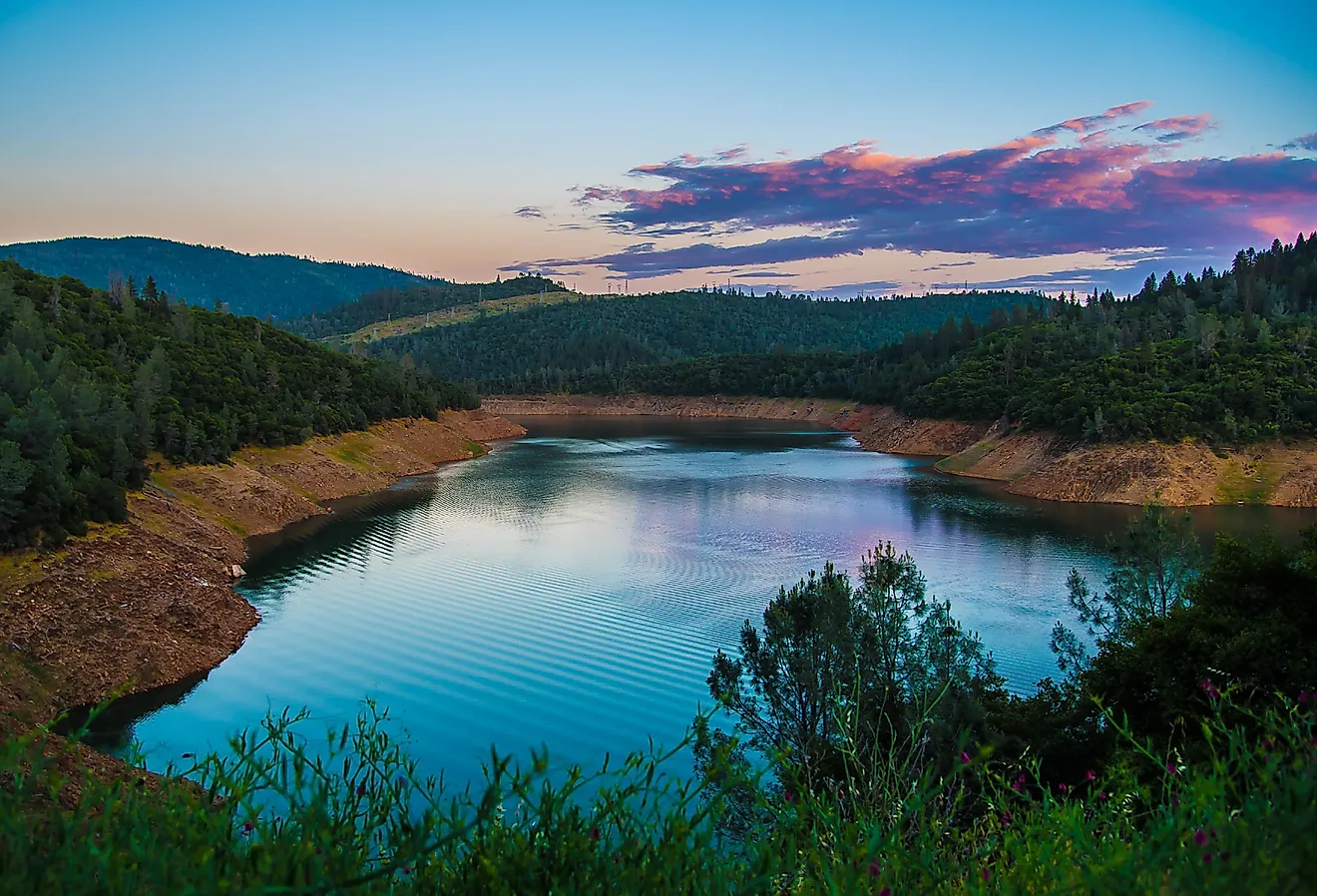
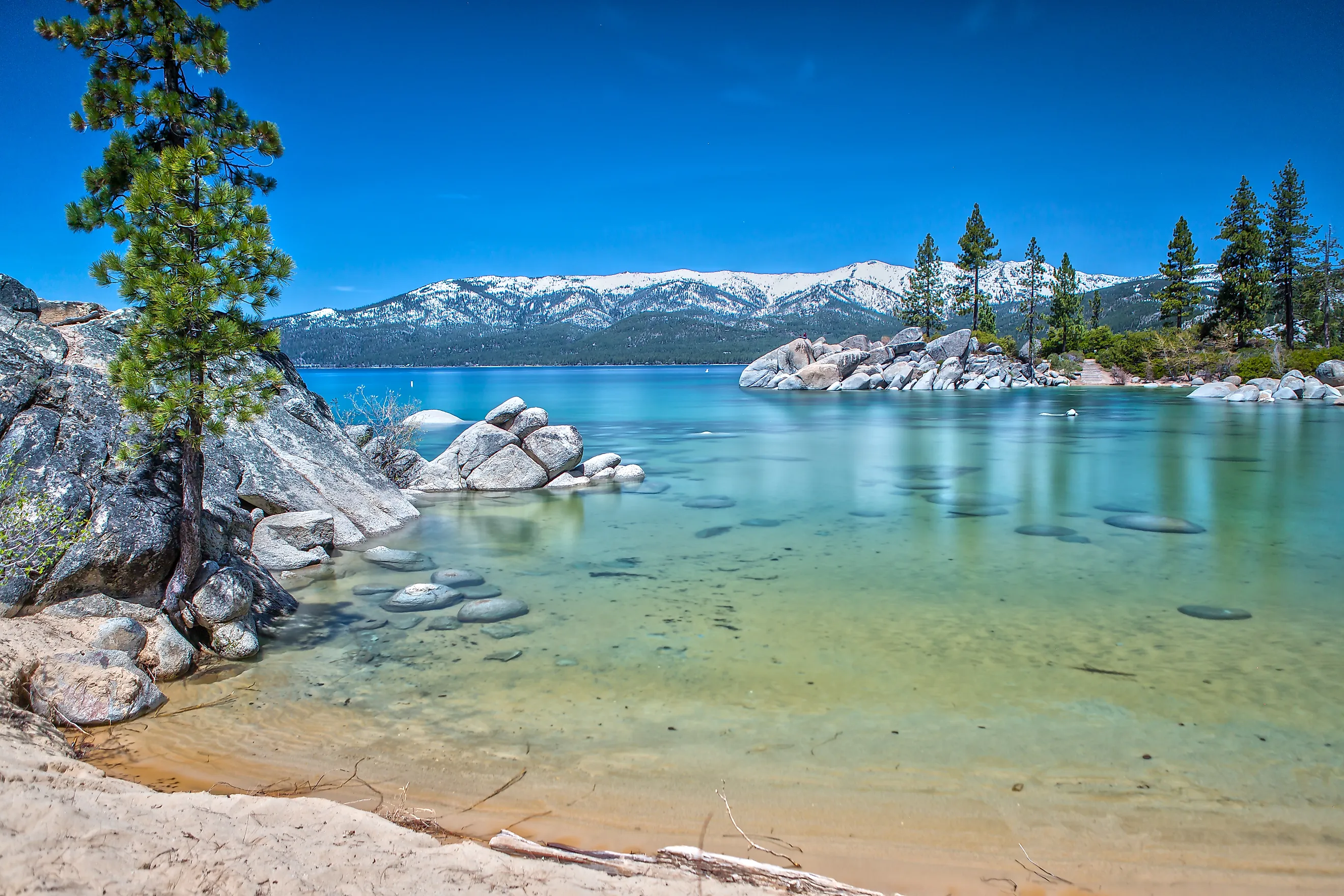
High in the Sierra Nevada Mountains between Nevada and California, there is the largest alpine lake in the US: Lake Tahoe. However, it is most well known for its depth, as the second deepest lake in the country behind Crater Lake. It is so deep, in fact, that if one put the Empire State Building down to the bottom of the lake, even the top of its antenna would be close to 200 feet underwater.
What is truly interesting are the stories of how Lake Tahoe became so deep and how the Empire State Building grew so tall.
What are Lake Tahoe's dimensions?

Lake Tahoe sits at 6,223 feet above sea level, although a dam raises its surface elevation by 6 feet to 6,229 feet. At 191 square miles, it's the largest alpine lake by surface area, measuring 22 miles long by 12 miles wide, and featuring 72 miles of shoreline. Its most well-known feature is its deep blue waters that go down to 1,645 feet at their deepest point. By comparison, the deepest lake in the US is Crater Lake, which has a maximum depth of 1,943 feet, but it is significantly smaller in surface area than Lake Tahoe at 20.6 square miles.
Lake Tahoe has an impressive water clarity as well, reaching more than 70 feet. This clarity is due to its water sources, as about 40 percent of the precipitation in the Tahoe Basin falls directly on the lake, while meadows and marshes filter out sediments from entering the lake. Unfortunately, many of the Lake's natural filters have diminished over the years, and it used to have a clarity of over 100 feet.
How did Lake Tahoe become so deep?

A lake can only be as deep as the basin it sits in, and Lake Tahoe sits in a large basin that formed 2 to 3 million years ago, driven by tectonic activity in the Sierra Nevada Mountains.
This mountain range has seen several phases of mountain building and erosion, with the modern mountains first beginning to emerge 20 million years ago, when a crust between Sierra Nevada and Utah began tearing apart. This formed a fault, which pushed rocks up to the west, forming mountains with valleys sitting to the east.

In between these two plates, there was another smaller block that slid downward, creating the Tahoe Basin. At the time of its formation, 2 to 3 million years ago, there was an open end to the north that allowed snowmelt to flow out of it.
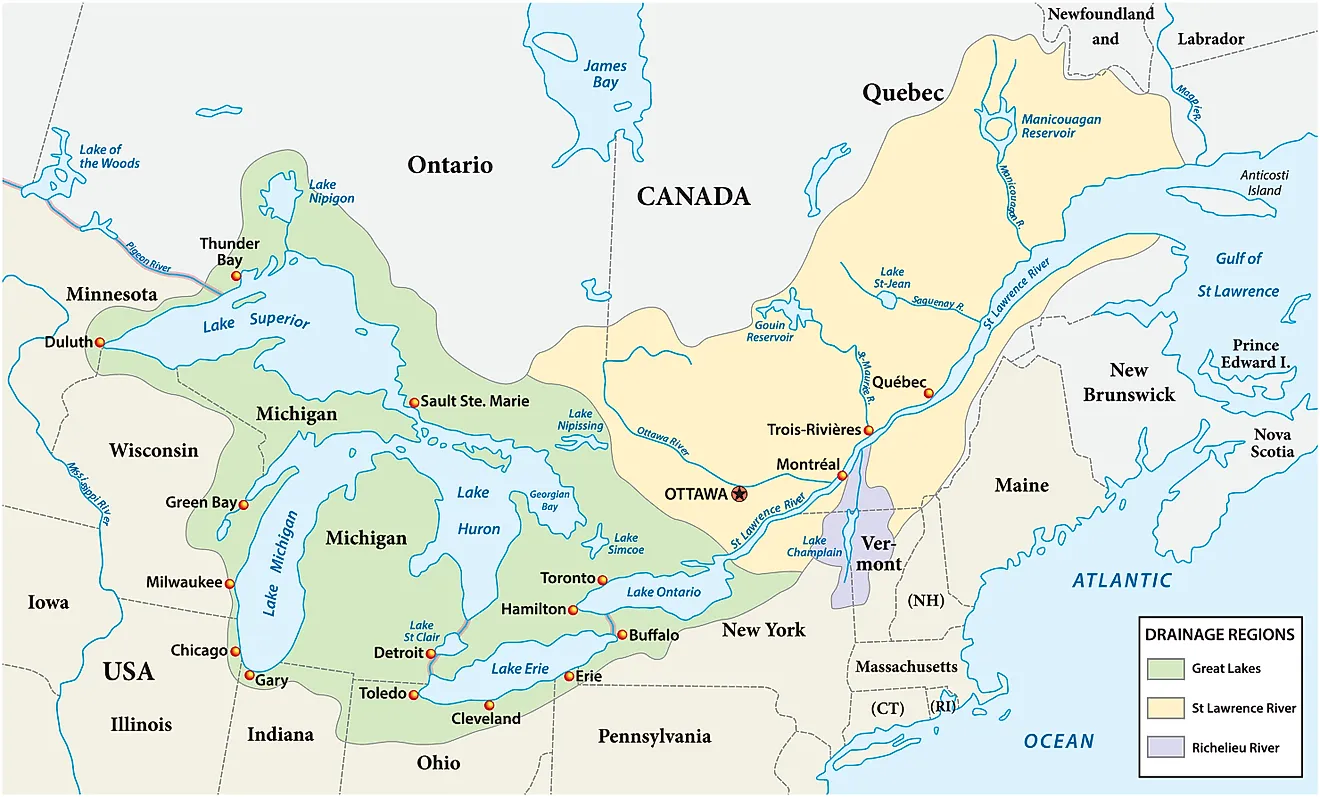
However, this tectonic activity also caused volcanic eruptions beginning two million years ago. Out of these mountains, Mount Pluto delivered lava and mudflows into the open northern end of the Tahoe Basin, sealing it off completely. This, in turn, transformed this deep tectonically formed valley basin into a lake basin. Geologists estimate that this basin filled with water two million years ago, creating the modern Lake Tahoe. This makes Lake Tahoe far older than many other lakes in America, including the Great Lakes, which were formed at the end of the last Ice Age from 20,000 to 3,000 years ago.
What are the Empire State Building's dimensions?

The Empire State Building is 1,250 feet from its base to its highest occupied floor, while its extensions and antenna bring its total height to 1,454 feet. If only measured from its occupied floor height, it would be covered under 395 feet of water in Lake Tahoe, while if its antenna were included and stayed intact when it hit the water, it would be covered with 191 feet of water.
The Empire State Building has 102 stories, plus a 103rd floor terrace that's closed to the public, along with the roof and antenna. There are 1,860 stairs to go from the bottom all the way to the 102nd floor. The building was made out of 730 tons of aluminum and stainless steel, 10 million bricks, and 200,000 cubic feet of limestone and granite.
The Empire State Building had a rocky start

This Art Deco style building was first planned during the highly optimistic Roaring 20s, but was built in the midst of the Great Depression. In 1928, a failing hotel called Waldorf Astoria sold the property to land developers who aimed to build the tallest office skyscraper in the world. The following year, Empire State Inc. was formed, led by Alfred Smith, former governor of New York.
They tore down the original hotel and began construction on March 17, 1930. By this point, the Great Depression was in full swing, caused by the stock market crash in October 1929. Despite the economic downturn, Empire State Inc. completed the project in record time, building 4.5 stories a week until the building opened on May 1st, 1931.

Its early years were rocky, as over 75% of the building was empty in 1931, leading to jokes about the Empty Empire State Building. At the same time, the building stood as a reminder of American resilience in the darkest days of the Great Depression, and movies such as "King Kong" raised its profile as an immense symbol of America itself. Most of its money came from tourists paying to go up to the observation decks on the 86th and 102nd floors.
The building wouldn't break even until the 1950s, as the offices finally filled up with companies. By the 1960s, there was a waiting list to get into the building, and in 1961 this once-empty building was sold for $65 million. Today, the Empire State Building isn't just an office building or a tourist attraction; it's a National Historic Landmark.
Lake Tahoe isn't just deeper than the Empire State Building

Both the Empire State Building and Lake Tahoe are popular tourist destinations, but Lake Tahoe gets far more visitors annually than the Empire State Building, with 15 million visitors annually, compared to 4 million visitors at the building. There are several beaches and state parks located around Lake Tahoe, on both the California and Nevada sides, such as the Kings Beach State Recreation Area and the Lake Tahoe Nevada State Park, that accommodate visitors from all over the country.
Both of these landmarks were formed during periods of great change, from the shifting of the Sierra Nevada to the west to the devastating impact of the Great Depression, and both have survived to this day as stunning reminders of the power of nature and the resilience of Americans.