5 Snake-Filled Waters In Vermont
Some people might be surprised to know that, despite its freezing winters, Vermont is an excellent habitat for snakes. In all, the state hosts 11 native snake species. Not all are aquatic, but the shores of rivers, creeks, and lakes are often rocky and overgrown with brush, providing excellent cover and abundant prey for land- and water-based snakes. Here are 5 bodies of water that make Vermont a robust snake oasis.
Shelburne Pond

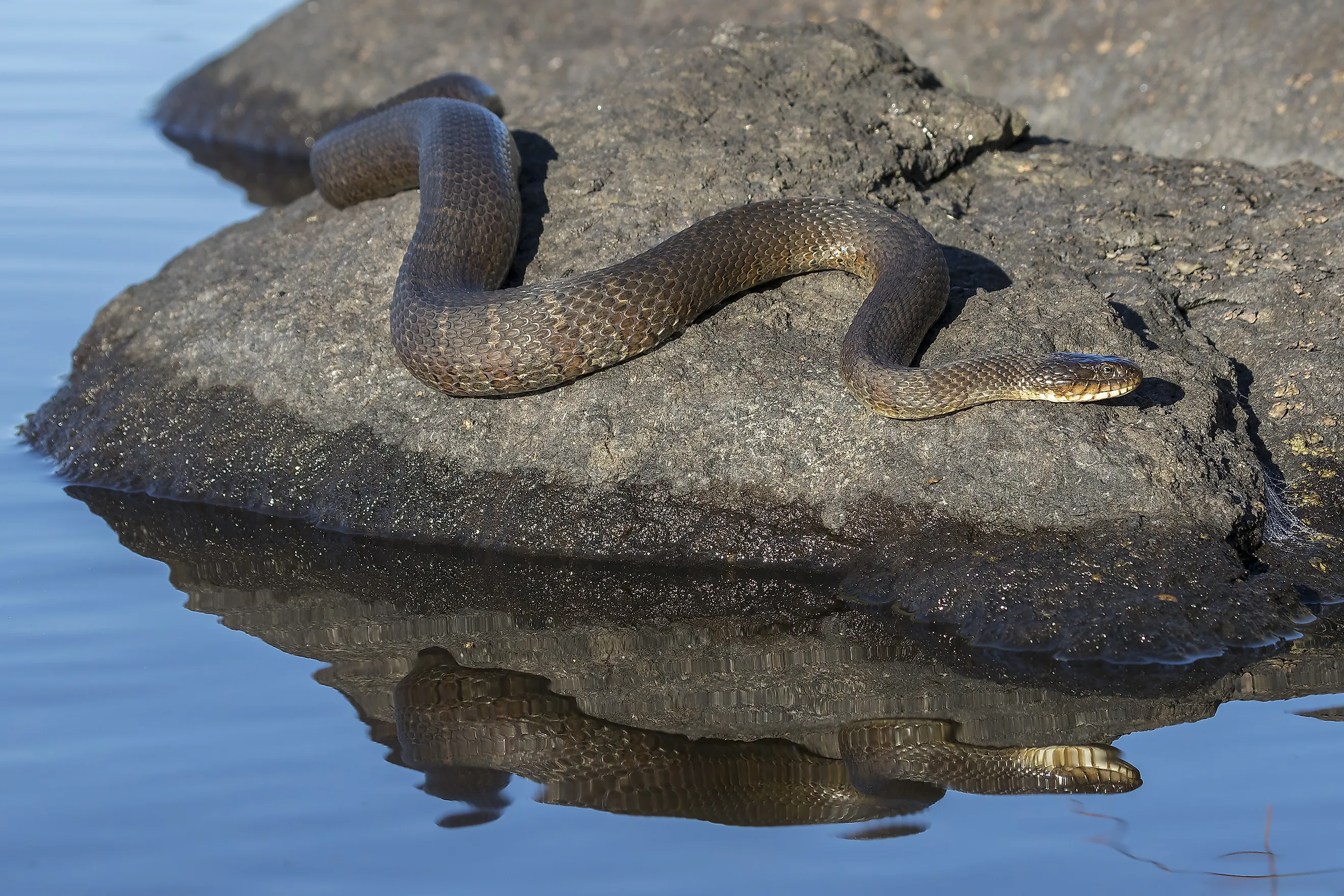
Though it sits just 10 miles from downtown Burlington, Shelburne Pond is considered the largest undeveloped body of water in the Champlain Valley. Spanning 450 acres and reaching depths of 25 feet, Shelburne supports many aquatic animals, ranging from waterfowl to fish to frogs to snakes. Its most common snake species, the only water snake native to Vermont, is the northern water snake (Nerodia sipedon).

Other species that may dive into Shelburne but prefer to roam its banks, particularly in the thousand-plus-acre H. Laurence Achilles Natural Area, are the common garter snake (Thamnophis sirtalis), eastern milk snake (Lampropeltis triangulum), and DeKay's brown snake (Storeria dekayi). Vermont snakes utilize everything from rock crevices to anthills for overwintering.
Otter Creek

Otter Creek is actually a river—the longest river entirely within Vermont. You can see otters along its approximately 112-mile course, but you might have a better chance of spotting snakes, especially around certain preserves. One such Otter Creek refuge is the Brandon Swamp Wildlife Management Area (BSWMA), which lies in the town of Brandon and protects hundreds of acres of snaky riverside habitat.

Species found in or near the BSWMA include the common water snake, common garter snake, eastern milk snake, DeKay's brown snake, smooth green snake (Opheodrys vernalis), and eastern rat snake (Pantherophis alleghaniensis). The last of those can exceed six feet in length, making it Vermont's largest native snake. These are all non-venomous species.
Lake Bomoseen

Lake Bomoseen is the largest lake entirely within Vermont. It covers roughly 2,400 acres in Rutland County near the New York border. Outside of its vast expanse of water, which supports the common water snake, are countless acres of wetlands that shelter semi-aquatic species like the common garter snake and the common ribbon snake (Thamnophis saurita), which, despite its name, is rather uncommon in Vermont.

Farther out, along the forested fringes west of Bomoseen, is the even rarer timber rattlesnake (Crotalus horridus), Vermont's sole significantly venomous snake. Though it once rattled across several counties, the timber rattlesnake is now confirmed at only two densities in Rutland County, both of which are protected by The Nature Conservancy and their precise locations kept secret. This is to limit human encroachment and persecution, the main factors for the rattler's decline. In fact, bounties were long offered by Bomoseen-area towns like Fair Haven and West Haven that claimed the lives of well over a thousand rattlesnakes. Compare that to the number of confirmed human fatalities caused by timber rattlesnakes in Vermont's history: zero.
Winooski River

One supposed historic haunt of the timber rattlesnake is the valley around the Winooski River, which flows for nearly 100 miles from the town of Cabot in Washington County to Lake Champlain near Burlington. Whether or not elusive rattlesnakes live there, we do know that numerous nonvenomous species thrive in various preserves along the Winooski, such as the Middlesex Notch Wildlife Management Area, Camel's Hump Management Unit, and Halfmoon Cove Wildlife Management Area. Species you could see there include the common garter snake, northern water snake, the eastern milk snake, the red-bellied snake, DeKay's brown snake, the common ribbon snake, the ring-necked snake, and potentially the smooth green snake.

Lake Champlain

The Winooski River is one of countless Vermont streams that empty into Lake Champlain, which is by far the largest lake in Vermont—and one of the largest in the country. Stretching more than 100 miles in length and roughly 500 square miles in surface area, Champlain borders New York to the west, Canada to the north, and is home to nearly all Vermont snake species. A notable exception is the North American racer (Coluber constrictor), which occupies the southeastern corner. There are even snakes on many of Champlain's islands. Its largest, Grand Isle (31-plus square miles), has common garter snakes, DeKay's brown snakes, eastern milk snakes, and northern water snakes.
Vermont Snakes

Snakes are an important part of most ecosystems, and Vermont's waterways are no exception. Many of these are areas that get a good deal of human traffic in good weather from hikers and outdoor sportspeople. Fortunately, most of its 11 native species are nonvenomous, so if you have an encounter, it's no reason to panic. Just give it its space, maybe take a photo to help you identify the species later, and marvel at the resiliency of nature.