4 Most Snake-Filled Bodies Of Water In The Prairies
Prairie lakes and rivers come with a snake problem in summer. Across the Great Plains, shallow reservoirs and grassy shorelines give snakes the warm water and plentiful prey they need. From the cottonmouth-heavy lakes of eastern Oklahoma to the rattlesnake bluffs along the Missouri River, dozens of species use these waters as hunting grounds. The four bodies of water below stand out for confirmed species count and consistent encounters reported by anglers and campers. All four are large reservoirs in the tens or hundreds of thousands of acres. Each delivers the same combination of warm shallows and marshy shoreline cover that snakes hunt from.
Lake Texoma (Oklahoma)

What Lake Eufaula is for cottonmouths (see below), Lake Texoma is for sheer variety. The 89,000-acre reservoir on the Red River draws around 6 million visitors a year to its two state parks, 54 US Army Corps of Engineers management areas, and 23 commercial campgrounds. Those visitors share the water with cottonmouths, copperheads, western diamondback rattlesnakes, pygmy rattlesnakes, and, on the Texas side, the Texas coral snake, a small but highly neurotoxic species. Formed by Denison Dam in 1944, the lake’s rocky coves and vegetated shorelines are the kind of habitat snakes gravitate toward regardless of species.

Cottonmouths are the primary concern in the water. They hunt actively, can bite underwater (though this is rare), and are most commonly spotted where river channels meet the shore. Copperheads and rattlesnakes tend to stay near the banks, moving into shallows when pursuing prey. Eisenhower State Park on the Texas side is a known hotspot. During warmer months, swimmers at the lake’s busier beaches report seeing snakes swimming with their heads above the water, the triangle-shaped heads of cottonmouths being the most recognizable at a distance.
Lake Oahe (South Dakota/North Dakota)

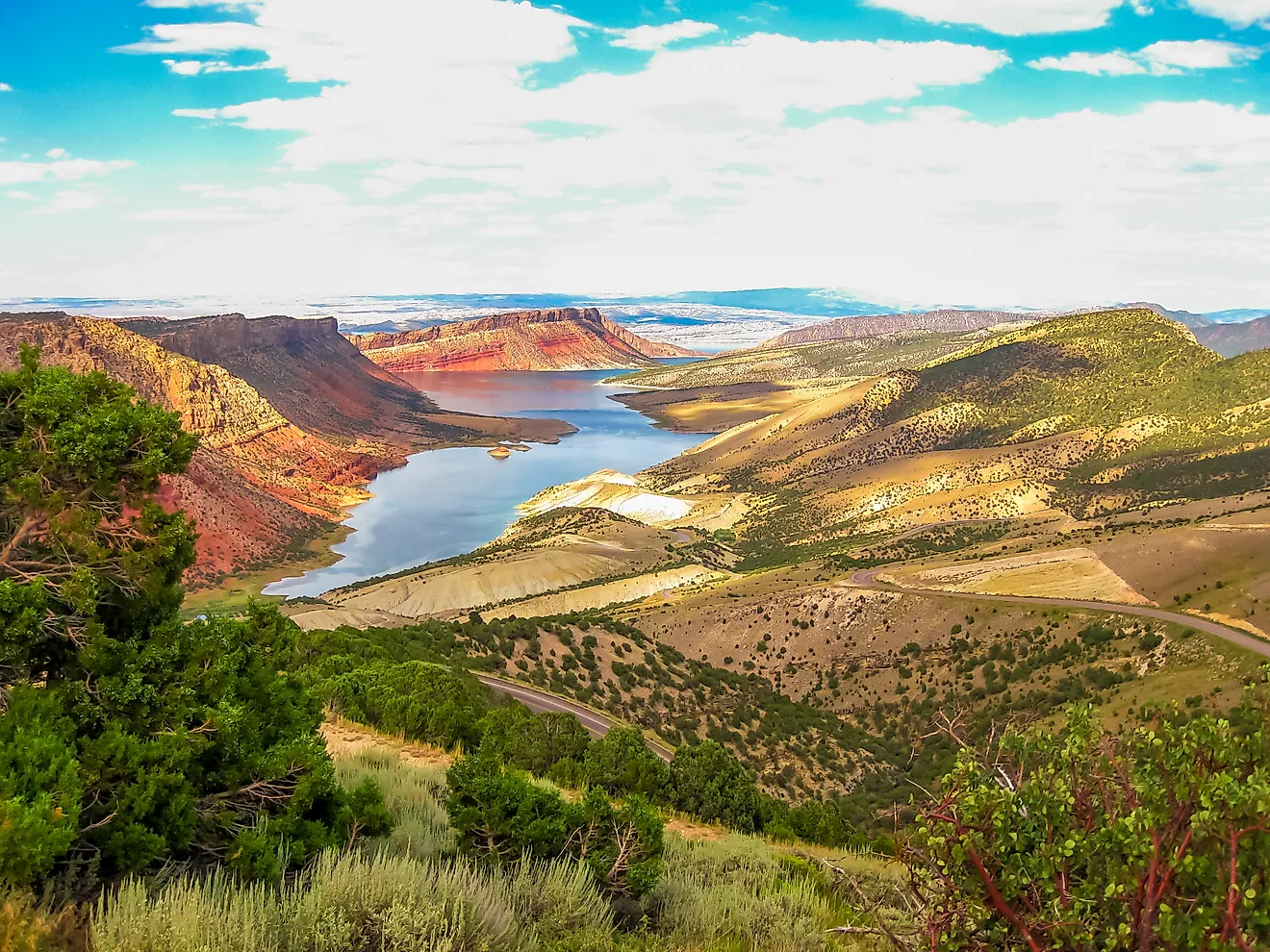
Lake Oahe is a 370,000-acre reservoir formed by damming the Missouri River, stretching 231 miles from Pierre, South Dakota, to Bismarck, North Dakota, with 2,250 miles of shoreline. Prairie rattlesnakes are the dominant venomous species along both states’ banks, concentrated in the western bluffs and shortgrass prairie where rocky outcroppings give them cover close to the water.
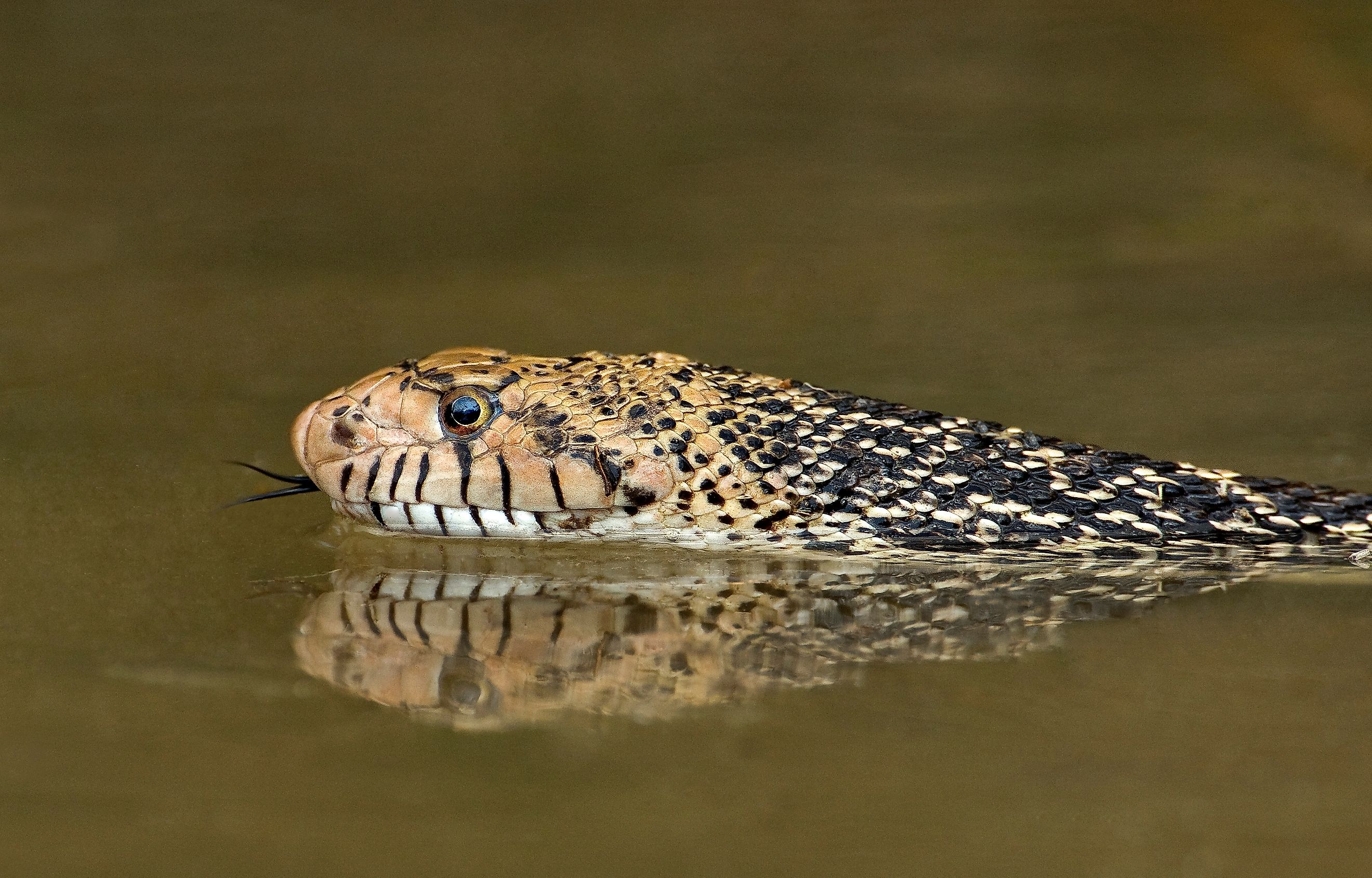
Researchers at North Dakota State University have been tracking a large rattlesnake den near the lake since 2015, monitoring population levels as part of an ongoing wildlife management study. Bullsnakes appear in equally large numbers, growing up to 6 feet (sometimes longer) and mimicking rattlesnake behavior, which can include hissing and vibrating their tails in the underbrush.
At recreation areas like Cow Creek, West Whitlock, and Beaver Creek, the lake draws up to 1.5 million visitors a year. Those who fish along the rocky shorelines at dawn share the banks with rattlesnakes doing the same thing. The lake’s prairie dog colonies, scattered across the surrounding bluffs, are prime rattlesnake hunting ground, and where prairie dogs go, rattlesnakes follow.
Lake Eufaula (Oklahoma)

Lake Eufaula is Oklahoma’s largest lake at over 105,000 acres, with about 800 miles of shoreline winding through the eastern part of the state. Cottonmouths, also known as water moccasins, breed in its marshy coves and use the surrounding shoreline as a sun-soaking corridor on warm days. Garter snakes, copperheads, and the occasional western pygmy rattlesnake round out the roster.
The lake’s mix of timbered coves, weed beds, and shallow flats is exactly the kind of habitat cottonmouths gravitate toward. They hunt actively in the water, can bite when stepped on, and are most commonly spotted where vegetation meets the bank. Visitors consistently report sightings in online reviews, and Oklahoma wildlife officials advise the public to learn the difference between cottonmouths and the lake’s several non-venomous water snake species before heading out.
The cottonmouth is one of the few semiaquatic pit vipers on Earth, spending much of its time in or near water. With Lake Eufaula’s 800 miles of shoreline cutting through wooded riverbends and shallow inlets, that adds up to a lot of cottonmouth territory. Eufaula State Park, Arrowhead State Park, and Fountainhead State Park all sit on the lake and host campers and anglers throughout the warm months. Boaters and shoreline fishermen are most likely to encounter snakes at dawn and dusk on hot days, when reptiles are most active near the water’s edge.
Tuttle Creek Lake (Kansas)

Kansas has over 42 snake species, and the copperhead is the most common venomous one in the state. Tuttle Creek Lake, the second-largest in Kansas at 12,500 acres, sits in the Flint Hills just north of Manhattan and supports a notable copperhead population. Its 100 miles of irregular, wooded shoreline on the Big Blue River create the kind of shaded, rocky-edged habitat copperheads prefer, close to water, covered by brush, with enough rodent activity nearby to feed a stable population year-round. Western massasaugas, common water snakes, plain-bellied water snakes, diamondback water snakes, and common garter snakes round out the species list confirmed in the area.

Eleven parks ring the lake’s 100-mile shoreline. The lake’s many secluded inlets give snakes dozens of spots undisturbed by boat traffic, where shoreline campers from Tuttle Creek State Park sometimes get more wildlife than they expected. Copperheads are responsible for more snakebites than any other venomous species in the US, partly because they freeze rather than retreat when approached, and partly because their hourglass-patterned bodies blend into leaf litter and rocky ground with startling effectiveness. At Tuttle Creek, that camouflage works year-round.
Go Forth, Stay Informed
Across all four of these bodies of water, precautions are necessary. Stay on marked trails and out of tall grass, particularly near the shoreline where snakes bask in the morning sun. Watch where you set your hands around rocks, logs, and brush before sitting or climbing. In the water, give any swimming snake space regardless of species. Cottonmouths swim with their bodies buoyant and their heads high, while non-venomous water snakes tend to move lower in the water.
If bitten, keep the affected limb below heart level, stay calm to slow venom spread, and get to an emergency room immediately. Do not use a tourniquet or attempt to cut and suck the wound. Prompt hospital treatment is what gets people through a cottonmouth or rattlesnake bite. At any of these four bodies of water, it can be the difference.