5 Most Snake-Filled Bodies Of Water In Michigan
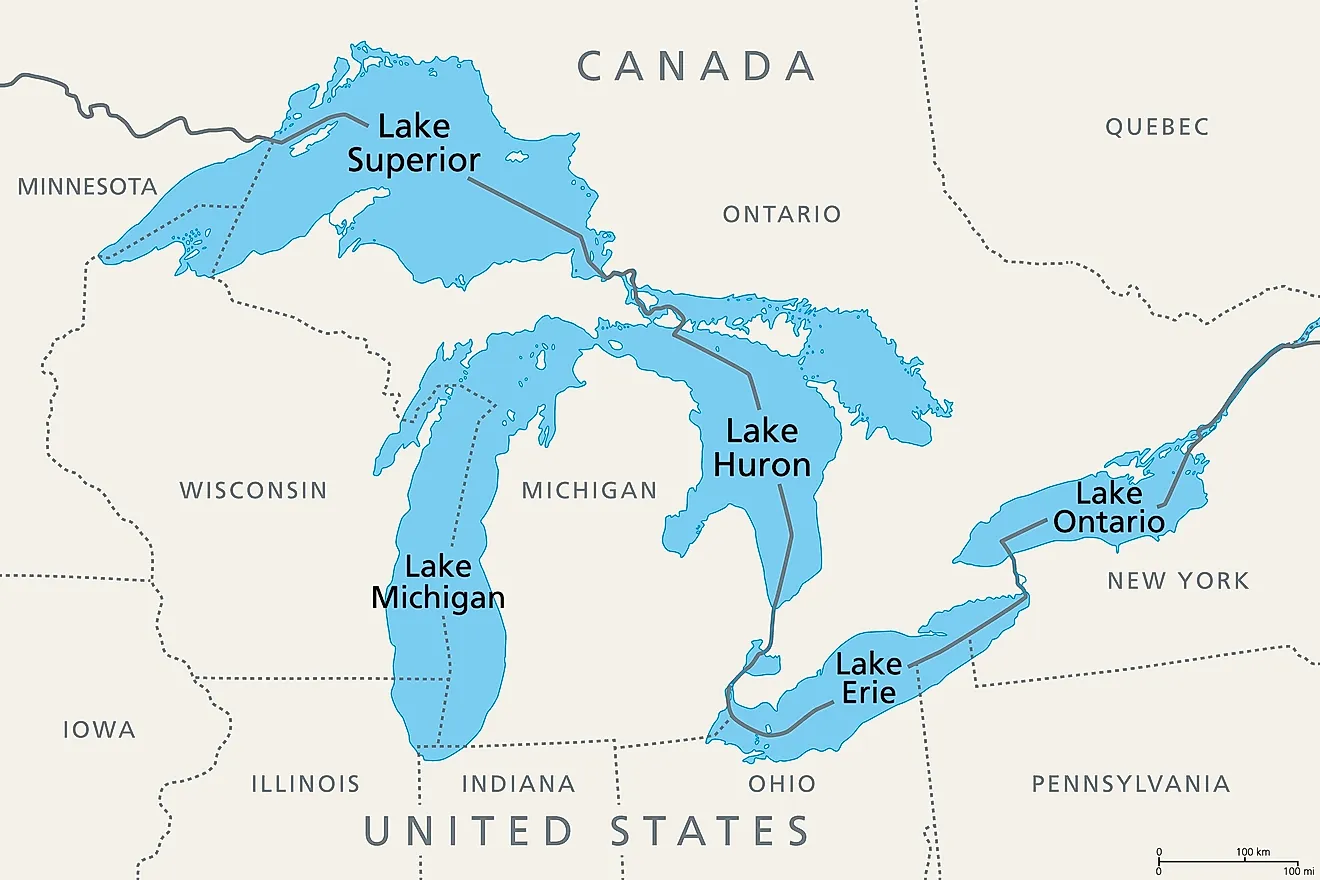
With shorelines of four out of five of the Great Lakes, Michigan has no shortage of bodies of water. It also has no shortage of snakes. Out of the 18 species of snake that call Michigan home, some have a preference for the state’s bodies of water. This includes the eastern Massasauga rattlesnake (Sistrurus catenatus), the state’s only venomous snake. Lake Superior, the Au Sable River, and the bodies of water below all support healthy snake populations.
Lake Michigan

Lake Michigan is the third largest of the Great Lakes and the only one entirely within the boundaries of the United States. It is bordered by Michigan to the north and east. The lake measures 321 miles long north-to-south, a maximum width of 118 miles, and a drainage basin of 45,500 square miles. Sleeping Bear Dunes National Lakeshore is located on the northeastern shore of Lake Michigan. The lakeshore contains miles of sandy beach, bluffs that rise 450 feet above the lake, dense forests, and several plant and animal species, including snakes.

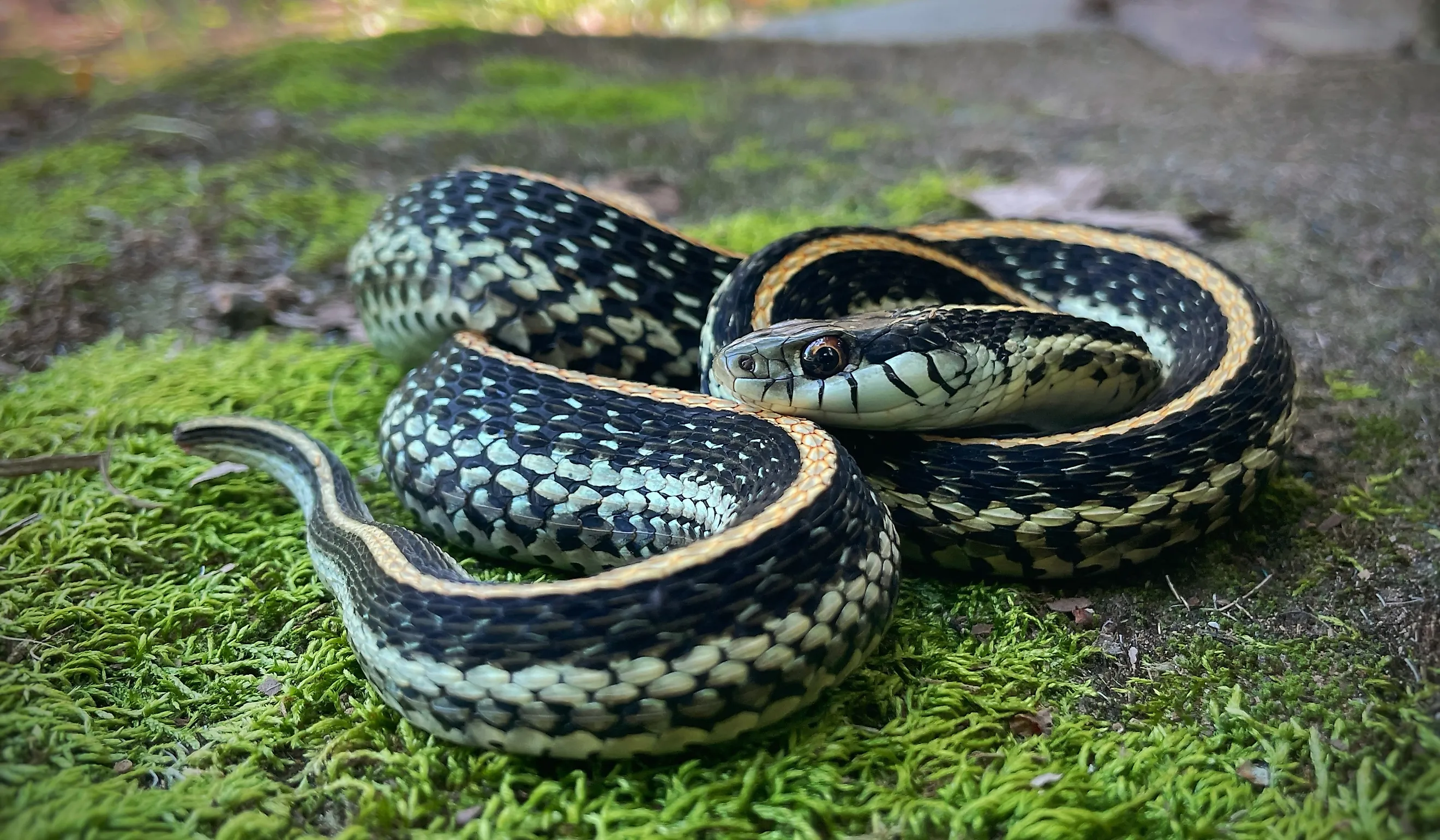
Several snake species inhabit Sleeping Bear Dunes. The eastern garter snake (Thamnophis sirtalis sirtalis), northern water snake (Nerodia sipedon sipedon), and eastern hognose snake (Heterodon platirhinos) are the three most commonly observed. Eastern garter snakes are the most frequently encountered species at Sleeping Bear Dunes. Northern water snakes are also routinely seen on the banks of the lakes and streams at the National Lakeshore. Eastern hognose snakes use their upturned snout to burrow in areas with loose, sandy soil.
Lake Superior

Lake Superior is the farthest northwest and largest of the Great Lakes. Its southern shore is in Wisconsin and Michigan. The lake measures 350 miles long east-to-west, 160 miles north-to-south at its widest point, and has a drainage basin of 49,300 square miles. Pictured Rocks National Lakeshore is located on Michigan’s Upper Peninsula, characterized by sandstone cliffs, sand dunes, waterfalls, and shoreline. It is laced with close to 100 miles of trails.

Although encounters with snakes are rare, hikers sometimes see eastern garter snakes and northern red-bellied snakes (Storeria occipitomaculata) slithering into the dense vegetation. These two species, along with the smooth greensnake (Opheodrys vernalis), are the only confirmed snake species that live in this area of the Lake Superior lakeshore. While unconfirmed, it is suspected that the western fox snake (Pantherophis ramspotti), northern water snake, and northern ringneck snake (Diadophis punctatus edwardsii) also inhabit this area.
Detroit River

The Detroit River flows for a total distance of 32 miles between Detroit and Windsor, forming part of the border between Michigan and Ontario. The river connects Lake St. Clair with Lake Erie. The Detroit River International Wildlife Refuge is the first and only International Wildlife Refuge in North America. It is comprised of islands, coastal wetlands, marshes, and shoals along 48 miles of the Detroit River and Lake Erie shoreline.

The refuge is home to several species of snake, including the northern water snake, common garter snake, and the Lake Erie water snake (Nerodia sipedon insularum). The Lake Erie water snake is limited to the shorelines of the western Lake Erie Islands. The refuge is also home to the eastern fox snake (Pantherophis vulpinus). This snake favors habitats characterized by large, open wetland areas with herbaceous vegetation such as cattails, which they use for shelter.
Au Sable River

The Au Sable River’s channel is characterized by aquatic, wetland, and upland habitats that support a wide variety of wildlife. Over 80% of the watershed is forested, containing major vegetative types like northern hardwoods, pine plantations, and mixed swampland species.

This terrain makes the Au Sable River suitable for the common water snake, hognose snake, and garter snakes. Water snakes are the most common species observed, often found basking on vegetation, rock piles, or logs adjacent to bodies of water, which they will drop into if startled. Hognose snakes are reportedly common in the Lower Peninsula, but they are very secretive and spend most of their time hiding. They will often remain hidden in burrows in sandy soil.
Huron River

The Huron River originates in southeastern Michigan in Springfield Township, where it then flows for approximately 130 miles. It flows through densely wooded areas, past current and former mill sites, past small villages like Milford, larger cities like Ann Arbor, before finally widening through rolling farmland and emptying into Lake Erie.

The Huron River is home to a species of snake that is uncommon in Michigan. The presence of queen snakes (Regina septemvittata) in the Huron River Watershed is an indicator of its suitability for snakes. Three individuals were found near Fleming Creek, which is within the Huron River’s watershed, northeast of Ann Arbor. This discovery has led scientists to believe that the local population of queen snakes in the area is healthy. A brown snake (Storeria dekayi) was also observed in the area, further strengthening the belief that the Huron River is prime snake habitat.
While Michigan’s only venomous snake, the eastern Massasauga rattlesnake, is known as the “swamp rattler” due to its preference for inhabiting wetlands, encounters with one are rare, as they are both shy and experiencing a decline in population due to habitat fragmentation and loss. The most commonly encountered snakes in Michigan are garter snakes and water snakes, both of which are nonvenomous and, like most snakes, avoidant of people. This means those who live in or visit Michigan can enjoy the Great Lakes and the state’s other waterways peacefully.