Reticulated Python
The reticulated python (Malayopython reticulatus) is the world's longest snake species and a member of the python family, Pythonidae. Wild individuals more than 6 meters (19 ft 8 in) are rare, but the species reliably exceeds that length more often than any other snake on Earth. The Guinness-recognized record holder, a captive specimen named Medusa kept in Kansas City, Missouri, was measured at 7.67 meters (25 ft 2 in) and 158.8 kilograms (350 lb) on October 12, 2011. Reticulated pythons range across South and Southeast Asia, with introduced populations in Florida and Puerto Rico.
Taxonomic Classification

Reticulated pythons were first described in 1801 by German naturalist Johann Gottlob Theaenus Schneider, who examined two zoological specimens held by the Göttingen Museum. The specimens differed in color and pattern enough that Schneider classified them as two separate species: Boa reticulata and Boa rhombeata. The species name reticulatus is Latin for "net-like," a reference to the snake's pattern. The genus Python was proposed by French naturalist François Marie Daudin in 1803, and the reticulated python was later moved into it.
In 1993, American zoologist Arnold G. Kluge ran a cladistic analysis on morphological characters and concluded that the reticulated python should remain within Python. Genetic studies in the 2000s, however, showed the reticulated python was more closely related to Australo-Papuan pythons than to Python molurus and its relatives. In 2014, R. Graham Reynolds and colleagues proposed the genus Malayopython to reflect this, and the name has since been recognized by the Reptile Database and most subsequent authors. Three subspecies are currently recognized: the Asian reticulated python (Malayopython reticulatus reticulatus), the Kayaudi reticulated python (M. r. jampeanus) of Tanahjampea Island, and the Selayer reticulated python (M. r. saputrai) of Selayar Island. The latter two are dwarf subspecies, with average sizes well below those of the mainland Asian form.
Physical Description

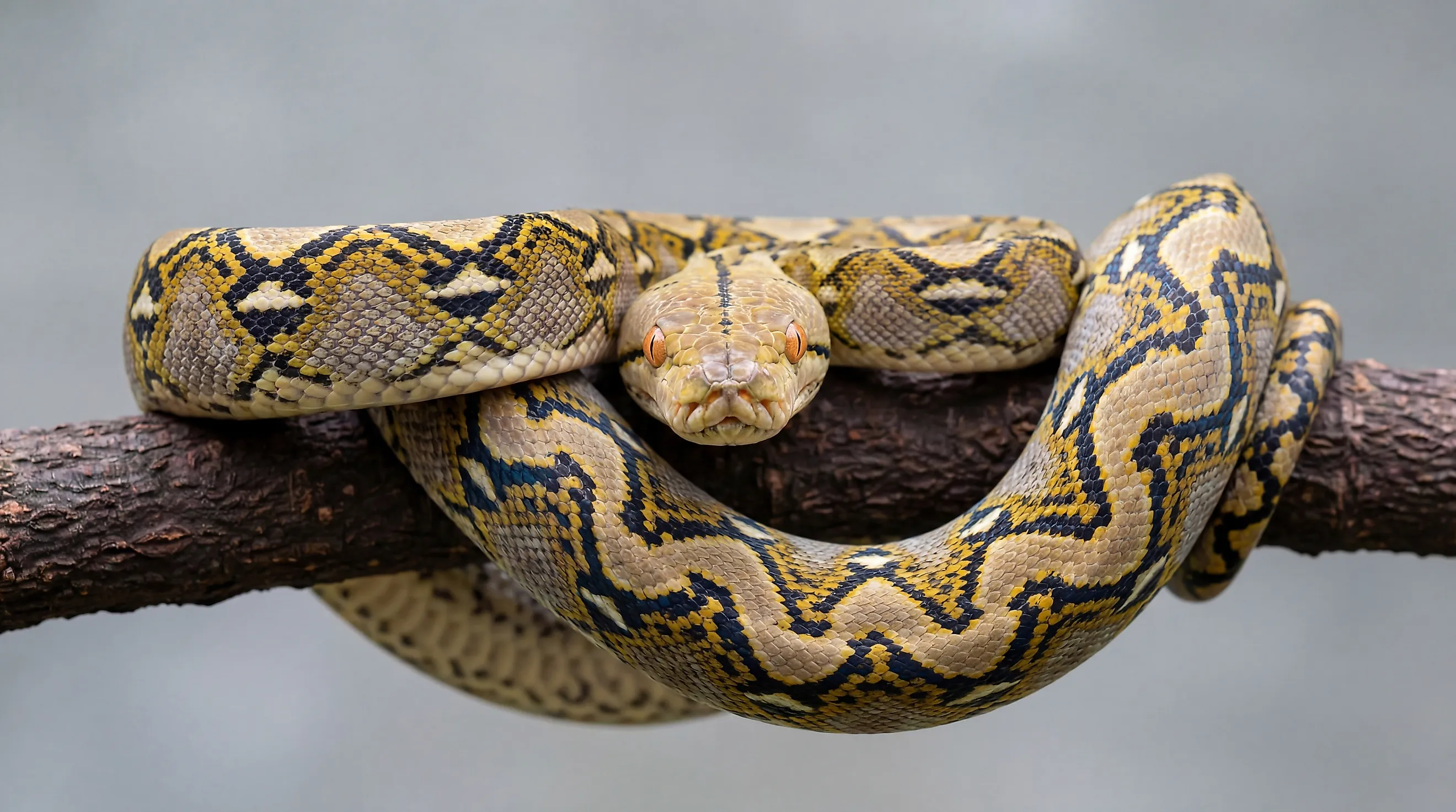
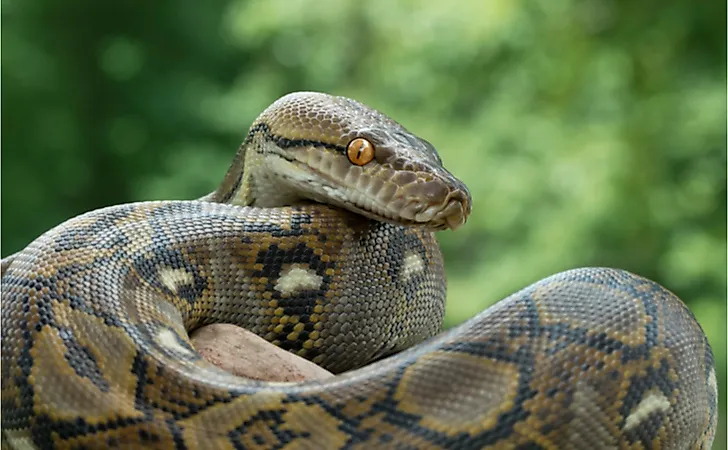
The reticulated python's net-like pattern consists of bold dark oval or triangular markings on a lighter yellow or brown background, with smaller pale-centered shapes bordering the larger markings. The skin is iridescent, and shifts through rainbow-like color casts depending on the lighting angle. Like other pythons, the species has heat-sensitive pit organs embedded within the lip scales that help detect warm-blooded prey at night.
Females are notably larger than males. Females commonly exceed 6 meters (20 ft) and may weigh around 90 kilograms (200 lb), while males are typically smaller, averaging closer to 4.5 meters (15 ft) and weighing substantially less. Reports of wild specimens reaching 10 meters (33 ft) trace mainly to a 1912 Sulawesi specimen described in older literature, but these claims are now considered uncorroborated. The largest scientifically measured wild reticulated python was a Balikpapan, East Kalimantan specimen at 6.95 meters (22 ft 10 in) and 59 kilograms (130 lb), measured under anesthesia in 2003. In January 2026, Guinness recognized a new wild record, an Indonesian specimen named Ibu Baron at 7.22 meters (23 ft 8 in). Like all snakes, reticulated pythons are ectothermic.
Range and Habitat

The reticulated python's native range covers tropical South and Southeast Asia, including Indonesia, the Philippines, Myanmar, Thailand, Laos, Cambodia, Vietnam, Malaysia, Singapore, India, and Bangladesh. The species occupies forests, grasslands, woodlands, wetlands, and even urban drainage and sewer systems. It is also a strong swimmer, frequently turns up near streams and lakes, and has been recorded at sea, an ability that has helped it colonize numerous smaller islands across its range.
Outside that native range, reticulated pythons have established introduced populations in Puerto Rico, where specimens have been documented in the western and southern parts of the island, including one individual measuring 5.5 meters (18 ft). Wild-caught animals have been donated to the University of Puerto Rico at Mayagüez, and the discovery of both adults and neonates indicates the population is reproducing in the wild.
Reticulated pythons have also turned up in Florida, where the better-known invasive constrictor is the related Burmese python (Python bivittatus). The reticulated python is far less widespread in Florida than the Burmese, but its size and adaptability still make it a potential threat to native wildlife. The Florida Fish and Wildlife Conservation Commission listed reticulated pythons as a Prohibited species in April 2021. Under current rules, the snakes can be humanely killed on private property with landowner permission, and on 32 FWC-managed lands in south Florida they can be captured and humanely killed year-round with no permit or hunting license required.
Food

Reticulated pythons are ambush predators with low metabolic rates, capable of waiting motionless for long periods until prey approaches. Like other pythons, they kill by constriction, coiling around prey and cutting off circulation. Younger pythons feed primarily on rodents and other small mammals such as bats and tree shrews. As they grow, they take on larger prey, including civets, binturongs, primates, wild boar, and deer species over 60 kilograms (132 lb). In areas where they live close to humans, they have been recorded preying on chickens, cats, and dogs, and rare cases of attacks on people, mostly in Sulawesi, have been documented over the last century.
Reticulated pythons can swallow prey approaching their own body weight. The most-cited documented case, published by Gabriella Fredriksson in The Raffles Bulletin of Zoology in 2005, involved a roughly 7-meter python in East Kalimantan that swallowed an adult female sun bear. The bear had been radio-collared as part of an ecological study, which is how the predation was confirmed. The researcher tracked the collar's signal to a swamp and found it being emitted from inside a python coiled in a thicket. The snake was eventually caught about a month and a half later to recover the regurgitated remains.
Behavior
Reticulated pythons are primarily nocturnal, often retreating into trees, tall grasses, crevices, or caves during periods of inactivity. Juveniles spend much of their time off the ground in trees or shrubs, where the cover protects them from predators and lets them ambush smaller prey. Larger adults are mostly terrestrial, since their size limits how easily they can move through branches. Reticulated pythons can be highly defensive when threatened. Startled animals raise their heads from the ground, hiss loudly, and may strike repeatedly. The species also uses water for concealment, both to avoid threats and to ambush prey approaching the shoreline.
Reproduction

Across much of the range, reticulated pythons breed between February and March. During courtship, males use tactile movements and their cloacal spurs, vestigial hind-limb structures near the base of the tail, to stimulate females. If the female is receptive, she lifts her tail and mating proceeds. Clutches range widely, from 8 to over 100 eggs, with most clutches falling between 25 and 50 eggs.
Under favorable conditions with abundant food and stable temperatures, females may produce one clutch per year. In poorer conditions, reproduction may occur only once every two to three years. Incubation runs about 60 to 90 days, and the hatchlings are independent from the moment they emerge. Parthenogenesis, a form of asexual reproduction in which embryos develop without fertilization by a male, has been documented in captive reticulated pythons. The first confirmed case in this species involved an 11-year-old captive named Thelma, who produced six fertilized eggs without ever mating; genetic analysis of the offspring confirmed they carried only her DNA.
Ecological Role and Threats

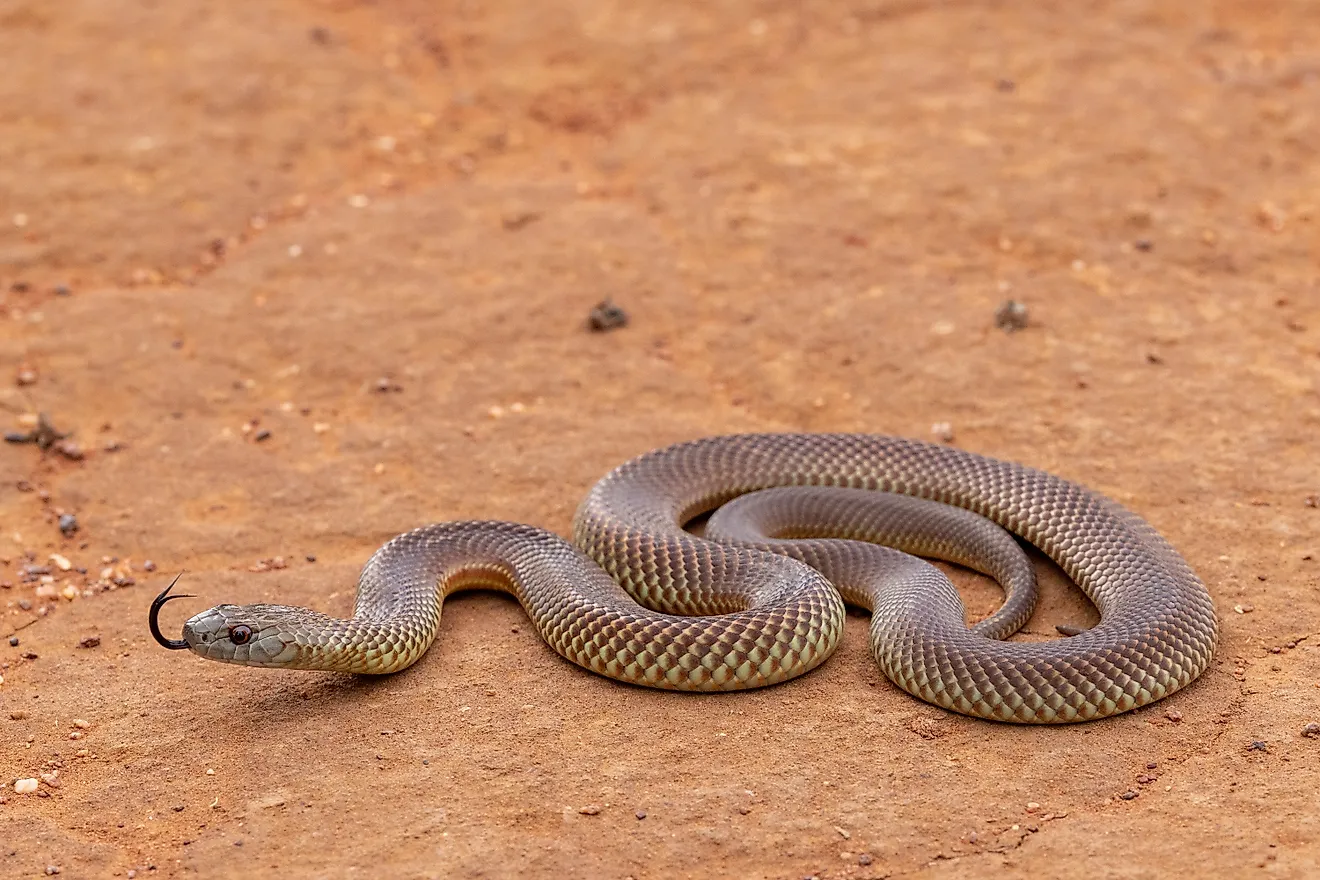
Despite their size, reticulated pythons play a regular ecological role in their native range, helping regulate rodent and other prey populations. They are not invulnerable themselves. Crocodiles and king cobras (Ophiophagus hannah), an ophiophagous species that primarily preys on other snakes, are known predators, particularly of juveniles and smaller individuals. Eggs and young pythons are also vulnerable to birds such as hawks, eagles, and herons, and to mammals including civets and mongooses.
The bigger pressure on the species comes from human use. Reticulated pythons are heavily hunted for the international skin trade and are sometimes consumed as meat. They are one of the most economically important reptiles in the world. The IUCN currently lists the species as Least Concern because of its wide distribution, but local population declines have been documented in heavily harvested areas. Captive reticulated pythons are also in demand in the exotic pet trade for their many color and pattern variations, known as morphs. Keeping a snake of this size presents real challenges, including parasites, respiratory infections, and a stress-related behavior known as "pushing" in which an enclosed animal repeatedly rubs or presses against the enclosure walls, sometimes causing swelling or permanent damage to the face and mouth.