Pythons
Pythons are widespread across much of Africa, Asia, and Oceania. They adapt to a variety of environments and are considered invasive and highly destructive in regions where they have been accidentally introduced or released, such as the Florida Everglades. Human pressure continues to alter native python habitats, and understanding these cold-blooded predators means looking at the biological and ecological factors that shape their status in the natural world.
Taxonomic Classification

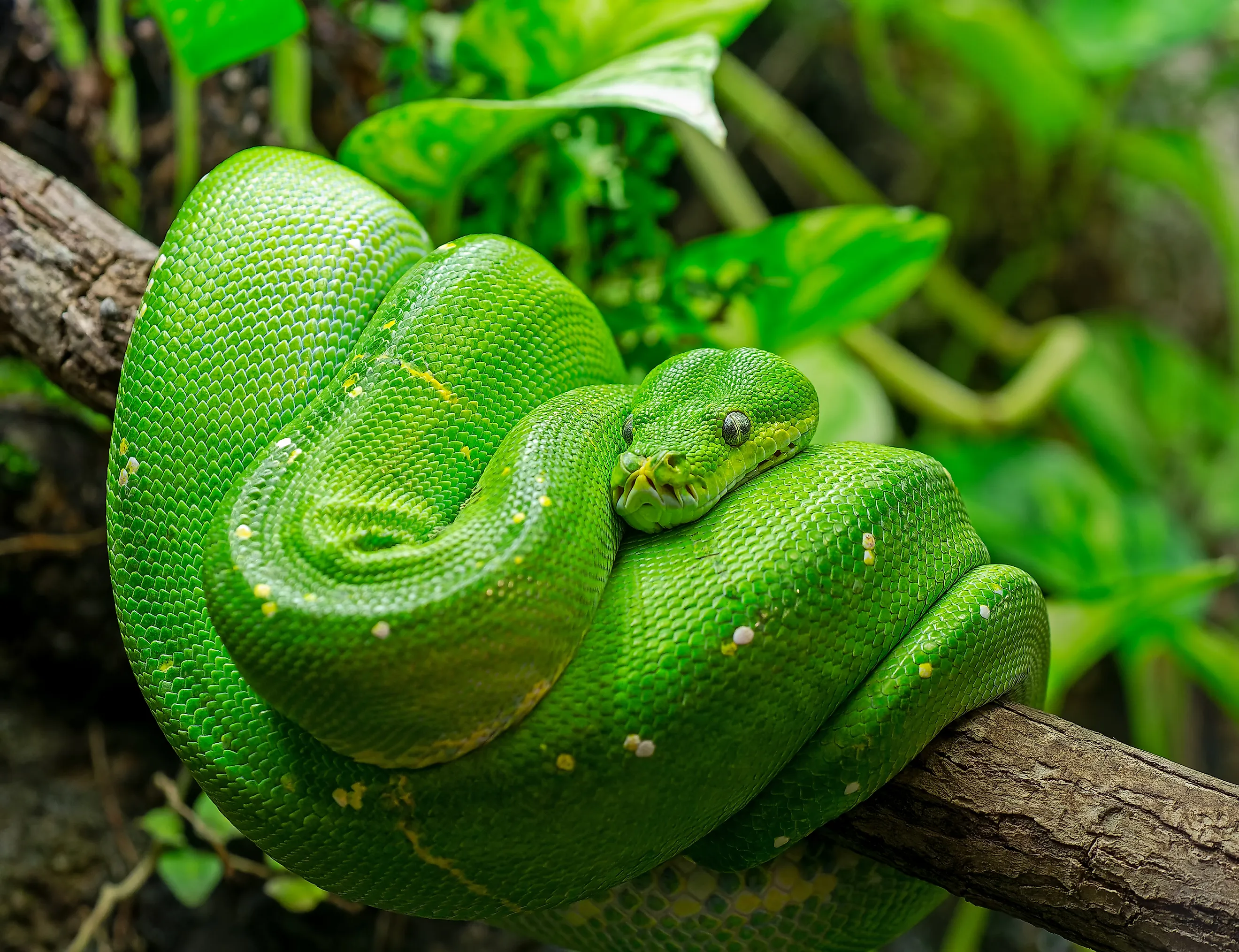
Pythons are a group of large, nonvenomous snakes classified within the family Pythonidae. They belong to the class Reptilia and the order Squamata, which includes all snakes and lizards. Within Pythonidae, several genera are recognized, including Python, Morelia, Aspidites, Malayopython, and Leiopython. These genera contain some of the most well-known species, including the reticulated python and the green tree python.
Pythons are closely related to boas (family Boidae), but they differ in several anatomical traits. Pythons retain small vestigial hind limb spurs and have a more complex skull structure. Another key distinction is reproductive: pythons lay eggs, while most boas give live birth. Their absence from the Americas, besides the invasive population of Burmese pythons in the Florida Everglades, further sets them apart.
Physical Description

Pythons are heavy-bodied snakes with muscular builds adapted for constriction instead of sheer biting force. Their size varies widely by species, from under 1 meter to over 6 meters in length, with some of the largest individuals being among the longest snakes in the world.
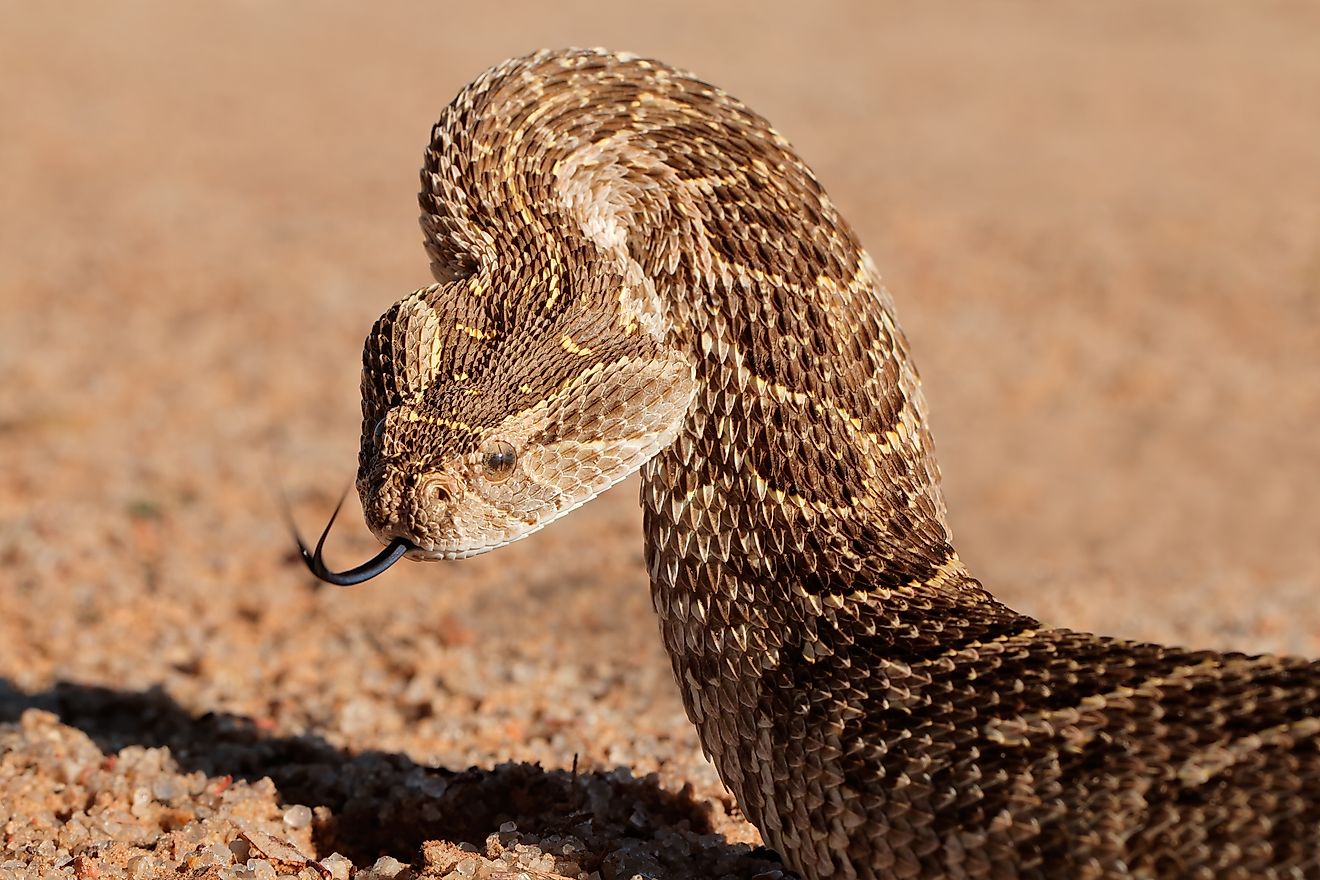
They have broad heads distinct from the neck, with heat-sensitive pits along the lips that detect warm-blooded prey. Pythons' jaws are noteworthy for their flexibility, allowing them to consume prey much larger than their head.
Python scales are smooth and often patterned in complex blotches, stripes, or geometric designs that help provide camouflage. Their coloration ranges from muted browns and greens to more vivid patterns, depending on habitat.
Range and Habitat

Most pythons are distributed across the Old World, with native ranges spanning sub-Saharan Africa, South Asia, and Australia. Some species also extend into island regions, including Indonesia, the Philippines, and New Guinea, where geographic isolation has led to distinct local forms. They occupy a wide range of habitat types, from tropical rainforests and monsoon woodlands to grasslands, swamps, and semi-arid scrub.
Python distribution is closely tied to climate, particularly temperature and humidity. Many species generally show a strong affinity for water and are frequently found near rivers, wetlands, or floodplains. On the other hand, some pythons, such as those in Australia, are better adapted to drier inland environments and shelter in rock crevices or burrows to avoid extreme temperatures; this is similar to how rattlesnakes behave.
Behavior

Pythons are primarily ambush predators, relying on concealment and patience rather than actively chasing prey like many colubrid and elapid snakes do. They often remain motionless for extended periods, striking rapidly when prey comes within range.
After capturing prey, they use constriction, tightening their coils to restrict and eventually stop blood flow and respiration of their prey. When threatened, pythons may hiss, strike defensively, or retreat, depending on size and circumstances.
Many python species are strong swimmers and will enter water to hunt or move between habitats. In more forested regions, climbing ability varies, with arboreal species showing high agility in trees. Larger, terrestrial pythons stay mostly on the ground.
Most species are nocturnal or crepuscular (active at twilight), though activity patterns can shift, depending on temperature and local conditions. Pythons are often solitary outside of breeding periods.
Diet

Like all snakes, pythons are carnivorous and feed on a wide range of vertebrates, with diet varying by species, size, and habitat. Smaller pythons typically consume birds, eggs, rodents, and lizards, while larger species are capable of taking mammals such as monkeys, wallabies, and antelopes. Some of the largest individuals have been recorded preying on pigs and deer, and there are very rare documented cases of pythons, particularly reticulated pythons, killing and swallowing adult humans.
Once subdued, prey is swallowed whole, headfirst, with the python's remarkably flexible jaws and expandable ligaments allowing them to ingest animals much bigger than their own head. Moreover, feeding frequency is irregular; after a large meal, a python may not eat again for weeks or even months while digesting their prey.
Reproduction

Pythons reproduce sexually, with most species breeding during specific seasonal windows tied to temperature and rainfall patterns. Males locate females by following scent trails and may engage in combat with rival males. During mating, males use their pelvic spurs to stimulate the female.
Like most snakes, pythons are oviparous, laying eggs rather than giving live birth. Clutch size varies widely, from three or four eggs in smaller species to 100 or more in the largest individuals. After laying her eggs, a female python typically coils around them to provide protection and regulate temperature through muscular contractions, a behavior known as "shivering thermogenesis."
Environmental conditions can affect the length of incubation periods, but they average between 40 and 100 days. Hatchlings emerge fully independent and are capable of hunting shortly after birth.
Threats

As with a number of different reptiles worldwide, pythons face a range of threats. Habitat loss from deforestation, agriculture, and urban expansion reduces available living space, as well as that of prey populations, particularly in tropical regions. Vehicle mortality is another localized threat in which expanding infrastructure intersects with habitat. Moreover, climate change has altered suitable environmental conditions, negatively affecting distribution and breeding cycles.
Many python species are hunted for their skins, which are used in the leather trade, and for their meat. The illegal pet trade also places unnatural pressures on certain python populations, especially those with rare or visually striking attributes. In addition, pythons, like countless other snake species, are often killed out of fear or ignorance, even when they pose little risk to humans.
While not all python species are threatened, many are experiencing noticeable declines, including the Oenpelli python in Australia, the Indian python, the African rock python, and several others.
Ecological Importance

In many of their native habitats, pythons function as mid- to top-level predators that help regulate populations of rodents, birds, and other small to medium-sized animals, contributing to local food web dynamics. In some contexts, this predation can benefit humans by reducing populations of crop-eating pests and potentially lowering the number of rodents associated with certain disease risks.
Pythons are important in scientific research, too, particularly in studies of metabolism and digestion. After a large meal, some species rapidly expand their digestive organs and hearts, then reduce them again once digestion is complete. This extreme physiological flexibility has drawn interest from researchers studying cardiac hypertrophy, fatty-acid signaling, and other questions with potential relevance to human health.
Pythons are also culturally and economically significant. In some regions, they are part of traditional religious practices and local diets, while the regulated trade of python skins supports the livelihoods of some niche tanners. However, the global reptile skin and pet trade is substantial in scale, estimated in the billions of dollars globally by widely published reports and trade assessments. This trade is unevenly regulated, which can contribute to increased pressure on wild python populations.