10 Iconic Animals That Live Only In Asia
Asia is the world’s largest and most populous continent. It sits in the Eastern and Northern Hemispheres, covering around 30% of Earth’s total land area, and is home to around 60% of the world’s population, some 4.5 billion people. Asia is also where you will find some of the most remarkable wildlife on the planet, thanks to vast, frozen Siberian forests and dramatic Himalayan peaks. In addition, some of the animals found here do not live anywhere else in the world. Some evolved in isolation, while others survived in the continent’s vast wildlife refuges. The following ten animals are symbols of Asia's rich ecology and among the most recognizable living creatures on Earth.
Malayan Tapir
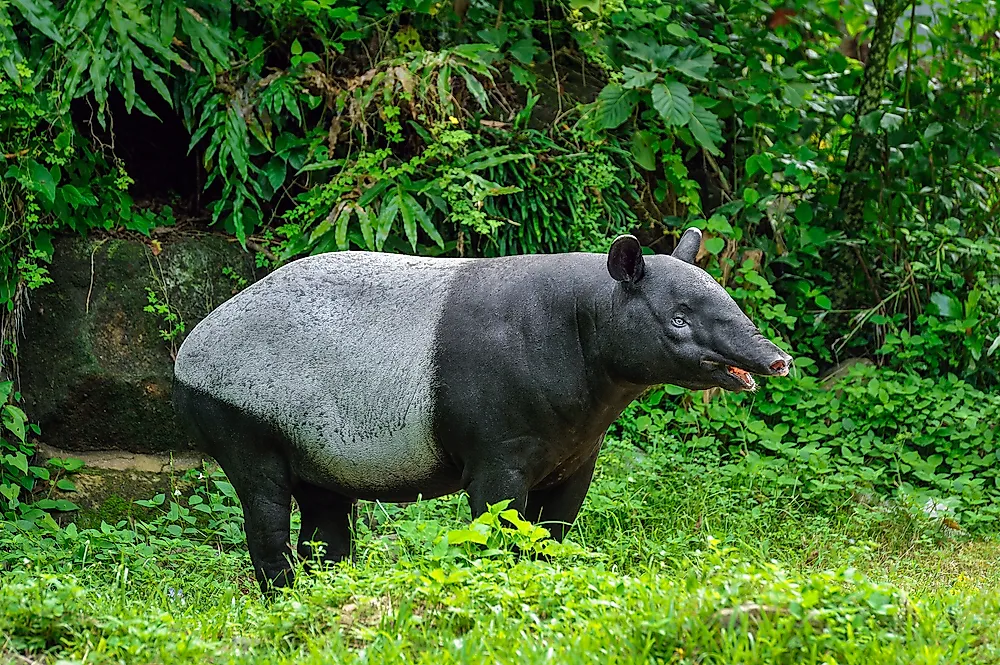
The quirky-looking Malayan Tapir is a mammal native to Southeast Asia. The tapir’s closest relative is the rhino, and they also belong in the same order as horses. What exactly are tapirs? They are primitive animals that have remained virtually unchanged for millions of years. While Malayan Tapirs may be found in zoos in the US, they are native only to the area that stretches from the Malay Peninsula to Sumatra. It is the only living tapir species outside of the Americas, and it has also been listed as Endangered on the IUCN Red List.
Malayan Tapirs are recognized by their coloration, which includes a black head and hind quarters and a white patch around the middle. This coloring has led to the nickname ‘Oreo’ tapir. They play an invaluable ecological role as browsers and seed dispersers, thereby contributing to forest regeneration and helping maintain plant diversity. These tapirs are primarily nocturnal and solitary, making them difficult to study. At the same time, camera-trap surveys have confirmed their restricted Asian range.
Proboscis Monkey
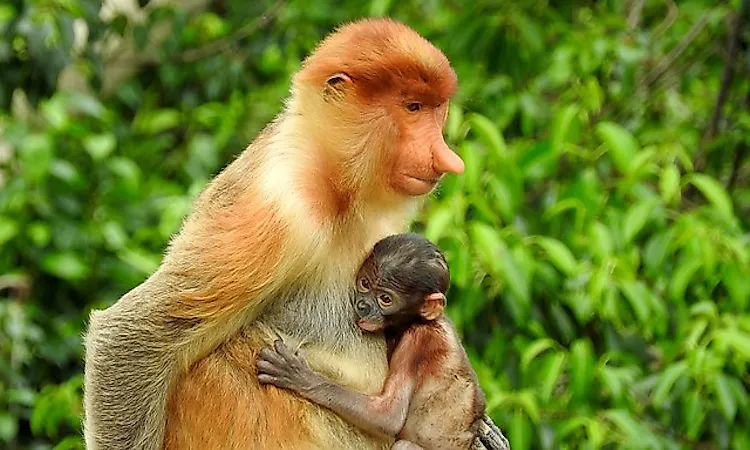
The cute but comical-looking proboscis monkey (Nasalis larvatus) is endemic to the island of Borneo. These monkeys are only found in parts of Malaysia, Brunei, and Indonesia. The proboscis monkey is famous for its large, pendulous nose, especially in adult males. The species also has a bright orange coat, and the males can weigh up to 50 pounds. Males use their large noses to attract mates, and scientists believe their noses help amplify their mating call to females while intimidating their rivals at the same time.

Proboscis monkeys are among the largest monkey species in Asia and are excellent swimmers. They are typically observed swinging or leaping from tree branches before jumping into water. While these monkeys are protected from hunting or capture, they remain endangered. The Borneo rainforests are being depleted for settlement, oil palm plantations, and timber, which has destroyed large parts of the monkeys’ habitat. This is forcing them to come down from the trees more often and travel longer distances to find food, making them an open target for predators. Conservation groups in Malaysia and Indonesia have launched mangrove restoration projects to protect the monkeys’ limited habitat. Since this primate is found nowhere else, these environmental policies directly impact its long-term survival.
Orangutan

Orangutans (Pongo spp.) are the only great apes found in Asia, and their entire wild range is restricted to the islands of Borneo and Sumatra. There are three species of Orangutans, namely Bornean, Sumatran, and Tapanuli. All three are listed as critically endangered, with Tapanuli orangutan numbers falling below 800. Habitat loss from logging, palm oil expansion, mining, and fires has reduced orangutan populations over the past century. The Borneo Orangutan Survival Foundation and other research programs have done long-term studies and determined that these apes depend greatly on intact rainforest canopies for food and nesting.
Orangutans spend most of their time swinging through these canopies with their long arms, and while they are up there in the branches, they often eat with their feet. Orangutan infants learn this and other behaviors from their mothers and stay with them for at least seven years. This is also why orangutans only give birth to infants every 7 to 9 years. Orangutans have a long lifespan, with some living to 50 years old. This lifespan does not support population recovery, so conservation centers are doing their best to rehabilitate rescued individuals and release them back into protected forest zones.
Pangolin

Asia is home to four pangolin species, namely Chinese, Sunda, Indian, and Philippine, and they are all native exclusively to the continent. Each Asian pangolin species occupies its own range; for instance, the Chinese Pangolin is found in China, Nepal, and Bhutan, while the Sunda pangolin ranges across Malaysia, Indonesia, and Indochina. Unfortunately, these mammals are also the world’s most trafficked wild animals, according to TRAFFIC and the IUCN. As such, they are classified as endangered and also critically endangered.

Pangolins are scaly mammals, not reptiles, and their scales are made of keratin. There is a widespread belief that these scales have magical properties. This, along with the demand for pangolin meat, is behind the large-scale trafficking. Some tribes even believe that seeing a pangolin means a drought is coming, and they kill the animal to prevent it. Pangolins have no external ears and no teeth, but they have good hearing, and their gizzard-like stomach helps grind food. They use their claws and long, sticky tongues to feed on ants and termites, and when they feel threatened, they curl up into a ball to protect themselves. Pangolins also need as much human protection as they can get to help curb poaching and trafficking. WWF actively works in Asia to protect pangolins and other species from wildlife crime.
Sun Bear
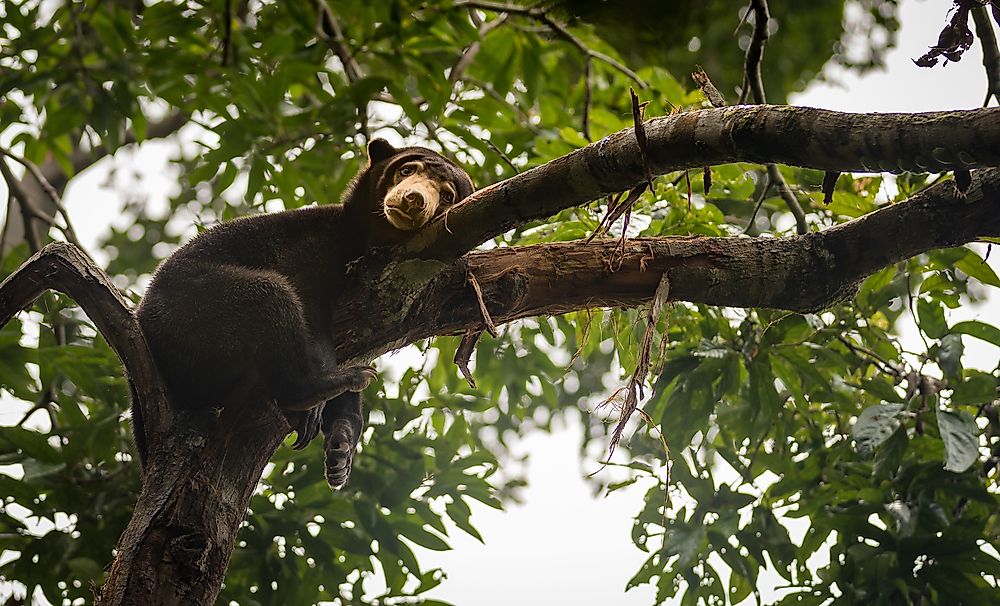
Asia’s sun bear (Helarctos malayanus) is the smallest member of the bear family. These bears inhabit southern China to eastern India, with some found as far as Indonesia. Sun bears get their name from the golden or white patch visible on their chests. Legend says that these patches represent the rising sun. Sun bears are around half the size of American black bears, making it easier for them to move through the trees. Despite their name, sun bears are often nocturnal and feed at night, although they are also known to be diurnal (active during the day) and crepuscular (active at dusk and dawn). They eat a range of foods, from roots and fruits to rodents and birds. Sun bears have long canine teeth, a very long tongue, and a strong bite force, which allows them to eat a wide variety of foods.
Ecological studies show that sun bears help disperse seeds and can also be instrumental in population control. But they are limited in range by deforestation in Borneo and Sumatra. The IUCN has listed the species as vulnerable because of habitat loss and poaching. Sun bears are also hunted commercially for their teeth, meat, paws, and gallbladders. There is a strong push to conserve what remains of the sun bear’s natural habitat and to end illegal wildlife trade.
Giant Panda
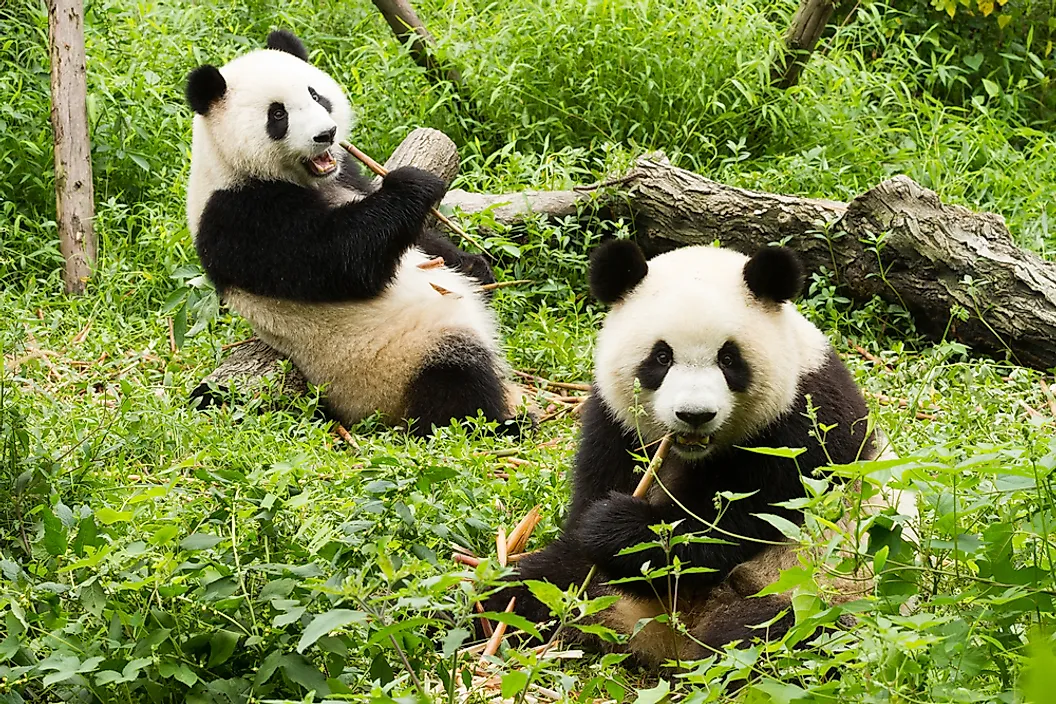
The giant panda (Ailuropoda melanoleuca) is perhaps the most iconic animal in Asia, especially in China. Giant pandas inhabit only the mountainous bamboo forests in Sichuan, Shaanxi, and Gansu provinces. This bear species does more than just clumsily make its way through every day. They feed for up to 14 hours a day, which is why they need large home ranges to access sufficient bamboo. Giant pandas need at least 26 pounds every day, depending on the part of the bamboo they eat.
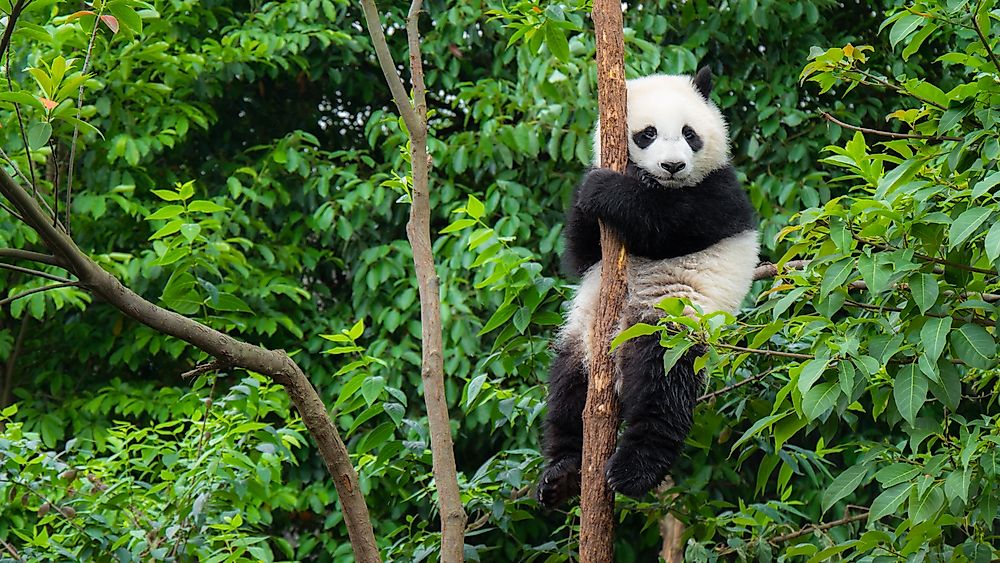
They are considered a national treasure in China, but their status remains vulnerable. There are only 1,864 left in the wild. Given that giant pandas are an umbrella species, their extinction would be a massive blow to nature. Protecting pandas means protecting the animals that inhabit their space. These include the golden monkey and pheasants. Pandas are also good at protecting themselves through camouflage. Their black-and-white coloring helps them blend into both the snow and the shade. Mother pandas protect their cubs, maintaining contact with them almost 100% of the time as their cubs develop during the first month after birth. Giant pandas are solitary animals and only meet to mate. Sometimes they meet outside the breeding season when they call to each other or leave scent marks.
Red Panda

Unlike the giant panda, the red panda (Ailurus fulgens) is not actually a bear. They may eat bamboo like giant pandas, but red pandas are more closely related to the raccoon and skunk family. Red pandas are native only to the temperate forests of the eastern Himalayas and southwestern China. Aside from bamboo, which they heavily rely on, red pandas also eat bird eggs, fruit, and insects. They lead a semi-arboreal lifestyle and are primarily crepuscular (active at dawn and dusk), making them challenging to observe in the wild.

Red pandas are an endangered species, and their populations continue to decline because of the loss of nesting trees and bamboo in the Himalayas. They also get caught in traps set up for other animals and are killed by poachers for their pelts. Fortunately, red pandas have semi-retractable claws and flexible ankles to help them escape when they can. They can also escape big predators like snow leopards by gripping branches or fleeing headfirst down trees. These pandas also live on their own, but when they encounter others, they communicate through head-bobbing, tail-arching, or squealing. There are estimated to be fewer than 10,000 red pandas left in the wild, and conservation efforts are now focused on forest management, education, and patrol training.
Snow Leopard

The gorgeous snow leopard (Uncia) lives exclusively in the high mountain ranges of Central and South Asia. These include the Himalayas, the Pamirs, the Tian Shan, the Altai, and the Tibetan Plateau. Snow leopards are elusive but highly recognizable for their beautiful fur. They have adapted to the cold landscape of their habitat, but yet again, humans threaten their existence. It is estimated that fewer than 7,000 snow leopards remain in the wild due to poachers who sell their hides and bones. Ironically, snow leopards are gentle creatures and have not shown aggression towards humans.

For thousands of years, the snow leopard ruled the mountains where they preyed on blue sheep, hares, marmots, and wild sheep. Even in modern times, more than 70% of their habitat remains unexplored, yet their population continues to decline. Listed as vulnerable, there is the possibility that, in the future, there will be no more snow leopards blending into mountain rocks, or creeping up on wild goats before rocketing down the slope.
Bengal Tiger
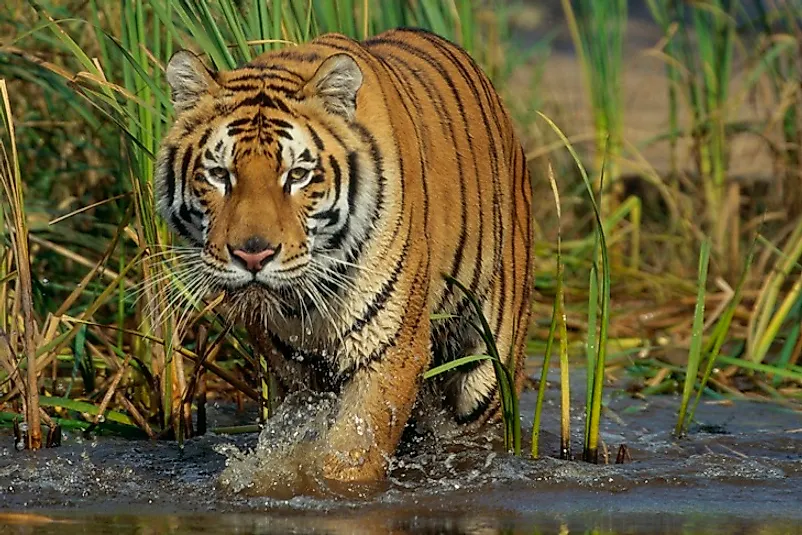
The majestic Bengal tiger is one of the largest wild cats on Earth. They belong to the Indian subcontinent and occur in India, Bangladesh, Nepal, and Bhutan. Bengal tigers are apex predators who dominate the food chain in their habitat. However, they have also been listed as endangered because of the destruction of their habitat and poachers who kill them for their bones. Their orange coat and black stripes are not always enough to camouflage and protect them from these ruthless killers.

As apex predators, Bengal tigers help regulate herbivore populations, and they maintain ecological balance. Conservation efforts aim to help maintain this balance, but at the moment, it is losing the battle against poachers and human encroachment. There are extensive anti-poaching laws, but the black market continues to thrive. There are only around 3,500 Bengal tigers left in the wild, so continued enforcement of the law and expanded conservation strategies are critical.
Asian Elephant
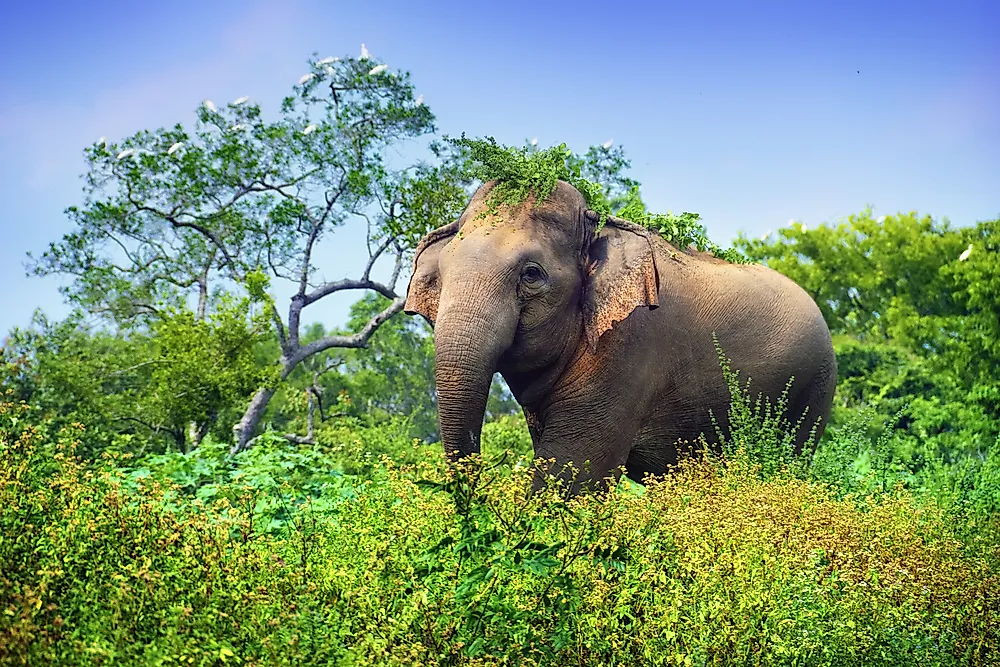
The Asian elephant is the largest land mammal on the continent. They are sociable mammals who form groups of up to seven related females. Sometimes, they join other elephants to form larger herds. Much of an Asian elephant’s day is spent eating grass, tree bark, roots, and leaves. They stay close to water because they must drink at least once every day. If they are near cultivated crops, they will feed on sugarcane and bananas. Asian elephants inhabit the grasslands and tropical forests of Southeast Asia and are slightly smaller than African elephants.

The Asian elephant is another endangered species, and its population has declined by 50% over the last three generations. The factors that most threaten these elephants include habitat degradation, habitat loss, and poaching. If Asian elephant populations continue to decline, other animals will also suffer. And there will be fewer pathways through forests that allow other wildlife to reach different areas beyond thick or dense growth. WWF is working to educate communities on coexisting with Asian elephants and to improve tolerance. The organization also supports protection efforts to help curb the killing of elephants for their skin. There are fewer than 50,000 Asian elephants left, so these measures are invaluable.
Why Asia’s Iconic Animals Matter
Asia’s one-of-a-kind wildlife is an awe-inspiring reminder of how extraordinary nature can be when humans allow species to evolve in their own corners. Their struggle, however, is another reminder of how cruel humans can be. These animals survive in environments that range from ice mountains to dense forests, only to be wiped out by greed. Protecting them is not just about saving a rare species. It is about keeping nature functioning properly and keeping ecosystems running. When Asia’s iconic animals are protected, all animals, for that matter, the diversity and balance of life on Earth can thrive.