6 Snakes You Might Spot in Yosemite National Park
Yosemite National Park is home to 13 species of snakes, from creek-dwelling hunters to rock-loving ambushers, and each one plays a quiet role in the High Sierra ecosystem.
This guide focuses on six you’re most likely to come across, whether you’re hiking sunlit trails, stepping over granite slabs, or pausing near a cold stream. Some are expert swimmers, some rely on speed, and others survive in chilly, hidden pockets of the park that stay damp long after summer fades. A few even use deception or specialized biology to compete with predators and rivals. Learn what makes these snakes tick, where they tend to turn up, and why Yosemite’s wild landscape suits them so well!
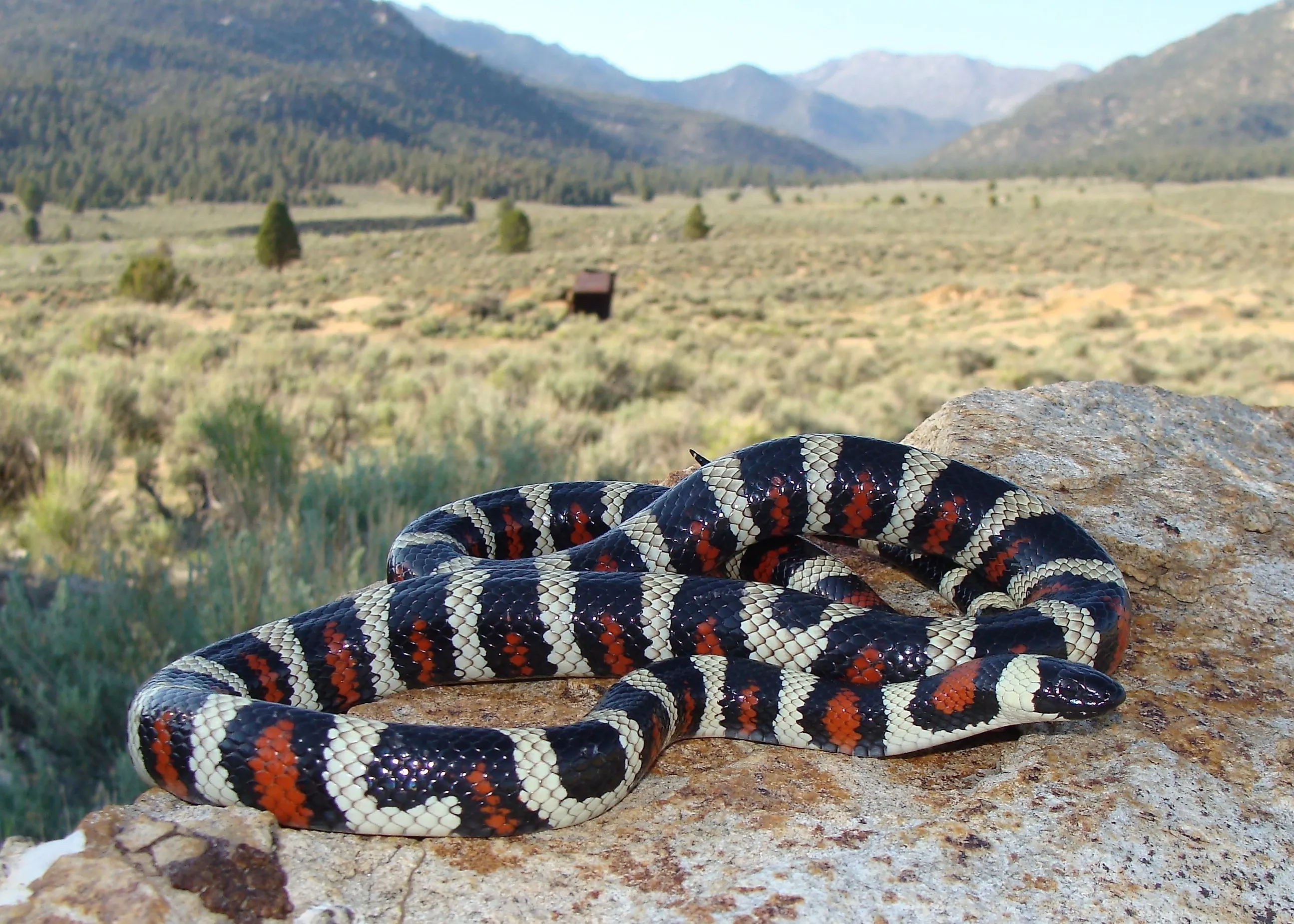
Sierra Mountain Kingsnake

A harmless but dangerous-looking snake found within the national park is the Sierra mountain kingsnake (Lampropeltis zonata multicincta)—a subspecies of the California mountain kingsnake. This yellow, black, and red (note the order) banded snake looks similar to the venomous coral snake. This is where the reassuring (albeit imperfect) adage comes in handy: "Red on black is a friend of Jack's, red on yellow, kill a fellow (or, 'you're a dead fellow')."
The best strategy is to steer clear of snakes altogether, but if you're anything like the Yosemite park ranger who blogged about the Sierra mountain kingsnake in 2013, you might be greeted by one of these ostentatious, but ultimately passive serpents in the unlikeliest of places. For you see, like many elite athletes who come to test themselves on Yosemite's world-famous rock faces, this kingsnake is an adept climber. According to the ranger's report, while setting up a belay station some 60 feet off the ground, a kingsnake slipped between their legs, and continued ascending the granite crack.
Fun fact about mountain kingsnakes: they are immune to rattlesnake venom, and therefore, can hunt, kill, and consume their pit-viper peers within the park.
Garter Snakes

The most commonly spotted snake in Yosemite, as with many places in North America, is the harmless garter snake. Here, in the High Sierra, three species exist: the common garter snake (Thamnophis sirtalis), the western terrestrial garter snake (Thamnophis elegans), and the Sierra garter snake (Thamnophis couchii). The latter, though named after the towering mountain range, is actually highly aquatic. So while the Sierra garter may vary quite significantly in appearance, if you spot a snake swimming through, or even crawling across the bed of gentle rivers and streams (likely on the prowl for fish and amphibians), or perhaps sunning itself on the corresponding banks, this is likely the culprit.
Northern Pacific Rattlesnake

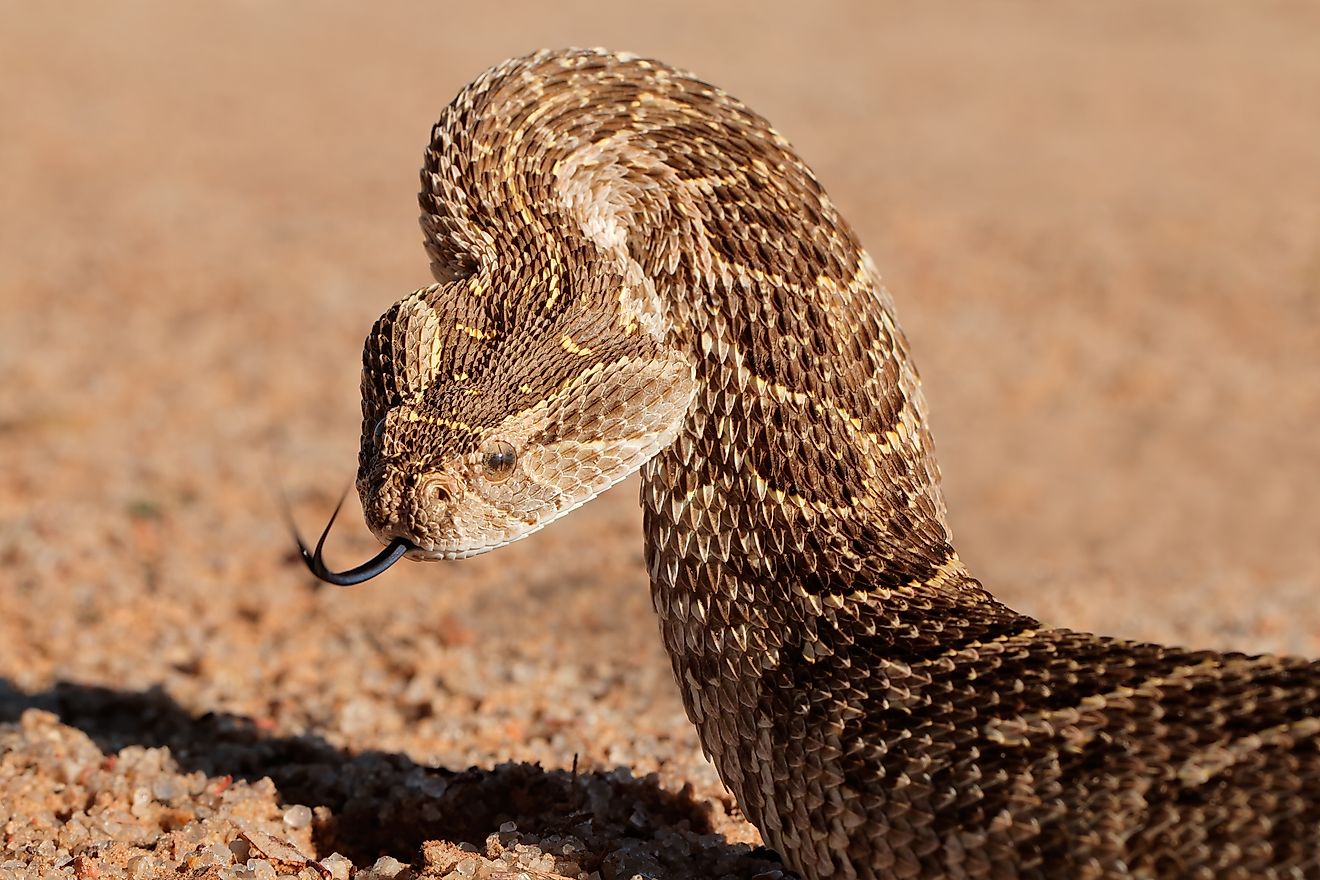
The sole venomous snake lurking within Yosemite is the Northern Pacific rattlesnake (Crotalus oreganus), also known as the western rattlesnake. This particular pit viper, despite its name and general reputation, rarely shakes its specialized tail when threatened, but instead adopts a still posture in an attempt to avoid detection. But given that this high-altitude serpent (up to 9,000 feet above sea level) typically takes cover under rocks and woodpiles, it tends to avoid contentious situations.
Rangers like the northern pacific rattlesnake because it naturally controls Yosemite National Park's rodent populations—namely, California ground squirrels. Guests also seem to get along just fine with this snake. Snake bites are rare in Yosemite, but they do occur, and injuries can be serious—so give snakes space and stay alert on warm days.
Gopher Snake

Speaking of rattlesnakes, Yosemite harbors a non-venomous imposter species. Though it is the park's largest reptile, the gopher snake (Pituophis catenifer) takes extra measures to ward off predators. The gopher snake may hiss, broaden its jaw to mimic a rattlesnake's triangular head, and even shake its tail rapidly in the leaves in order to simulate the quintessential rattle. Regardless of the snake in question, it is wise and respectful to leave it be, but hardcore herpetologists may wish to identify a few physical differentiators.
For starters, adult gopher snakes can reach 6 to 7 feet in length, whereas the resident rattlesnake tends to be 2 to 4 feet long. Secondly, while both breeds have dark blotches across much of their bodies, the gopher snake's base color is usually light brown or even yellowish, while the Northern Pacific is often brownish-gray. Finally, the former possesses a standard head shape and round pupils, whereas the latter bears a triangular head and vertical, catlike pupils.
Racers

Trail runners aren't the only speedsters traversing the High Sierra. Yosemite National Park is home to two species of racer snakes. Though their length and exceptional swiftness may make them appear intimidating, racers are non-venomous, and therefore, predominantly non-threatening to humans. The striped racer (Masticophis lateralis), also known as the California striped racer, or California whipsnake, has a slender, dark-colored body with yellow(ish) stripes along each side—or racing stripes, if you will. The yellow-bellied racer (Coluber constrictor flaviventris), or eastern yellow-bellied racer, is a subspecies of the North American Racer. Its nearly 6-foot body can range in color from blue-gray, to blue-green, to brownish, but as the name suggests, a yellow (or cream-colored) belly is usually present.
Northern Rubber Boa

Hikers who happen upon the northern rubber boa (Charina bottae) might not know what to make of it. With its smooth scales, blunt tail, grayish hue, and general rubbery appearance, this Yosemite snake is sometimes mistaken for a giant earthworm. But unlike those sneaky soil-dwellers, rubber boas like to chow down on nesting rodents, small lizards, and even eggs from other snakes.
Fascinatingly, though cold-blooded, northern rubber boas have adapted to relatively cool and moist areas, and are not particularly tolerant of warm, open spaces. In fact, this enigmatic reptile is able to preserve heat around its head (in order to protect the brain), allowing its body temperature to drop as low as 44 degrees Fahrenheit. That might come in handy during Yosemite's off-season.
Ssssee You in Yosemite
A day in America's most iconic national park might entail an intensive hike up Half Dome, watching climbers tackle El Capitan, or basking in the midst of Yosemite Falls. It might also put you face-to-face (or boot-to-face) with some of the Sierra Nevada's diverse array of wildlife—snakes included. From the humble garter to the legendary rattler, a surprising number of species have set up shop in this four-season haven. So next time you pass through Yosemite National Park, remember to look down at the dirt as well as up towards the heavens.