What Animals Live In The Tropical Rainforest?
Tropical rainforests are found near the equator in regions of South and Central America, Central and West Africa, Southeast Asia, and parts of Oceania. These ecosystems experience consistently warm temperatures, typically between 20°C and 30°C (68°F to 86°F), and receive 2,000 to more than 4,000 millimeters (80-160 inches) of rainfall annually, with no true dry season. In most tropical rainforests, every month receives at least 60 millimeters (2.4 inches) of rain, a threshold commonly used by climatologists to define rainforest conditions.
Though they occupy less than 7 percent of Earth’s land, tropical rainforests harbor an incredibly rich diversity of life. Experts believe that 40 to 50 percent of all land species dwell there, including millions of insects, thousands of plant types, and some of the planet’s most unique vertebrates. One hectare of Amazon rainforest may have more tree species than all of North America, highlighting the ecosystems' density and complexity.
Rainforest animals are distributed vertically across distinct forest layers, each shaped by light availability, humidity, and food sources. Large mammals such as jaguars, tapirs, and okapis primarily occupy the forest floor, while arboreal species like three-toed sloths, spider monkeys, and king colobus monkeys move through the understory and canopy. Birds including the African gray parrot, keel-billed toucan, and crowned eagle rely on the canopy and emergent layers for nesting and feeding, while reptiles such as boa constrictors and bats like the large flying fox exploit both ground and aerial habitats.
Okapi
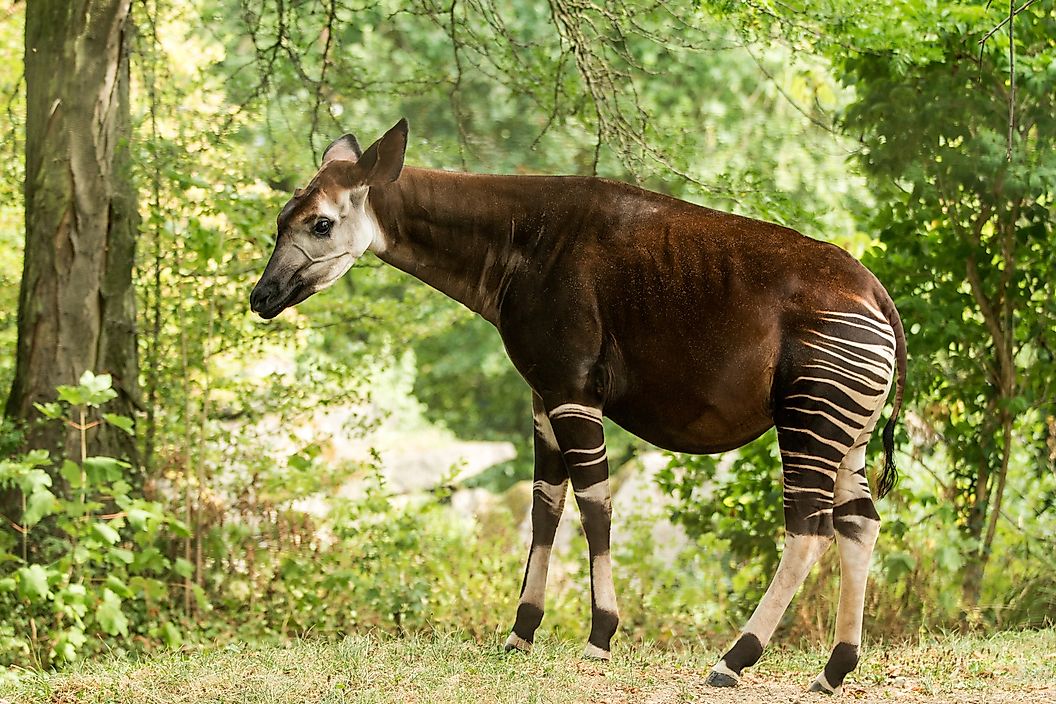
The okapi (Okapia johnstoni) is a forest-dwelling mammal endemic to the Ituri Rainforest of the Democratic Republic of the Congo, where it inhabits dense, lowland tropical forest. Although its striped hindquarters resemble those of a zebra, the okapi is the closest living relative of the giraffe, sharing anatomical traits such as a long, flexible tongue and similar skull structure. The species was unknown to Western science until 1901, underscoring how isolated its habitat remains.
Okapis are primarily diurnal and solitary, maintaining overlapping home ranges that can span several square kilometers. They rely heavily on hearing and scent marking to navigate the forest and avoid predators such as leopards. Their diet includes more than 100 plant species, consisting of leaves, buds, fruits, ferns, and fungi, as well as clay-rich soil that provides essential minerals. Using their prehensile tongue, which can exceed 30 centimeters in length, okapis strip leaves and clean their ears and eyes.
Classified as Endangered by the International Union for Conservation of Nature, okapi populations are threatened by habitat loss, illegal mining, and armed conflict within their limited range. As large browsers, they play an important ecological role by shaping understory vegetation and dispersing seeds, making them a key species in maintaining the structure of Central Africa’s tropical forests.
Tapir

Tapirs (Tapirus spp.) are large, herbivorous mammals known for their stocky bodies and short, flexible, prehensile snouts that function like a small trunk. Four of the five living tapir species inhabit tropical rainforests and wetlands in Central and South America, while one species, the Malayan tapir, is native to Southeast Asia, making tapirs one of the few large mammals with a disjunct distribution across two continents.
Tapirs are mainly active during the night and twilight hours, resting in dense vegetation during the day and feeding at night. Their diet consists of leaves, shoots, fruits, bark, and aquatic plants, with each tapir consuming dozens of plant species. As they navigate the forest and disperse seeds through their droppings, tapirs are vital long-distance seed dispersers, especially for large-seeded trees that few other animals can carry.
Despite their size, tapirs are agile swimmers that often enter rivers and swamps to feed, escape predators, or regulate body temperature. All tapir species are currently listed as Vulnerable or Endangered due to threats like deforestation, habitat fragmentation, and hunting. Their sensitivity to environmental changes makes tapirs key indicator species for the health of tropical forest ecosystems.
Sumatran Rhinoceros

One of the five extant rhinoceros species, the Sumatran rhinoceros (Dicerorhinus sumatrensis) inhabits dense tropical forests in Sumatra and Borneo, with its remaining populations fragmented into small, isolated pockets. It is the smallest and most primitive living rhinoceros, distinguished by its two horns, reddish-brown hair, and wrinkled skin, traits that reflect its ancient lineage.
Adult Sumatran rhinos typically weigh 500 to 800 kilograms (1,100-1,760 pounds), far smaller than African rhino species. They are solitary, forest-dwelling browsers that feed on leaves, shoots, bark, fruit, and saplings, consuming more than 100 plant species. Their preference for steep terrain and thick vegetation makes them among the most elusive large mammals on Earth.
The Sumatran rhinoceros is classified as Critically Endangered, with fewer than 80 individuals believed to survive in the wild. Decades of poaching for horns, driven by demand in parts of China and Southeast Asia despite the lack of scientific evidence for medicinal value, combined with severe habitat loss and population isolation, have pushed the species to the brink of extinction. Today, conservation efforts focus on intensive protection, managed breeding programs, and preventing further genetic decline in what remains one of Asia’s most threatened large mammals.
Western Lowland Gorilla

The western lowland gorilla (Gorilla gorilla gorilla) inhabits the lowland tropical forests and swamp forests of Central Africa, primarily in Gabon, the Republic of the Congo, Cameroon, Central African Republic, and Equatorial Guinea. It is the smallest and most numerous of the gorilla subspecies, though its population has declined sharply in recent decades.
Western lowland gorillas are highly intelligent and display documented tool use, including using sticks to test water depth, stabilize footing in swampy terrain, and access food sources. They live in social groups led by a dominant silverback male and feed on a varied diet of fruit, leaves, shoots, bark, and insects, with fruit making up a significant portion when seasonally available. Their wide-ranging foraging behavior makes them important seed dispersers, contributing to forest regeneration.
Despite their adaptability, the subspecies is classified as Critically Endangered. The primary threats include poaching for bushmeat, habitat loss from logging and mining, and disease, particularly Ebola virus outbreaks, which have killed tens of thousands of individuals since the 1990s. Although large populations still exist in remote forests, continued pressure has led to an estimated decline of more than 60 percent over recent decades, placing the western lowland gorilla among the most threatened great apes in the world.
Jaguar
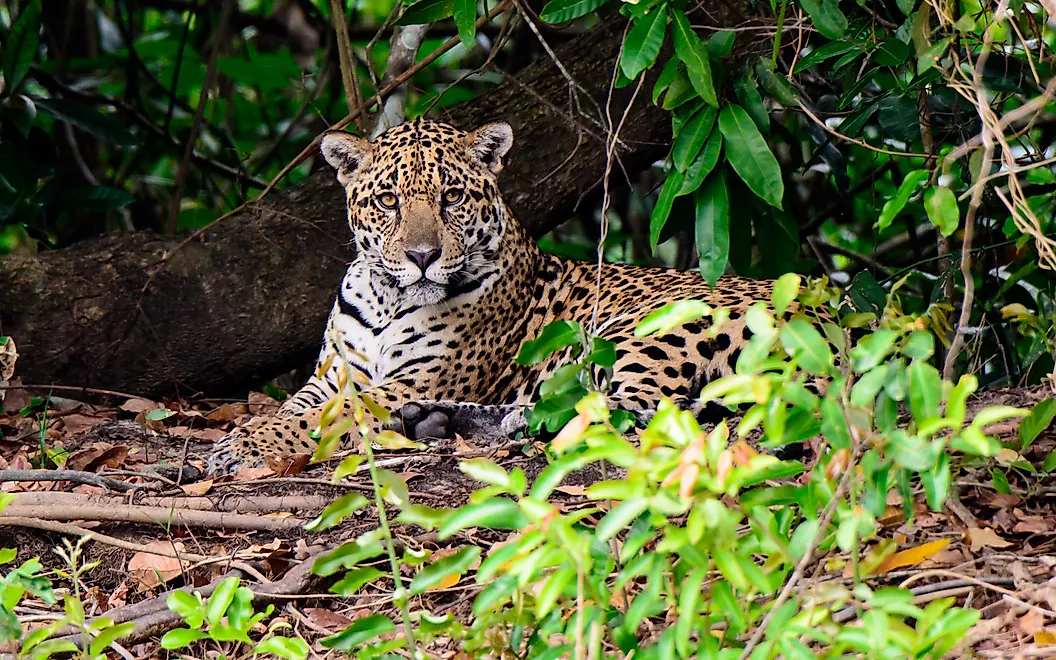
The jaguar (Panthera onca) is the largest cat in the Americas and the third-largest cat species in the world, after the tiger and the lion. Its range extends from southern Mexico through Central America and much of South America, reaching as far south as northern Argentina and Paraguay, though populations have disappeared from large portions of their former range.
Jaguars are mainly linked to tropical rainforests, but they also live in wetlands, seasonally flooded forests, savannas, and river corridors, showing a preference for areas close to water. Although they are often mistaken for leopards, jaguars are more robust, with broader heads, shorter limbs, and larger rosettes that usually have central black spots. Adult males can weigh up to 100 kilograms (220 pounds), making them the strongest feline in the Western Hemisphere relative to their body size.
A solitary and territorial predator, the jaguar sits at the top of the food web. Its diet includes deer, peccaries, capybaras, caimans, turtles, and fish, and it is known for its exceptionally strong bite, capable of piercing skulls and shells, a hunting strategy unique among big cats. As an apex predator, the jaguar plays a critical role in regulating prey populations and maintaining ecological balance across tropical forest ecosystems.
Classified as Near Threatened, jaguars face ongoing pressure from habitat loss, fragmentation, and conflict with humans, particularly where forest landscapes are converted to agriculture. Conservation efforts increasingly focus on protecting large, connected habitats that allow jaguars to maintain viable populations across their historic range.
Poison Dart Frog

Despite their fearsome reputation, only three species of poison dart frogs are considered truly lethal to humans, all belonging to the genus Phyllobates. Among them, the golden poison dart frog (Phyllobates terribilis) is the most toxic amphibian known. Native to the humid lowland rainforests of Colombia’s Pacific coast, a single individual can carry enough toxin to kill multiple adult humans.
These frogs secrete batrachotoxin, a powerful neurotoxin that interferes with nerve and muscle function by preventing sodium channels from closing, leading to paralysis and cardiac failure. Indigenous Emberá people historically used the toxin to coat blowgun darts, giving rise to the frogs’ common name.
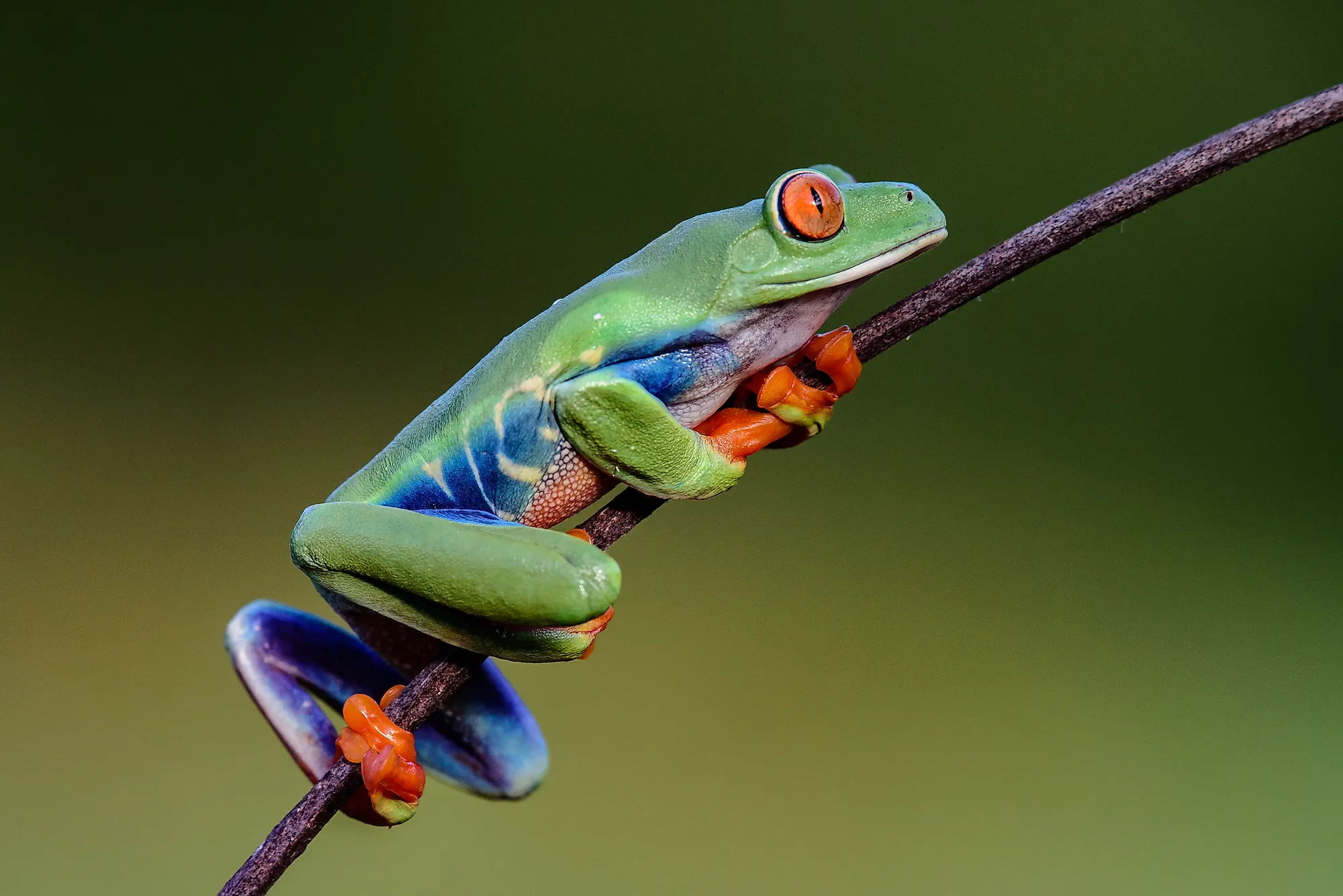
Poison dart frogs are vibrant and eye-catching, showcasing bright shades of yellow, gold, red, blue, and green. Their vivid colors act as a warning to potential predators, employing a defensive tactic called aposematic coloration, which signals that the frog is toxic and tastes bad. Interestingly, frogs bred in captivity become non-toxic because batrachotoxin is obtained from their natural diet—consisting of ants, mites, and other arthropods—rather than being produced within their bodies.
South-American Coati

Also known as the ring-tailed coati, the South American coati (Nasua nasua) is a member of the raccoon family (Procyonidae) that inhabits a wide range of forested habitats across South America. Its distribution extends east of the Andes from Colombia and Venezuela through the Guianas, Brazil, Bolivia, and Paraguay, reaching as far south as Uruguay and northern Argentina. While most closely associated with lowland tropical rainforests, the species also occurs in gallery forests, dry forests, and wooded savannas.
South American coatis are highly adaptable and diurnal, foraging both on the ground and in trees. They have long, flexible snouts and distinctive ringed tails, which are often held upright while moving through vegetation. Females and juveniles typically live in social bands of up to 30 individuals, while adult males are usually solitary except during the breeding season. Their omnivorous diet includes fruit, insects, small vertebrates, eggs, and carrion, making them important contributors to seed dispersal and insect population control within rainforest ecosystems.
Boa Constrictor

The boa constrictor (Boa constrictor) is a sizable, nonvenomous snake native to Central and South America, with populations also found on various Caribbean islands. Its range covers northern Mexico, Central America, and much of South America, extending as far south as northern Argentina. While the species inhabits a variety of environments—such as dry forests, savannas, and farmland—it is most commonly linked to tropical rainforests.
In rainforest environments, boas benefit from high humidity, stable temperatures, and dense vegetation that provides cover for ambush hunting. Adults commonly reach 3 to 4 meters (10-13 feet) in length, with some individuals growing larger. Boa constrictors are opportunistic predators, feeding on birds, rodents, bats, lizards, and small to medium-sized mammals. They kill prey through constriction, cutting off blood flow rather than airflow, a more efficient method than suffocation.
Boa constrictors are primarily nocturnal or crepuscular and spend much of their time either coiled on the forest floor or resting in low vegetation. As mid- to upper-level predators, they help regulate prey populations and contribute to the ecological balance of tropical forest ecosystems.
African Gray Parrot

The African gray parrot (Psittacus erithacus) is a medium-sized parrot native to the lowland rainforests and forest edges of equatorial Africa, including Gabon, the Republic of the Congo, Cameroon, Ghana, and parts of Côte d’Ivoire. Recognized by its gray plumage, black bill, and bright red tail, the species is widely regarded as one of the most intelligent birds in the world, capable of complex vocal learning, problem-solving, and long-term memory.
African gray parrots feed primarily on fruits, seeds, nuts, and leafy matter, playing an important role in seed dispersal within forest ecosystems. Individuals can live 40 to 60 years or more, a long lifespan that makes populations especially vulnerable to sustained losses. The global population is estimated at approximately 120,000 to 260,000 individuals, though numbers vary widely by region and continue to decline.
The species is classified as Vulnerable, with some populations approaching endangered status. The primary threats are habitat loss from logging and agriculture and intensive trapping for the international pet trade, which has removed millions of birds from the wild over recent decades. In response, the African gray parrot is listed under CITES Appendix I, which largely bans international commercial trade and reflects growing concern over its long-term survival.
Keel-Billed Toucan
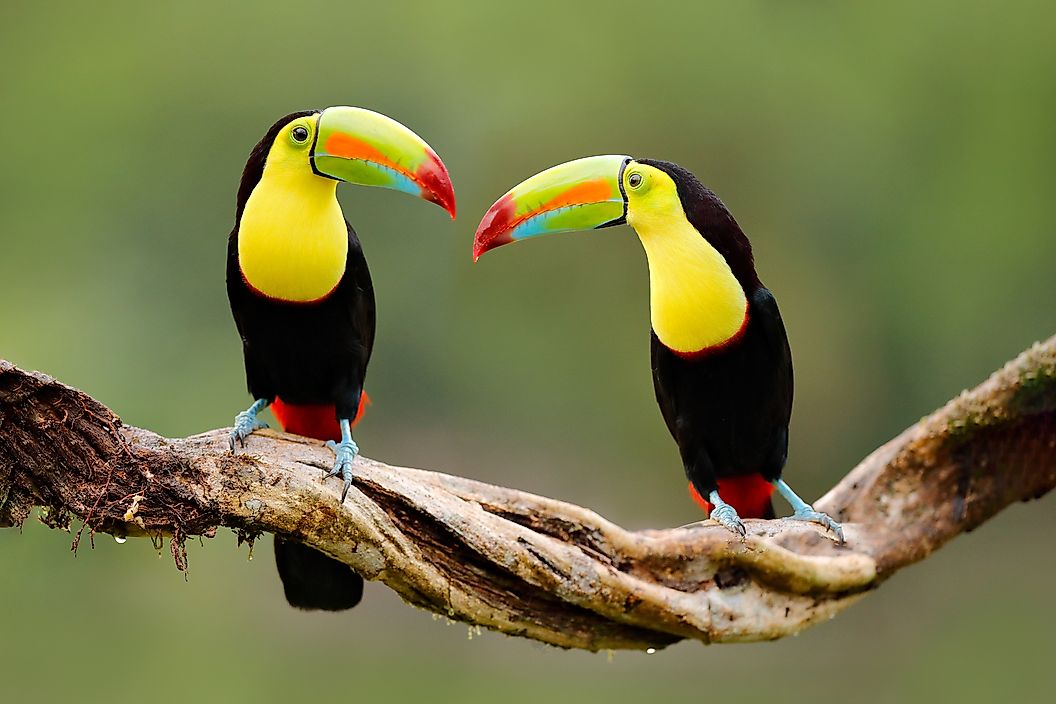
The keel-billed toucan (Ramphastos sulfuratus) inhabits tropical and subtropical forests of Central America, ranging from southern Mexico through Belize, Guatemala, Honduras, Nicaragua, Costa Rica, and western Panama. It is most commonly found in lowland rainforests and forest edges, where it spends much of its time in the canopy layer.
Keel-billed toucans roost and nest in natural tree cavities, often sharing these spaces with several other birds. These communal roosts can be quite crowded, causing the birds to tuck their large bills beneath their wings and fold their tails forward to fit inside the hollow. This compact position helps save space and retain heat during the night.
Despite its bill, which can reach up to one-third of the bird’s total body length, the toucan remains lightweight because of the bill’s honeycomb-like internal structure. The species feeds primarily on fruit, supplemented by insects, eggs, and small vertebrates, and plays a key role as a seed disperser, helping maintain plant diversity in rainforest ecosystems.
Spider Monkey
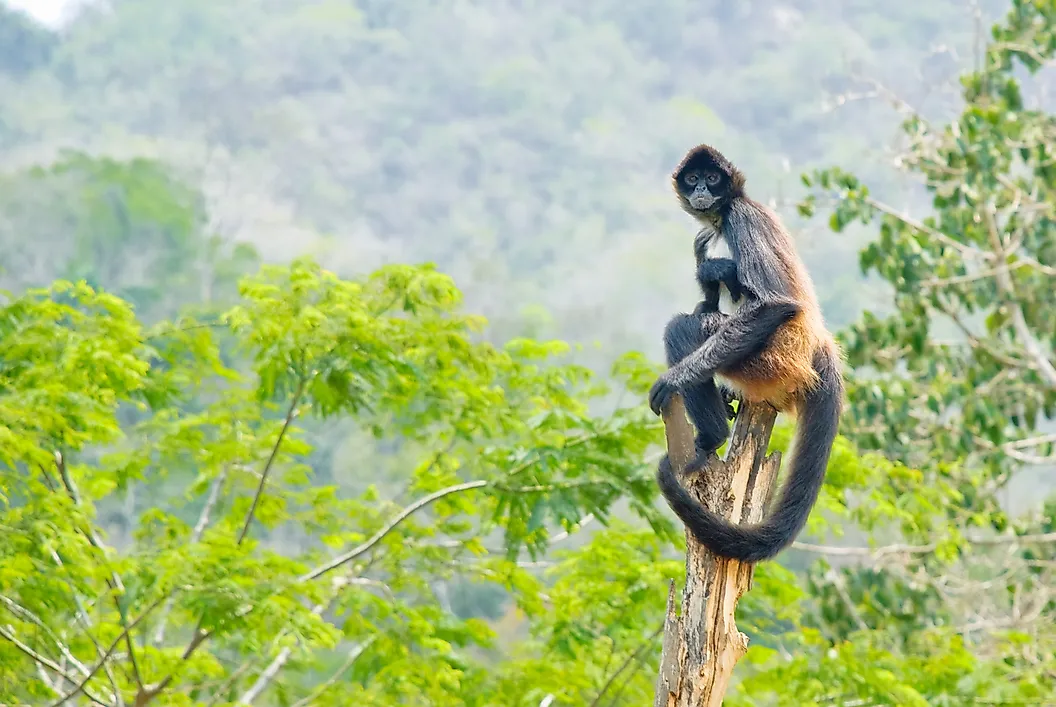
Spider monkeys (Ateles spp.) inhabit tropical rainforests of Central and South America, ranging from southern Mexico through Central America and across the Amazon Basin to Brazil and Bolivia. All seven recognized species are currently threatened to varying degrees, primarily due to habitat loss and hunting.
These arboreal primates are highly social and live in large, fluid communities that can include 30 to 40 individuals. Rather than moving as a single unit, spider monkeys use a fission-fusion social system, splitting into smaller subgroups during the day to forage and traveling long distances through the canopy in search of fruit. Their prehensile tails, which function as a fifth limb, allow them to brachiate efficiently between trees and access food in the upper forest layers.
Spider monkeys rely heavily on fruit-rich diets, making them important seed dispersers in tropical forests. Because they require large, continuous tracts of mature forest to survive, their presence is often considered an indicator of ecosystem health. Ongoing deforestation has fragmented their habitat, placing increasing pressure on populations throughout their range.
Three-toed Sloth
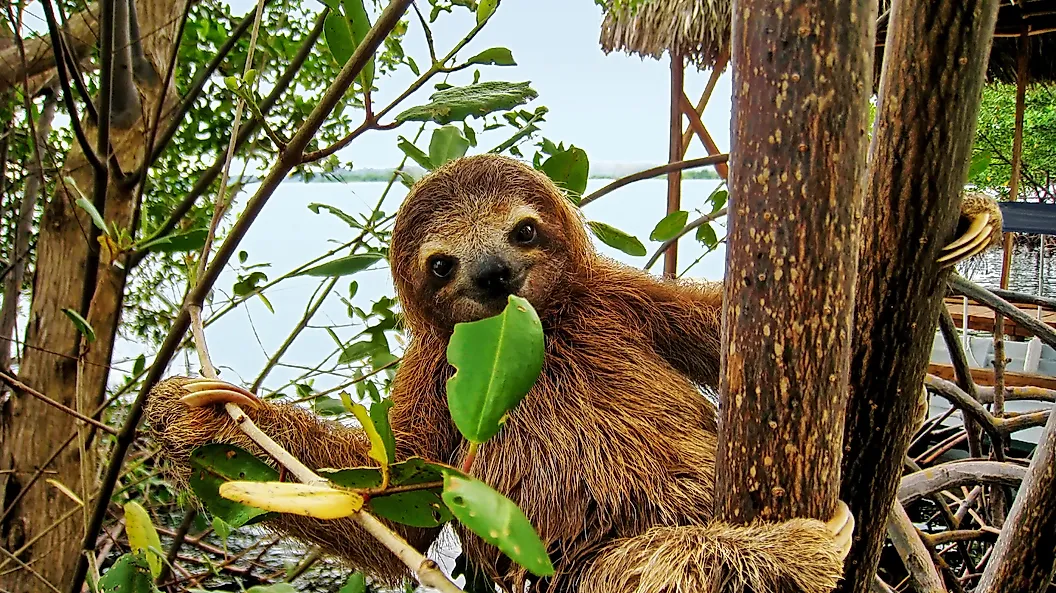
Three-toed sloths (Bradypus spp.) are slow-moving, arboreal mammals native to the tropical rainforests of Central and South America, ranging from Honduras south through the Amazon Basin to Brazil and Bolivia. There are four living species, all adapted to life in the forest canopy, where they spend most of their lives suspended upside down from branches.
Their famously slow movement is not merely a defining trait but a key energy-conserving adaptation. With a low-calorie, leaf-based diet and one of the slowest metabolic rates among mammals, three-toed sloths move deliberately to conserve energy. Adults are roughly the size of a small dog, weighing 3 to 6 kilograms (6.5-13 pounds), and are equipped with three long, curved claws on each limb, providing a strong grip for hanging and climbing.
Three-toed sloths feed primarily on leaves, buds, and tender shoots, digesting food slowly with the help of a multi-chambered stomach. Their sedentary lifestyle supports a unique micro-ecosystem, with algae growing in their fur that provides camouflage and supports insects such as moths, further illustrating how sloths are tightly integrated into the rainforest canopy environment.
Great Hornbill
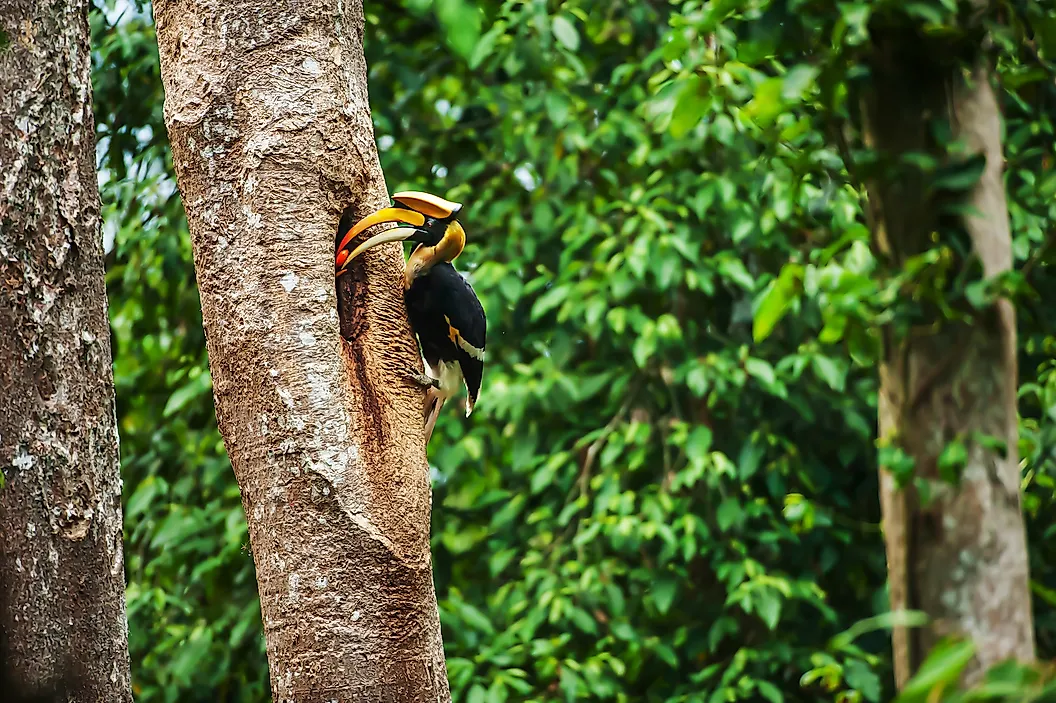
The great hornbill (Buceros bicornis) is one of the largest hornbill species and a distinctive forest bird of the Indian subcontinent and Southeast Asia, occurring in India, Bhutan, Nepal, Myanmar, Thailand, Laos, Cambodia, Vietnam, Malaysia, and parts of Indonesia. It inhabits mature tropical and subtropical forests, particularly areas with large, old trees needed for nesting. The species is classified as Vulnerable due to habitat loss and hunting pressure.
Great hornbills are primarily frugivorous, feeding on a wide variety of forest fruits, especially figs, but they also consume small mammals, birds, reptiles, and insects on occasion. As large-bodied fruit eaters capable of dispersing big seeds over long distances, they play a crucial role in forest regeneration. Adults can reach up to 1.2 meters (4 feet) in length with a wingspan exceeding 1.5 meters (5 feet), and their prominent casque is used in display and vocalization.
The species is notable for its unique nesting behavior. Females seal themselves inside tree cavities using mud, fruit pulp, and droppings, leaving only a narrow slit through which the male delivers food until the chicks are nearly grown. Great hornbills can live 40 to 50 years in captivity and hold deep cultural significance among several Indigenous communities, where they appear in rituals, folklore, and traditional art, symbolizing strength, fidelity, and prosperity.
Kinkajou

The kinkajou (Potos flavus) is a nocturnal mammal inhabiting the tropical rainforests of Central and South America, ranging from southern Mexico through the Amazon Basin to Brazil and Bolivia. Although often mistaken for a monkey or a ferret, the kinkajou is neither. It belongs to the raccoon family (Procyonidae), making it more closely related to raccoons, coatis, and olingos.
Kinkajous are arboreal and highly adapted to life in the forest canopy. They have large, forward-facing eyes for night vision and a prehensile tail capable of supporting their full body weight, enabling them to move easily between branches. Their diet is primarily frugivorous, consisting largely of figs and other soft fruits, though they also eat nectar, insects, and small vertebrates. As fruit specialists, kinkajous play an important role in seed dispersal within rainforest ecosystems.
Kinkajous are fairly widespread but are increasingly threatened by habitat loss, illegal trade for pets, and hunting for fur and food in certain areas. Although they are not officially endangered, these threats have caused local declines in populations, especially near human settlements and fragmented forests.
Crowned Eagle

The crowned eagle (Stephanoaetus coronatus) is one of Africa’s largest and most powerful birds of prey, inhabiting tropical and subtropical forests throughout sub-Saharan Africa. It is most often found in the emergent and upper canopy layers, where tall trees provide nesting sites and elevated hunting perches. With a wingspan that can exceed 1.8 meters (6 feet) and heavily muscled legs equipped with long talons, the species is highly adapted to capturing large prey in dense forests.
Crowned eagles mainly feed on medium-sized mammals like small antelopes, monkeys, hyraxes, and tree-dwelling species, but they also hunt birds and reptiles when possible. They usually hunt by launching a powerful surprise attack from cover, often killing prey immediately upon impact. In certain areas, mammals constitute over 80 percent of their diet, which is a notably high share compared to other forest raptors.
The species is currently listed as Near Threatened by the International Union for Conservation of Nature. Its population decline is driven by deforestation, habitat fragmentation, and human disturbance, all of which diminish nesting sites and prey resources. As crowned eagles depend on extensive, continuous areas of mature forest for breeding, they serve as a vital indicator of forest ecosystem health.
King Colobus

The king colobus (Colobus polykomos) is a black-and-white colobus monkey native to the Upper Guinean rainforests of West Africa, with populations in Senegal, Guinea-Bissau, Guinea, Sierra Leone, Liberia, and Côte d’Ivoire. It inhabits mature lowland and coastal rainforests, spending most of its time in the upper canopy and emergent layers and rarely descending to the ground.
Unlike many primates, the king colobus is highly arboreal and mainly folivorous, feeding on young leaves, seeds, flowers, and unripe fruit. Its specialized, multi-chambered stomach helps it digest tough plant material effectively. Its long limbs and reduced thumbs are adaptations for jumping and climbing in the treetops rather than for foraging on the ground.
King colobus monkeys live in small social groups, typically comprising one to two adult males, three to six females, and their offspring. Group members coordinate movement and feeding across overlapping home ranges, relying on vocalizations to maintain contact in dense forest cover. Due to deforestation and hunting, the species is classified as Endangered, with remaining populations increasingly fragmented across its limited range.
Large Flying Fox

The large flying fox (Pteropus vampyrus), also known as the giant fruit bat, is among the largest bat species in the world, with a wingspan that can exceed 1.5 meters (5 feet). It inhabits tropical rainforests, mangroves, and coastal forests of Southeast Asia, including Malaysia, Indonesia, Thailand, Vietnam, and the Philippines, where it spends much of its time in the canopy layer.
Unlike many smaller bats, large flying foxes do not use echolocation. Instead, they rely on keen eyesight and a strong sense of smell to locate food. Their diet is primarily frugivorous, consisting of fruit such as figs and mangoes, supplemented by nectar and flowers. By carrying fruit over long distances and dispersing seeds in their droppings, they play a critical role in forest regeneration and plant diversity.
During the day, large flying foxes roost in large communal colonies, often numbering in the hundreds or thousands, hanging from tall trees near feeding areas. Although still widespread, the species is classified as Near Threatened, with populations declining due to deforestation, disturbance at roost sites, and hunting for food and traditional medicine. As one of the most important long-distance seed dispersers in Southeast Asian forests, its loss would have wide-ranging ecological consequences.