Who Were The Roman Empire’s Secret Police?
The Roman Empire had many similarities with modern-day authoritarian states. One such commonality was the way it handled crime. Depending on the offense, perpetrators could face draconian punishments. The methods used to uncover those crimes also resembled those of authoritarian states over the last century. While not exactly the same thing, several groups of intelligence agents, military personnel, and spies essentially functioned as secret police forces. Together, they helped keep the emperor informed of the goings-on within the empire, made arrests, and used intimidation to maintain governmental authority.
The Frumentarii

The frumentarii most closely resembled a modern-day secret police force. However, they initially had no intelligence or law-enforcement role and instead functioned as grain-supply collectors (the word frumentarius comes from frumentum, meaning grain). The army was the main recipient of these supplies. Military leaders and emperors soon realized that the frumentarii could serve another role: carrying information between armies. By the late 1st to early 2nd century CE, their responsibilities had evolved further, and they were functioning as intelligence officers.

The frumentarii had several different roles. A regular soldier or general had little reason to travel from one end of the empire to the other. As "grain suppliers", the frumentarii did. Since they were officially military personnel, their orders and information carried considerable weight. The frumentarii also had the authority to make arrests and to transport prisoners. Finally, they often participated in intelligence-gathering operations. If the emperor or a governor suspected that a particular group was plotting a rebellion, he would dispatch the frumentarii to learn more about it.
Everyday Romans feared and eventually grew to loathe the frumentarii. Since they had several different roles, the arrival of one in a provincial town gave no indication of whether he had come to collect information, deliver a prisoner, or make an arrest. They were also prone to bribes and corruption, further contributing to their poor reputation. This unpopularity, paired with the Empire's changing needs, led to the frumentarii being abolished under Diocletian, whose administrative reforms dissolved the corps around the turn of the 4th century CE.
The Agentes In Rebus

Even though the frumentarii were gone, Rome still required intelligence officers. This led to the creation of the agentes in rebus (roughly translated to "those engaged in affairs"). A corps of imperial officers, they served roughly the same role as the frumentarii, albeit with some differences and without the reputational baggage, at least initially. The most important change was their centralization. The frumentarii had become more centrally organized only gradually. The agentes in rebus were placed under the magister officiorum, one of the most senior administrative officials in the Roman Empire, and by the middle of the 4th century CE, they formed a single corps under his authority.
Eventually, the same corruption and abuses of power that characterized the frumentarii emerged in the agentes in rebus. Senior agents supervised the imperial post as curiosi, or "inquisitive ones", a title that came to reflect their reputation for inserting themselves in private affairs and disrupting people's lives. Therefore, when the Western Roman Empire fell in 476 CE, most didn't lament its end. However, the agentes in rebus continued to operate in the Eastern Roman Empire for more than two centuries after that. The last recorded agent was sent on an embassy in 678 CE, and the corps was abolished in the early 8th century CE, when its duties passed to the logothetes tou dromou.
The Speculatores

The speculatores served a slightly different function from that of the frumentarii and agentes in rebus. Officially part of the legion system, where Augustus had assigned ten of them to each legion, they were reconnaissance and intelligence troops. Their roles included gathering information behind enemy lines, interrogating prisoners, and even carrying out executions. Perhaps most interestingly, they could also serve the emperor directly. If he needed information about a foreign enemy, he'd often call on the services of a speculatore. Since they didn't concern themselves as much with domestic affairs, speculatores were less like modern secret police than the two previously discussed groups. Nevertheless, their secretive nature, paired with their taking commands from the highest echelons of the Roman government, means that they still shared some similarities.
The Praetorian Guard

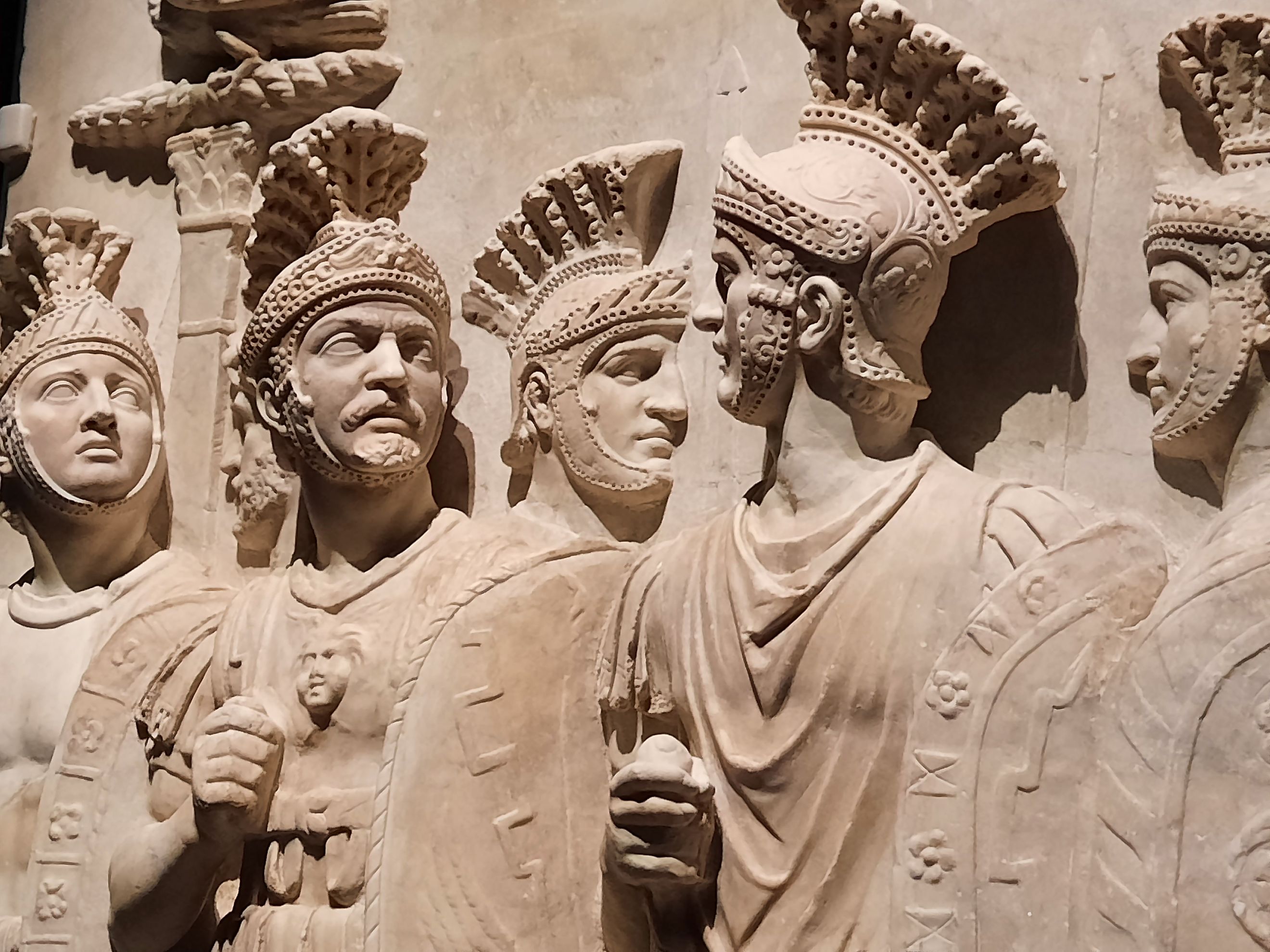
The Praetorian Guard was an elite military unit whose official job was to protect the emperor. However, it gained far more power over the course of its existence. Praetorians were paid better than other soldiers, and their proximity to the emperor meant that they controlled access to him. This was useful, since they could protect the emperor from plots and assassination attempts. It also gave them immense political power, since the Praetorians knew that the emperor needed them. This created a situation where emperors were forced to enact policies favorable to the Guard, or risk being assassinated. Caligula found this out the hard way when he was assassinated by the Praetorians in 41 CE after alienating them (and nearly every other elite member of Roman society).
Perhaps the most famous example of Praetorian overreach came in 193 CE. After killing Emperor Pertinax when he attempted to enact reforms, the Guard auctioned off the emperorship to the highest bidder. Didius Julianus offered the highest financial reward, and he was thus made emperor. This did not last, and Julianus was deposed after 66 days. Septimius Severus, who deposed Julianus, disbanded the Guard shortly afterward and rebuilt it from his own legionaries. Nevertheless, this affair demonstrated their sheer power. It was also somewhat contradictory, indicative of their ability to function as some sort of political police force. By demonstrating their capacity to control the emperor, the Praetorians discouraged dissent and rebellion, since people feared what they could do to them.
Impact and Legacy

Several different groups functioned as secret police in the Roman Empire. The two that most closely aligned with such a force were the frumentarii and the agentes in rebus. As intelligence officers with the authority to arrest people, the main things separating them from modern-day secret police were their limited centralization and the amount of information they could collect. 20th-century security services simply had more data available to them due to the technology at their disposal. Speculatores served similar roles but focused more on foreign threats. Finally, the Praetorian Guard should be considered in discussions of the Roman Empire's secret police for its role in discouraging rebellion and dissent.