Was The Trojan Horse Real?
Soldiers hiding inside a giant wooden horse is one of history's most famous tricks. It sits at the heart of the Trojan War legend. Excavators at Troy have turned up layers of burning and battle. The city itself stood on the Anatolian coast during the Late Bronze Age. The horse survives only in poems written centuries afterward. Its story still reveals what the Greeks and Romans prized most.
The Story Of The Trojan Horse

The Trojan Horse story comes from the legendary end of the Trojan War, which ancient Greek tradition placed around the late 12th century BCE. Contrary to popular belief, the Iliad, the Homeric poem that most fully depicts the war, actually ends before the Trojan Horse. The related epic, the Odyssey, refers to the wooden horse in several passages but does not narrate the entire episode. The fullest surviving continuous account appears in Book 2 of the Aeneid, written by the Roman poet Virgil in the late first century BCE. Earlier Greek epics also described Troy's fall, but they survive only in fragments and later summaries.
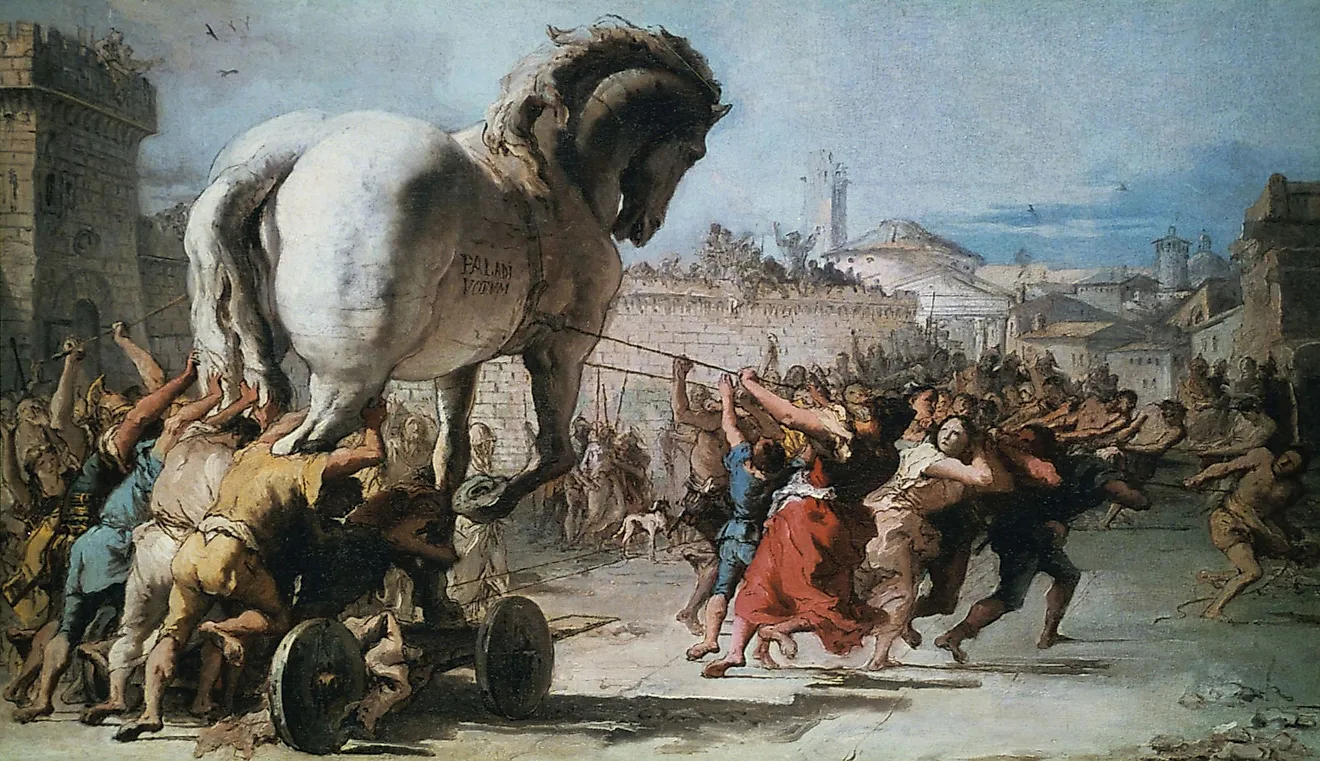
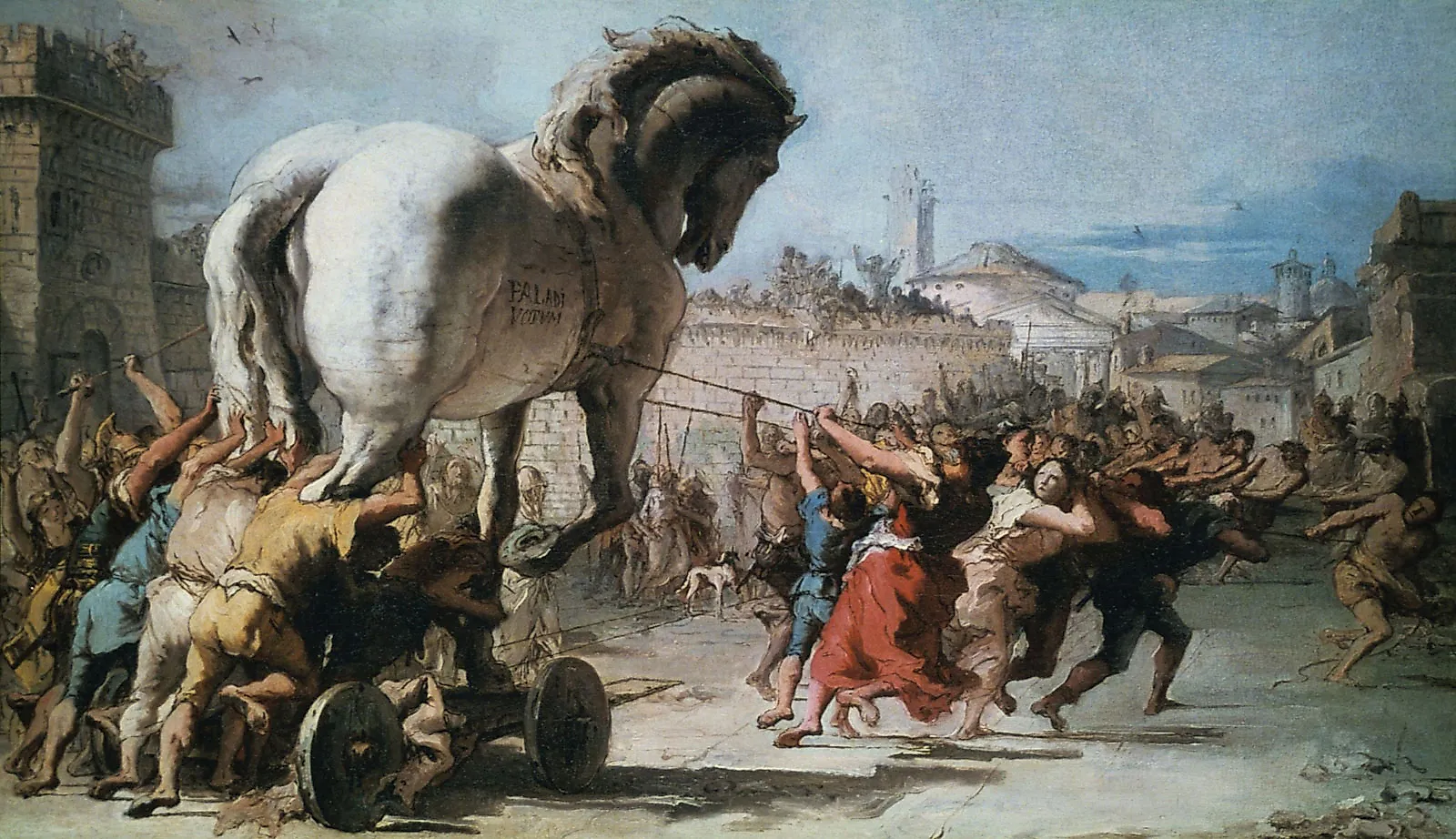
After ten years of fighting in the Trojan War, neither the Greeks nor the city of Troy could achieve victory. So Odysseus, king of Ithaca, devised a cunning trick. He ordered the creation of an enormous wooden horse, in which the elite Greek soldiers hid. After pretending to abandon the siege, the Greeks left the horse outside Troy. According to Virgil's version, a Greek named Sinon convinced the Trojans it was a sacred offering which would protect their city. Trojan warnings were ignored, and the structure was pulled inside. At night, the soldiers emerged from the horse and opened the city gates from the inside, thereby letting in the rest of the Greek army. This act of deception led to the fall of Troy and the end of the Trojan War.
Was The City Of Troy Real?

Before saying if the Trojan Horse really existed, it's necessary to establish some basic facts. By the 19th century, scholars disagreed over whether Homer's Troy had been a real city and, if so, where it stood. The British expatriate Frank Calvert argued that the mound of Hisarlık in the Ottoman Empire was the likely location. German businessman Heinrich Schliemann began large-scale excavations there in the 1870s, bringing worldwide attention to the site, although his destructive methods damaged important archaeological layers.
Later excavations revealed a long sequence of settlements built at the site. Scholars have most often compared Homer's city with Troy VI, which was largely destroyed around 1300 BCE, and Troy VIIa, which ended violently in the late 13th or early 12th century BCE. Neither layer can be conclusively identified as the city destroyed in Homer's war.
Was The Trojan War Real?

Now that we've established that the city of Troy was real, it's also worth asking if the Trojan War actually occurred. The safest answer is that some historical conflict probably lies behind the legend, but archaeology cannot prove that one great Trojan War occurred exactly as later Greek poets described it. In the Iliad, the Trojan War begins when the Trojan prince Paris abducts (or elopes with) Helen, wife of the Spartan king Menelaus. In reality, the cause of the conflict was likely more political and economic. Located on the Dardanelles Strait, Troy was an essential trade route between the Black Sea and the Mediterranean. Whoever controlled it therefore became an economic and political powerhouse.
The Greeks in Homer's stories bear a striking resemblance to the Mycenaeans, who dominated mainland Greece from roughly 1600 to 1200 BCE. They possessed advanced bronze weapons and large fortified palaces. The Mycenaeans could also read, write, and boasted advanced long-distance trading networks. All these details are consistent with those described in the Iliad and the Odyssey.
Perhaps the most convincing piece of evidence comes from the archives of the Hittite Empire. An Anatolian-based civilization that existed between the 17th and 12th centuries BCE, its records mention a kingdom called Wilusa, which is linguistically very close to Ilios (another Greek name for Troy). Hittite records also note domestic disputes, local rebellions, and military tensions involving Wilusa. While little resembles the exact details of the Homeric poems, this suggests that some sort of military conflict took place at Troy.
Was The Trojan Horse Real?

The most accurate answer is that there is no reliable evidence that a giant wooden horse was used to capture Troy. The episode appears in poetry composed centuries after the period in which the war supposedly occurred, and archaeology has uncovered nothing that verifies it. Most historians therefore treat the horse as legend, symbolism, or a heavily transformed memory rather than a documented weapon of war.
Some think that the word "horse" referred to a siege engine. Ancient armies often gave names to their equipment, and it could have evolved into a "real" horse over centuries of oral storytelling. Others posit that it was an earthquake. Poseidon, the sea god and the god of earthquakes, was also closely associated with horses. Oral storytellers could have personified the earthquakes by making it a horse. Finally, many historians believe that the horse was a symbol for deception. Rather than winning the war through pure brute strength, the Greeks used surprise, cunning, and intelligence. The horse thus served as a dramatization of all these elements.
Even though we now know that the Trojan Horse was legendary rather than literal, this doesn't mean that it has no historical importance. Perhaps most importantly, it tells us something about the values of the ancient Mediterranean world. The Homeric epics reached something close to their surviving form around the eighth or early seventh century BCE, centuries after the Late Bronze Age setting of the war. They therefore reveal as much about the storytelling traditions and values of early Archaic Greece as they do about the Mycenaean world. Virgil also wrote the Aeneid in the 20s BCE, a tumultuous time in Roman history when it was transitioning from a republic to an empire. Both these societies were violent, but they also understood the importance of mental acuity. The Trojan Horse functions as the perfect encapsulation of both these values.
Impact And Legacy
Troy was real, and Late Bronze Age conflicts occurred around it, but historians cannot confirm that Homer's Trojan War, or the wooden horse, happened as described. The Trojan Horse itself was possibly the physical embodiment of intelligence or cunning. It also could have represented an earthquake, or have been the name the Greeks gave to a siege engine. Regardless, the values conveyed through the story provide insights into Greece during its Dark Ages and Rome during its most significant political transformation in history.