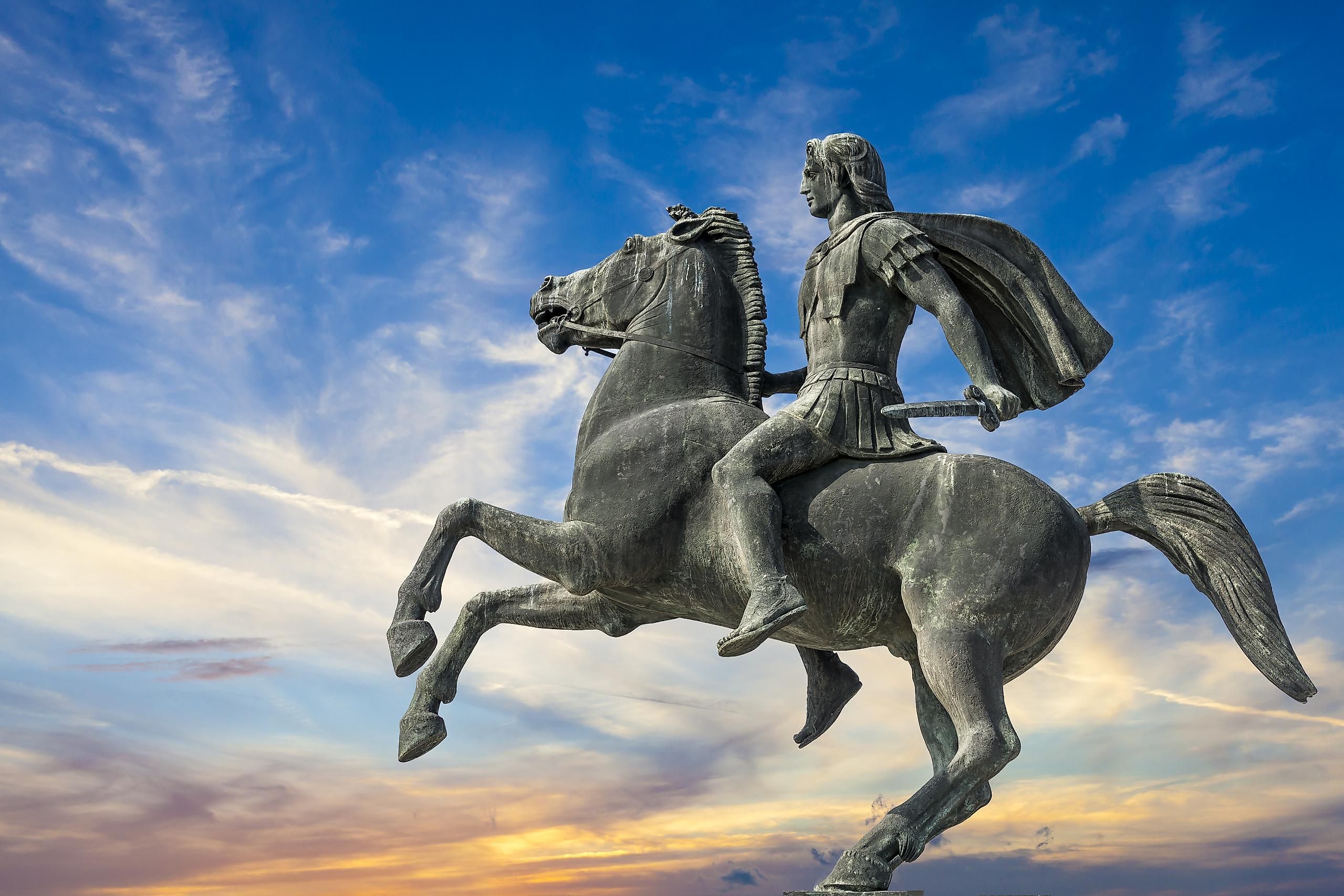
Was Alexander The Great Inspired By Homer?
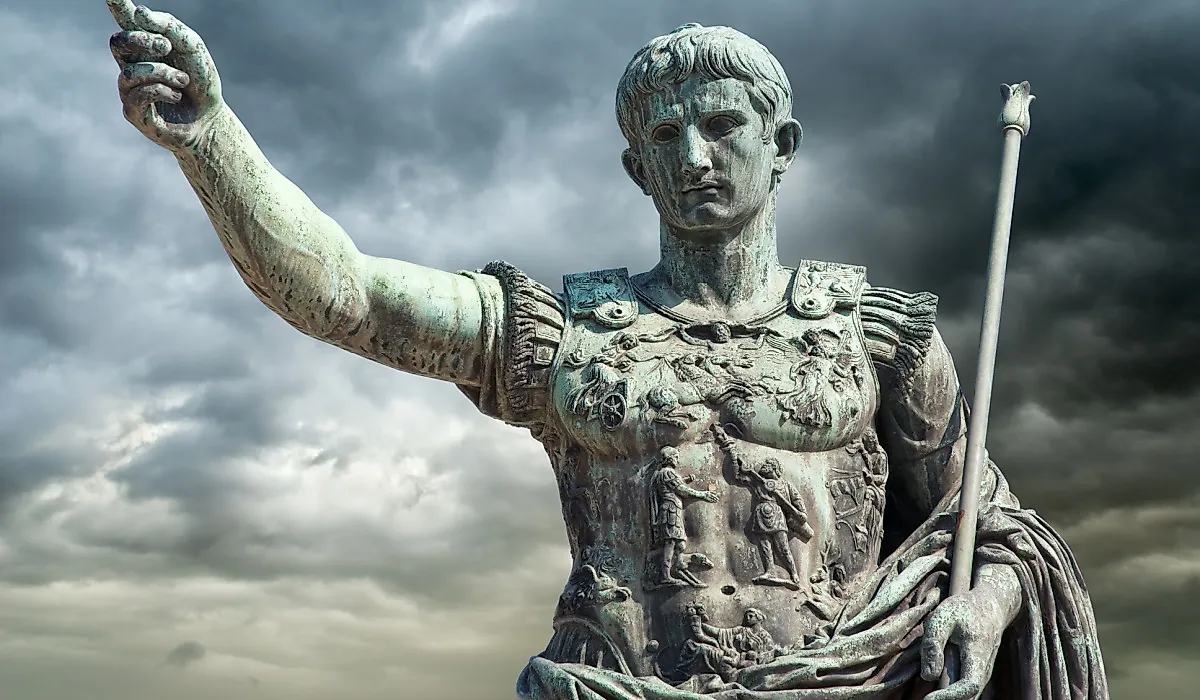
Alexander the Great is one of the most iconic people in world history. Apart from his military accomplishments, one of the reasons why he's still remembered is due to his reputation as an enlightened leader. While the veracity of this reputation is questionable, Alexander was highly educated. A cornerstone of this education involved learning about ancient authors. Indeed, Homer's work, particularly the Iliad, shaped how Alexander understood war, kingship, and his own place in history.
Alexander's Early Life

Alexander the Great was born in 356 BCE in Macedon. The son of King Philip II, he grew up with every advantage available to a Macedonian prince, one of which was a high-quality education. As a teenager, he was tutored by Aristotle. The famed philosopher taught Alexander about subjects like math, science, and history. However, the most influential topic was literature. According to Plutarch, a Greek historian writing roughly four centuries later, Aristotle prepared a special annotated copy of Homer's Iliad for Alexander. It quickly became the young prince's favorite piece of literature, and he reportedly carried it with him on campaign, later keeping it in a jeweled casket taken among the Persian spoils.
Alexander And Achilles

More than anything else in the Iliad, Alexander was inspired by Achilles. The son of King Peleus and the sea nymph Thetis, Achilles was supposedly dipped in the River Styx as an infant. This made him invincible in every place except the heel where his mother had held him. He initially joined King Agamemnon in the Trojan War but then refused to fight after Agamemnon took his war prize, Briseis. His friend Patroclus was later killed by the Trojan prince Hector. Overcome by grief and anger, Achilles set aside his personal grievances and slaughtered numerous Trojans. His most famous act came when he killed Hector. Ultimately, Achilles was killed by Hector's brother Paris, who shot him in the heel, the one unprotected part of his body.
Achilles embodied many qualities that Alexander admired. Courage in battle, military excellence, personal honor, and kleos (the idea that great deeds let a name live well beyond the life that earned it) were just some such traits. More than anything, Alexander took the central message of Achilles' life to heart: live a long and ordinary life or die young and achieve everlasting glory. As king of Macedon, he built an empire that reached the Balkans in the west and India in the east. Despite only living to the age of 32, he's remembered to this day.
Alexander Visits Troy

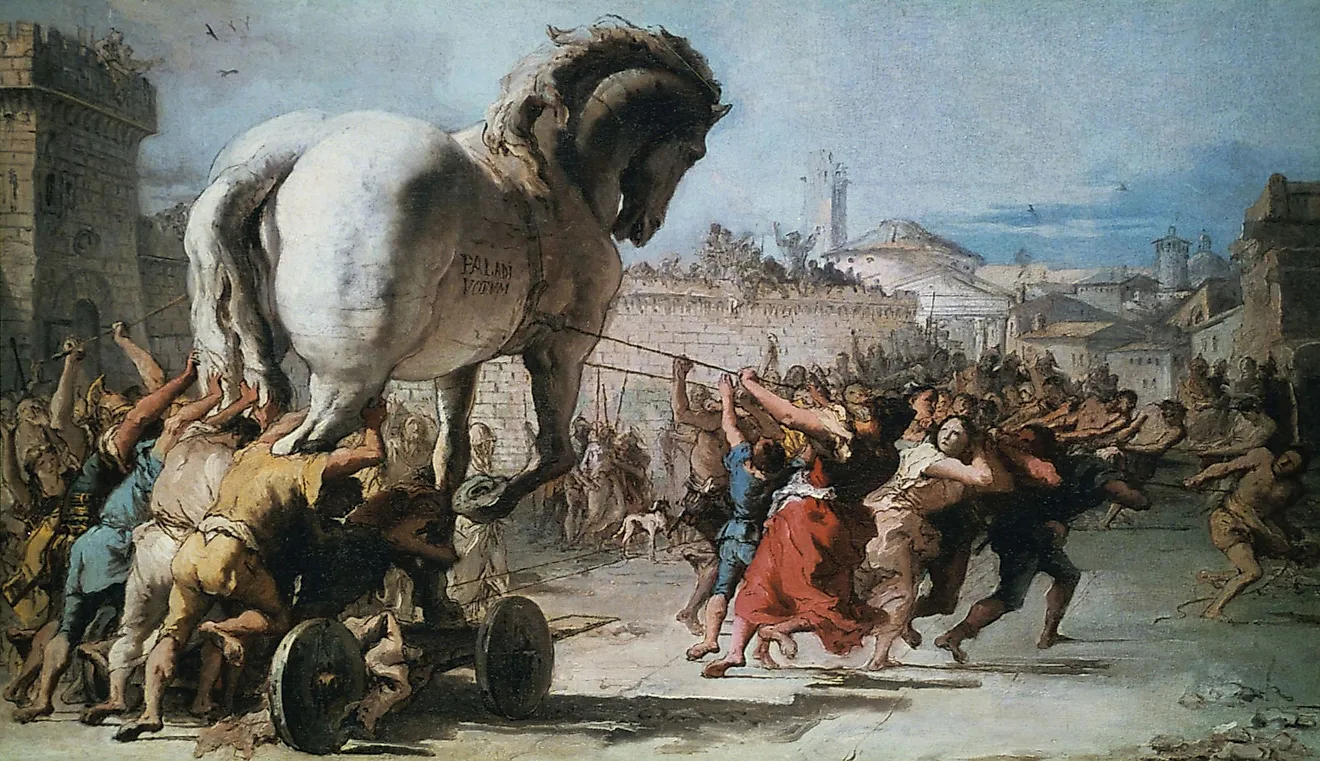
The importance of the Iliad to Alexander could be seen on the eve of his invasion of Persia in 334 BCE. Before beginning major military operations, he crossed into Asia Minor (modern-day Anatolia) and visited the city of Troy, the site of the Trojan War, to pay respect to Achilles. Upon reaching it, he discovered a very different city from the one described by Homer. As opposed to the site of a formidable civilization, it was nothing more than a tourist town coasting on past glory. While imposing walls from the Bronze Age still existed, little else indicated that Troy was once legendary and mythic.
Alexander still found importance in Troy. He visited the supposed tomb of Achilles and had a close companion (and possible lover), Hephaestion, visit Patroclus' tomb as well. Alexander also took a set of sacred arms from the Temple of Athena, said to date to the Trojan War, leaving his own in their place. Plutarch adds that he anointed the gravestone of Achilles with oil, ran a race beside it naked with his companions as custom required, and crowned the tomb with garlands. Historians debate whether every detail of Alexander's excursion to Troy is accurate. Nevertheless, these measures closely linked Alexander to some of the most celebrated heroes in Greek history, which was very much his intention.
Homer's Influence On Alexander's Leadership
![Illustration on page 265 of 'The Iliad of Homer. Translated by Mr Pope. [With notes partly by W. Broome.] (An Essay on the life, writings and learning of Homer. [By T. Parnell].) F.P', CC0, via Wikimedia Commons](https://www.worldatlas.com/r/w960-q80/upload/4d/b9/7d/the-death-of-patroklos-from-pope-iliad-of-homer-book-16-white-balanced-colorized-s3cdn.png)
The Iliad did more than shape Alexander's personal ambitions. It also influenced his approach to leadership. He believed that a king should lead his army from the front, rather than command the battle from safety. Alexander, therefore, frequently participated in cavalry charges. Perhaps the most famous example was the Battle of the Granicus in 334 BCE. The first major engagement of the Persian campaign is remembered for Alexander leading an aggressive river crossing while under enemy attack. Even though this strategy was risky, it led to a decisive victory and established Alexander and the Macedonians as a force to be reckoned with.
Homer's Influence On Alexander's Understanding Of Culture

Homer's work influenced Alexander beyond military campaigns as well. The heroes of the Iliad and the Odyssey traveled far and wide. In doing so, they encountered a wide array of people and cultures. Alexander learned from them and didn't try to impose his own culture on the people he ruled. Rather, he took a genuine interest in the cultures of the places he conquered. For instance, Alexander adopted elements of Persian fashion, incorporated Persian court rituals, and even took Persian wives. These measures ingratiated him with the local populace, who in turn adopted aspects of Greek culture like its language and literature. Greek culture then persisted in these regions centuries after Alexander died. Perhaps more than anything else, Homer's influence on Alexander's understanding of culture helped the Macedonian king transcend the legacy of the mythic heroes to which he aspired.
Impact And Legacy

Homer's work, and the Iliad in particular, impacted nearly every aspect of Alexander the Great's life and rule. As a teenager, he was enraptured by the story of the Trojan War. Before invading Persia, Alexander went out of his way to visit Troy and draw parallels between himself and Achilles. Achilles' influence could again be seen on the battlefield, as Alexander led the assaults himself. Doing so helped him achieve decisive victories and personal glory. Finally, Homer's work shaped Alexander's understanding of culture, allowing him to spread Greek culture across the world and go some way toward earning the reputation as an enlightened leader that still attaches to his name.