Discovering the St. Paul’s Cathedral Memorial to 28,000 American War Dead
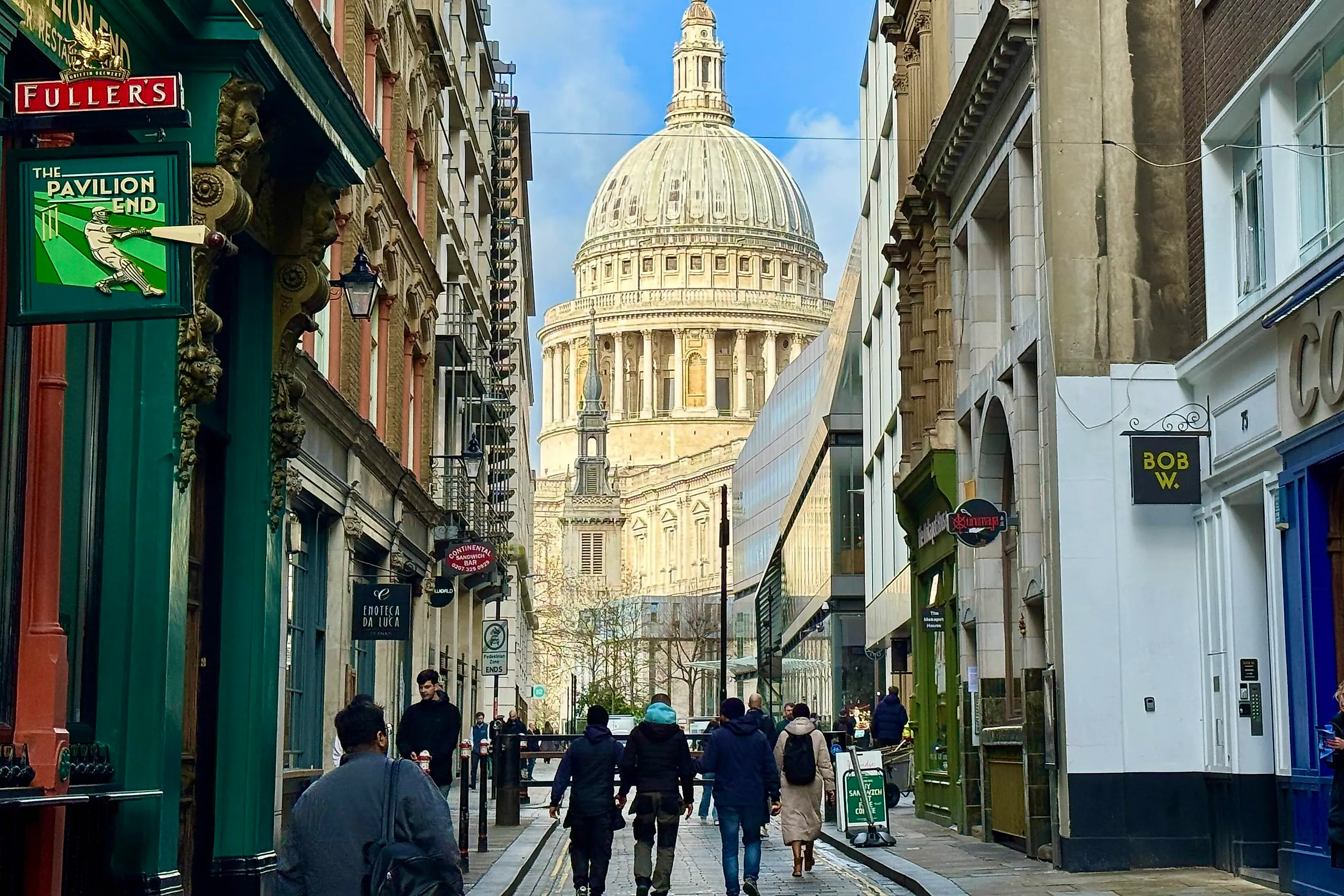
St. Paul's Cathedral is one of Britain's most visited buildings, pulling in crowds of tourists for its vast dome and its crypt, the final resting place of many of the nation's most revered heroes. Far fewer visitors, though, realize that behind the cathedral's high altar, there's an often-overlooked chapel that will forever be tied to the United States.
The American Memorial Chapel, dedicated to the 28,000 Americans who died while based in or traveling to Britain during the Second World War, is among London's most moving sights. And it's one that most visitors walk straight past, not knowing that it's there. So, on a recent visit to St. Paul's, I took a look at what we've all been missing out on.
The American Memorial Chapel

I first heard about the American Memorial Chapel while researching St. Paul's for an altogether different article. As I dug a little deeper into Christopher Wren's masterpiece, I learned that there were several memorials here dedicated to Britain's World War 2 allies. But none, I learned, were as large as this one.
Finding the American Chapel isn't difficult. Upon entering the cathedral, head for the apse, the rounded space at the far east end of the cathedral, directly behind the High Altar. Interestingly, the space it occupies was itself a victim of Europe's deadliest conflict. On October 10, 1940, a German bomb struck this part of the building during the Blitz, destroying the Victorian high altar that had stood here.
Rather than simply rebuild it, the cathedral's governing body chose to turn the damaged east end into a memorial to the Americans who had served and died so far from home. To that end, the chapel honors 28,000 American servicemen and women who lost their lives while stationed in or traveling to Britain between 1939 and 1945. Many died in the air war over Europe, in training accidents, or in the D-Day landings.
A Sobering Reminder

Amazingly, the entire project was paid for by donations from the British public. In fact, when General Eisenhower offered American funding, it was declined, as the chapel was meant to be a gift from Britain to its wartime ally.
And it certainly impresses. In fact, the design follows Wren's original style so closely that at first glance it looks like it's always been a part of the 17th-century cathedral that surrounds it. But look closely, and the references to the United States start to reveal themselves.

The three stained-glass windows carry the seals of the 48 states and four territories that made up the country in 1958. And the limewood carvings framing the chapel feature American birds, plants, and flowers. One panel even contains a small rocket and stars, a nod to the space race that was underway when the chapel was finished.
Set into the black-and-white marble floor is a five-pointed invasion star. This was the symbol painted on Allied vehicles for the Normandy landings, instantly recognizable and designed to easily distinguish them from the enemy. The words, "To the American dead of the Second World War from the people of Britain," also emphasize the unique and lasting bond between the two countries.
The Roll of Honor

The chapel's centerpiece is the Roll of Honor. This large, 473-page book of remembrance records the name, rank, and service details of all 28,000 Americans based in (or bound for) Britain who died in the conflict. The book's so important, however, that it's kept in a glass case on a marble plinth behind the high altar, beneath a carved wooden canopy.
The original Roll of Honor opens with a message written by Eisenhower himself, who had commanded Allied forces on D-Day before becoming U.S. president. He describes each name as "a story of personal tragedy and a grieving family," and frames the men listed as part of the price paid to defend freedom and liberty.
Since the chapel's dedication, a single page of the book has been turned by hand every day, a practice that remains unbroken since 1958. Because the original is sealed in its case, the cathedral keeps a second copy that visitors can look through. I asked a very helpful cathedral employee to show me the two volumes of the copy, which she did willingly. Seeing page after page of names of those who died really is sobering.
A Memorial Few Americans Know

The chapel was dedicated in November 1958, the day before Thanksgiving. It was considered so important an event that none other than Queen Elizabeth II herself unveiled the memorial. The service was attended by Richard Nixon, then vice president of the United States, and broadcast to audiences across Britain. As an added tribute, a special Thanksgiving service has been held in the cathedral every year since.
Despite its history, the chapel is easy to miss. While it is signposted within the cathedral, it's easy to miss if you're focused on things like the famous Whispering Gallery set in that vast dome. American travelers often walk straight past it, unaware that Britain's most famous cathedral contains a memorial built especially to commemorate their fallen countrymen. Which is a shame.

Anyone with an interest in or a connection to the Second World War would do well to check out St. Paul's American Memorial Chapel. As it did for me, it'll remind you of the very special bond and the long alliance that exists between the United States and Britain. It also provides an opportunity to say "thank you" to an often-overlooked group who died to preserve our freedom.