The State Parks That Are Bigger Than National Parks
National parks may receive most of the attention, but several state parks protect landscapes that are even larger than some of America's best-known federal destinations. For travelers hoping to experience sweeping wilderness without the crowds, these oversized state parks offer an impressive alternative. National parks and state parks serve different purposes. National parks are managed by the National Park Service, while individual state agencies oversee state parks, each with its own rules, fees, and management priorities. These six state parks prove that some of the country's biggest adventures happen well outside the national park system.
Wood-Tikchik State Park, Alaska

Covering nearly 1.6 million acres, Wood-Tikchik State Park is widely recognized as the largest traditional state park in the US. (New York's Adirondack Park is much larger overall at roughly six million acres, but it functions as a mixed public-private preserve with more than 100 towns inside its boundaries rather than a conventional state park.) Wood-Tikchik alone is larger than national parks such as Grand Teton, Olympic, or Yosemite.
Located in southwest Alaska north of Dillingham, the park protects an immense chain of glacier-carved lakes connected by rivers that flow through mountains, wetlands, and boreal forest. Much of the landscape remains exactly as it has for thousands of years, with virtually no permanent roads crossing the park.
Fishing is one of the biggest attractions, especially for trophy rainbow trout and salmon. Visitors also come for canoe and rafting trips, wildlife photography, and wilderness camping. Brown bears, moose, wolves, caribou, and countless migratory birds all inhabit the region.
Reaching Wood-Tikchik requires commitment. Most visitors arrive by bush plane or boat, making the journey feel more like an expedition than a typical vacation. That isolation is precisely what appeals to travelers looking for a landscape where nature still dominates every horizon.
Anza-Borrego Desert State Park, California

California's largest state park protects almost 650,000 acres, making Anza-Borrego Desert State Park larger than Acadia, Sequoia, and several other celebrated national parks.
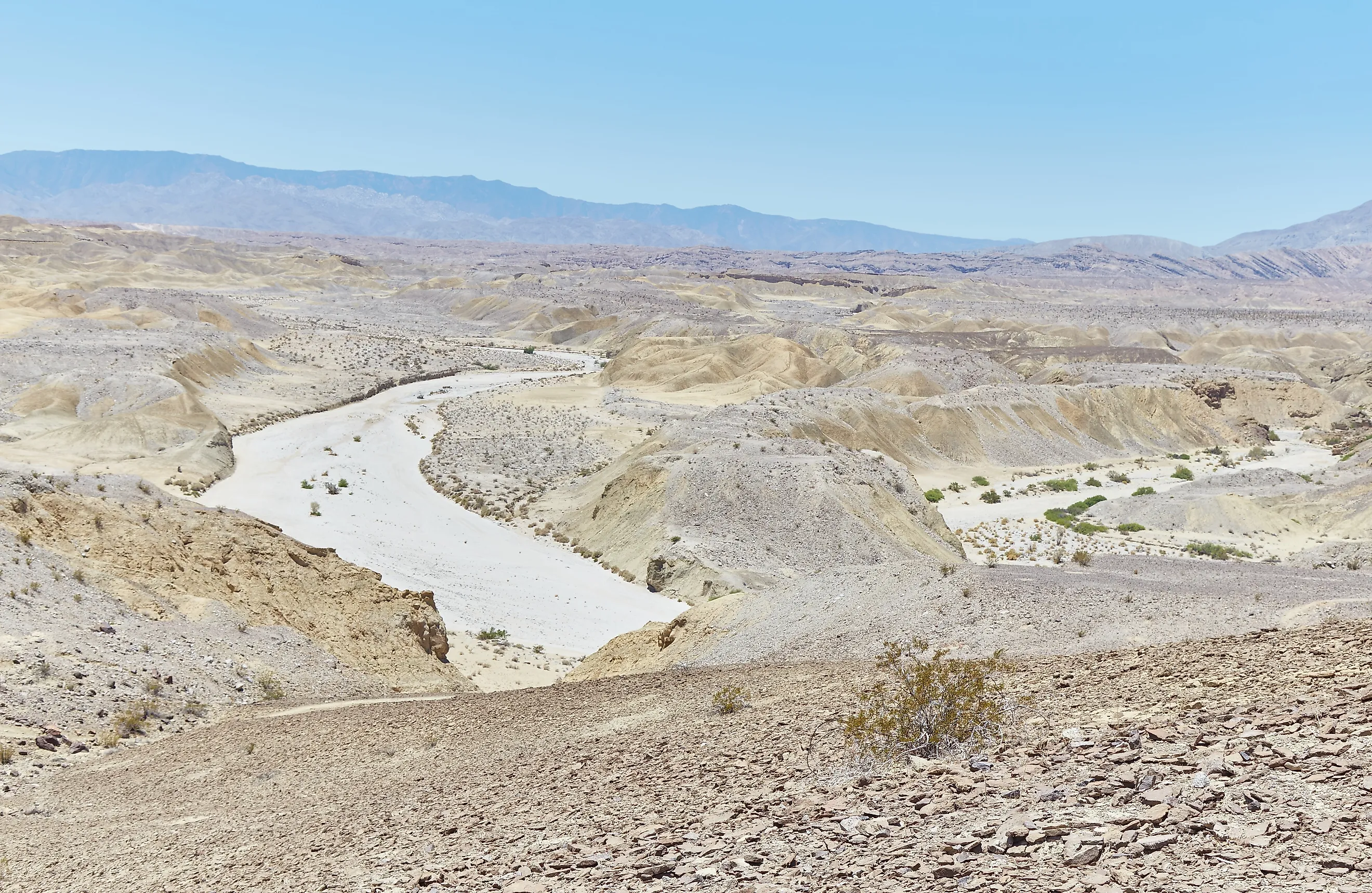
Rather than dense forests or alpine peaks, Anza-Borrego showcases an enormous expanse of desert wilderness. Mountains rise from broad valleys and slot canyons cut through sandstone. Badlands reveal colorful layers of ancient geology, and hidden palm oases create unexpected pockets of green across the landscape.
The park changes dramatically throughout the year. After winters with enough rainfall, vast wildflower blooms blanket portions of the desert in brilliant shades of yellow, purple, and orange. During dry years, visitors instead discover sculpted washes, rugged hiking routes, and expansive off-highway backcountry roads stretching for hundreds of miles.
Because nearby cities produce relatively little light pollution, the park has also earned recognition as one of the premier stargazing destinations in California. On clear nights, the Milky Way becomes strikingly visible overhead, creating an experience every bit as memorable as many national parks.
Big Bend Ranch State Park, Texas

At more than 300,000 acres, Big Bend Ranch State Park is the largest state park in Texas, bigger than national parks such as Guadalupe Mountains and Acadia. It also remains one of the least crowded protected landscapes in the state.
Located directly west of Big Bend National Park along the Rio Grande, the park protects volcanic mountains, desert grasslands, deep canyons, and miles of rugged river corridor. Together, the two parks preserve one of North America's most dramatic desert environments.
The Rio Grande forms the park's southern boundary, creating outstanding opportunities for canoeing and rafting through isolated canyons. Inland, hikers encounter abandoned ranches, volcanic formations, desert wildlife, and mountain vistas that stretch for dozens of miles.
Big Bend Ranch is intentionally less developed than many national parks. Primitive campsites, rough backcountry roads, and long distances between services encourage visitors to plan carefully and embrace a more adventurous style of travel. For experienced outdoor enthusiasts, that rugged character is part of its appeal.
Kachemak Bay State Park, Alaska

Kachemak Bay State Park encompasses more than 400,000 acres of glaciers, alpine peaks, fjords, and coastline along Alaska's Kenai Peninsula. Its immense size exceeds several famous national parks, yet many travelers outside Alaska have never heard of it.
Unlike many large wilderness parks, Kachemak Bay combines both marine and mountain ecosystems. Tidewater glaciers descend toward the ocean, waterfalls spill into sheltered coves, and dense spruce forests climb steep mountain slopes above the shoreline.
Wildlife thrives throughout the park. Sea otters float in protected bays, harbor seals haul out along rocky beaches, and whales occasionally enter the bay. Bald eagles nest throughout the surrounding forests, and black bears and mountain goats inhabit the more remote backcountry.
Much of the park has no road access. Visitors typically board water taxis or charter boats from Homer before hiking, kayaking, or camping in one of Alaska's most scenic coastal landscapes. That limited accessibility keeps visitor numbers relatively low despite the park's extraordinary scenery.
Baxter State Park, Maine

Baxter State Park protects more than 200,000 acres, making it larger than places such as Hot Springs National Park, Gateway Arch National Park, and Cuyahoga Valley National Park.
Mount Katahdin dominates the landscape at 5,269 feet, serving as the highest mountain in Maine at the northern endpoint of the Appalachian Trail. Thousands of hikers celebrate completing the famous 2,197-mile trek by climbing Katahdin's rocky summit each year.
In other areas of the park are hundreds of ponds, quiet forests, and remote campsites for canoeing, fishing, and backpacking. Moose sightings are especially common, while black bears, Canada lynx, and numerous bird species inhabit the surrounding forests. Even during peak hiking season, much of Baxter feels remarkably peaceful compared with many heavily visited national parks.
Custer State Park, South Dakota

Covering more than 71,000 acres, Custer State Park surpasses several national parks in size, including Hot Springs, Indiana Dunes, and Gateway Arch. Just as importantly, it delivers many of the same experiences travelers seek in larger federal parks, including mountain scenery, abundant wildlife, scenic drives, and outstanding hiking.
Located in South Dakota's Black Hills, the park features granite spires, pine forests, clear mountain lakes, and wide-open grasslands that support one of the country's largest publicly owned bison herds.
Wildlife Loop Road gives visitors opportunities to spot bison, elk, bighorn sheep, burros, and wild turkeys, often within a single drive. The Needles Highway winds through towering granite formations and impossibly narrow tunnels before reaching Sylvan Lake, one of the park's most photographed locations.
Custer also serves as an excellent base for exploring attractions in the area, like Mount Rushmore National Memorial, Jewel Cave National Monument, and Wind Cave National Park. For many travelers, combining these destinations creates an experience every bit as memorable as visiting one of America's larger national parks.
Bigger Than You Might Expect
From Alaska's immense wilderness lakes to California's sprawling desert and Texas' volcanic canyons, these state parks protect landscapes measured not in square miles, but in hundreds of thousands, or even millions, of acres.
Their size is only part of the story. Travelers often find fewer crowds, easier campsite reservations, and a stronger sense of solitude than they might experience at the country's busiest national parks. Many also offer the same opportunities for hiking, paddling, wildlife viewing, and backcountry camping without the long entrance lines or packed overlooks that have become common at some of America's most popular destinations.
For travelers planning their next road trip or outdoor adventure, these oversized state parks are a reminder that extraordinary landscapes are not limited to the National Park Service. Sometimes the biggest surprise is discovering that one of the country's largest protected places is managed not by the federal government, but by a state park system, and that it can deliver an equally unforgettable experience.