The Largest Desert State Park In America
Anza-Borrego Desert State Park is the largest desert state park in the U.S. Exact figures vary, but its overall size is somewhere between 640,000 and 650,000 acres. This makes it the largest state park in California as well as the third largest state park in the U.S. This desert was shaped over millions of years by tectonic activity, uplift, and erosion. It features a wide variety of large mammals and wildflowers when conditions are right.
Environment

This state park is part of the Colorado Desert, which is itself a section of the larger Sonoran Desert. It stretches across southeastern California down to northern Mexico.
The environment here is arid and surrounded by several mountain ranges to the north and east. To its east lies a brackish lake called the Salton Sea, which gets its salt content from a depression left behind by the prehistoric Lake Cahuilla. The Anza-Borrego Desert State Park sits west of the Salton Sea and east of San Diego.
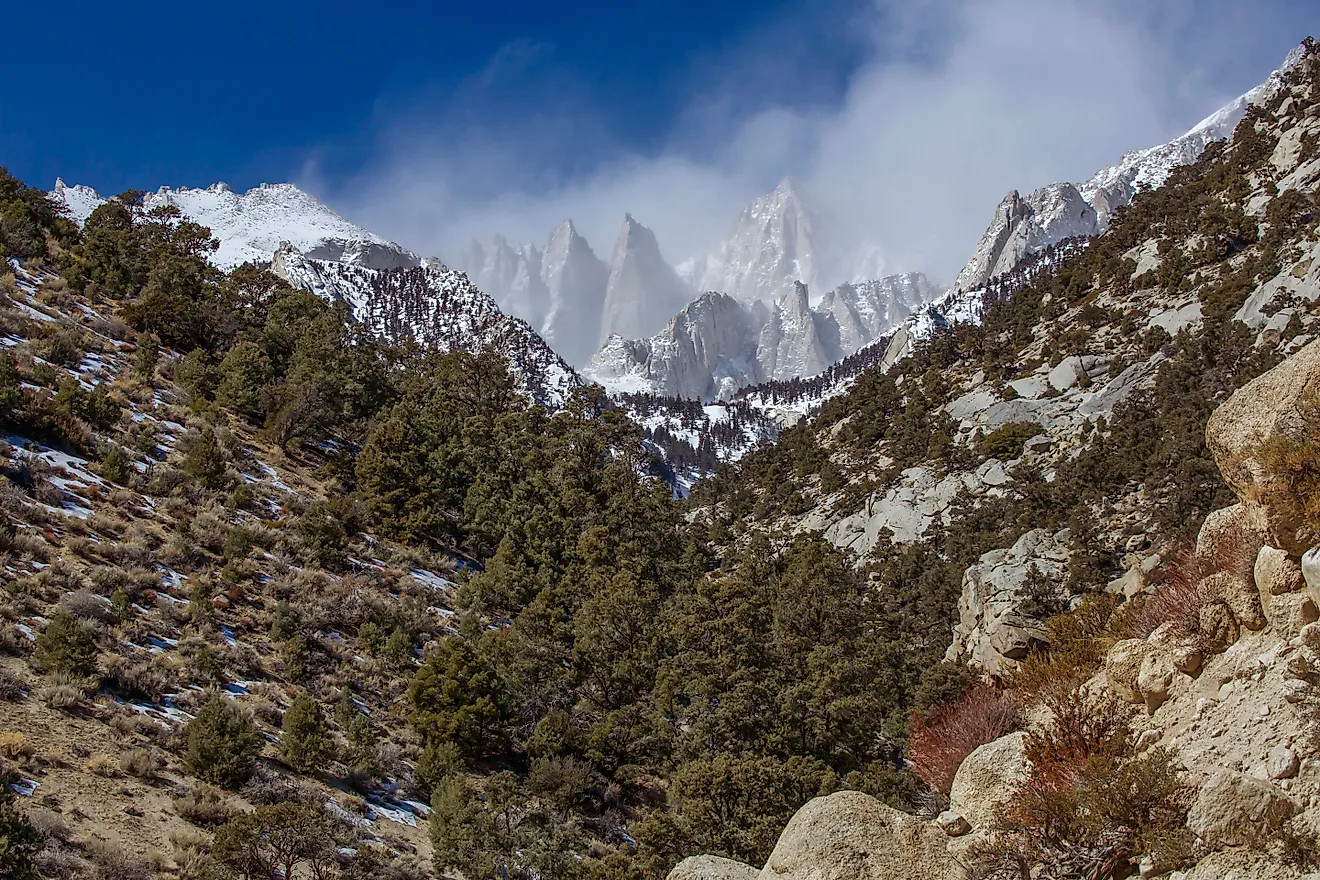
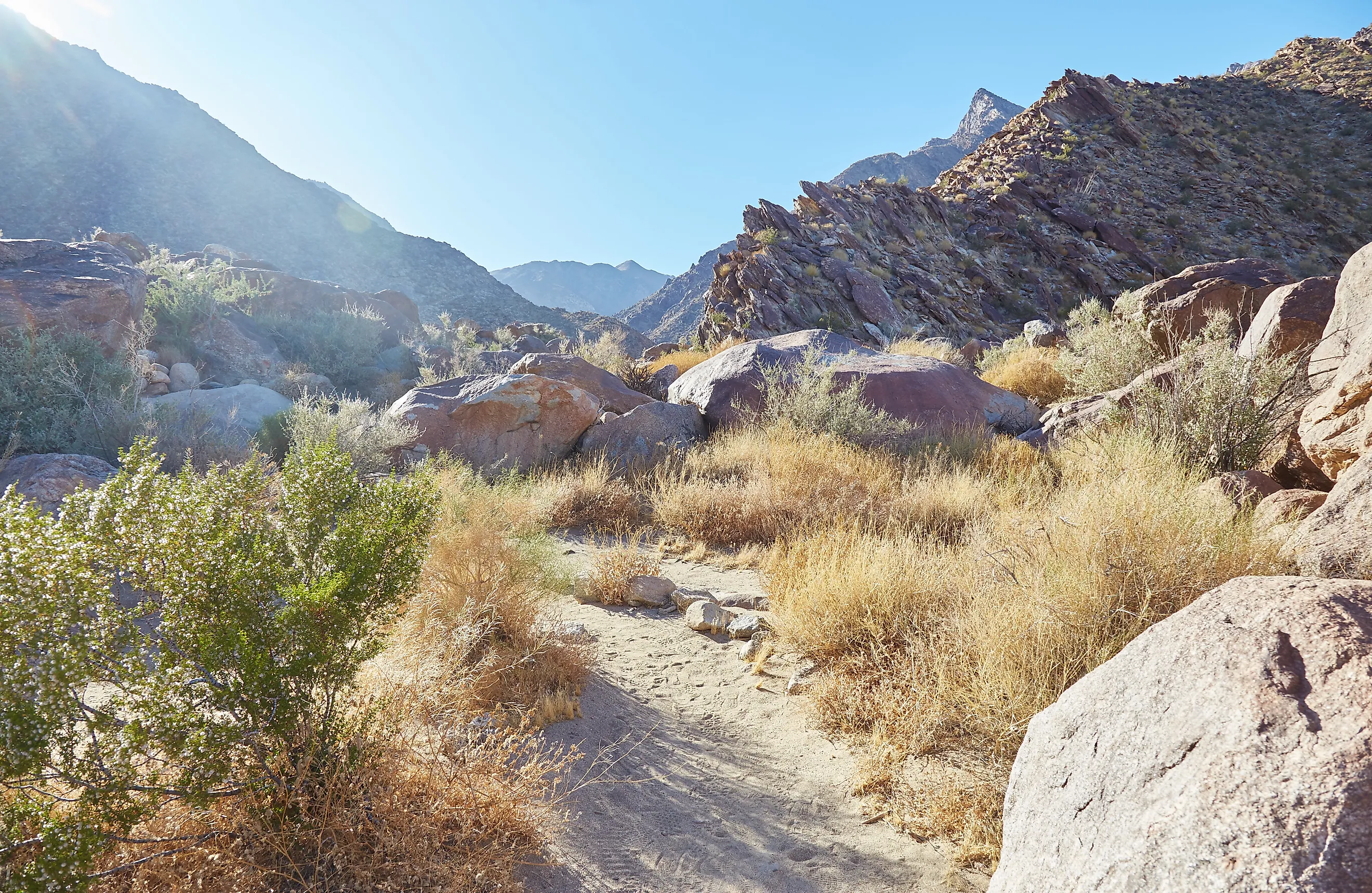
The landscape includes badlands, canyons, dry lake beds, and mountains. The highest peak here is Combs Peak, which rises 6,188 feet on Bucksnort Mountain and is one of 40 named mountains. All of these mountains are part of the Peninsular Ranges.
The badlands themselves speak to the ancient history of waters that were once found in the park. There are three badland areas in the park, the Borrego, the Vallecito Creek-Fish Creek, and the Carrizo Badlands. All of these badlands used to be filled with lake basins that were fed by the Colorado River as it flowed through the Grand Canyon, leaving behind a vast array of sediments. Due to geological activity, the Colorado River no longer flows through the Anza-Borrego Desert. Instead, one can view the siltstone and sandstone layers that make up the badlands here, along with marine fossils.
The desert isn't completely dry. It also features a small palm tree oasis, located at the end of the Borrego Palm Canyon Trail.
One interesting fact about these fossils is that some of them are originally from South America, such as llamas, tapirs, camels, and a tortoise. This means these fossils must date back at the very latest around 3 million years ago when the Isthmus of Panama formed, linking North and South America.
History

The name Anza-Borrego derives from a Spanish explorer named Juan Bautista de Anza. He first explored the area between 1774 and 1776 in an attempt to establish roads between Mexico and California. The other part of the word borrego is Spanish for bighorn sheep, which thrive in this desert.
Prior to this exploration, small groups of Natives had used the region at times, including the Mine Wash region, which shows small numbers of milling and roasting pits, alongside stone tools, which would date it back to the Stone Age. It was later used by other Native Americans as a temporary winter camp, including the Kumeyaay people, a nomadic group that lived here until the late 19th century.
In the 1930s, there was a major push from local leadership, including George Marston from San Diego, to preserve California's natural resources. In 1933, the state officially established Anza-Borrego State Park.
The park's land expanded over time, initially made up of land donations from San Diego citizens. It would gradually expand over the 1940s and 1960s until it reached its current size. The Anza-Borrego Foundation was set up in 1967 for land conservation.
Wildlife

As mentioned above, the peninsular bighorn sheep is the most iconic creature in this park. It lives both in the desert and in the Santa Rosa Mountains. They have strong climbing skills and can ascend rocky cliffs. They feed on desert plants such as cacti and spend time near one of the few water sources during the hot summer months.
Other mammals include mule deer, which live in the higher elevations of the park, coyotes, bobcats, and desert kit foxes. These kit foxes have large ears to cool down and usually only come out at night. The apex predator of the park is the mountain lion, which attacks bighorn sheep and mule deer. They can wander nearly the entire length of the park in search of prey.
Another notable creature in this desert is the roadrunner. These birds use their hind legs to move at speeds of up to 20 miles per hour, which they can use to escape predators such as several types of rattlesnakes that live in this desert, including the Mojave rattlesnake and western diamondback rattlesnake. The Mojave rattlesnake in particular is documented as having a strong cocktail of venoms that can target a prey's nervous system and bloodstream. Unlike other rattlesnakes, it will typically avoid rocky regions and only live out in open shrublands or deserts.
Despite the arid environment here, with temperatures regularly reaching more than 100 degrees between May and October, little shade, and rainfall of less than seven inches annually, wildflowers do bloom here, usually between March and April. During high rainfall seasons, seeds will bloom rapidly, of many different colors and varieties such as apricot mallow, desert woolstar, and phacelia.
Things to do

The hiking trails throughout Anza-Borrego Desert State Park guide hikers through all manner of interesting sights, including cacti and palm trees.
The Borrego Palm Canyon Nature Trail is a three-mile loop trail that takes one to an overlook to the palm grove. Due to wildfires, the palm grove itself is closed, but one can see how these trees are recovering from the overlook.
Visitors can also see the site of the Native American winter village mentioned above at the Ehmuu-Morteros Trail, including large flat rocks, pottery and tools, or view cactus from the Cactus Loop Nature Trail. Some of the sites in the park were left behind by humans, such as the Galleta Meadows Sculptures. Artist Ricardo Breceda designed more than 130 of these sculptures, including a dragon, grasshopper, elephant, and more. One can find them by getting a digital map or a pocket guide from the Anza-Borrego Desert Natural History Association.
One of the best views in the desert is up in the sky. For those with a Four Wheel Drive, they can reach the Fonts Point overlook within a badlands section of the park, which is renowned for its views of the sunrise and the surrounding badlands. Anza Borrego is also worth visiting at nighttime as it is recognized as an International Dark Sky Park due to its lack of light pollution, allowing one to view the Milky Way Galaxy much more clearly than in populated areas.
It is important to note that park authorities recommend being cautious if visiting during the summer, such as making sure to pack enough water, keeping one's vehicle well stocked with supplies, and utilizing a Four Wheel Drive vehicle.
This desert park shouldn't be missed
California is one of the best states to go to experience national and state parks, with 9 national parks and 280 state parks, which include redwood forests, lakes, coastlines, and the rich desert landscape of Anza Borrego. This desert park isn't just a place to walk through the sand, as one can trek through badlands peaks, view wildflowers and cacti, snap pictures of peninsular bighorn sheep, or even see a metal dragon sculpture emerging from the desert. And of course, one can't forget to take in the sunrise and the night sky in this vast desert park.