What The Bennu Samples Are Telling Us About Life's Origins
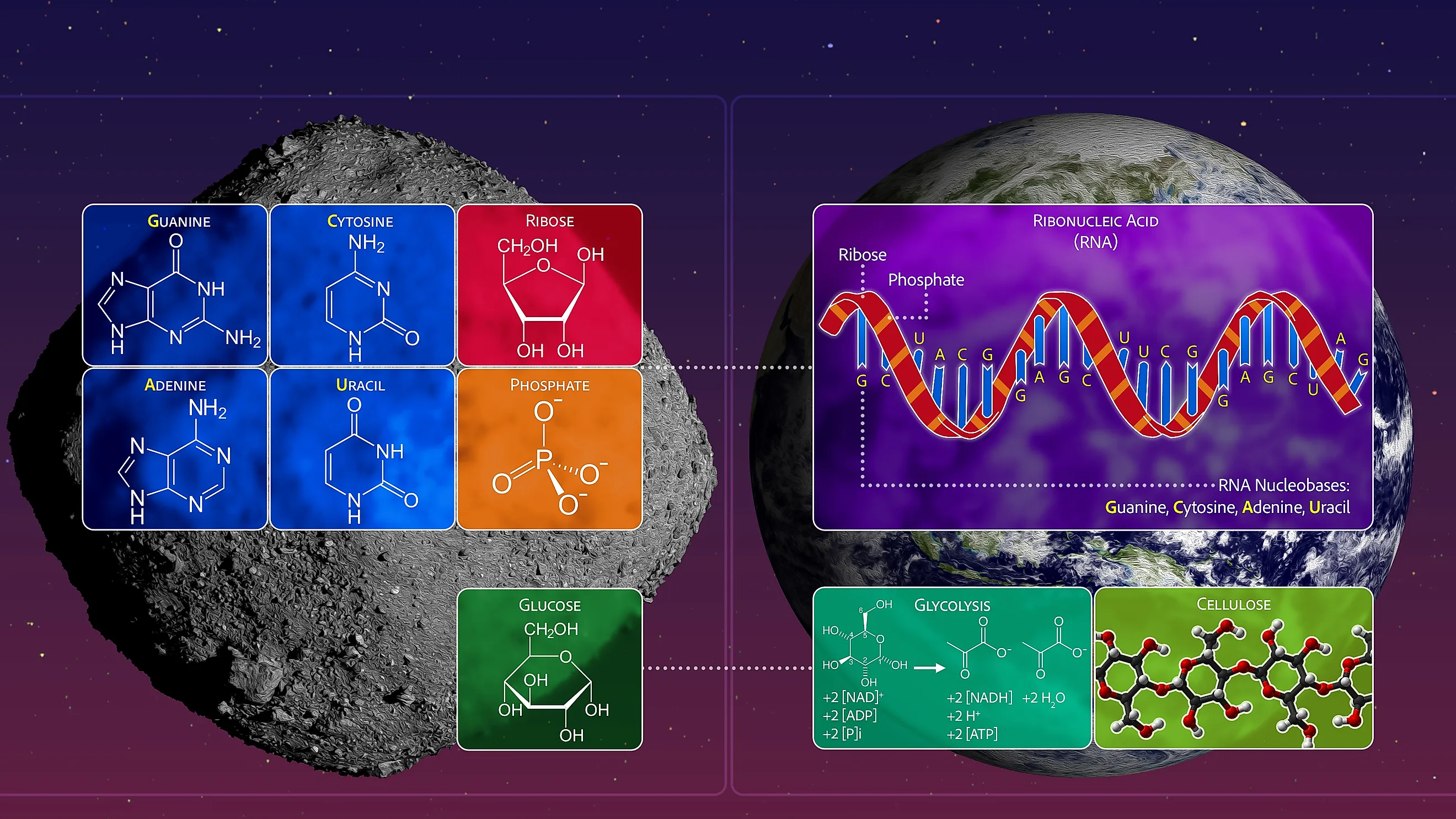
A pinch of asteroid dust from Bennu turned out to hold the chemical starter kit for life. NASA's OSIRIS-REx scooped it up and dropped it in Utah in 2023. Inside were amino acids that build proteins and nucleobases that spell out DNA and RNA. Scientists even pulled out ribose and glucose, the sugars that make RNA work. Those ingredients formed in space before Earth existed. That points to asteroids like Bennu delivering life's raw materials to a young planet.
All About Bennu

Most asteroids orbit between Mars and Jupiter, but Bennu is a small, rubble-pile asteroid that passes near Earth about every six years. This relatively frequent proximity makes it a practical target for OSIRIS-REx. Humanity does not need to worry about an impact anytime soon, however. Bennu has about a 1 in 1,750 chance of colliding with Earth over the next few centuries, but scientists do not consider it a present-day danger.
Classified as a primitive carbonaceous asteroid, Bennu is made of rocks and boulders loosely packed together and weakly held in place by gravity and other forces. Scientists think Bennu was once part of a larger, possibly wet object that broke apart after a major collision. It preserves carbon-rich material left over from the early solar system. Meteorites can also reveal primitive asteroid material, but their trip through Earth's atmosphere can contaminate or destroy parts of them, while a protected sample collected directly from Bennu gives scientists a cleaner look at ancient material.
What was OSIRIS-REx?

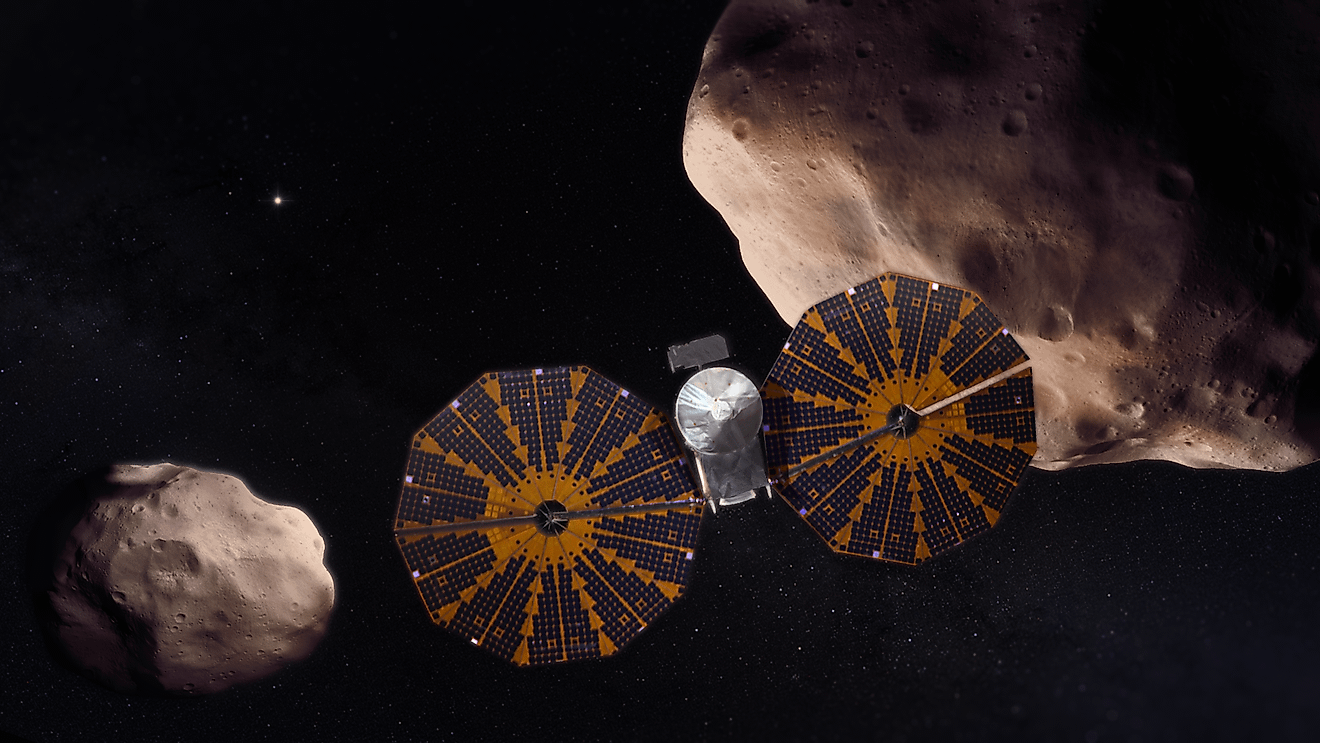
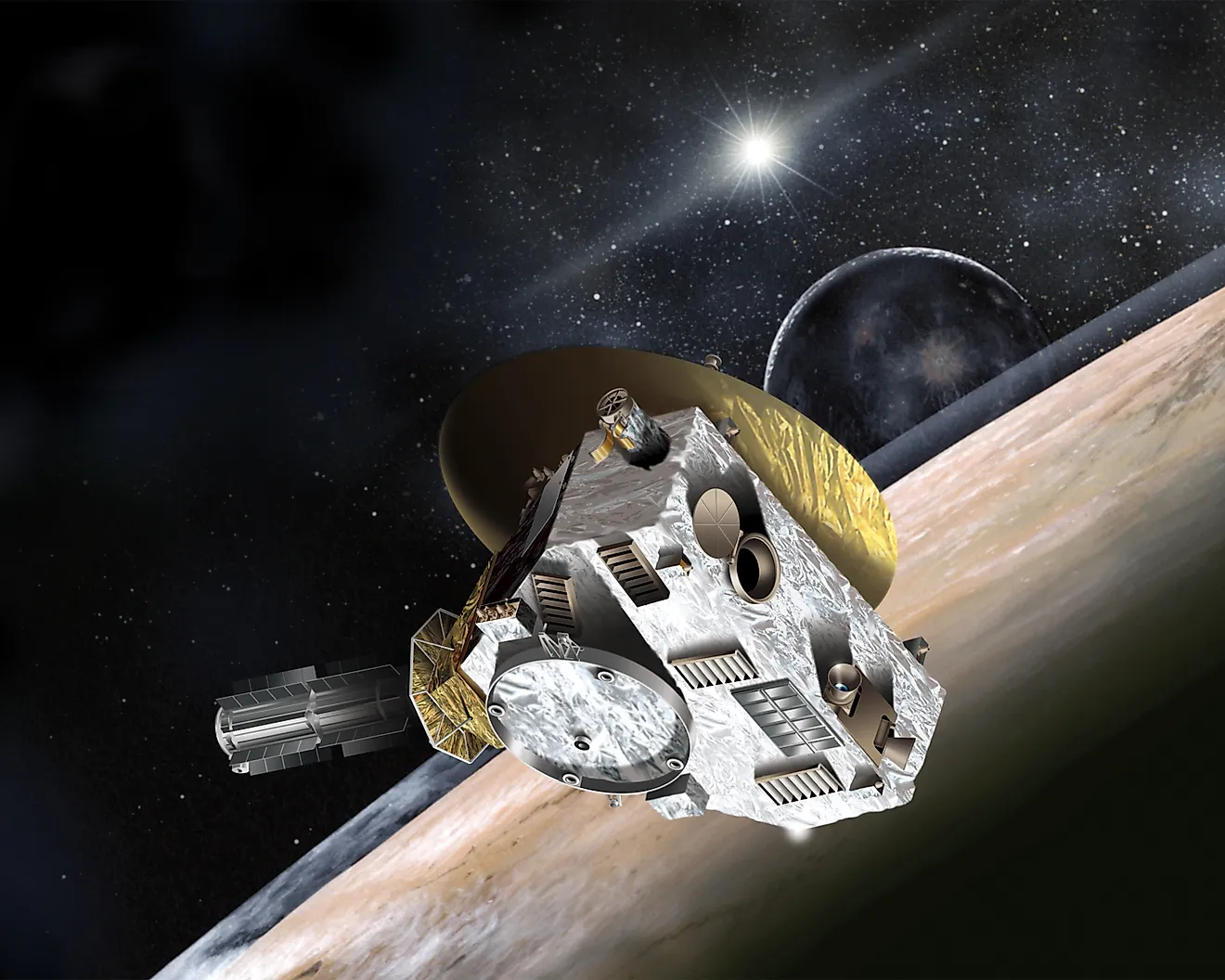
OSIRIS-REx stands for Origins, Spectral Interpretation, Resource Identification and Security-Regolith Explorer. The NASA mission gathered and returned the largest sample ever captured in space beyond the Moon. OSIRIS-REx launched on September 8, 2016, and collected material from Bennu on October 20, 2020. The sampling attempt required careful planning because Bennu's surface was much rougher than scientists expected. Smooth areas were rare, and boulders covered much of the asteroid. Four possible sample sites were chosen and named after birds: Nightingale, Osprey, Kingfisher, and Sandpiper. Nightingale, near Bennu's north pole, became the final sampling site.

After three more years in space, OSIRIS-REx brought around 4.29 ounces of material back toward Earth. The sample capsule returned on September 24, 2023, while the spacecraft continued onward. OSIRIS-REx then became OSIRIS-APEX, a new mission headed to study Apophis. The asteroid once drew serious attention because of its possible future close approaches to Earth.
The sample capsule released by OSIRIS-REx careened through the sky at 27,650 mph. It landed at the Department of Defense's Utah Test and Training Range near Salt Lake City. Two parachutes slowed the capsule to about 11 mph before it touched down. The capsule was built to survive the intense speed and heat of reentry, keeping the asteroid material safe inside. After landing in Utah, the samples were sent to the Johnson Space Center in Houston, Texas. Roughly a quarter of the material was set aside for the mission's current science team and partners, and about 70% will be preserved at Johnson Space Center for future scientists to study.
What Was Found on Bennu

Some scientists used an ion beam to carve microscopic sections out of the Bennu sample. These slices were about a thousand times thinner than a piece of paper. Researchers then used non-destructive X-ray light to examine chemical bonds and structures at a tiny scale. This helped them map and identify chemicals inside the asteroid material. The samples contained stardust grains older than our Sun, predating the solar system itself. Scientists think Bennu's original parent body formed in a protoplanetary disk, a rotating disk of gas and dust where planets take shape. That region appears to have been enriched with dust from dying stars.

Despite coming from the cold expanse of space, the Bennu samples contain organic molecules linked to life's chemistry. Scientists also found sodium-rich minerals, which are often associated with water evaporation, and the samples contained nucleobases, which help make up DNA and RNA. They also contained amino acids used to build proteins, as well as glucose and ribose, two sugars important to life's chemistry. Ribose is especially important because it helps form RNA. It has previously been found in two meteorites that struck Earth, and its presence on Bennu suggests it may have been widespread in parts of the early solar system. The finding supports the RNA world hypothesis, the idea that early life may have relied on RNA before DNA became dominant.
Researchers also found a gum-like substance that had not been seen before in an extraterrestrial sample. The material was found along with dust produced by supernova explosions. This space gum likely formed early in the solar system's development. It may once have been flexible, but it has since hardened into a material rich in nitrogen and oxygen.
What Does This Tell Scientists?

These discoveries support the idea that asteroids may have delivered water and chemical building blocks important to life to early Earth. The same process could also have seeded other worlds in the solar system with similar ingredients. Scientists are still studying what else the Bennu sample may reveal. For now, the material strengthens the idea that meteorites and asteroids delivered some of the raw ingredients that helped life emerge on early Earth. OSIRIS-APEX is now headed to study Apophis after the asteroid's close pass by Earth on April 13, 2029. Its next target will give scientists another look at how small, ancient worlds move, change, and preserve clues about the solar system's violent past.