Could Humans Survive on Europa?
Jupiter's moon Europa hides a saltwater ocean that may hold twice as much water as every ocean on Earth combined. That ocean sits beneath a shell of ice, locked under some of the harshest radiation in the solar system. Scientists have spent decades asking whether anything could live in that buried sea. A harder question is whether people could ever stand on the ice above it. New data keeps sharpening both answers, and neither one is simple.
These are questions that scientists are currently trying to get to the bottom of. New research is showing that Europa may contain elements for potential human habitation. However, there is much to learn about this moon before further steps toward settling.
About Europa

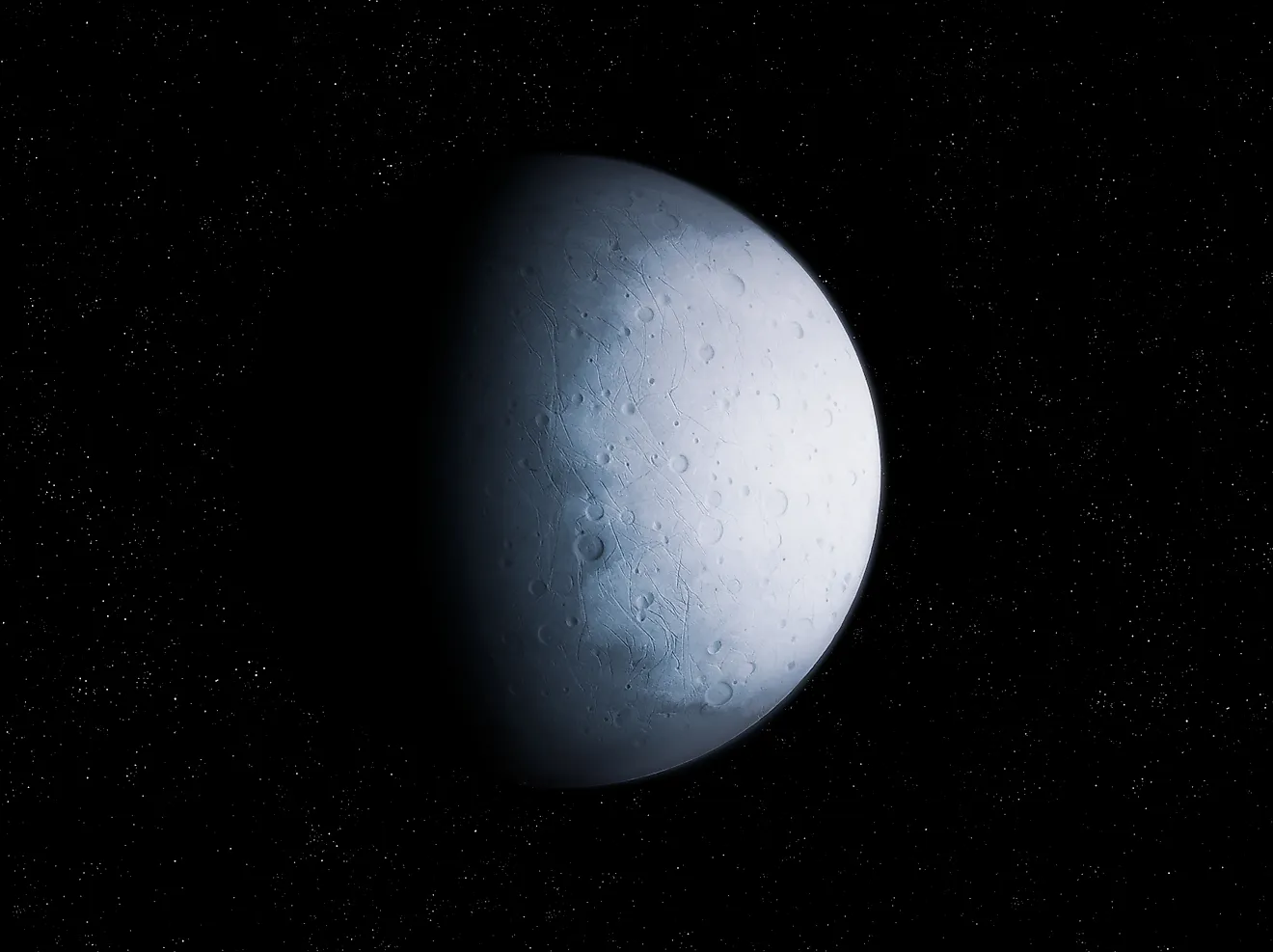
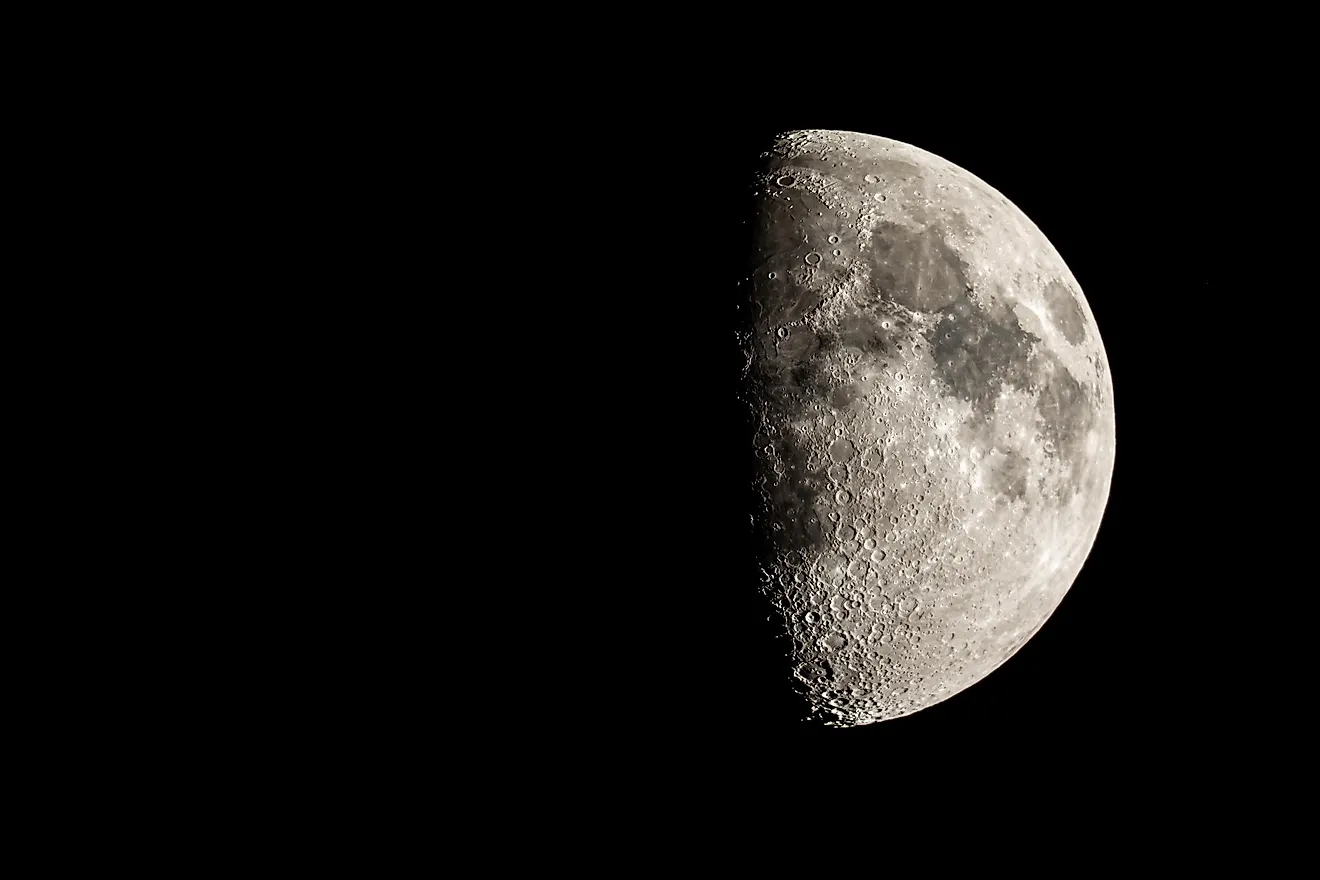
Europa is the fourth largest of the dozens of moons orbiting Jupiter, measuring about 1,940 miles across. That makes Europa about 90% the size of our moon; however, unlike our moon, Europa is much brighter. Because its surface is made up of water and ice, Europa reflects about 5.5 times the sunlight of our moon. That brightness does not mean it receives more sunlight, though. Light from the sun takes about 45 minutes to reach Europa, so sunlight is about 25 times fainter there than on Earth.
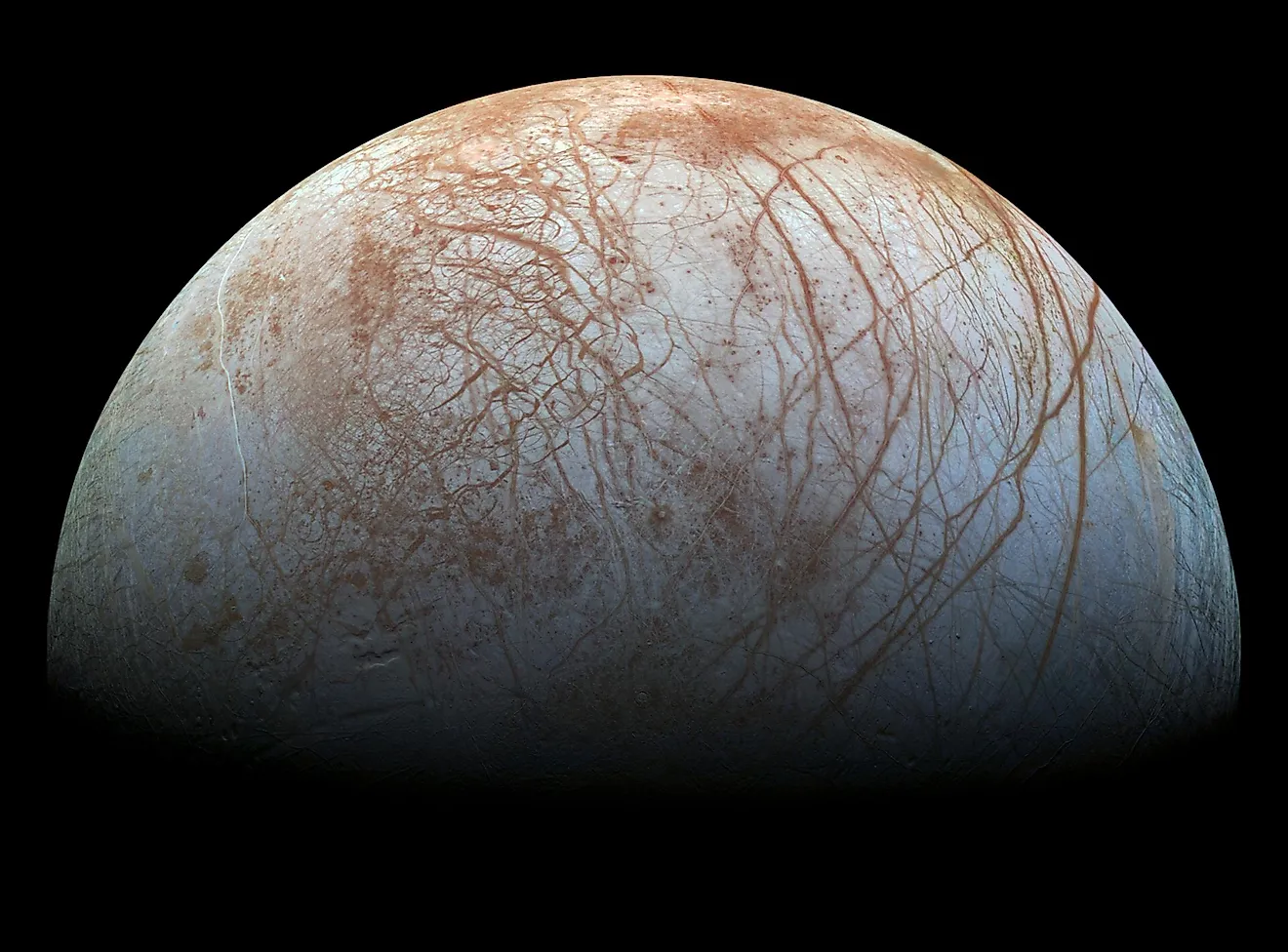
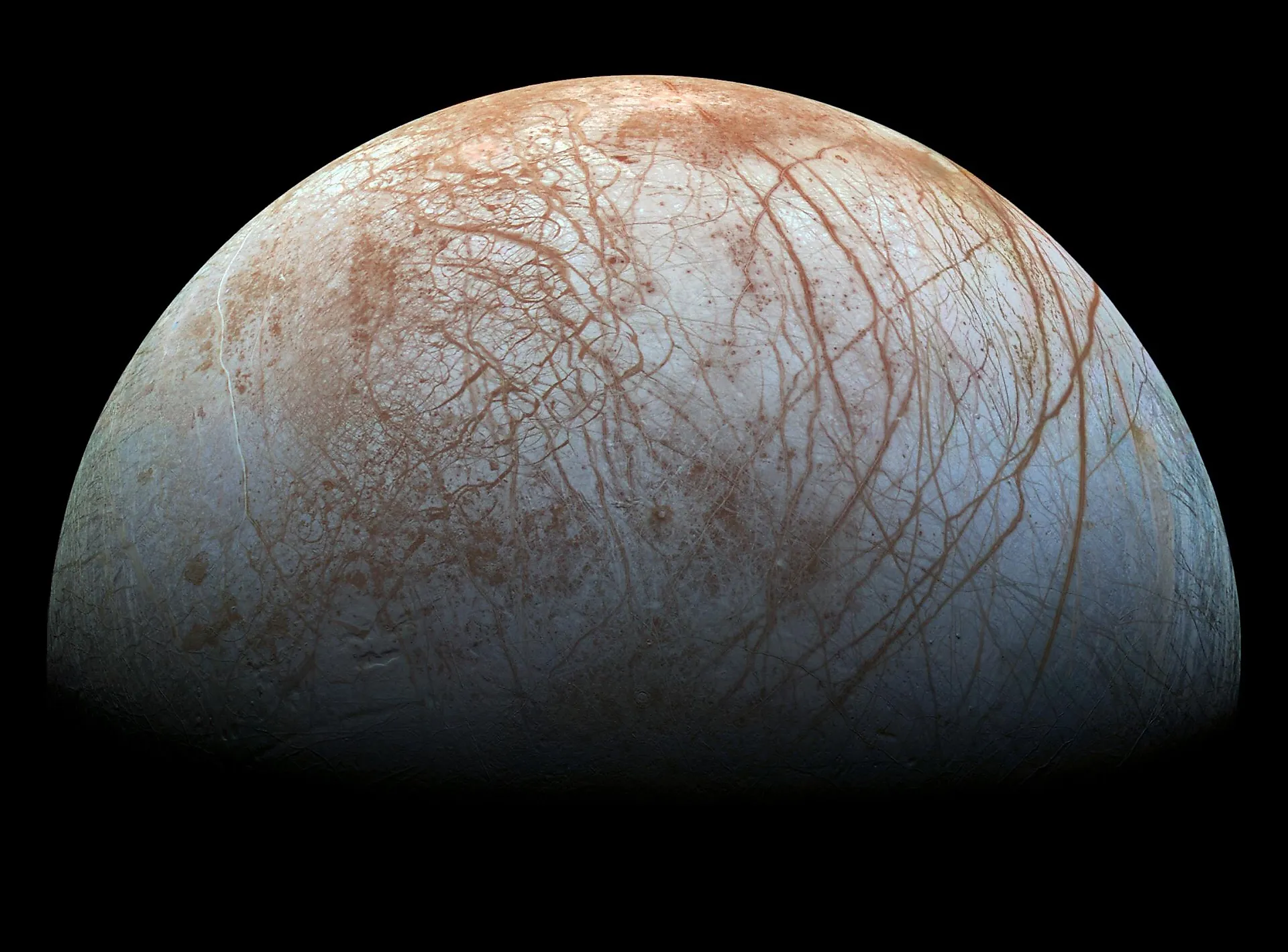
It is estimated that Europa's surface is about 40 to 90 million years old, making this moon considered fairly young in geologic terms, which would explain why it does not have many craters. What its surface does have is reddish-brown cracks. It isn't known yet what this reddish-brown material is, but scientists believe that it is likely salts and sulfur compounds mixed with water ice and modified by radiation.
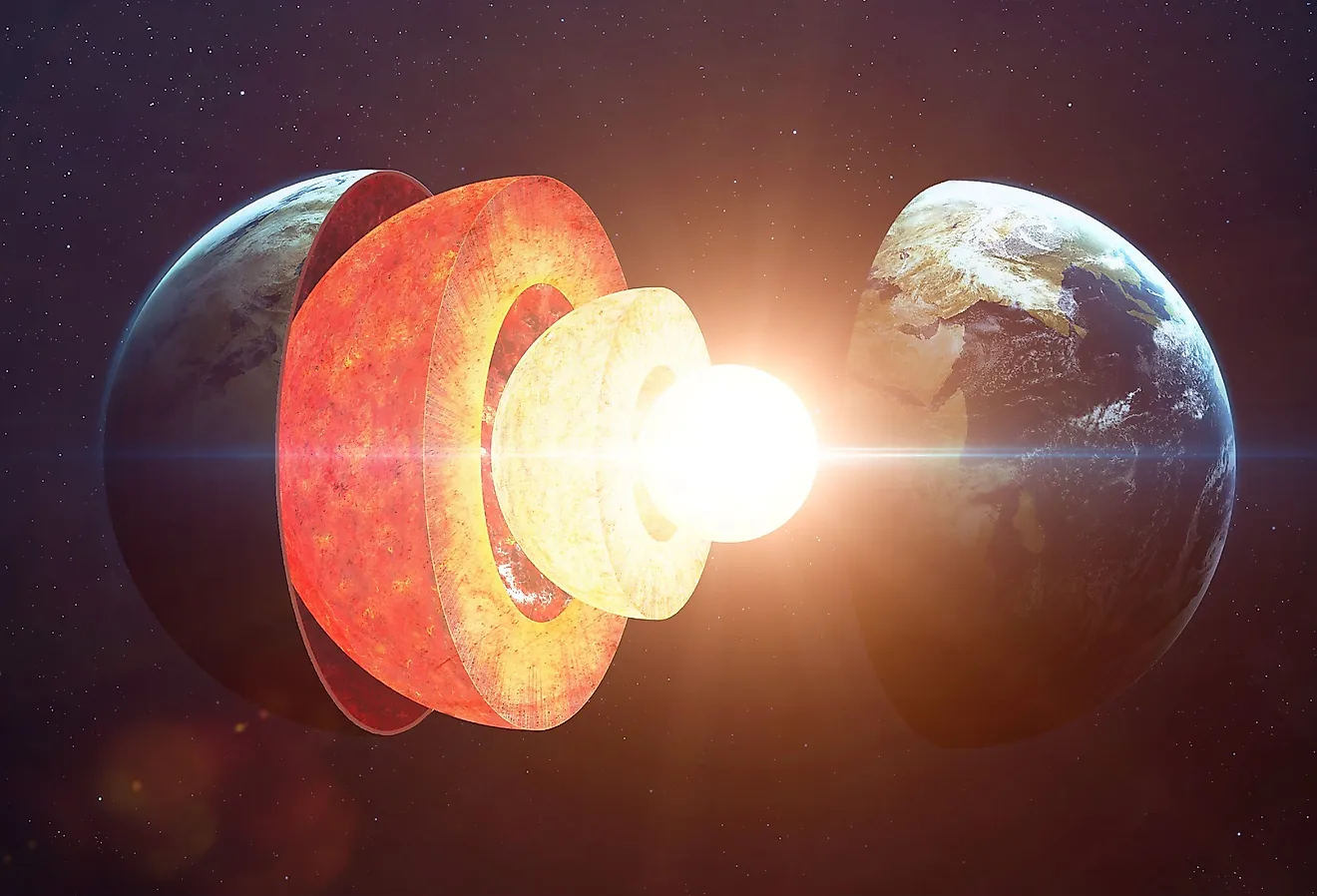
What is most interesting about Europa is not what is visible on its surface, but what possibly lies beneath. Scientists believe that beneath the thick sheet of ice covering the moon, there is a salt ocean possibly twice the size of Earth's oceans. Having a salt ocean is a similarity to Earth, and that is not where the similarities end. Europa is also thought to have an iron core and a rocky mantle, features also found on Earth.
Europa's Relationship with Jupiter

Since Europa is not a planet but a moon, it is dependent on Jupiter, similar to how our own moon is dependent on Earth. The distance Europa is from Jupiter varies since Europa's orbit is elliptical, but scientists do know that Europa's near side feels the pull of Jupiter's gravity more than its far side. When Europa goes about its orbit, the changes in the gravitational pull are so extreme that it creates tides that stretch and relax the moon's surface. In turn, this flexing causes Europa's surface to fracture, which may also be the reason for all the reddish-brown cracks seen across it.
Jupiter also pounds Europa with radiation, so much so that scientists believe the moon glows in the dark. The moon is already highly reflective to sunlight, but even its dark side, facing away from the sun, emits its own glow.
While Jupiter has an effect on Europa, Europa also affects Jupiter. The moon disrupts Jupiter's magnetic field, which is what led scientists to believe that there is a magnetic field created within Europa by a layer of some electrically conductive fluid under the surface. Scientists speculate that salty water lies beneath the icy surface of Europa since salty water would be the most likely thing to cause this magnetic signature.
What Our Spacecraft Discovered

On March 4, 1979, Voyager 1 was able to take a full picture of Europa, and then on July 9, 1979, Voyager 2 took an up close picture of the large moon. The photo taken by Voyager 2 showed a world that was icy with streaks, fractures, and few impact craters.
After Voyager 1 and Voyager 2 reached Europa in 1979, NASA launched the Galileo mission, where the Galileo spacecraft reached Jupiter in 1995 and sent back pictures of four of Jupiter's moons, including Europa. The information sent back made scientists extend the mission, in a follow-on known as the Galileo Europa mission, and the spacecraft kept studying the Jovian system until 2003. It was during this mission that scientists saw how Europa was disrupting Jupiter's magnetic field, leading them to hypothesize that Europa contains salty water. Galileo found regions dubbed "chaos terrain," where broken landscapes were covered in reddish material. Scientists believe that chaos terrain could be a place where the icy surface collapsed above lens-shaped lakes embedded within the ice.
In 2013, using the Hubble Space Telescope, scientists found that Europa might be venting water into space. Scientists think that if they can send a spacecraft through this potential water vapor, then they may be able to analyze the contents of Europa's ocean and learn even more about this moon.
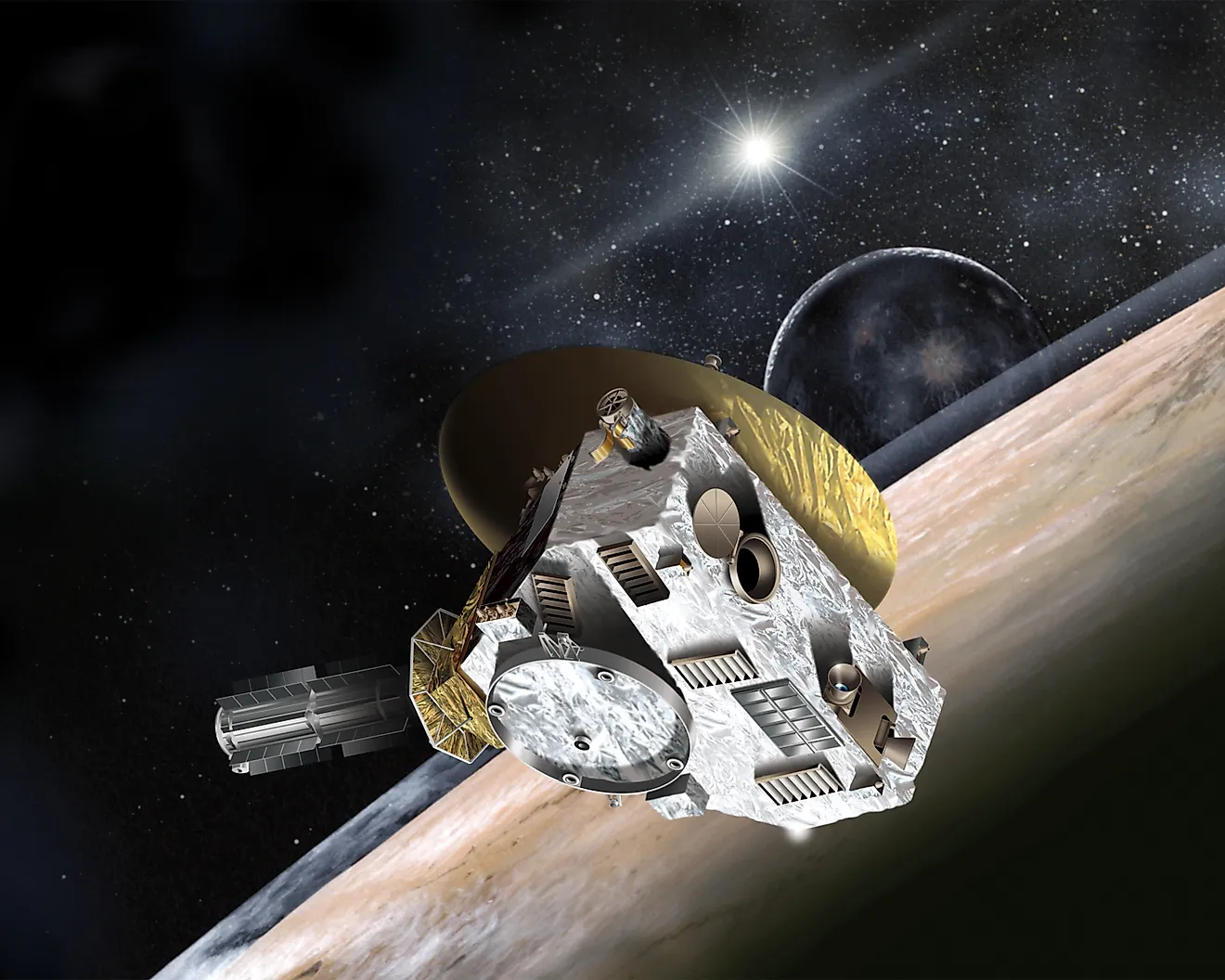
As for future information, NASA's Europa Clipper launched on October 14, 2024, and will travel 1.8 billion miles and arrive at Jupiter in 2030. Then it will conduct 49 flybys of Europa, which will help it collect data for scientists to learn more about whether this is a potentially habitable world.
Possibility Of Life

According to scientists, life requires three things: liquid water, certain chemical elements, and an energy source. Life also requires time to develop. It is believed that if there is an ocean beneath Europa's surface, it is most likely around 4 billion years old, which would be sufficient time for life to develop.
Astrobiologists believe that the chemicals thought to be present on Europa and the presence of water would make it conducive to being a place where life could exist. So there may be life underneath the surface of the ice.
Would We Be Able To Survive on Europa?

On one hand, data collected by the Juno spacecraft reveals that Europa produces about 1,000 tons of oxygen every 24 hours. Though Europa has no breathable atmosphere, scientists have calculated that this could keep up to 1 million humans breathing for a day. Unfortunately, we cannot forget that Jupiter blasts this moon with radiation. The radiation from Jupiter is so intense that a human without major radiation shielding would not survive for more than a day, even if their spacesuit protected them from the harsh cold.
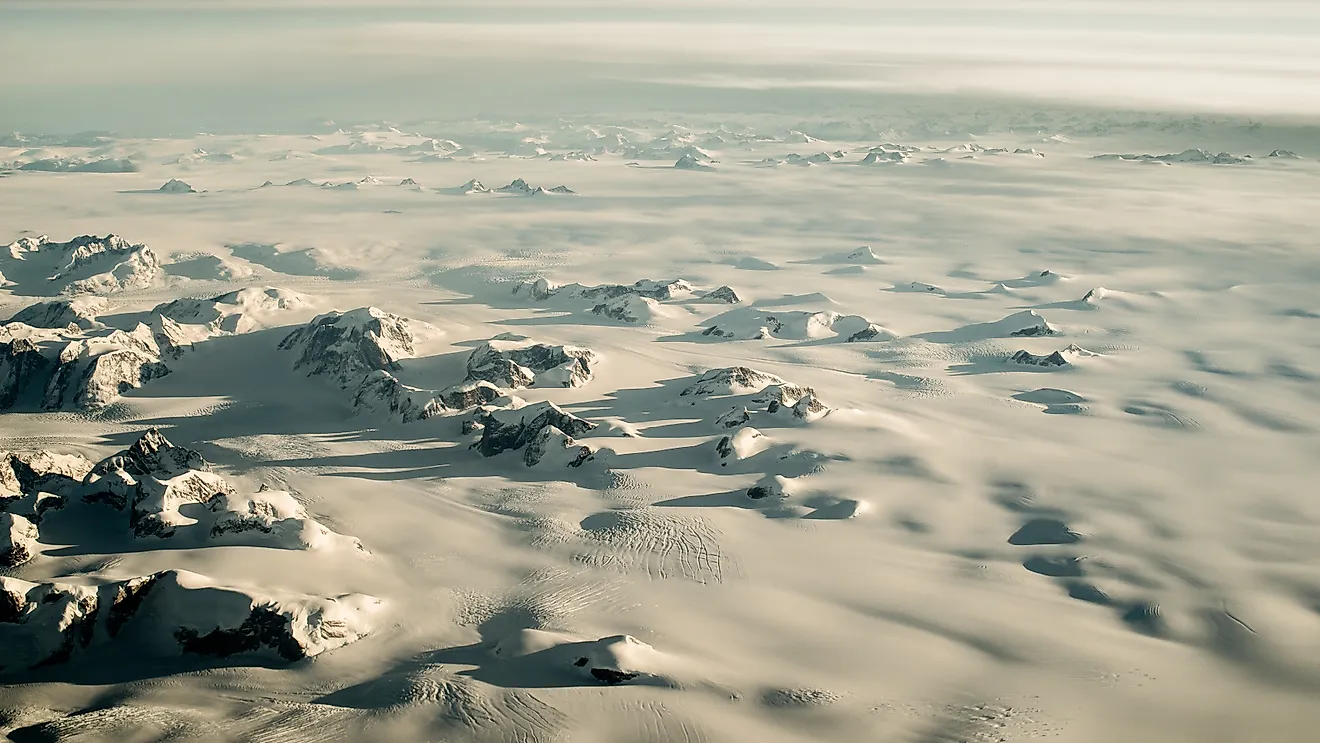
At its warmest, Europa's surface temperature does not rise above minus 260 degrees Fahrenheit. To put that in perspective, the lowest temperature ever recorded on Earth was minus 128.6 degrees Fahrenheit, at Antarctica's Vostok Station in 1983. Europa's warmest surface is roughly twice as cold as that record, cold enough to cause immediate frostbite and severe hypothermia.
At the moment, for the technology that we have and for what we know about Europa, the answer is no, humans would not be able to survive on Europa. The Europa Clipper still has information to relay once it reaches Jupiter in 2030. There is still much we do not know about Europa, so while at the moment it appears inhospitable, there is still a slim chance that there exists a future in which we call Europa home.