The Largest Volcanoes Ever Found Beyond Earth
Imagine staring up at the cloudless night sky, taking in the full moon's glow. Then, in an instant, an eruption occurs. The quaking isn't felt beneath your feet but instead up in the sky, where you watch the illuminated face of the moon become blotched with a plume of ash. Luckily, this is a sight that people on Earth do not need to worry about, but it likely occurred around 3.8 to 3.9 billion years ago.
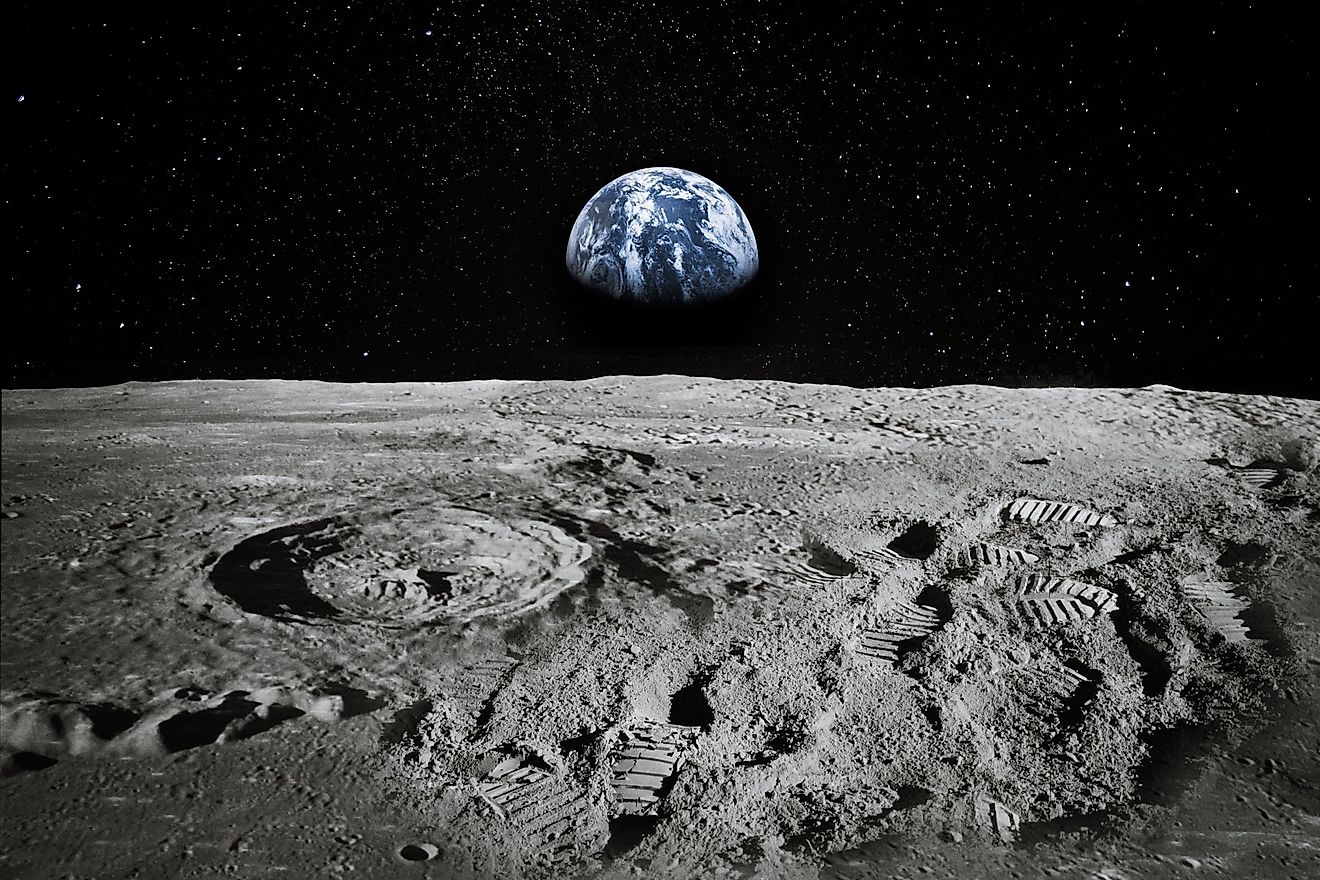
Now, when astronauts visit the moon, they can view an old lava tube of what remains of the volcanoes called the Marius Hills. It is estimated that more than 250 volcanoes were in the area, but at the moment, it remains a mystery how large they were. While we don’t need to worry about our moon erupting, there are other places in our solar system with volcanoes that make Earth's volcanoes look like ant hills.
Ahuna Mons

Floating in the asteroid belt and named after the Roman goddess of the harvest is the dwarf planet known as Ceres. The dwarf planet is only 1/13 the size of Earth, yet it hosts a powerful volcano. The surface of Ceres is full of craters, and emerging from the horizon is the Cryovolcano Ahuna Mons. Ahuna Mons is 2.5 miles (4 kilometers) tall and 12 miles (19.3 km) across, making this volcano about the length of Manhattan and as tall as about 44 American football fields.
Making it even more unique, Ahuna Mons was formed by a brine-and-clay mixture. It's the only volcano of its kind on Ceres; all the others on the dwarf planet are most likely deformed. While dormant now, if we were at the base of Ahuna Mons when it was going off, we would be met with frozen liquids rather than a pyroclastic flow. Ahuna Mons is a Cryovolcano, which isn’t something that exists on Earth. Cryovolcanoes erupt volatile-rich materials, such as salty mud and ice, rather than lava. Ahuna Mons is the only Cryovolcano on Ceres, but it is not the only Cryovolcano in our solar system.
Enceladus Tiger Stripes

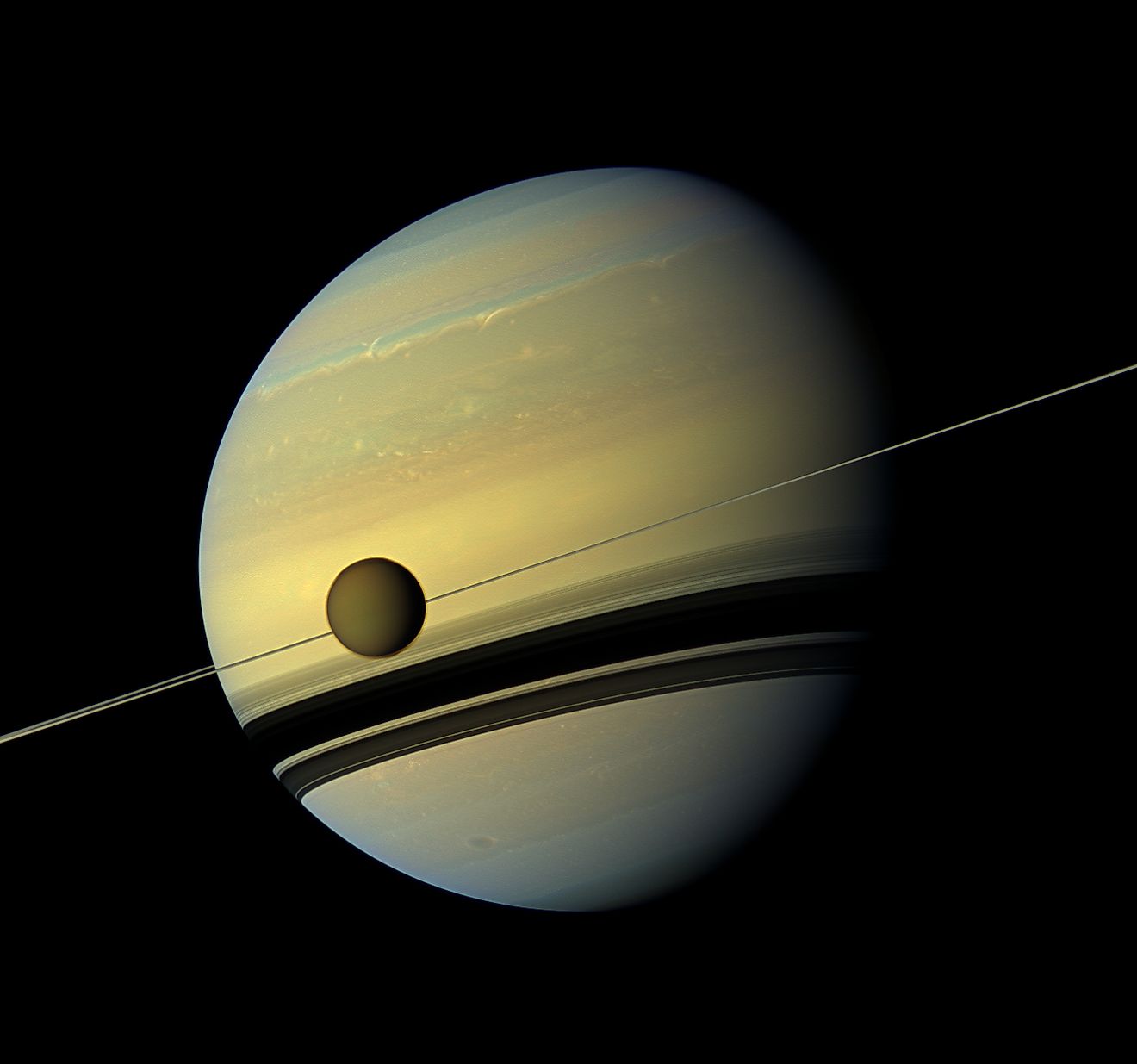
Enceladus is an icy moon of Saturn with a surface temperature of negative 330 degrees Fahrenheit. At the South Pole are four parallel fissures called Tiger Stripes. These Tiger Stripes are long fractures that vent geyser-like jets of water vapor and ice particles, similar to a geyser seen on Earth. Tiger Stripes contain gases including water vapor, carbon dioxide, methane, maybe some ammonia, and either carbon monoxide or nitrogen gas. This mixture erupts out of Enceladus at about 800 miles per hour, faster than the speed of sound!
The eruptions are continuous and create a halo of ice dust around the moon and also supply a small amount of material to Saturn’s E-ring. And what happens to the snow mixture that doesn’t become part of the Ring? It flits back down to the moon's surface in small flakes, creating a continuous snow globe.
Maat Mons

If you thought that a planet made out of mostly volcanoes was only possible in science fiction movies, think again. Venus has an estimated 85,000 volcanoes. That makes Earth’s estimated 1,500 volcanoes look minuscule. There is an immense amount of carbon dioxide in Venus’ atmosphere, and it is theorized that this may be from the large number of volcanic eruptions.
Towering above all the volcanoes on Venus is Maat Mons. Maat Mons is 5 miles (8 km) high, and at the top of Maat Mons is a caldera crater that is about 16 by 18 miles (25 by 28 km) in diameter. That is about the span of 139,360 American football fields! Maat Mons is also considered active, as scientists have observed it spewing lava, similar to the 2018 eruption of Hawaii's Kilauea volcano.
Loki Patera

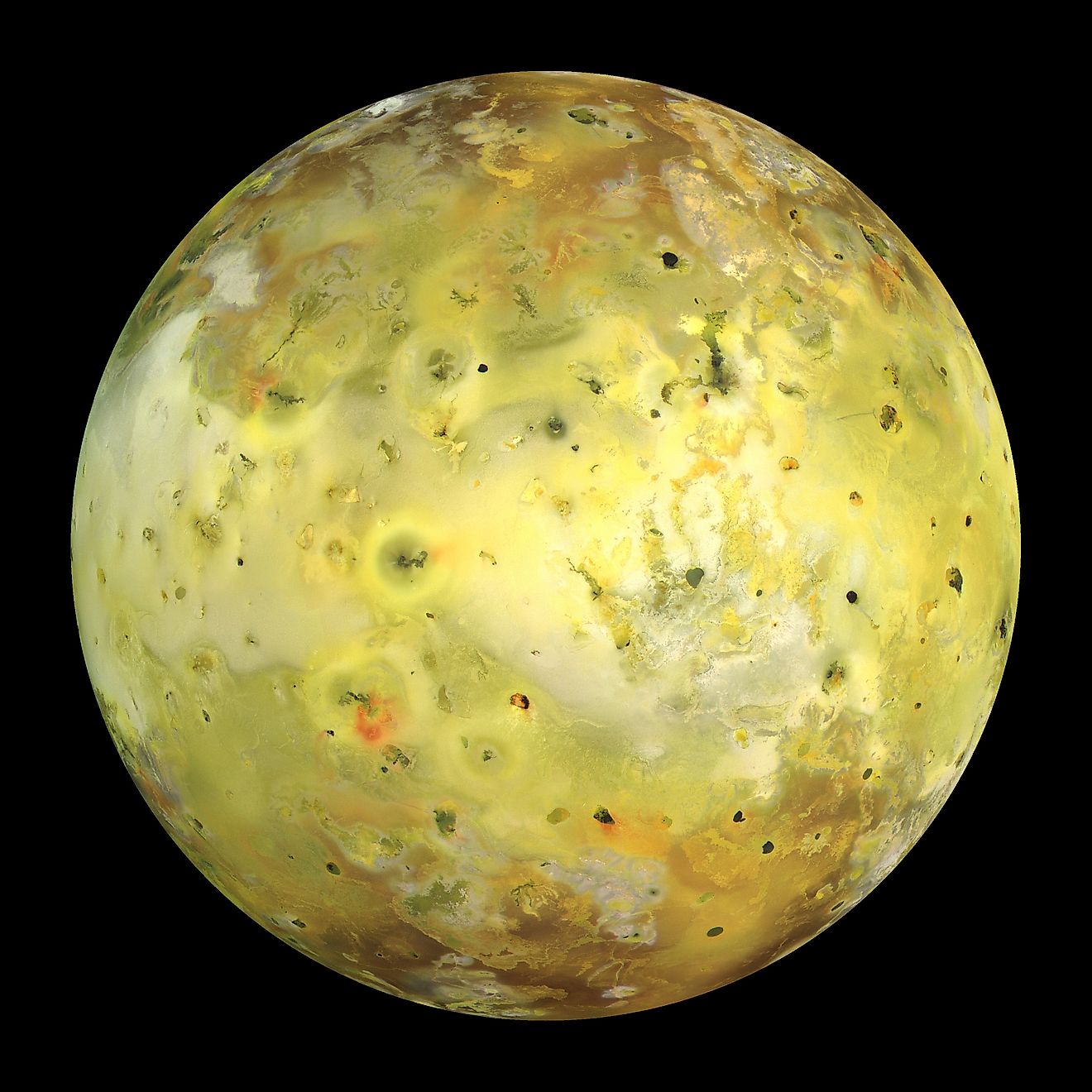
One of Jupiter’s moons, Io, is also riddled with volcanic activity. While Venus has the most volcanoes, Io is considered the most volcanically active world in the solar system. One of these volcanoes is Loki Patera. This volcano looks more like a sweltering lake of lava, and not only is it the largest volcano on Io, it is also the most volcanically active body in the solar system.
This volcano is about 127 miles (200 km) long, making it close to the same size as Lake Champlain, only much deadlier. Once scientists observed the lava overturning, creating two powerful waves that rippled across the surface. It is definitely a lake where you would not want to dip your toes in.
Alba Mons

Radial lava flows NW of Alba Mons on Mars.
Named after the Roman god of war, it is no surprise that Mars contains many volcanoes. This includes the incredibly massive Alba Mons. While Alba Mons may not be tall, that does not take away from how truly enormous this volcano’s span is. Alba Mons spans a little more than 620 by 620 miles (997 km by 997 km), making this volcano slightly larger than the size of all of Venezuela!
This volcano is the remnant of its former self, with scientists believing it erupted and then collapsed into the empty magma chamber below. While Alba Mons is a haunting corpse of what it once was, it is still a volcano worth admiring for its colossal size.
Olympus Mons

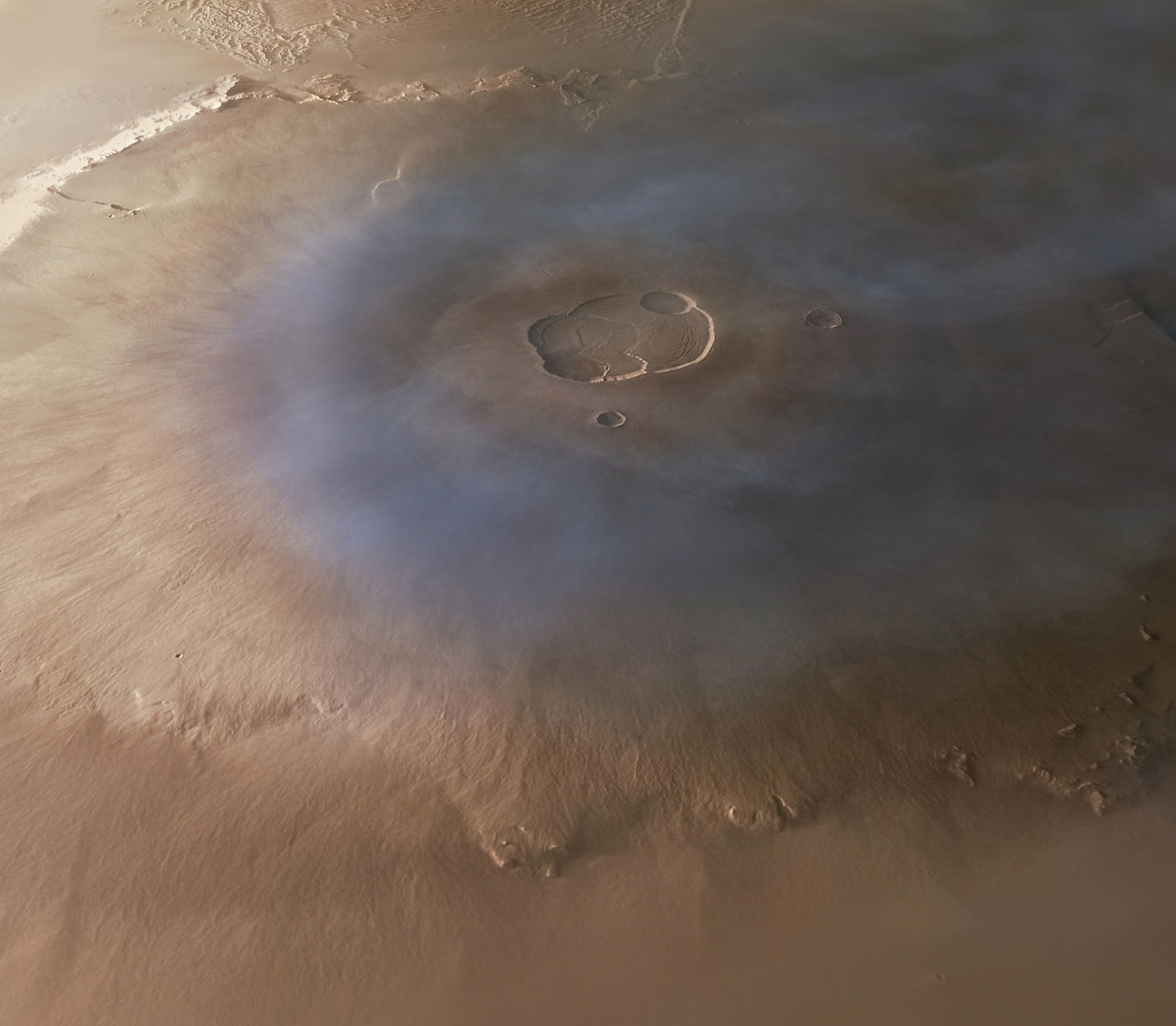
As far as size goes, there is one clear winner at the moment in our solar system. The current reigning champion of the largest volcano in our solar system is Alba Mons on Mars. It is called Olympus Mons, and this volcano is 16 miles (25 km) tall and is 374 miles (601 km) wide. That is three times as high as Everest and about as wide as France. How can a volcano even get to such heights? The answer is that the volcanoes here on Earth are subject to plate tectonics, where the crust of our planet is constantly drifting, even if we don’t notice it.
Meanwhile, Mars does not have plate tectonics, so where there’s a hotspot within the planet, the ground above it stays in place. This means the lava flows on top and keeps growing and growing and growing. This resulted in the largest volcano in our solar system. At least, as far as we are aware.
Volcanoes and the Final Frontier
Our solar system is not the only planetary system out there. In fact, astronomers have discovered over 3,200 other stars with planets orbiting them, and there are likely many more that scientists don’t know about. As we continue to expand and explore more of our galaxy and our own solar system, discoveries may bring more volcanoes. For all we know, Olympus Mons is only the smallest of the giants that are thundering on another planet.